
Affiliate disclosure: BestDeerFeeders.com is reader-supported. As an Amazon Associate we earn from qualifying purchases, at no extra cost to you. Our picks are not sponsored and no brand reviewed or paid for placement.
Deer feeder reviews: the short answer
A deer feeder is a hopper that holds corn, protein pellets or other feed and releases it for deer — on a timer, by gravity as deer eat, or from a vehicle. Hunters use feeders to pattern deer to a spot during the season, landowners use them to carry deer through winter and grow healthier herds, and plenty of people run one just to watch deer near the house. There is no single best deer feeder, because the right design depends on which of those jobs you are hiring it for.
Start with the type, not the brand. Timed spin feeders are the hunting tool: they throw feed at set times so deer show up on your schedule. Gravity feeders are the nutrition tool: feed is available around the clock with nothing electronic to fail. Hanging feeders trade capacity for portability in thick cover. Road and hitch feeders spread feed from a truck or UTV. And protein feeders are purpose-built gravity or enclosed designs that keep pellets dry for a year-round feeding program.
Our top pick in each family, from the 16 feeders we scored in our full best deer feeders guide:
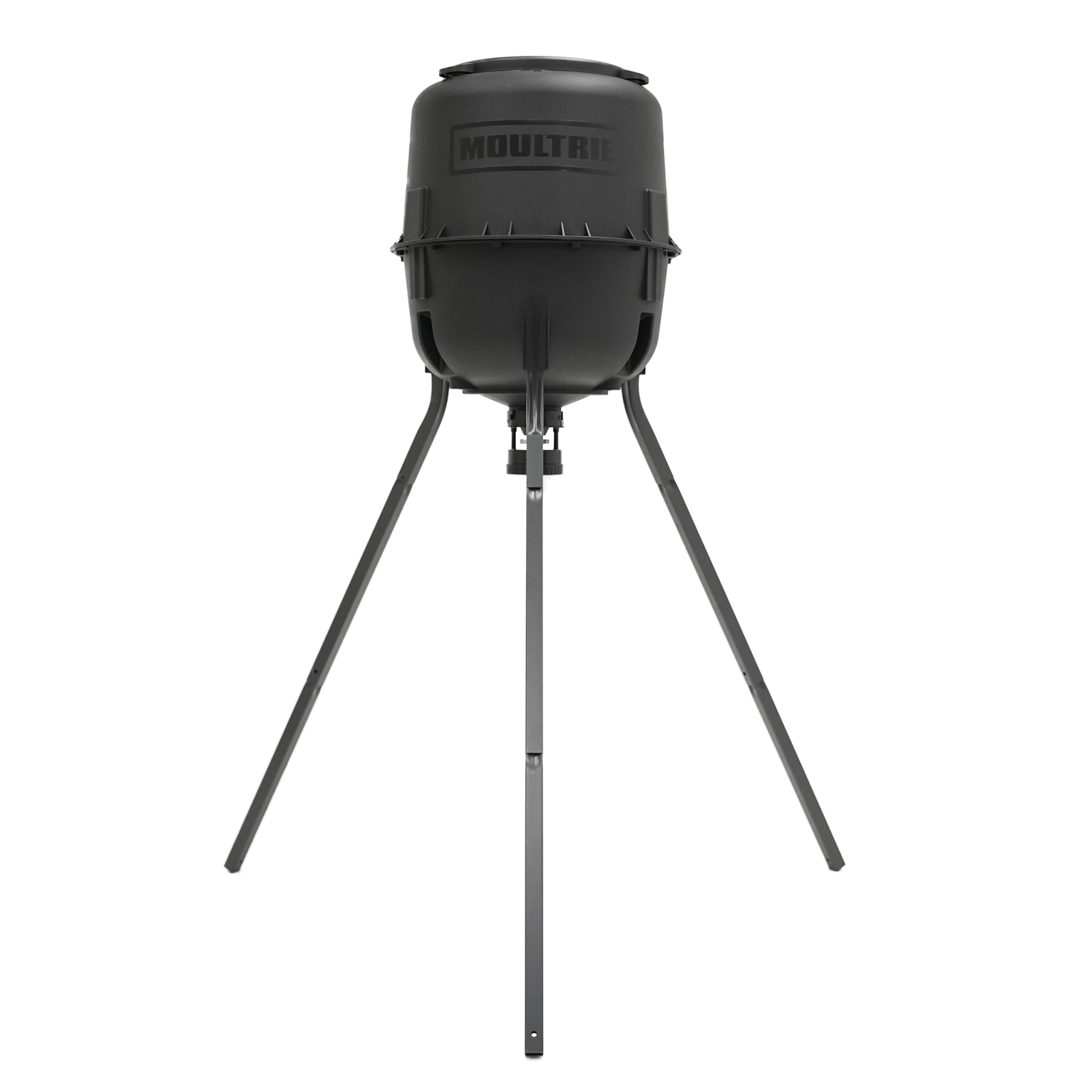 🏆 Best spin / tripod · 9.3Moultrie 200 lb Deer Feeder Standard
Bluetooth app control, 360° spread, runs a season on AA batteries.
Check price on Amazon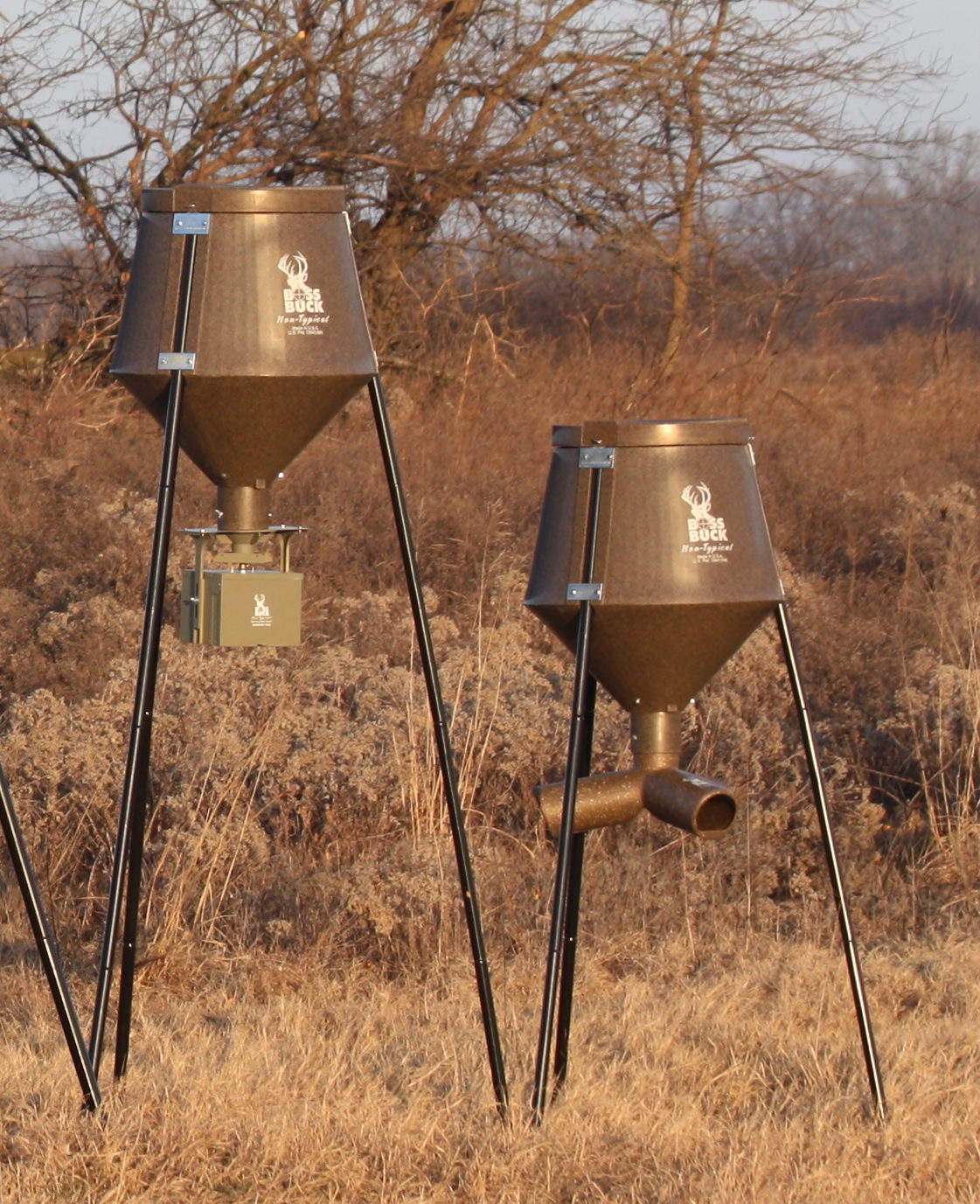 🌾 Best gravity · 8.6Boss Buck 200 lb All-In Gravity
No electronics, three rain-shielded ports, converts to a spinner later.
Check price on Amazon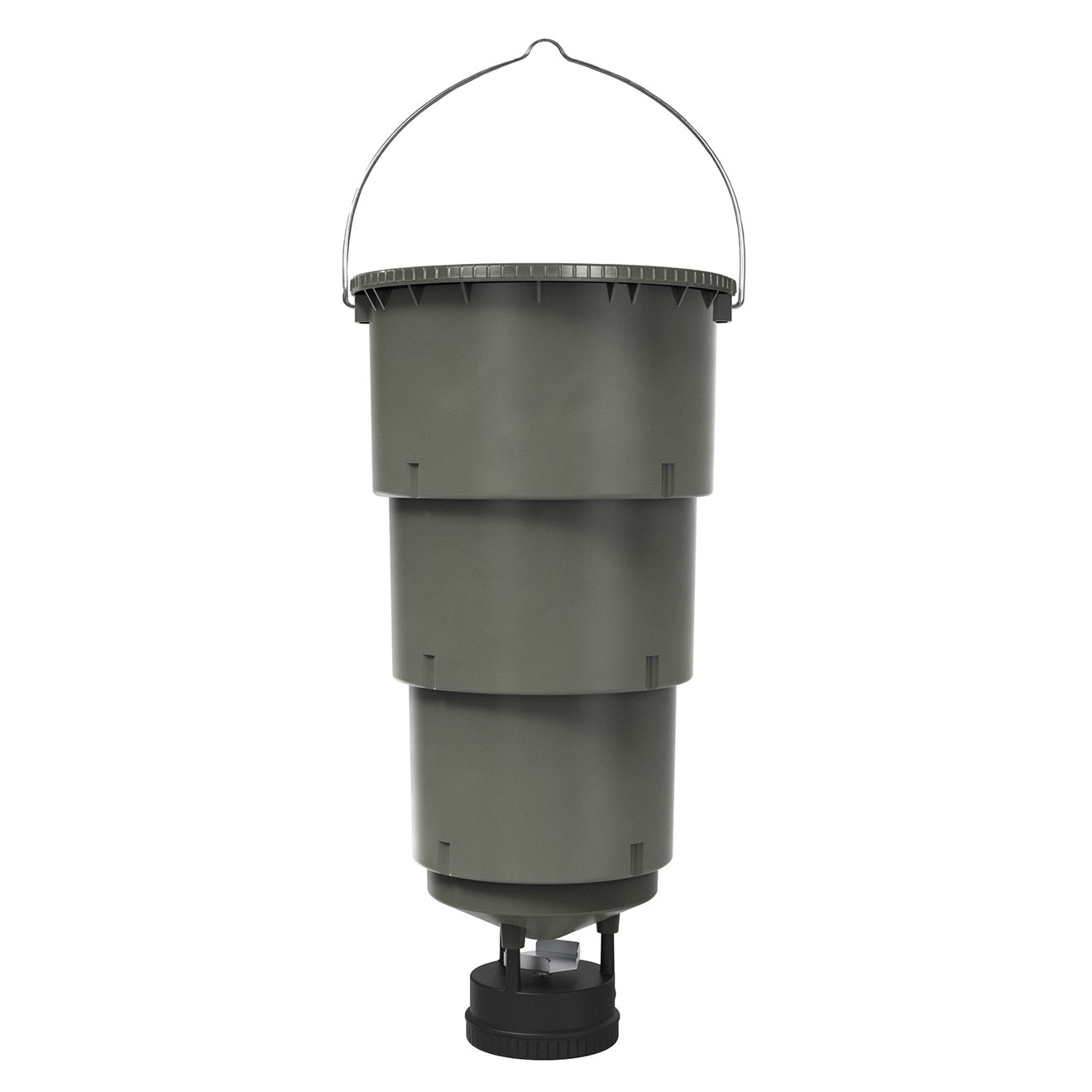 🌲 Best hanging · 8.4Moultrie 30 lb All-in-One Hanging
Collapsible hopper, same Bluetooth timer as our top pick, hangs in minutes.
Check price on Amazon ⭐ Best premium ground-fill · 9.0Boss Buck Stand & Fill 300
Steel hopper on a sled, filled from the ground, solar panel in the box.
Check price on Amazon 🏞️ Best ranch scale · 8.8All Seasons Feeders 600 lb EZ Broadcast
600 lb of corn, ground-level fill, battery and solar already included.
Check price on AmazonThis page is the map. The full scored reviews of all 16 feeders live in the best deer feeders guide, and each feeder type below links to its own detailed guide.
The five types of deer feeders, compared
Almost every feeder sold in the U.S. — whether the listing calls it a deer feeder, a game feeder or just feeders for deer — is one of these five designs. The type decides how much control you get, how often you will visit, and how much can go wrong. Get the type right and the brand decision gets much easier.
| Type | Best for | Feed control | Upkeep | Typical capacity | Start here |
|---|---|---|---|---|---|
| Timed spin (tripod) | Patterning deer to shooting light; corn | High — set times and amounts | Battery, timer, motor to maintain | 200–600 lb | Moultrie 200 · 9.3 |
| Gravity | Protein pellets; remote land; low-maintenance programs | None — deer eat free choice | Very low — nothing electronic | 100–1,200 lb | Boss Buck 200 Gravity · 8.6 |
| Hanging (spin) | Thick cover, slopes, tight budgets, backyard watching | High — timed, like a tripod | Battery; small hopper refills often | 30–50 lb | Moultrie 30 lb · 8.4 |
| Road / hitch / tailgate | Feeding roads, lanes and food plots from a truck or UTV | Broadcast while you drive | Vehicle-powered spreader | Varies by model | Road feeder guide |
| Protein feeders | Year-round nutrition programs (gravity or enclosed timed) | None to high, by design | Low; keep pellets dry | 200–350 lb typical | Boss Buck 350 · 8.1 |
A word on the listings that call themselves the best game feeders or a best game feeder kit: “game feeder” is the same hardware aimed at deer, hogs and other game, and a “kit” is the timer, motor and spinner unit sold on its own — Moultrie’s Pro Hunter III and All-In-One II are both sold as kits — so you can convert a barrel or hopper you already own instead of buying a complete feeder. If you already have a sound barrel and legs, a kit is the cheapest route into timed feeding; if you are starting from zero, a complete feeder is usually better value than a kit plus parts. Our deer feeder timer guide covers the kit decision in detail.
How we picked (and what we didn’t do)
We’re upfront about our process: we did not field-test all 16 feeders side by side, and you should be suspicious of any deer feeder guide that implies otherwise without showing the work. The scores used across this site are built from evidence you can check yourself: manufacturer specifications from Moultrie, Wildgame Innovations, Boss Buck, American Hunter and dealer spec sheets; owner reports from retailer reviews (Walmart, Tractor Supply and others), with the complaints weighted as heavily as the praise; expert reviews from established hunting publications; and wildlife research from university deer labs and state agencies.
Scoring weights (out of 10): feed control 30% · capacity vs. refill effort 20% · durability & varmint resistance 20% · ease of setup and filling 15% · value 15%. Only feeders currently sold in the U.S. with clear, verifiable specs made the list, and we re-check specs, availability and prices every month. This pillar page summarises the results by type; the evidence, spec tables and owner-report detail for every model live in the full guide’s method and reviews.
Spin & tripod deer feeders: control over when deer feed
The tripod spin feeder is the default American deer feeder, and for hunting it earns that spot. A battery timer spins a plate at the times you set, broadcasting corn in a circle deer learn to visit on schedule — ideally in shooting light, not at 2 a.m. Because feed only appears at set times, less sits on the ground to spoil or feed raccoons, and a 200 lb hopper can stretch across much of a season. The costs of that control are real: a battery to keep charged, a timer and motor that can fail, and a fill height that usually means lifting bags to chest height or higher. If you want deer arriving when you decide, this is your type; the full model-by-model breakdown is in our tripod deer feeder guide.
Moultrie 200 lb Deer Feeder Standard — best spin feeder overall
Up to 4 feedings a day (1–20 seconds each), changed from your phone over the free Moultrie app with no subscription, and it runs a full season on 8 AA batteries, so there is no 6V battery or charger to buy. The honest trade-offs: no factory varmint cage, and the AA kit throws corn a shorter distance than Moultrie’s 6V kits — both detailed in the full review.
Moultrie Pro Hunter III 250 lb — best for total feeding control
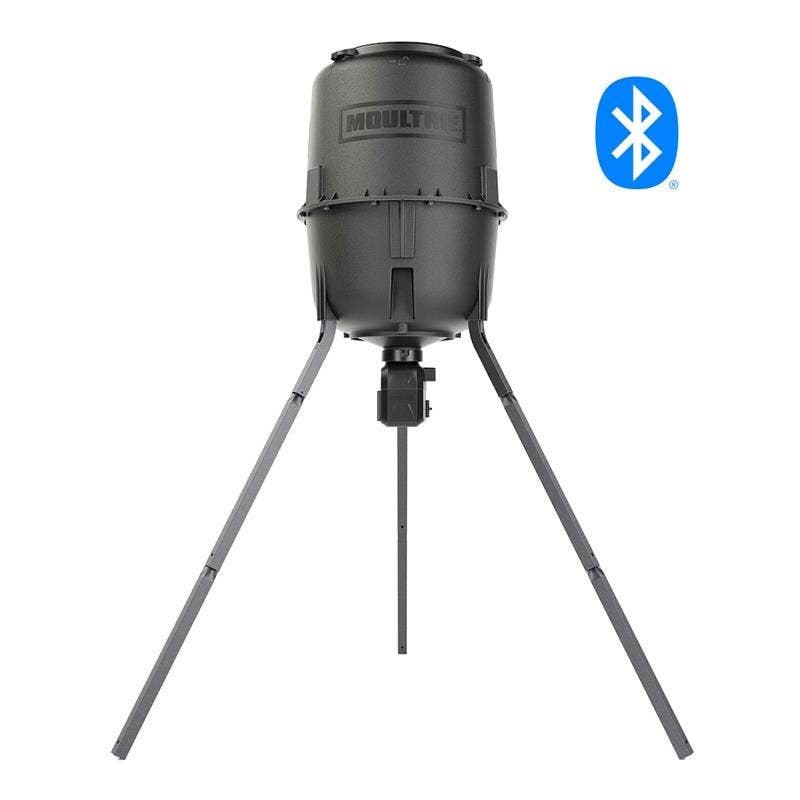
It comes in 360° broadcast or a Directional version for trails and ponds, and pairs with an EDGE 3 camera for cellular control. The catch is the extras: the 6V tab-top battery is sold separately and a solar panel costs more again, so price the whole setup, not the feeder.
Wildgame Innovations Quick-Set Pro 270 — best for raccoon & hog country
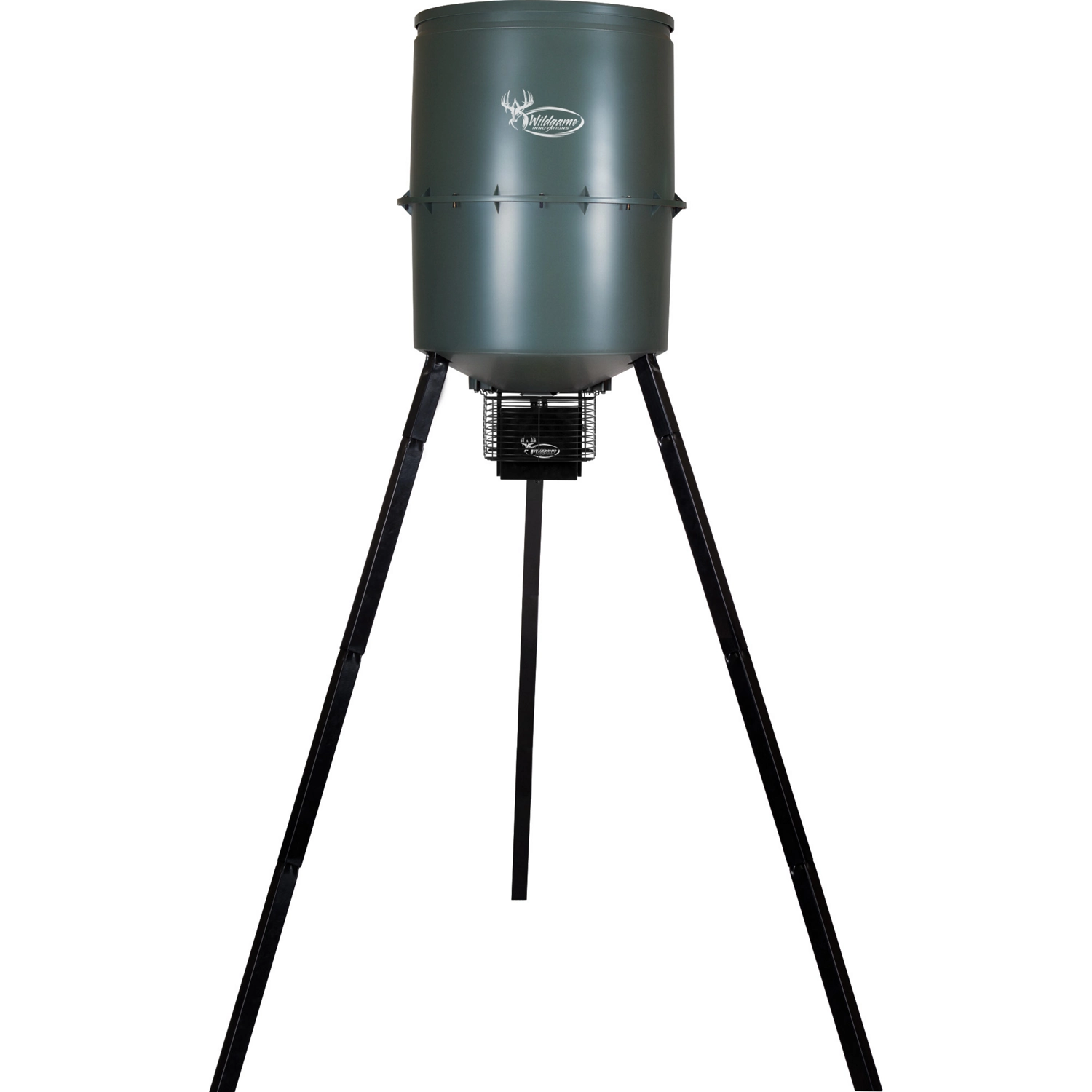
The rigid guard protects both the spinner and the control unit, exactly where raccoons do their damage, and square legs are steadier than round ones. No app control, the 6V battery is extra, and some owners report timer quality-control issues — test-run yours for a few days before the season, as the full review explains.
Going bigger: ground-fill and ranch scale. If lifting bags up a tripod is the deal-breaker, two spin feeders in our scored 16 fill from the ground. The Boss Buck Stand & Fill 300 (9.0, typical price $450–$600) is a powder-coated steel hopper on a towable sled with a 12V kit and solar panel in the box — check price. The All Seasons Feeders 600 lb EZ Broadcast (8.8, typical price $525) doubles the capacity to 600 lb and is the rare big feeder that includes both the 12V battery and the solar panel — check price. Both are semi-permanent stations you drive to, not walk-in feeders.
Gravity deer feeders: no power, no schedule, nothing to fail
A gravity feeder is a hopper with feed ports at the bottom: deer eat, feed flows down, and the feeder’s whole job is keeping that feed dry and flowing. There is no timer to program, no battery to die in week three, and nothing for a raccoon to “spin” — which is why gravity designs dominate protein feeding and remote properties you visit monthly, not weekly. The flip side is control: feed is available to every animal, around the clock, including the raccoons, hogs and turkeys you were not trying to feed, and deer are under no pressure to show up in daylight. Our gravity deer feeder guide reviews the type in depth, and spin vs. gravity settles which side of that trade-off fits your land.
Boss Buck 200 lb All-In Gravity — best gravity feeder
The head is designed to keep pellets dry: three ports angled at 10°, each with a 1-inch overhang and a drain hole, plus a 3-way inner sleeve that throttles flow for different pellet sizes. Owners rate it 4.4 stars across 748 reviews on Tractor Supply, with one recurring warning — squirrels and raccoons can chew the plastic — so plan on a leg guard in squirrel country.
Banks Outdoors Feedbank 300 — best premium gravity feeder
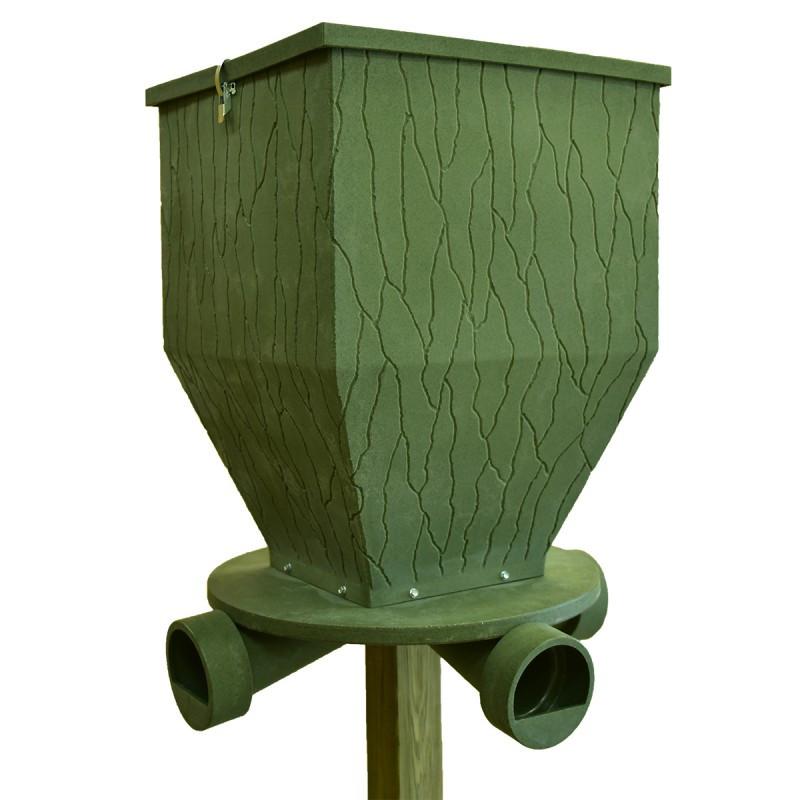
The single 4×4 post mount is antler-safe — nothing for a buck to bang his rack on — and you fill it from the ground. Budget honestly: the post itself isn’t included, and in hog country owners say the post needs concrete or extra depth to stay put.
Testing a spot cheaply? The Wildgame Innovations Treehugger 100 (7.4, typical price $20–$30) is a PVC bag that straps to a tree in under five minutes and holds up to 100 lb — for about the price of two bags of corn you can find out whether feeding works on your land before buying a real feeder (check price). Handier still: build the station yourself with our DIY 55-gallon drum feeder walkthrough.
Hanging deer feeders: for thick cover, slopes and small budgets
A hanging feeder is a small timed spinner in a hopper you hang from a limb. You give up capacity — 30 to 50 lb instead of 200-plus — and in return you get a feeder that packs into rough country, works on ground too steep or thick for tripod legs, and costs a fraction of a full-size tripod. They suit honey holes, small properties and watching deer near the house. The discipline they demand is refills: 30 lb empties fast at two feedings a day, so run your numbers through the refill calculator before committing one to a remote spot. More models and setup detail are in the hanging deer feeder guide.
Moultrie 30 lb All-in-One Hanging — best hanging feeder
Hang it from a limb and it is running in minutes: up to 4 feedings a day, app scheduling with no subscription, and AA power. It needs a sturdy limb, and if squirrels chew plastic on your land, Moultrie’s 40 lb metal-bucket version is the upgrade to look at.
American Hunter 50 lb Hanging (R-50PROAP) — best budget automatic
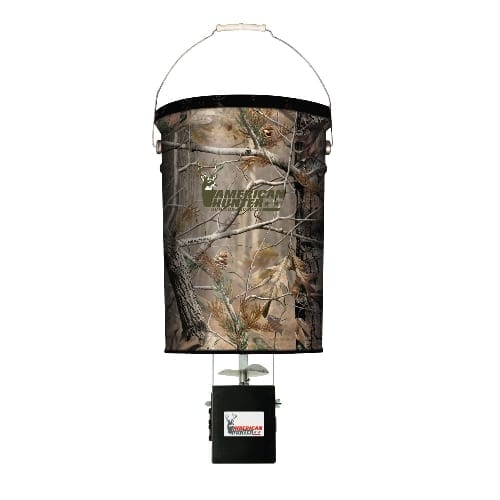
The 50 lb steel hopper resists chewing better than plastic, and the photocell E-Kit timer feeds at dawn and again 6–12 hours later, with runs adjustable from 1 to 30 seconds. Know what you are buying: that photocell timer is simpler than a clock-scheduled digital timer — no exact feed times — and the 6V battery is extra.
Road, hitch & tailgate feeders: feeding from the truck
Road feeders solve a different problem from every stationary feeder above. A hitch- or tailgate-mounted broadcast spreader, powered from the truck or UTV, throws feed as you drive — down ranch roads, along food-plot edges and across lanes where you want deer feeding without a permanent station, and without walking your scent into the spot. They are the working tool on larger properties: one pass can service ground that would take half a dozen stationary feeders, and the “feeder” comes home with you, so there is nothing left out for thieves, hogs or weather to work on.
Who should skip them: hunters feeding one small property, where a $100–$130 tripod does the job for a season on a single fill. Who should shortlist them: anyone already driving the property to check cameras and fill multiple stations, or feeding along roads and plots as part of a broader program. When you compare models, the questions that matter are hopper size against the length of your route, spread width, how the gate is controlled from the cab, and how the unit mounts to your specific hitch or tailgate. Check your state rules before feeding from a vehicle on or near public roads — the legality section below is the place to start.
Our picks from the road feeder guide: for most hunters, the Texas Hunter Products RF100 Road Feeder — it holds two full bags of corn, slides into any 2-inch receiver hitch and fires from a wireless remote, so you can lay a trail of corn along ranch roads without leaving the driver’s seat — check price. Feeding bigger ground, the All Seasons Feeders Hercules 200 lb is the biggest-capacity model in that guide — check price.
Because road feeders are vehicle equipment rather than stationary feeders, we review them separately from the scored 16: the models, specs and picks are in our best road feeder for deer guide.
Protein feeders & protein feed: the year-round nutrition play
Protein feeding is not hunting-season attraction; it is a nutrition program. The standard setup is free-choice protein pellets offered through spring and summer, when bucks are growing antlers and does are raising fawns, from a feeder whose first job is keeping pellets dry — pellets broadcast onto wet ground spoil quickly, which is why protein is rarely fed from an open spinner. That leaves two proven designs: gravity heads with rain-shielded ports, and enclosed timed feeders. The research favours the enclosed end: Caesar Kleberg Wildlife Research Institute testing found an enclosed, controlled-time feeder delivered protein pellets to deer at roughly 90–95% efficiency, better than free-choice designs. Our protein deer feeder guide and the gravity vs. timed protein comparison walk through both routes, and the capacity guide sizes the hopper to your herd.
Boss Buck 350 lb Gravity Protein Feeder — best big protein feeder
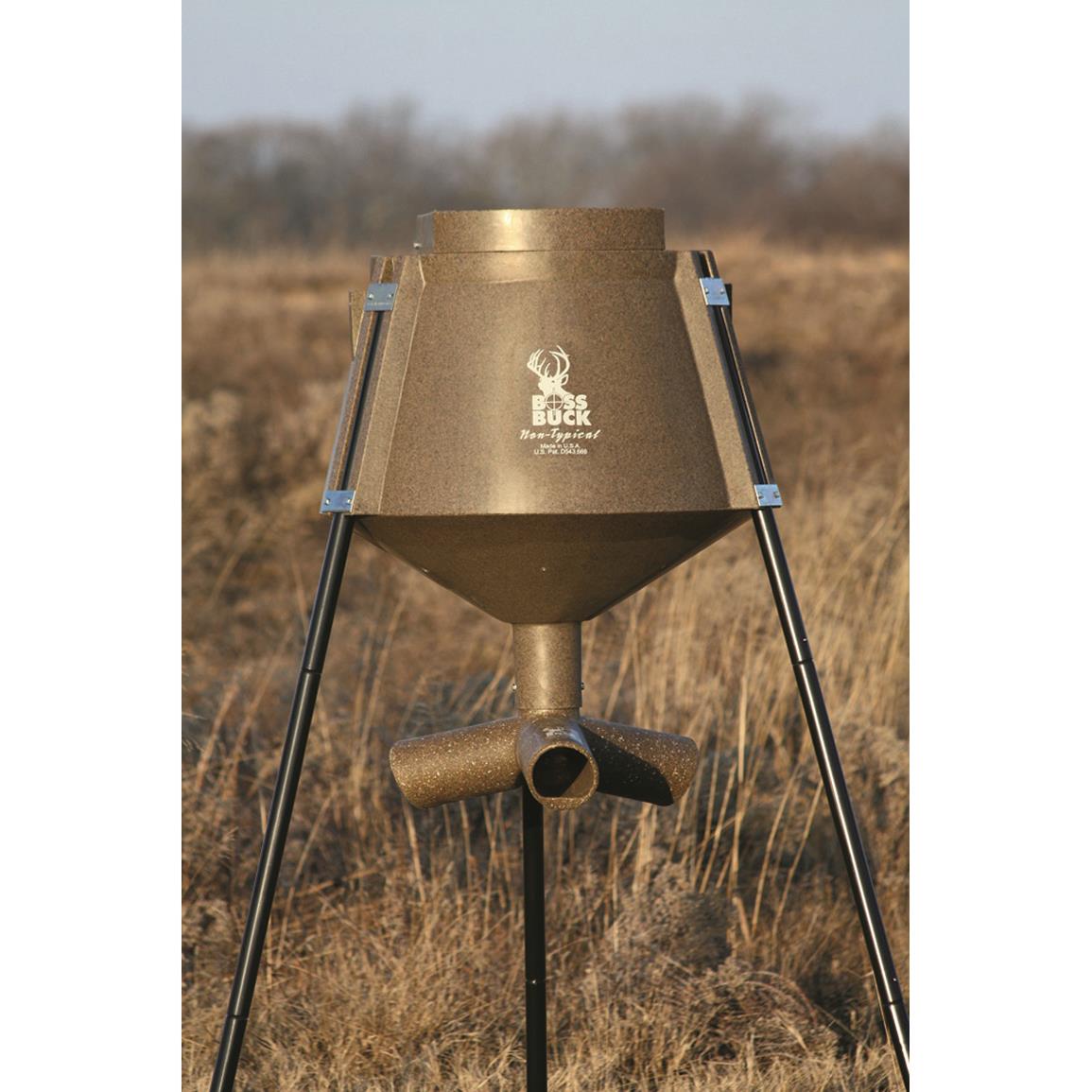
Same proven head as our gravity pick — three 4-inch ports on a 10° angle with drain holes and a 3-way sleeve that meters flow by feed size — in a thick-wall HDPE hopper. Read the full review before ordering: at 3.6/5 across 15 reviews at Sportsman’s Guide it carries the weakest retailer rating in our guide, and owners say to buy the foot pads, because without them the legs can sink and lean.
The two gravity picks above pull double duty here: the Boss Buck 200 Gravity (8.6) is the smaller-station protein feeder, and the Banks Feedbank 300 (8.5) holds about 250 lb of protein under a watertight cover. And the feeder is only half the program — what goes in it matters as much. Our best protein feed for deer guide compares the feeds themselves, and what to feed deer instead of corn covers the alternatives when pellets are not the plan. One hard rule from the manufacturer, whichever gravity feeder you choose: no salt-based minerals in a Boss Buck hopper.
How to choose a deer feeder: the five decisions that matter
Most buyers who regret a feeder bought the wrong type, not the wrong brand. Work through these five decisions in order and the shortlist usually writes itself.
1. What is the feeder for?
Patterning deer for hunting points to a timed spin feeder, because you control when feed appears. Year-round nutrition points to gravity or an enclosed protein feeder. Watching deer near the house points to whatever is quiet, close and cheap to run — often a small hanging feeder. Feeding a big property points to ground-fill capacity or a road feeder. Every later decision gets easier once this one is honest.
2. How often can you visit? Size the hopper to that
Every refill trip leaves scent and noise, so capacity should match your visit schedule, not your ambition — but corn sitting for months in a humid hopper can mold, so bigger is not automatically better. A good rule: choose a capacity that lasts 2–4 weeks at your feeding rate, then check the maths. Your feeder’s throw rate is the number that matters, and it varies by model, motor and battery charge: measure it once with a bucket test (run a 5-second spin into a bucket, weigh the corn, divide by 5). At a typical 0.25 lb per second and two 5-second feedings a day, 200 lb lasts roughly 80 days — our refill calculator runs your own numbers, and how long feeder corn lasts explains the variables.
3. What else will eat there?
Raccoons, squirrels and hogs decide more feeder purchases than deer do. A raccoon spinning a thrower plate can empty a hopper overnight; squirrels chew plastic brackets and, on some properties, the feeder head itself; hogs tip, root under and monopolise stations — research from the Caesar Kleberg Institute notes deer will abandon a feeder entirely to avoid feral pigs. If pests are heavy, prioritise a factory varmint guard (the Quick-Set Pro above), metal over plastic where chewing is the issue, and the tactics in our raccoon and hog guide and squirrel guide.
4. Which power system will you actually maintain?
AA-powered kits (Moultrie’s All-In-One II line) remove the battery chore almost entirely. Traditional 6V and 12V systems throw further and run bigger motors but need charging between fills or a solar panel to stay honest — a weak battery throws less corn before it stops altogether. Gravity feeders sidestep the question. Match the system to your discipline, then read the 6V & 12V battery guide and solar panel buying checks before adding either to a basket.
5. Where will it stand?
Placement beats brand. Put the feeder near cover deer already use, downwind of your stand, at a distance you can shoot ethically, and where you can refill without walking through bedding areas. Our placement guides cover where to place a deer feeder, how far from your stand and how high off the ground — and once it is standing, the timer guides cover programming, how many times a day it should go off and the best time of day to run it.
What a deer feeder really costs (what’s not in the box)
The sticker price is rarely the full price. Across the 16 feeders we scored, the pattern is consistent: most 6V and 12V feeders ship without the battery they need, solar is usually an extra, and gravity feeders trade those costs for mounting hardware instead. The extras for our five type winners:
| Pick | Battery needed | Included? | Solar | Varmint guard |
|---|---|---|---|---|
| Moultrie 200 Standard (9.3) | 4–8 AA | No | Not needed | No |
| Boss Buck Stand & Fill 300 (9.0) | 12V | No | Included | Yes |
| All Seasons 600 EZ (8.8) | 12V | Yes | Included | Yes |
| Boss Buck 200 Gravity (8.6) | None | — | — | — |
| Moultrie 30 lb Hanging (8.4) | 4–8 AA | No | Not needed | No |
Then there is the feed itself — the cost that never stops. A feeder running two short feedings a day works through corn slowly; a free-choice gravity feeder full of protein pellets empties at whatever pace the local deer, raccoons and hogs set. Before you commit to a program, run your throw rate and visit schedule through the refill calculator, and if a motor or timer dies mid-season, our replacement motor guide is cheaper than a new feeder. Seasonal timing helps too: our Black Friday deer feeder deals page tracks the one window when feeder prices reliably drop.
What wildlife research says about feeding deer
1. Feed shifts deer toward night. One of the most consistent findings in the literature, going back to Ozoga and Verme’s work in 1982, is that supplemental food pushes deer from dawn-and-dusk movement toward more nighttime activity. That is why timing a spin feeder to legal shooting light matters more than raw capacity.
2. Mature bucks may not be at your corn pile. A Georgia DNR-funded camera study summarised by the National Deer Association found that corn feeders on a lightly hunted property mostly photographed yearling bucks and does at night, while the mature bucks were photographed at other sites. Use a feeder for inventory and patterning, not as your only stand location.
3. Enclosed timed feeders waste the least. Caesar Kleberg Wildlife Research Institute (Texas A&M–Kingsville) testing found an enclosed, controlled-time feeder delivered protein pellets to deer at roughly 90–95% efficiency, better than free-choice designs. The same bulletin notes the labour of servicing feeders ends up costing more than the feeder itself — another argument for sizing capacity to your visits.
4. Moldy corn is a real risk. Mississippi State University’s Deer Lab, working with the National Deer Association, warns that aflatoxin can develop quickly in warm, humid conditions on corn left on the ground, and recommends cleaning feeders regularly. Run feed on a schedule, keep corn fresh and dry, and clean the hopper between fills.
Is it legal to use a deer feeder where you hunt?
Even the best deer feeder is useless if feeding is banned where you hunt. Deer feeding and baiting laws are set by each state and sometimes by county, and they change mid-season when chronic wasting disease (CWD) is found. Examples of how fast this moves:
- Minnesota expanded its deer feeding and attractant ban to 37 counties in July 2026. Check the Minnesota DNR map.
- Wisconsin bans baiting and feeding in any county with a CWD-positive deer and in counties within 10 miles of one, and the ban lasts three years after the last detection.
- Michigan restricts baiting and feeding in CWD and bovine TB management areas; check the current DNR digest before you buy.
Before you order a feeder, check your state wildlife agency’s current hunting digest. We keep state explainers for Texas and Georgia, and our what is a deer feeder primer covers the basics for new landowners.
Every deer feeder guide on this site
This page is the hub; these are the spokes. Every guide below is published on BestDeerFeeders.com.
Feeder roundups by type
- Best Deer Feeders — all 16 scored reviews in one guide
- Best Tripod Deer Feeders
- Best Gravity Deer Feeders
- Best Protein Deer Feeders
- Best Protein Feed for Deer — what to put in them
- Best Corn Feeders for Deer
- Best Hanging Deer Feeders
- Best Road Feeder for Deer — hitch & tailgate models
- Best Deer Feeders with Camera & App Control
- Moultrie vs Wildgame Deer Feeders
- Black Friday Deer Feeder Deals
- Shop — the full product catalogue
Types compared & how to choose
- Spin vs Gravity Feeders
- Gravity vs Timed Protein Feeders
- Deer Feeders vs Food Plots
- Protein Deer Feeder Capacity Guide
- DIY 55-Gallon Drum Deer Feeder
Power, timers & setup
- Best Deer Feeder Timer
- Best Deer Feeder Batteries (6V & 12V)
- Deer Feeder Solar Panels
- Deer Feeder Replacement Motors
- How to Program a Deer Feeder Timer
- How Many Times a Day Should a Feeder Go Off?
- Best Time of Day to Run a Deer Feeder
- Deer Feeding Times Chart
- How Long Does Feeder Corn Last?
Placement & pests
- Where to Place a Deer Feeder
- How Far Should a Feeder Be From a Stand?
- How High Should a Deer Feeder Be?
- Keep Raccoons & Hogs Off Your Feeder
- How to Keep Squirrels Out of a Deer Feeder
Deer feeder FAQ
What is a deer feeder?
A deer feeder is a hopper that holds corn, protein pellets or other feed and releases it for deer. Timed spin feeders throw feed at set times, gravity feeders let deer eat free choice around the clock, hanging feeders are small timed units hung from a limb, and road feeders broadcast feed from a truck or UTV. Hunters use them to pattern deer to a spot, landowners to carry herds through winter, and homeowners to watch deer.
What is the best deer feeder?
For most hunters, the Moultrie 200 lb Deer Feeder Standard — it scored 9.3/10 in our reviews, with a 200 lb hopper, 360° spread and subscription-free Bluetooth app control on AA batteries. The best feeder depends on the job, though: gravity for protein and remote land (Boss Buck 200 Gravity), hanging for thick cover (Moultrie 30 lb), and ground-fill steel for ranches (Boss Buck Stand & Fill or All Seasons 600 EZ).
Which type of deer feeder is best for hunting?
A timed spin feeder — most hunting feeders are timed spinners for exactly this reason. It throws feed at times you set, so deer learn to arrive on your schedule instead of whenever they like — ideally in legal shooting light. Gravity feeders can’t do that: feed is always there, so deer have no reason to show up at a particular hour, and research shows supplemental feed tends to shift deer activity toward night.
Should I get a gravity or a spinning deer feeder?
Choose spinning for control over when deer feed and less feed exposed to raccoons and hogs. Choose gravity for zero electronics, year-round protein, or land you can only visit every few weeks. Our spin vs. gravity guide compares the two in full.
How much does a deer feeder cost?
Typical US prices we saw in October 2026 run from about $20–$30 for a Treehugger gravity bag to $700+ for a steel ranch feeder. Most hunters land between $100 and $300. Budget for extras: many 6V and 12V feeders ship without the battery they need, and solar panels, varmint guards and mounting posts are often separate purchases.
How long will 200 lb of corn last in a deer feeder?
It depends on your spinner’s throw rate. At two 5-second feedings a day and about 0.25 lb per second, 200 lb lasts roughly 80 days. Measure your own feeder’s rate with a bucket test — run a 5-second spin into a bucket and weigh it — for an accurate answer, and use our refill calculator to run your numbers.
Do deer feeders scare off mature bucks?
The feeder itself usually doesn’t; pressure does. Frequent visits, scent and noise push mature bucks toward night activity. Research summarised by the National Deer Association found corn feeders photographed mostly young bucks and does at night, so use trail cameras, refill at midday and keep visits to a minimum.
Is it legal to feed deer?
It depends on your state and often your county. Many states restrict or ban baiting and feeding, especially in chronic wasting disease zones, and rules can change mid-season. Always check your state wildlife agency’s current regulations before you buy or fill a feeder.
What is a game feeder kit?
A feeder kit is the timer, motor and spinner unit sold on its own, without a hopper — Moultrie’s Pro Hunter III and All-In-One II are both sold as kits. A kit lets you convert a barrel or hopper you already own into a timed feeder. If you are starting from zero, a complete feeder is usually better value than a kit plus the parts to match it.
What should I feed deer — corn or protein pellets?
Corn is the classic attractant and spins well, so a timed spin feeder is the best tool for corn. Protein pellets are a long-term nutrition feed, usually offered free-choice from gravity or enclosed feeders, because pellets broadcast onto wet ground spoil quickly. Many programs run both: protein through spring and summer, corn for the season.
Do Bluetooth deer feeders need a subscription?
No. Moultrie’s Bluetooth kits, including the All-In-One II and Pro Hunter III, work with the free Moultrie app without a subscription. Cellular control through the Moultrie Feed Hub kit does require a Moultrie Mobile plan.
How far should a deer feeder be from my stand?
There is no single right distance: it depends on your weapon, the cover, the terrain and your state’s rules. The working principle is a distance you can shoot ethically, downwind of the stand, where you can refill without walking through bedding areas. Our placement guide works through the decision in detail.
Final verdict
If you buy one feeder and stop reading, buy the Moultrie 200 lb Deer Feeder Standard — app control and AA power remove the two biggest headaches of owning a feeder, and it is the top score (9.3) across all 16 deer feeders we reviewed. The rest of the shortlist is about fit: Pro Hunter III if you want maximum scheduling, Quick-Set Pro 270 if raccoons run your property, Boss Buck 200 Gravity for protein on land you rarely visit, Moultrie 30 lb Hanging for thick cover and small budgets, and the Boss Buck Stand & Fill or All Seasons 600 EZ when the property — and the budget — gets ranch-sized. Road and hitch feeders earn their own guide because they solve a different problem entirely.
Whatever you choose, check the law first: feeding rules change with every new CWD detection, and no feeder is worth a citation. Full scored reviews, spec tables and owner-report detail for every model named here are in the best deer feeders guide.
Last updated: October 2026.
Sources
- Moultrie — 250 lb Deer Feeder Pro III
- Moultrie — Pro Hunter III Feeder Kit
- Moultrie — All-In-One II Feeder Kit
- Moultrie — 30 lb All-in-One Hanging Feeder
- Simmons Sporting Goods — Boss Buck Stand & Fill 300 specs
- Bass Pro Shops — Boss Buck All-In Gravity 200 lb
- National Deer Association — Which deer visit feeders and when
- National Deer Association / MSU Deer Lab — Aflatoxin in corn
- Caesar Kleberg Wildlife Research Institute — Supplemental feeding bulletin (PDF)
- Minnesota DNR — Deer feeding and attractant bans
Products mentioned in this guide
See this product on Amazon
Check Price on Amazon →Confirm price and availability on AmazonBoss Buck 200 lb All In Gravity Feeder
Check Price on Amazon →Confirm price and availability on Amazon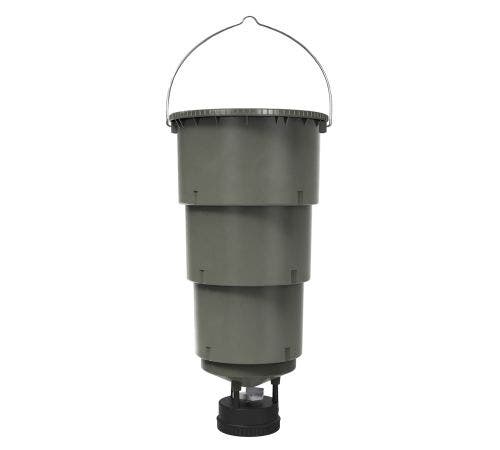
Moultrie 30 lb All-in-One Hanging Feeder
Check Price on Amazon →Confirm price and availability on Amazon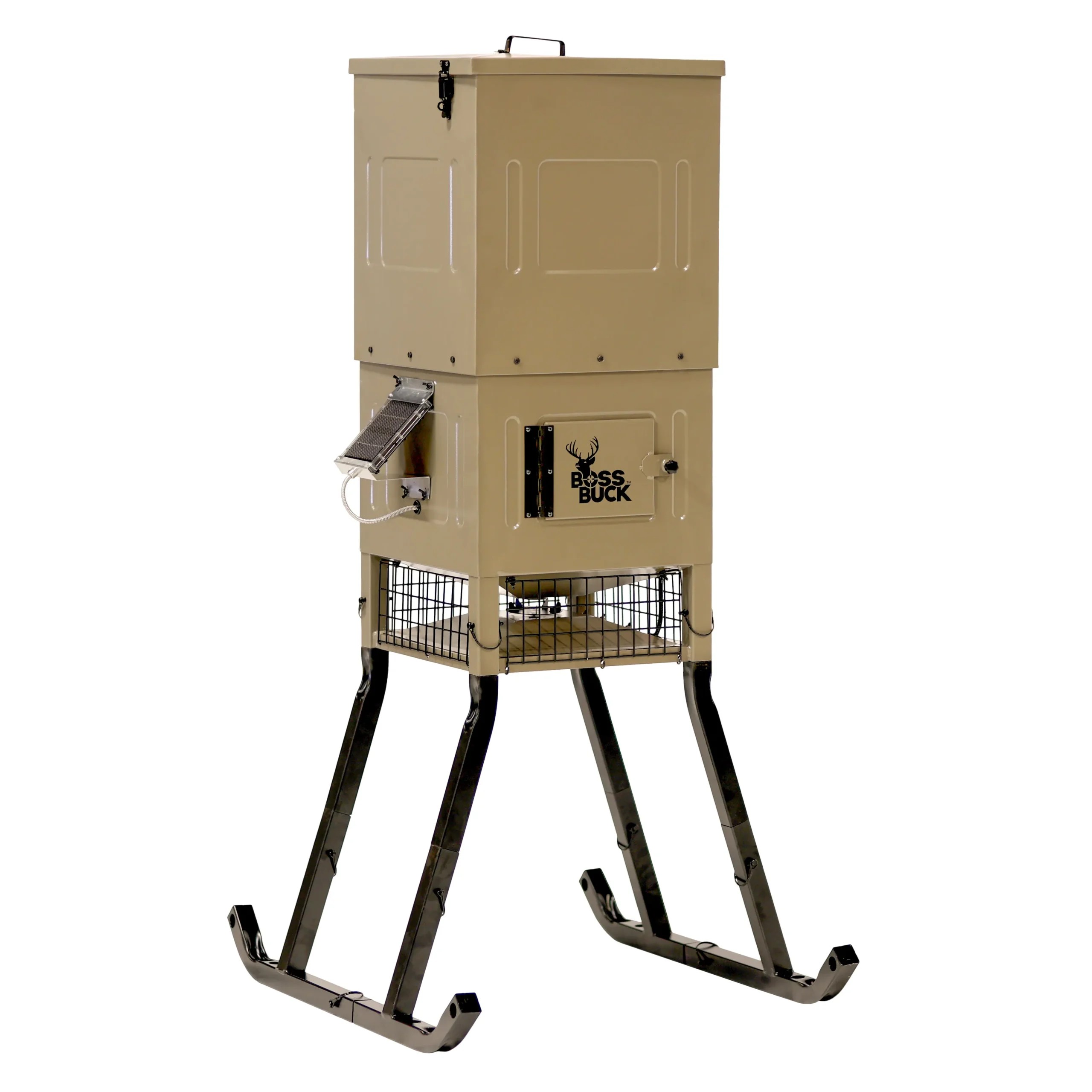
Boss Buck Stand & Fill 300 Feeder
Check Price on Amazon →Confirm price and availability on Amazon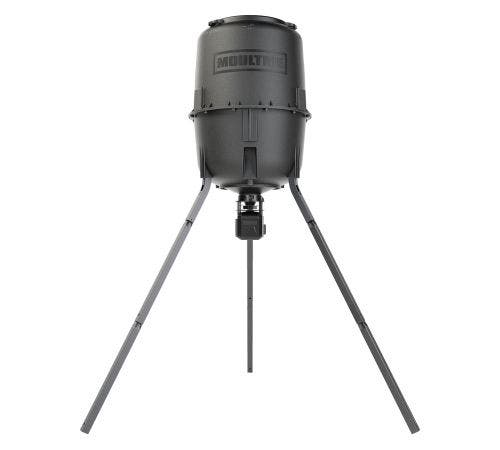
Moultrie Pro Hunter III 250 lb Deer Feeder
Check Price on Amazon →Confirm price and availability on AmazonWildgame Innovations Quick-Set Pro 270 Feeder
Check Price on Amazon →Confirm price and availability on AmazonBanks Outdoors Feedbank 300 Feeder
Check Price on Amazon →Confirm price and availability on Amazon
Wildgame Innovations Treehugger 100 lb Feeder
Check Price on Amazon →Confirm price and availability on AmazonBoss Buck 350 lb Gravity Protein Feeder
Check Price on Amazon →Confirm price and availability on AmazonAs an Amazon Associate, we earn from qualifying purchases.