DIY 55-Gallon Drum Deer Feeder: Complete Build Guide (2026)
Disclosure: This post contains affiliate links. As an Amazon Associate, we earn from qualifying purchases at no extra cost to you.
The short answer
A food-grade 55-gallon drum build is the cheapest reliable path to a high-capacity deer feeder: $50–$70 for gravity, ~$240 for a timed spinner-kit version, holding 300–330 lbs of shelled corn — roughly triple the capacity-per-dollar of most store-bought units. (Still choosing the kit itself? Our deer feeder kit roundup compares all seven drum kits head-to-head.) Use food-grade drums only, never chemical drums — this 55 gallon drum deer feeder guide gives you the full parts list with prices, step-by-step builds, and pro tips.

📑 On this page
- Parts & tools: everything with snapshot prices
- Step-by-step: gravity drum feeder (PVC ports + trays)
- Timed spinner-kit variant
- Gravity vs timed vs PVC: which build is yours?
- When NOT to DIY (honest advice)
- Placement & setup: where you put it matters more than what you built
- Sourcing a food-grade drum: where, what to ask, red flags
- Varmint-proofing masterclass
- Seasonal maintenance calendar
- Maintenance & troubleshooting
- 7 mistakes that ruin first builds
- 55 gallon drum deer feeder: FAQ
- Final word
Hunters have been building drum feeders for decades because the math is brutal: a used food-grade drum costs about $20 and holds an easy 300+ lbs of corn by bulk-density math (~330 lbs), matching what lease owners report in the field. Compare that to commercial hoppers that start smaller and cost more for the same volume. This guide gives you the complete build — parts with snapshot prices, both gravity and timed variants, placement, troubleshooting, and the mistakes that ruin first builds.
On this page: parts & tools with prices · step-by-step gravity build · timed-kit variant · gravity vs timed vs PVC · placement · maintenance & troubleshooting · 7 mistakes · FAQ
⚠️ Read this before you buy a drum
Food-grade drums only — drums that previously held food or water. Never use a drum that held industrial chemicals: residues leach into feed and water, and washing doesn’t make them safe. Also check your state wildlife agency’s current rules before filling anything — CWD-related feeding and baiting restrictions are spreading, and legality is not universal. See our Texas and Georgia rules guides.
Parts & tools: everything with snapshot prices
Prices checked Oct 18, 2026 — never treat as live. Every “Check Price” button below carries our affiliate link, which supports this site at no cost to you.
| Part | Spec | Price | |
|---|---|---|---|
| 55-gal food-grade drum | Steel or HDPE, previously held food/water | ~$20 used | Facebook Marketplace / local |
| Moultrie Pro Hunter II Feeder Kit | Motor + timer + spinner, 6 feed times/day, 6V | See current price | Check Price |
| Moultrie Pro Hunter III Directional Kit | Newer, directional throw | See current price | Check Price |
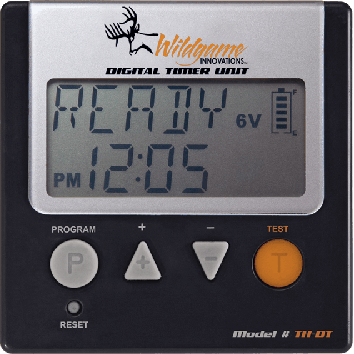 Wildgame Trophy Hunter 6V Kit | Digital power control unit | See current price | Check Price |
| American Hunter High-Torque 12V motor | Motor only — pair with your timer | See current price | Check Price |
| Tripod leg kit for 55-gal drums | Bolt-on 3-leg kit | See current price | Check Price |
| 6V rechargeable feeder battery | Standard feeder battery | See current price | Check Price |
| 6V solar panel | Keeps the battery topped up | See current price | Check Price |
| Metal varmint-guard cones | Per leg — stops climbing raccoons | $25–35/leg | Check Price |
| 2″ PVC elbows + trays | Gravity ports + drywall mud pans | ~$30–50 | Hardware store |
Tools assumed on hand: drill + bits, hole saw, sawzall or jigsaw, wrenches, screwdriver, tape measure, eye protection, gloves. Never torch-cut a drum — residual fumes can explode. Sawzall, jigsaw, and hole saws only.
💰 The value math that sells this build
A gravity drum build (~$60) holding 330 lbs works out near $0.18 per pound of capacity — against ~$0.30/lb for the cheapest commercial gravity feeder and ~$0.50/lb for budget timed units. You’re getting 2–3× the capacity per dollar. The timed-kit build (~$240) still beats every commercial timed feeder on capacity per dollar, and you own every part that can break.
Step-by-step: gravity drum feeder (PVC ports + trays)
The 1–2 hour build. Easiest path to 300+ lbs of 24/7 feeding with zero batteries.
- Wash the drum thoroughly even if labeled food-grade. Remove all residue and dry completely — old sugars grow mold.
- Cut a lid access opening large enough for filling and inspection. Deburr every cut edge; sharp steel and corn dust are a bad combination.
- Drill 2-inch port holes near the bottom of the drum, positioned so the finished ports sit roughly 4 ft off the ground once elevated.
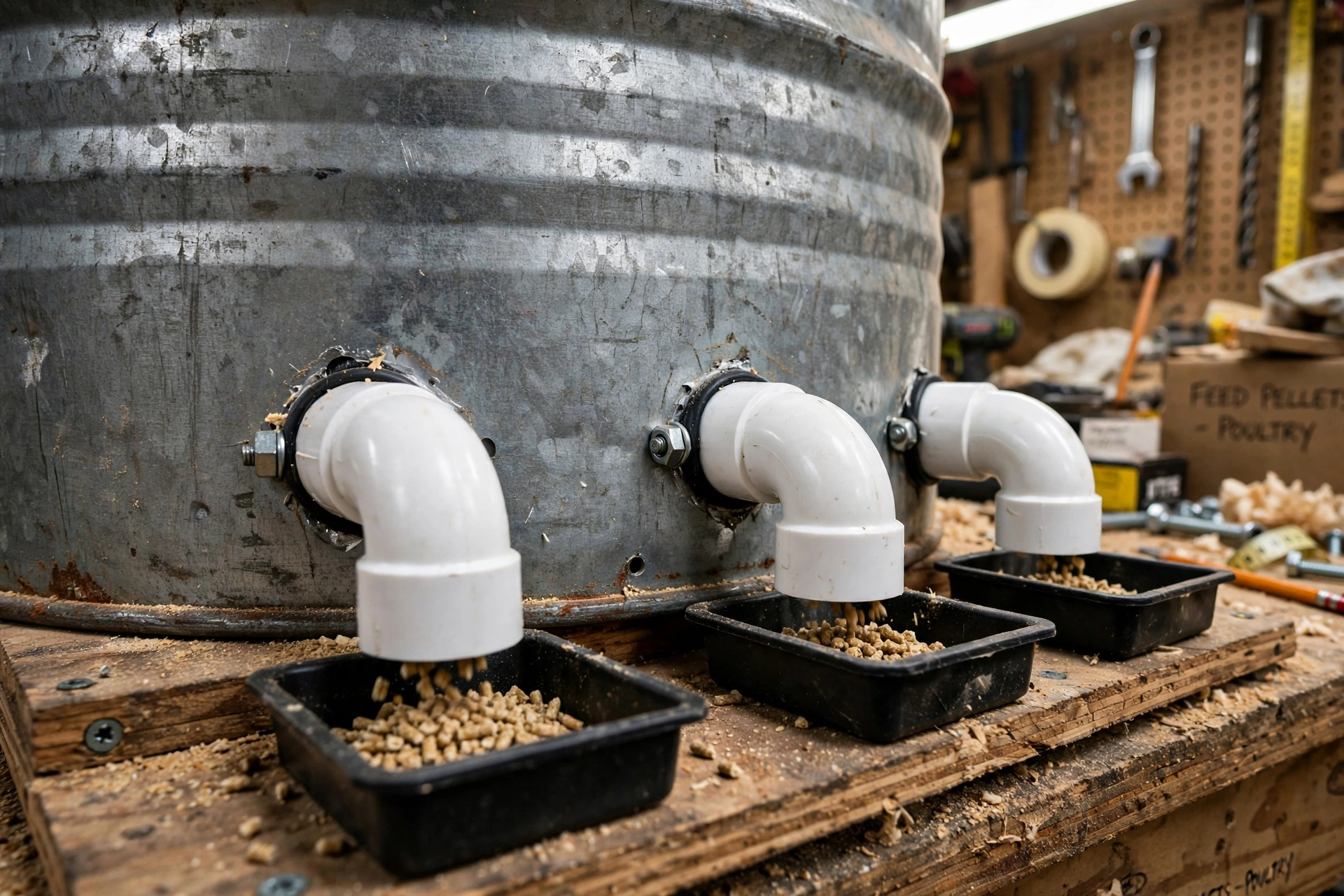
- Fit 2-inch PVC elbows through the holes, open ends feeding into trays (drywall mud pans work). Trim elbows so they don’t stick up too high inside — tall elbows cause bridging.
- Bolt the trays on. Friction-fit trays detach under use — screws or bolts, no exceptions. This is the #1 first-build failure in owner reports.
- Seal every joint against moisture. Water intrusion + corn = mold and aflatoxin risk (Texas Parks and Wildlife cites a 20 ppb limit for corn accessible to wildlife).
- Elevate: platform or bolt-on leg kit so the drum bottom sits ~2 ft off the ground (ports land near 4 ft). Strap the drum down — a 300-lb drum on weak legs tips, and hogs will test it.
- Fill with shelled corn. Start with corn on the ground around the feeder for a few days so deer find it faster.
🧑🌾 From the field: alloutdoor.com’s lease crew: their 55-gal drum held an easy 300+ lbs of corn. But expect a trust curve — one nchuntandfish poster rigged a gravity PVC feeder over summer and his trail cam showed deer all around it with only one doe ever eating; he switched back to ground corn and plans to retry late season. A veteran poster’s take: deer can take a while to trust a new feeder, but once they do it’s reliable for years.
✅ Pros
- ✓ $50–70 all-in — the cheapest 300-lb feeder that exists
- ✓ Zero batteries, timers, or electronics to maintain
- ✓ Silent and always available; nothing to program
❌ Cons
- ✗ Unmetered — coons, hogs, and bears eat free (one poster’s bear loves messing with gravity feeders)
- ✗ Deer may take weeks to trust it; plan a transition period
- ✗ Everything eats, day and night — no portion control
📺 Watch: 55-gallon drum to deer feeder — full conversion
Watch a drum-to-feeder conversion start to finish before you cut your first hole.
Timed spinner-kit variant
Mount the feeder kit under the drum per the manufacturer’s instructions, wire the 6V battery, and program the timer. Owner reports treat a 4-second spin as roughly 1 lb of corn — at 2 feedings a day, a full 330-lb drum stretches ~165 days. That’s the real advantage of timed: a single fill can cover most of a season.
Pro tips from builders:
- Daylight-only schedules cut overnight raccoon and hog losses dramatically.
- Moisture kills timers. Failed timer modules after one wet season are widely reported — mount the control box with the seals facing down and consider a dab of dielectric grease on connections.
- Bridging fix: pellets bridging above the spinner? A hanging weight on a string inside the funnel jiggles loose every time deer bump the feeder.
- Bear country: hang the drum on steel cable between two trees with a boat-trailer winch for raising/lowering — and keep climbable trunks 8+ ft from the drop point.
- Squirrel-proofing plastic: metal flashing riveted over chewed spots; metal varmint cones on legs.
🧑🌾 From the field: theolddeerhunters.com’s build sheet: a ~$20 recycled steel drum off Facebook Marketplace, Moultrie Pro Hunter II motor kit (~$51), leg kit (~$99), 6V battery (~$10.50), and 6V solar panel (~$49) — roughly $170–230 all in, and he insists on steel, not plastic. Texas poster “Ten points” has run an elevated drum with the Moultrie Pro Hunter digital feeder and a Wildgame solar panel for years — through coons, pigs, and wind.
✅ Pros
- ✓ Metered portions + daylight-only schedules starve out nocturnal raiders
- ✓ Proven multi-year reliability in real field conditions
- ✓ At 4 seconds ≈ 1 lb of corn, a full drum on 2 daily feedings lasts ~165 days
❌ Cons
- ✗ ~$240 all-in — about 4× the gravity build
- ✗ Batteries, timers, and solar need seasonal care
- ✗ More parts means more potential failure points
📺 Watch: 55-gallon drum feeder kit — setup guide
How timed-kit components fit a standard drum — useful if you’re choosing between gravity and timed.
Gravity vs timed vs PVC: which build is yours?
🔀 Flowchart: which build is yours?
Timed = corn on a schedule, less waste. Gravity = always available, zero batteries.
~$240, 2–3 hours. Best for hunting over the feeder on a schedule.
$50–70, 1–2 hours. Best for low-maintenance, high-capacity feeding.
🧑🌾 From the field: nchuntandfish’s “aya28ga”: 6-inch diameter, 5-ft PVC holding about 60 lbs, set slightly in the ground with a small V-notch at the bottom — burial depth controls the flow rate, readjusted about monthly. But a guest poster found animals emptied his PVC feeder fast and switched to a barrel with quarter-sized holes that metered corn slower. And “CountryboyNC” cracked the placement code: put PVC feeders where corn was already being put out — then deer started using them.
✅ Pros
- ✓ $20–30 and an afternoon — cheapest way to add extra feeding spots
- ✓ Ideal for distant properties you visit weekly
❌ Cons
- ✗ Small capacity — empties fast on busy sites
- ✗ Deer may ignore it for weeks; place it on an existing corn spot
- ✗ Squirrels run off with cob corn — use shelled corn only
| Build | Cost | Difficulty | Capacity | Best for |
|---|---|---|---|---|
| Gravity drum (PVC ports/trays) | $50–70 | Easy, 1–2 hrs | ~330 lbs | Remote 24/7 feeding, no batteries |
| Timed spinner-kit drum | See current price | Moderate | ~330 lbs, metered | Daylight portion control, fewer varmint losses |
| PVC tube gravity | $20–30 | Easiest, 20 min | ~60 lbs | Testing a new spot cheaply |
| Half-drum trough | ~$20 + lumber | Moderate | ~150+ lbs | Free-choice on large properties (needs a roof) |
Steel or plastic drum? Steel is rodent-proof but rusts and can bend under hog pressure. Plastic never rusts, but squirrels chew holes that admit water. Decide by your local varmint pressure — both must be food-grade. Deeper comparisons: feeder timers, the best commercial feeders.
When NOT to DIY (honest advice)
We sell the dream of the $60 feeder, so here’s the other side: buy commercial if you need it running this weekend (a build plus parts hunting is a full Saturday), if you want a warranty (DIY has none — every failure is yours to fix), or if hogs own your property (a $60 drum becomes a $60 hog toy without serious anchoring). For those cases, our best deer feeders guide covers the commercial options — and the Black Friday deals page tracks when kits and feeders go on sale if you’d rather buy the parts than the patience.
Placement & setup: where you put it matters more than what you built
Set feeders at habitat edges and staging areas between bedding and feeding zones — big bucks avoid exposed setups in open fields. Scout first: tracks and scat tell you where deer already travel. Target port height near 4 ft. Anchor legs against hog ramming and wind. And give it time: acclimation ranges from days to weeks, and a few properties in owner reports never saw takers. Place the new feeder where deer already feed, scatter corn around it for the first week, and let the woods do the rest.
Sourcing a food-grade drum: where, what to ask, red flags
The drum is the foundation — get this wrong and nothing else matters. Here’s the sourcing playbook:
Where to look: Facebook Marketplace and Craigslist are the prime hunting grounds (~$20 used). Also try car washes (soap drums), food processors, breweries, and bottling plants — all receive food-grade liquids in 55-gal drums and often give empties away. New food-grade drums run $60–80 at industrial suppliers if you’d rather skip the hunt.
Questions to ask the seller: What exactly was in it? (Acceptable: food products, water, juice concentrate, soap.) Is it steel or HDPE plastic? Any dents, rust-through, or lingering smell? A drum that smells like chemicals after “cleaning” was holding chemicals.
Red flags — walk away: no knowledge of contents · chemical or solvent smell · “food-grade-ish” hedging · visible chemical staining · a price too good to be true on a “new” drum. When in doubt, buy new. A $70 new drum beats a free mystery drum that poisons your feed site.
Varmint-proofing masterclass
🧑🌾 From the field: worlddeer.org’s author, from field experience: metal varmint-guard cones ($25–35 per leg) beat thin plastic rings — the plastic cracked in one cold snap and raccoons were back on night two. Cones shed rain and give coons no flat edge to grip. One Forestry Forum builder hangs his feeders on a steel cable strung between two trees with a boat-trailer winch for raising and lowering; when squirrels gnawed his plastic barrels, he added metal flashing on top — problem solved.
Raccoons, hogs, and squirrels are the uninvited dinner guests of every drum build. Layer your defenses — no single trick holds:
- Leg cones: metal varmint-guard cones ($25–35/leg) stop climbing raccoons cold. The single highest-ROI varmint purchase.
- PVC sleeves: 4-inch PVC pipe slipped over wooden legs — raccoons can’t grip it.
- Daylight-only schedules (timed builds): most varmint raiding happens overnight. Don’t feed them.
- Throw distance: a 10–15 ft spinner pattern scatters corn so it isn’t piled under the feeder for hogs to vacuum.
- Hog panels: for serious hog pressure, pen the feeder with hog panels — 48×48 pens are the owner-tested standard. Nothing else reliably stops a determined sounder.
- Squirrel holes: rivet aluminum flashing over chewed spots on plastic drums before they admit water.
What doesn’t work outdoors, per owner reports: grease on legs (washes off), tack strips (raccoons learn), mothballs (ineffective and questionable near feed).
Seasonal maintenance calendar
- Pre-season (Sept–Oct): full inspection — ports, trays, lid seal, leg bolts, timer function, battery charge, solar connections. Fill and test-feed before deer season.
- Mid-season (Dec): check for squirrel damage, water intrusion, and bridging. Top up corn; a 330-lb drum on daylight-only feeding may not need it.
- Post-season (Feb–Mar): empty remaining feed (don’t let it rot over summer), clean the drum, service the timer, store batteries charged.
- After every major storm: 5-minute check — lid sealed, legs upright, no new chew holes. Storms cause most mid-season failures.
Maintenance & troubleshooting
Three failures account for most dead drum feeders:
- Clogged ports / bridging. Corn or pellets bridge above the outlet. Fix: steeper internal funnel (~60°), or the hanging-weight trick that jiggles bridging loose when deer bump the feeder.
- Detached trays. Friction-fit trays always fail eventually. Bolt them.
- Water intrusion. Leaking lids and squirrel-chewed holes let rain in; wet corn molds fast. Inspect before the season, mid-season, and after every major storm.
For timed kits: protect the timer module from moisture, swap batteries on schedule, and check solar connections. Raccoon countermeasures that actually work — metal varmint-guard cones ($25–35/leg), 4-inch PVC sleeves over wooden legs, daylight-only schedules, and a 10–15 ft throw pattern so corn isn’t piled under the feeder. What doesn’t work: grease, tack strips, and mothballs (all fail outdoors, per owner reports).
Deeper dives: feeder batteries · solar panels · keeping hogs & raccoons off feeders · squirrel-proofing · replacement motors
7 mistakes that ruin first builds
- Using a chemical drum. Residues leach; washing doesn’t make it safe. Food-grade only.
- No roof on trough builds. Rain spoils feed and raises aflatoxin risk.
- Ports at the wrong height. Target ~4 ft. Too high and fawns can’t reach; too low and hogs feast.
- Weak legs under 300 lbs. Hogs will topple it. Anchor like you mean it.
- Friction-fit trays. They detach. Bolt them.
- Cob corn instead of shelled. Costs more per pound of actual corn, and squirrels carry whole cobs off overnight.
- Skipping the legality check. CWD-related feeding bans are spreading. Check your state agency first.
55 gallon drum deer feeder: FAQ
How much corn does a 55-gallon drum hold?
About 300–330 lbs of shelled corn by bulk-density math, matching lease-owner field reports. Manufacturer 400-lb ratings are optimistic heaped figures — plan on 300.
Steel or plastic drum?
Steel is rodent-proof but rusts and dents under hog pressure. Plastic never rusts but squirrels chew holes that admit water. Choose by your local varmint pressure; both must be food-grade.
What height should the ports be?
About 4 ft off the ground — reachable for adult deer, awkward for hogs.
Will deer actually use a homemade feeder?
Often yes, rarely instantly. Reports range from same-day use to weeks of acclimation. Place it where deer already feed, scatter corn around it the first week, and give it time.
How do I keep raccoons out of a drum feeder?
Metal varmint-guard cones or 4-inch PVC sleeves on the legs, plus daylight-only timer schedules on kit builds. Grease, tack strips, and mothballs fail outdoors.
Can I use any old 55-gallon drum?
No — only food-grade drums that previously held food or water. Chemical residues leach into feed; washing doesn’t make them safe. When in doubt, buy a new food-grade drum.
Gravity or timer kit?
Gravity is cheaper and silent but unmetered — everything eats. A timer kit (~$240 all-in) meters portions and cuts overnight losses but adds electronics and battery care. At 4 seconds ≈ 1 lb, a full drum on 2 daily feedings lasts ~165 days.
What does it cost to build?
PVC tube $20–30 · gravity drum ~$50–70 · timed spinner-kit drum ~$240 · half-drum trough ~$20 plus lumber. The drum itself is ~$20 used.
How do I prevent mold in the corn?
Sealed lid, zero water intrusion (watch for squirrel holes), corn at 14–15% moisture or drier. Moldy corn can carry aflatoxin — when in doubt, throw it out.
Is feeding deer legal in my state?
Final word
Our take
If you have a Saturday and $60, the gravity drum is the highest-value feeder project in deer hunting — 330 lbs of capacity for the price of a tank of gas. If you want portion control, the timed-kit build at ~$240 still undercuts every commercial timed feeder per pound of capacity. And if you’d rather buy than build, watch the Black Friday deals page — the same kits in this guide go on sale every November.
Keep building your setup: feeder timers · batteries · solar panels · replacement motors · best deer feeders 2026