
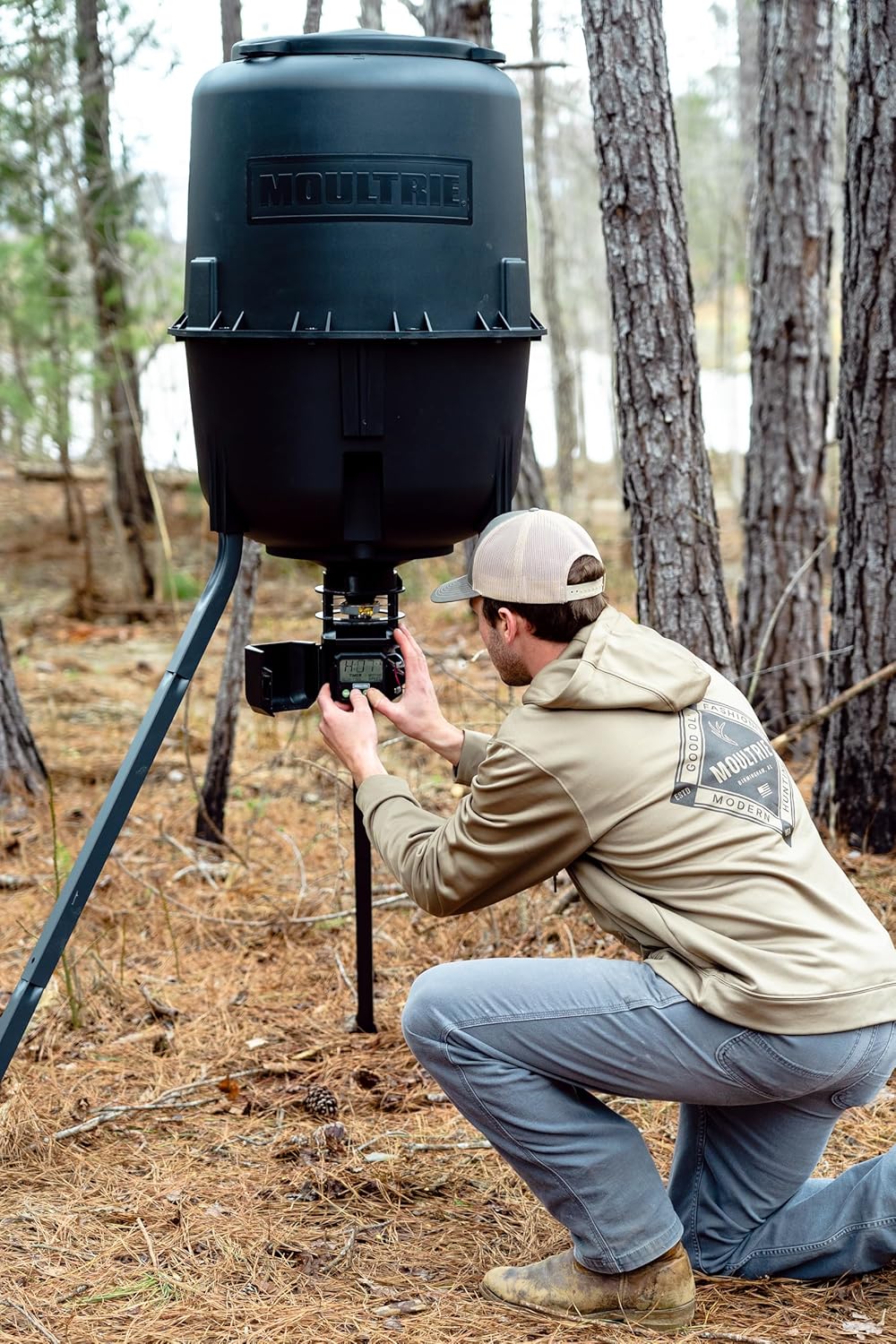
How High Should a Deer Feeder Be Off the Ground?
How High Should a Deer Feeder Be Off the Ground? | BestDeerFeeders.com
🦌 Deer Feeder Setup Guide
The exact height range used by experienced hunters across the U.S. — and the factors that make it slightly different for every property
📅 June 2026⏱ 8 min read✍️ BestDeerFeeders.com
📋 In This Article
- The Quick Answer
- Why Feeder Height Actually Matters
- Ideal Height by Feeder Type
- Regional Deer Size — How It Changes Things
- Pest Animals & How Height Helps
- Uneven Terrain & Slope Adjustments
- Step-by-Step Setup Guide
- 3 Height Mistakes That Cost You Deer
- Frequently Asked Questions
You have picked your location, filled the hopper, and set the timer. But there is one detail that separates a well-run feeder from a money pit that feeds every raccoon, squirrel, and feral hog in the county: how high the feeder sits off the ground. Get it wrong in either direction and you either shut deer out or throw feed money straight at every pest that wanders through.
This guide gives you the exact height range used by experienced hunters across the United States, explains why it varies by feeder type, deer size, and terrain, and tells you precisely how to adjust for your specific property. For gear that pairs with these height recommendations, see our full review of the best deer feeders on the market right now.
The Quick Answer
✅ Recommended Height
Set the bottom of your deer feeder — or the discharge point for spin feeders — between 6 and 7 feet off the ground. For gravity-fed protein feeders with tubes, set tube openings at 40 to 42 inches from the ground — comfortable head height for most adult whitetails.
That 6–7 foot range for the feeder body balances three competing demands: deer can comfortably eat the feed that falls or spills below, smaller nuisance animals have a harder time reaching the hopper or dispersal mechanism, and you can still service the feeder without needing a ladder every visit. The 40–42 inch tube height for gravity feeders matches the natural head-down feeding posture of an adult whitetail without forcing fawns or smaller does to stretch uncomfortably.
Why Feeder Height Actually Matters

Height affects four things at once, and every one of them has a real-dollar impact on your feeding program:
1. Deer accessibility. The shoulder height of white-tailed deer ranges from 21 to 47 inches — roughly the height of a six-year-old child — with males taller than females. A mature buck in the Northeast or Midwest typically stands 36–42 inches at the shoulder. A yearling or Southern deer may be closer to 28–32 inches. Your feeder needs to serve both without forcing either to strain.
2. Pest exclusion. Squirrels, raccoons, and other smaller animals can deplete feed quickly and contaminate it. Height is your first line of defense — not a perfect one, but an important one.
3. Feed waste. A feeder mounted too high for the local deer population causes animals to knock the discharge tube with their antlers or muzzle, spilling feed and burning through your budget faster than necessary.
4. Deer behavior and confidence. Deer seem less skittish around feeders mounted higher off the ground than models mounted at their eye level — especially tripod-based feeders that make loud noises when the feeder activates. Mounting them higher seems to disturb deer less when they go off.
Ideal Height by Feeder Type
No single number fits every feeder design. Here is how height recommendations break down by the four most common feeder types used by hunters in the U.S.:
6–7 ft off ground
⚙️ Spin / Broadcast Feeder
The hopper sits 6–7 ft up; the motor and spinner plate hang below. Feed broadcasts out in a 10–15 ft radius on the ground — deer eat naturally at ground level with no height constraint on their access.
40–42 in tube height
🪣 Gravity / Protein Feeder
The feed tubes or ports should open at 40–42 inches — matching the natural feeding posture of an adult whitetail. Barrel sits higher; the exit point is what matters most for deer comfort.
5–6 ft off ground
🌳 Hanging Feeder
More adjustable than tripods. Hang so feed dispersal point sits 5–6 ft up. Easier to lower or raise based on observed deer behavior — re-check after first week of use.
Fixed — check model
📐 Tripod Feeder
Tripod-based feeders are usually built with a fixed, non-adjustable height, so you don’t have many options to change height on them. Choose a model with leg extensions if your terrain varies, or account for slope during placement.
| Height Setting | Assessment | Reason |
|---|---|---|
| Under 4 ft (feeder body) | Avoid | Hogs, raccoons, and dogs access freely. Deer are spooked by feeder noise at eye level. |
| 4–5 ft | Marginal | Works for ground-broadcast spin feeders in hog-free areas. Too low for gravity feeders. |
| 6–7 ft (feeder body / hopper) | ✓ Ideal | Best balance of deer access, pest deterrence, and easy servicing. |
| 40–42 in (gravity tube port) | ✓ Ideal | Matches natural head-down feeding posture of adult whitetails. |
| 7–8 ft (hog country only) | Situational | Hogs often struggle to reach 7–8 ft while deer can still access feed. Only raise this high if hog pressure is severe. |
Regional Deer Size — How It Changes Things
One size does not fit all 50 states. Whitetail body size follows Bergmann’s Rule — deer in colder, northern states are consistently larger than their southern counterparts. Bucks in northern states with abundant food sources tend to be larger than their southern counterparts, with a mature buck typically standing 32 to 36 inches tall at the shoulder. That regional difference is why a gravity feeder tube set at 42 inches works perfectly in Wisconsin but may be slightly high for a Florida hunter managing smaller swamp deer.
| Region | Avg. Buck Shoulder Height | Suggested Tube Height |
|---|---|---|
| Deep South (FL, LA, MS) | 28–33 in | 36–38 in |
| Mid-South (TX, AR, AL, GA) | 30–35 in | 38–40 in |
| Midwest (MO, IL, IN, OH) | 34–38 in | 40–42 in |
| Great Plains (KS, NE, IA) | 36–40 in | 42–44 in |
| Northeast (PA, NY, WI, MI) | 36–42 in | 42–44 in |
Pro Tip Set a trail camera aimed at the feeder during the first two weeks of operation. Review footage for any deer that are visibly straining upward or ducking awkwardly. Either sign means the tube height needs a half-inch adjustment. This two-week observation period is the most reliable calibration method available.
Pest Animals & How Height Helps (and Doesn’t)

Height alone will not solve your pest problem, but it changes the equation significantly depending on the animal:
Squirrels: No matter what steps you take or how high the feeder is mounted, a determined squirrel will find a way to get to it — just like they find a way to get to a bird feeder. Focus instead on squirrel baffles — conical metal guards on the feeder legs — rather than trying to out-height them.
Raccoons: Raccoons are heavier than squirrels and less acrobatic, so moving a feeder higher off the ground offers a decent form of deterrence depending on feeder type. A hopper sitting at 6.5–7 feet meaningfully reduces raccoon access to the feed storage itself, even if they can still eat spilled grain below.
Feral hogs: Hogs are your biggest height challenge in the South and Southeast. To make a feeder hog-proof, hang it from a tree limb 6 feet or more off the ground, use a tall tripod stand, or suspend it by cable between two trees — the goal is getting it up and off the ground where hogs can’t reach it, push it over, or bump it around. Some hunters in heavy hog country raise their entire setup to 7–8 feet and accept some reduction in deer comfort in exchange for feed preservation.
⚠️ Common Mistake
Raising a feeder above 7 feet to deter hogs often backfires — does with fawns and younger bucks stop visiting because the feed tube is too high to reach comfortably. If hogs are your main problem, hog-proof fencing around the feeder perimeter is more effective than extreme height increases.
Uneven Terrain & Slope Adjustments
Feeder height is measured from where the deer are actually standing — not from an arbitrary reference point. On sloped terrain, this distinction matters more than most hunters realize. If your feeder sits on a slight rise and deer typically approach from the downhill side, the effective height from the deer’s perspective is lower than your measurement suggests. Measure height from the lowest approach angle deer will use, not from directly below the feeder.
On steep terrain, use adjustable tripod legs or shim one leg of a fixed-height tripod with packed gravel or a platform block. A feeder that rocks or tilts more than two degrees will throw spin feeders off-pattern and can cause gravity feeder tubes to jam on one side.
Step-by-Step Setup: Getting Height Right the First Time
Step 1 — Measure before you dig or hang. Use a tape measure and mark your target height on the tree or post before committing. For tripod feeders, assemble on flat ground first to confirm the manufacturer’s discharge height matches your target range.
Step 2 — Account for feed type. Spin feeders throwing corn broadcast it at ground level regardless of feeder height — the 6–7 foot rule applies to the hopper body for pest deterrence. Gravity feeders with tubes need the tube exit point set to 40–42 inches regardless of where the barrel sits.
Step 3 — Set your trail camera before opening the feeder. Aim the camera to capture deer at the feeder from a 45-degree angle so you can see both the deer’s head height and the feeder tube height in the same frame. This makes adjustment fast and evidence-based.
Step 4 — Check at two weeks and again at six weeks. Deer behavior changes as they grow accustomed to a new feeder. Velvet bucks in summer are especially cautious — a feeder that spooked them at week one may be visited freely by week four once they pattern it as safe.
Pairing a well-positioned feeder with the right equipment makes all of this significantly easier. Our editors have tested and ranked the top options at every price point in our guide to the best deer feeders — including models with adjustable leg heights for uneven terrain.
3 Height Mistakes That Cost You Deer
Mistake 1 — Setting the Feeder Too Low
Setting the feeder too low attracts non-target animals and increases feed waste. Beyond feed waste, a feeder at hog or raccoon height creates a feeding competition that keeps wary mature bucks away entirely — they will not push into a feeding situation that feels chaotic or unpredictable.
Mistake 2 — Raising It Too High to Compensate
Setting the feeder too high makes it difficult for deer to access the feed, negating the purpose of the feeder. Fawns and younger deer — which will grow into next year’s target bucks — stop visiting. You lose the herd conditioning that makes a feeder valuable over multiple seasons.
Mistake 3 — Ignoring Slope
Uneven terrain can make a properly set feeder ineffective. Ensure the feeder remains at the optimal height relative to the ground where the deer are actually standing. A feeder perfectly set at 40 inches on the high side of a slope may effectively be at 34 inches on the approach side — too low for comfortable adult deer access and easy pickings for every hog in the area.
Need a Feeder Built for the Right Height?
Not all feeders have adjustable heights. Our hands-on review ranks the best models — including adjustable-leg tripods, hanging feeders, and gravity protein feeders — at every budget level.🦌 See Our Top-Rated Deer Feeders →
Frequently Asked Questions
How high should a deer feeder be off the ground for a spin feeder?
Set the bottom of the hopper body 6 to 7 feet off the ground. The motor and spinner plate hang below that, and feed broadcasts at ground level where deer eat naturally. The elevated hopper deters raccoons and prevents hogs from bumping and tipping the unit.
How high should a gravity or protein feeder tube be for deer?
Set the tube exit port at 40 to 42 inches from the ground for most U.S. regions. This matches the head-down feeding posture of an adult whitetail and allows comfortable access for the majority of your herd including yearlings. In the deep South where deer are smaller, 36 to 38 inches works better.
Can I raise my deer feeder higher to keep hogs out?
Raising to 7 to 8 feet reduces hog access to the hopper itself, but hogs can still eat broadcast or fallen feed below. The better solution in heavy hog country is 34-inch hog-proof wire panels surrounding the feeder perimeter, allowing deer to step over while blocking hogs — combined with maintaining a feeder height that keeps all deer comfortable.
Will a feeder that’s too high scare deer away?
Not directly — but deer that cannot comfortably access the feed will visit less frequently and for shorter periods. Fawns and small does may stop visiting entirely if tube height is set for large northern bucks. This matters because consistent herd conditioning across age classes is what builds reliable feeder traffic over a full season.
Should I adjust deer feeder height by season?
Generally, seasonal adjustments to deer feeder height aren’t necessary, but monitoring deer behavior and adapting to extreme weather conditions is recommended. The one exception is if you switch from a corn-based load in fall to a protein pellet gravity feeder in spring — those two feeder types may have different tube heights, so check and adjust when you swap equipment.
Bottom Line
For most hunters across the United States, 6 to 7 feet of clearance for the feeder hopper body and 40 to 42 inches for gravity tube ports covers the majority of setups and deer populations. Adjust down slightly for Southern properties with smaller deer, up slightly if hog pressure is severe, and always verify with a trail camera in the first two weeks of operation.
Getting height right is half the equation. The other half is picking equipment designed to hold that height reliably through wind, weather, and wildlife pressure. Our full guide to the best deer feeders shows you exactly which models are built for it.
