Best Protein Feed for Deer 2026: 7 Feeds Ranked & Compared
Disclosure: This post contains affiliate links. As an Amazon Associate, we earn from qualifying purchases at no extra cost to you.
On this page
- The short answer
- The 7 best protein feeds at a glance
- Which protein feed in 30 seconds
- How we picked these feeds
- The 7 best protein feeds for deer of 2026 — full reviews
- Watch protein feeding in action
- What a protein program really costs per season
- How to choose the right protein feed
- Protein feeding resources & guides
- Frequently asked questions
- Final verdict
The short answer
The best protein feed for deer for most hunters in 2026 is Purina AntlerMax Water Shield Deer 20 — a true 20% protein pellet with moisture-resistant technology, priced at $23.99 for a 50-lb bag at Tractor Supply (checked October 2026). It is the reference pellet the rest of the category is measured against: 20% crude protein for spring and summer antler growth, flavored for palatability, and widely available across the US.
Running a tighter budget? Record Rack Sportsman 20 delivers the same 20% protein tier for $21.99 per 50-lb bag — the cheapest verified 20% pellet we found. The table below compares all seven feeds side by side: pellets, a blend, a block, and a regional option, so you can match the feed to your program, budget, and feeder setup. Every price link goes to the current Amazon listing, where you can check today’s price.
Best protein feeds for deer at a glance — 2026
| Feed | Best for | Protein / bag | Type | Owner signal | Price |
|---|---|---|---|---|---|
| Purina AntlerMax Water Shield Deer 20 | Best overall | 20% / 50 lb | Pellets | Reference pellet; eaten first in a brand taste test | Check Price → |
| Record Rack Sportsman 20 | Best value | 20% / 50 lb | Pellets | Cheapest verified 20% pellet; Texas staple brand | Check Price → |
| Purina AntlerMax Deer 20 Climate Guard | Best moisture protection | 20% / 50 lb | Pellets | Newer line above Water Shield; limited owner history | Check Price → |
| Antler King Booner Blend | Most palatable blend | Blend / 40 lb | Protein blend | 4.47/5 across 64 TSC reviews; “smells like the deer will like it” | Check Price → |
| Big Tine Protein Plus | Best trial bag | Blend / 25 lb | Protein blend | Maker’s recommended pick for spin or gravity feeders | Check Price → |
| Antler King Grainiac Block | Best for remote spots | 16% / 20 lb | Feed block | No feeder needed; conditioning-tier protein | Check Price → |
| F-R-M Mid-Way 20% | Best regional pick | 20% / 50 lb | Pellets | Old-line Southeast mill brand | Check Price → |
Prices change frequently — the links above go to the live Amazon listings so you always see today’s price. Bag prices below are snapshots checked October 2026, not live prices.
Which protein feed in 30 seconds
Are you running a real program, or testing the waters?
Testing with one bag → start small: Big Tine Protein Plus (25-lb trial bag).
Committed to a season or more → buy 50-lb staple bags; everything below assumes that.
↓
What’s your budget per pound?
Tightest budget → Record Rack Sportsman 20 at $0.44/lb — the cheapest verified 20% pellet.
Reference standard → Purina AntlerMax Water Shield 20 at $0.48/lb.
Maximum moisture defense (humid sites, trough feeding) → AntlerMax Climate Guard 20.
↓
Do you have a feeder — or a remote spot with none?
Gravity tube or spin feeder → straight pellets (Water Shield or Record Rack).
No feeder, hard-to-reach corner → Antler King Grainiac Block (16%, no equipment).
Southeast, buying from a local feed store → F-R-M Mid-Way 20%.
↓
Pellets or a palatable blend?
Deer ignoring pellets, or you want maximum acceptance → Antler King Booner Blend (blend format, strong palatability reviews).
Committed program with converted deer → straight 20% pellets deliver more protein per dollar.
How we picked these feeds
We did not pretend to run a feeding trial. Instead we aggregated what actually exists: verified October 2026 prices from Tractor Supply and Purina direct, guaranteed-analysis tags, retailer review patterns, hunting-forum threads where owners report back after seasons of feeding, wildlife-biologist guidance, and head-to-head comparisons with the other pages ranking for “best protein feed for deer” — then kept only products with real buying demand behind them.
Three things the competing roundups get wrong, and we fixed:
- They mix feed with everything else. One leading listicle ranks a feeder head, a mineral supplement (Whitetail Institute 30-06), and an attractant (Acorn Rage) inside its “protein feed” top 5. A mineral is not a feed, an attractant is not nutrition, and a feeder head is equipment. This page is feed only — and we name the category errors explicitly below.
- They publish scores with no evidence. Another scores a feed 9.9 “Exceptional” with no verifiable specs, price, or reviews, and claims “thoroughly tested” across three near-duplicate pages. Every price, protein percentage, and owner quote on this page traces to a source.
- They skip the cost math. A protein program costs thousands per season — nobody else shows you the per-pound, per-day, and per-season numbers before you buy the first bag. Ours are below, built from verified prices.
What we did not do: invent taste tests, quote fake reviewers, or promise one-season antlers. Where owner data is thin — the newer Climate Guard line, the regional F-R-M pellet — we say so. Where a product’s protein percentage was not verified, we mark it as a gap instead of guessing.
The 7 best protein feeds for deer of 2026 — full reviews
1. Purina AntlerMax Water Shield Deer 20 — Best Overall
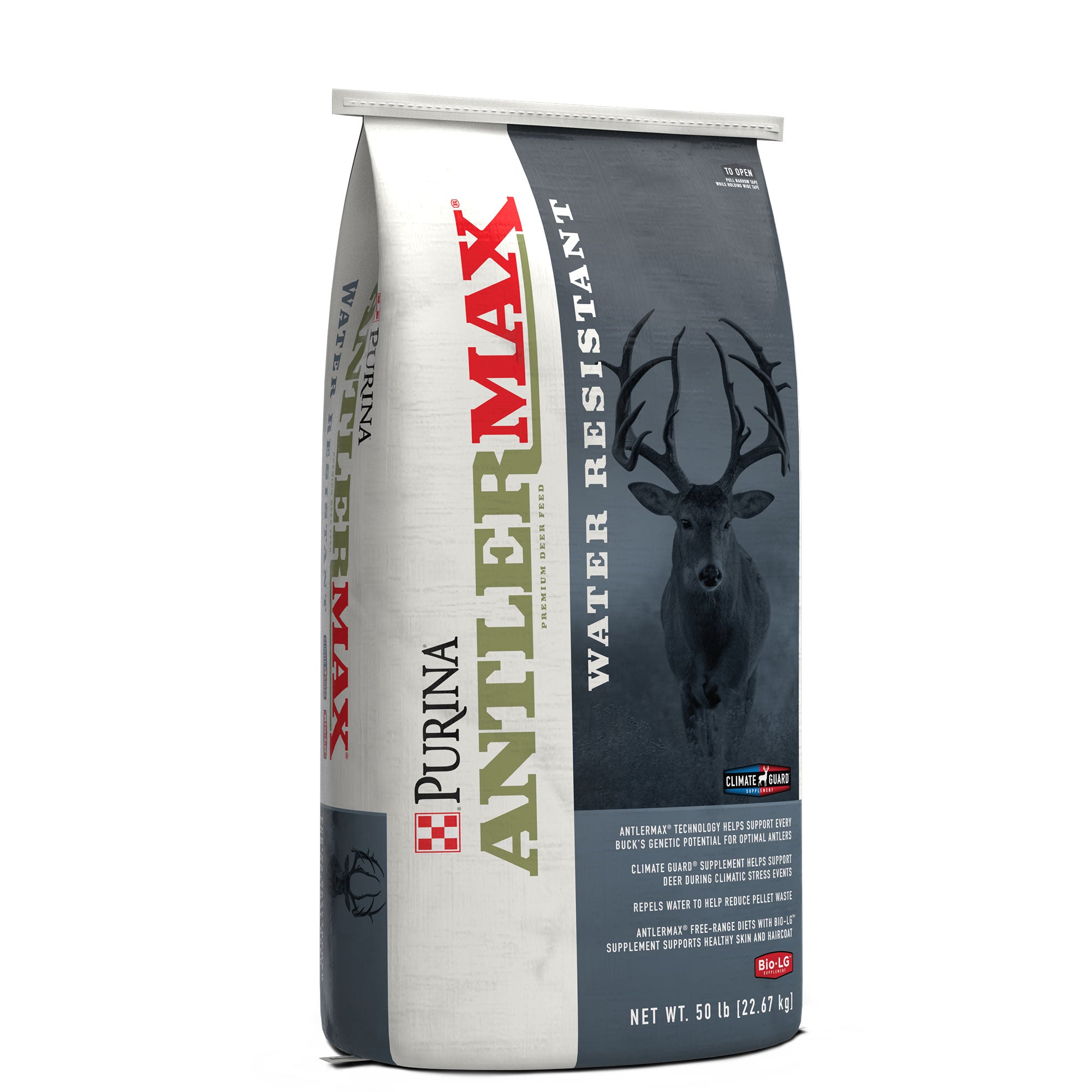
Purina’s AntlerMax line is the brand serious deer managers name first, and Water Shield 20 is its most widely available pellet. The Water Shield treatment protects the pellet from moisture — critical if you feed in humid country, run troughs, or cannot refill feeders weekly — while the 20% protein level matches what biologists recommend for spring and summer nutrition.
The price is the other half of the story: $23.99 for 50 lb works out to about $0.48 per pound, making it one of the cheapest feeds on a per-pound basis despite the premium brand. Availability is strong too — Tractor Supply stocks it in many locations, so you can often pick it up locally rather than paying freight on shipped feed.
✅ Pros
❌ Cons
| Protein | 20% |
| Bag | 50 lb |
| Type | Pellets |
| Price per bag | $23.99 (TSC, checked Oct 2026) |
| Price per lb | $0.48 |
Also available at: Purina AntlerMax Water Shield on Amazon.
2. Record Rack Sportsman 20 — Best Value 20% Pellet
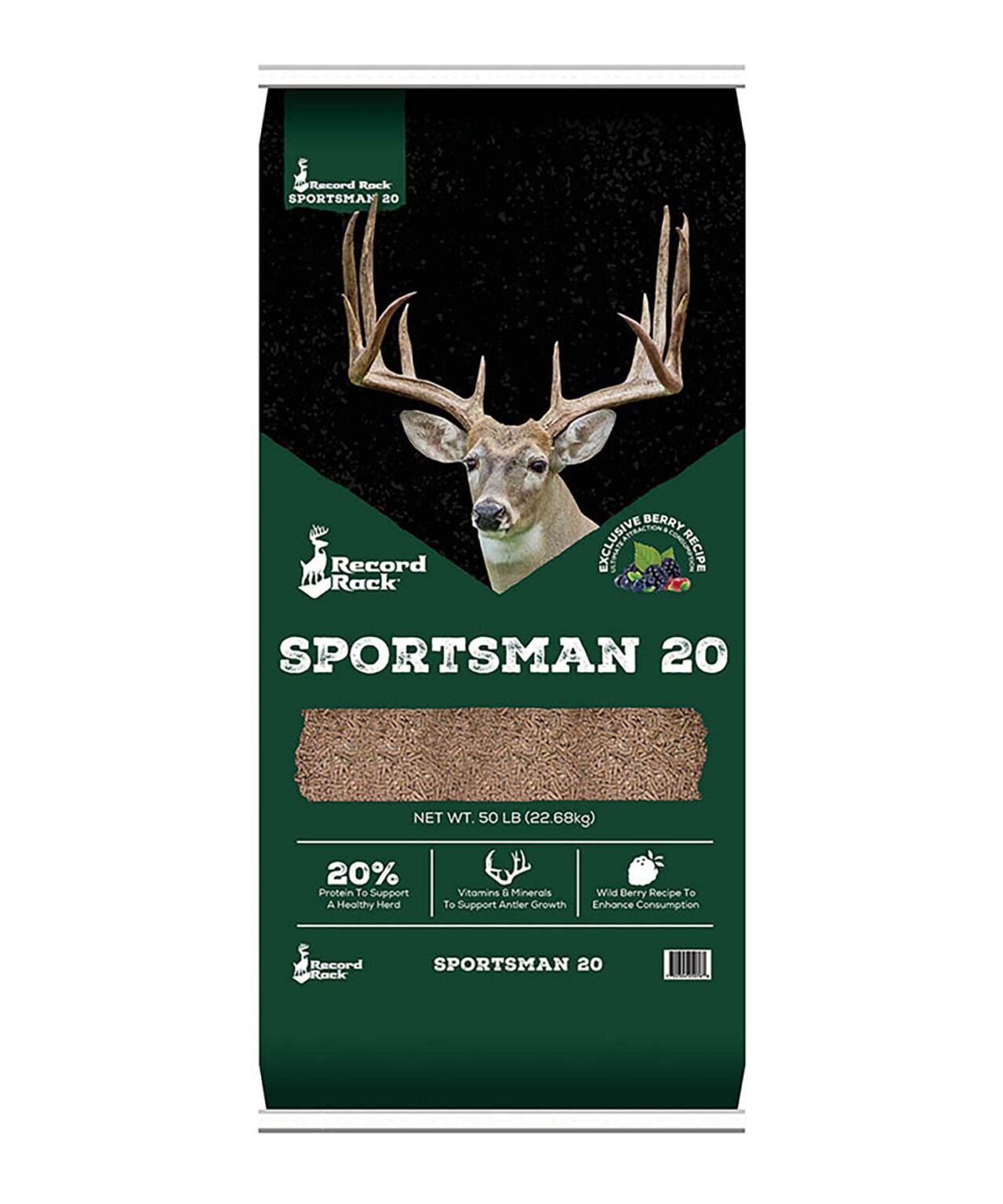
Record Rack is a Texas-grown brand built specifically for whitetail country, and Sportsman 20 is its working-horse pellet: 20% protein at $21.99 per 50-lb bag — the lowest verified per-pound price in this roundup at $0.44/lb. If you are feeding at volume (and most serious programs are), that $2-per-bag saving over the premium pellet compounds fast across a season.
The brand carries genuine credibility in the feeder community: Texas feed-store veterans recommend Record Rack by name, and hunters on public land report deer eating it “just as much as corn,” which is high praise for a pellet. One caution from the community worth noting: Record Rack’s lower-protein “Golden Deer Nugget” (13%) is an attractant, not a protein feed — buy the 20%, not the nugget.
✅ Pros
❌ Cons
| Protein | 20% |
| Bag | 50 lb |
| Type | Pellets |
| Price per bag | $21.99 (checked Oct 2026) |
| Price per lb | $0.44 |
3. Purina AntlerMax Deer 20 Climate Guard — Best Moisture Protection
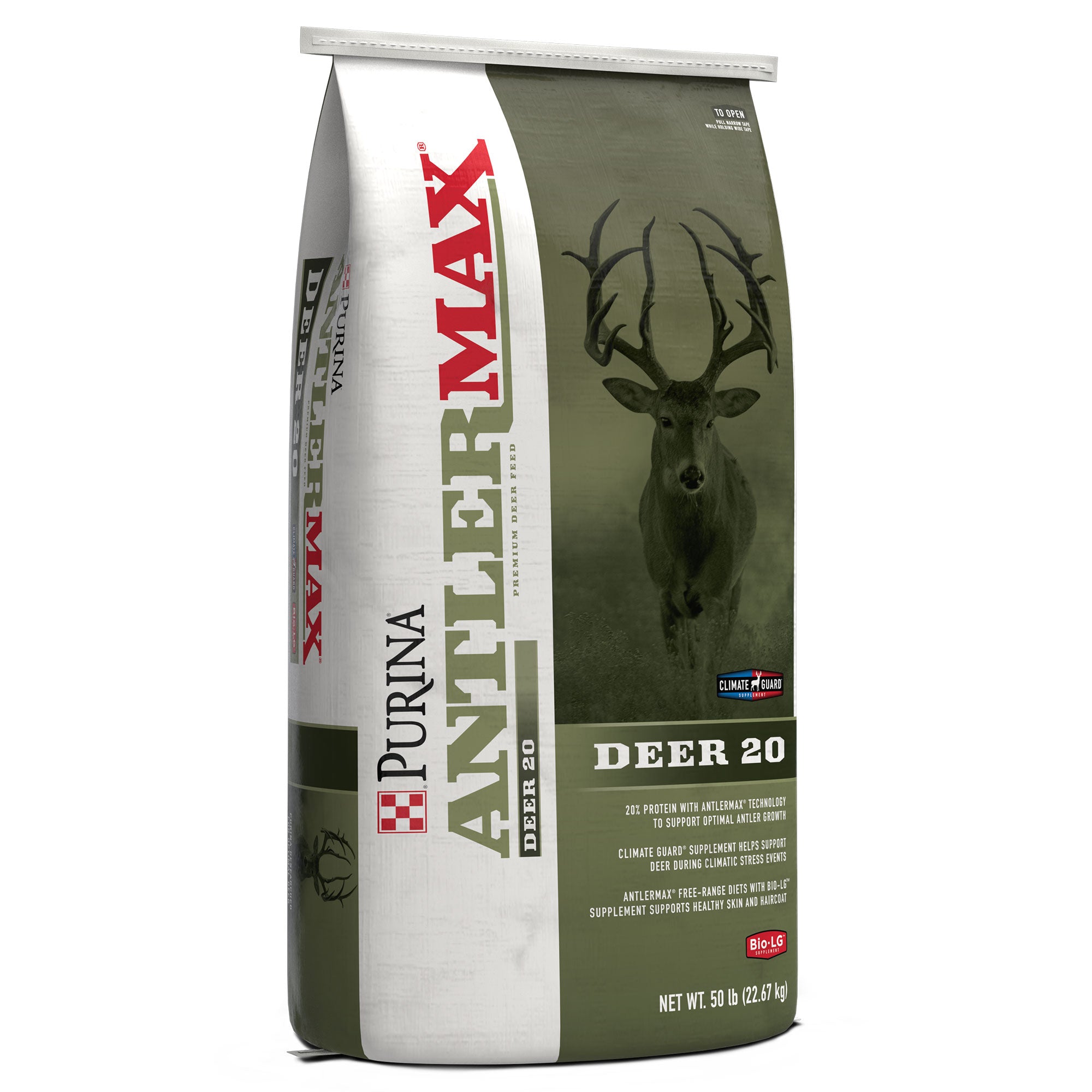
Climate Guard is the newer AntlerMax line positioned above Water Shield, with enhanced moisture and weather resistance for feeders that sit out in the elements. It keeps the same 20% protein foundation in a 50-lb pellet.
The honest caveat: this is the least owner-tested pick in this roundup. We found fewer retailer reviews and forum threads for Climate Guard than for Water Shield, so you are buying Purina’s formulation credibility more than a community track record. For humid sites or trough feeding where pellet integrity matters most, that trade can still make sense — but go in knowing the evidence base is thinner.
✅ Pros
❌ Cons
| Protein | 20% |
| Bag | 50 lb |
| Type | Pellets |
| Price per bag | Not verified at a major retailer (checked Oct 2026) |
| Price per lb | Not verified |
4. Antler King Booner Blend — Most Palatable Blend
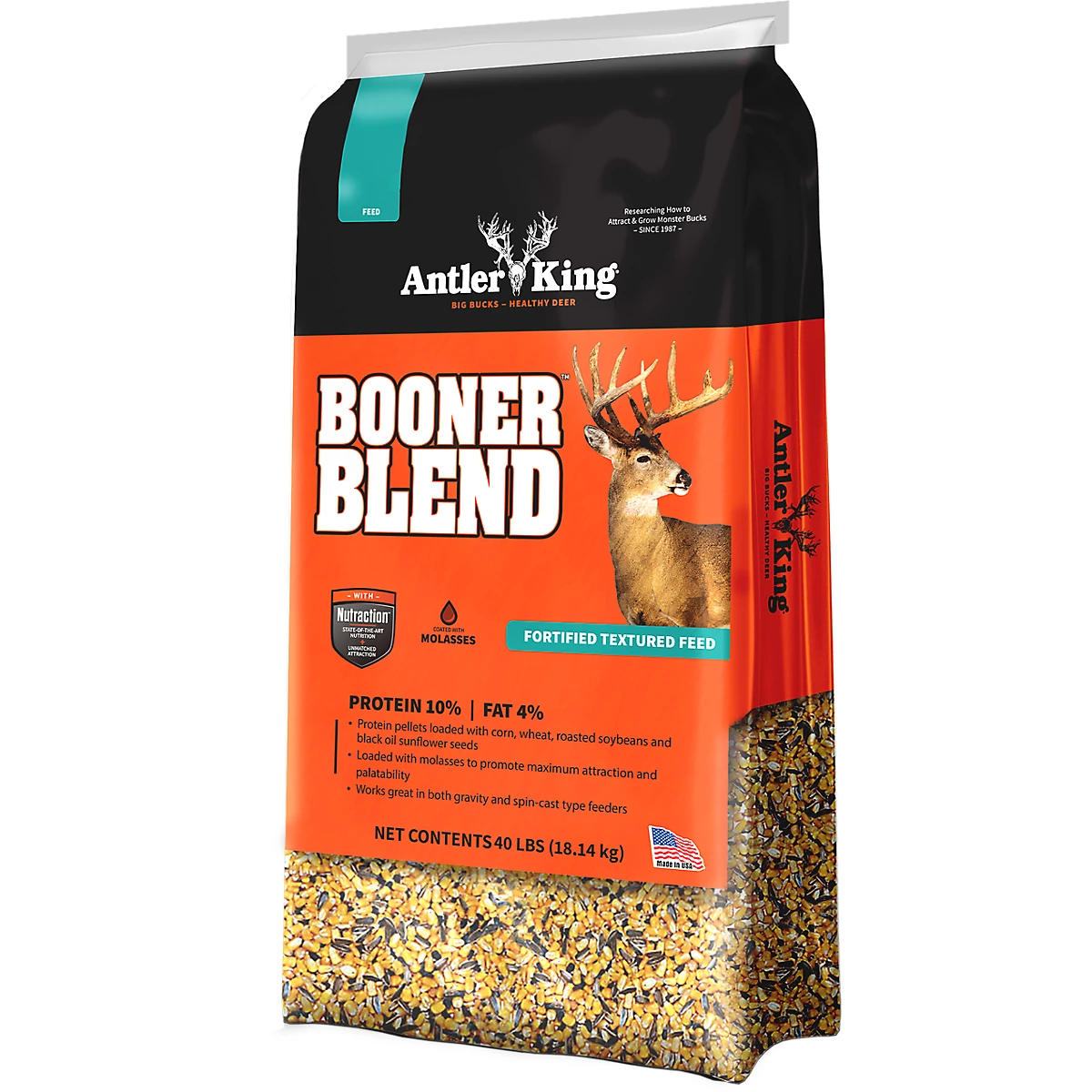
Booner Blend is a protein-fortified blend rather than a straight pellet, and it wins on acceptance: deer that walk past pellets will eat it. With 64 Tractor Supply reviews averaging 4.47 out of 5, it has the strongest owner-review signal of any product in this roundup.
The trade-off is format and math: a 40-lb blend bag at a higher per-bag price means more dollars per pound of protein than straight 20% pellets. And the reviews are not all glowing — one-star reports mention palatability misses (“Good but works about the same as the 12% textured sweet feed”) and a recurring bug complaint. Use Booner Blend where acceptance is the bottleneck: new sites, picky herds, or converting deer onto feed.
✅ Pros
❌ Cons
| Protein | Blend (protein % not verified) |
| Bag | 40 lb |
| Type | Protein blend |
| Price per bag | Not verified at a major retailer (checked Oct 2026) |
| Price per lb | Not verified |
5. Big Tine Protein Plus — Best Trial Bag
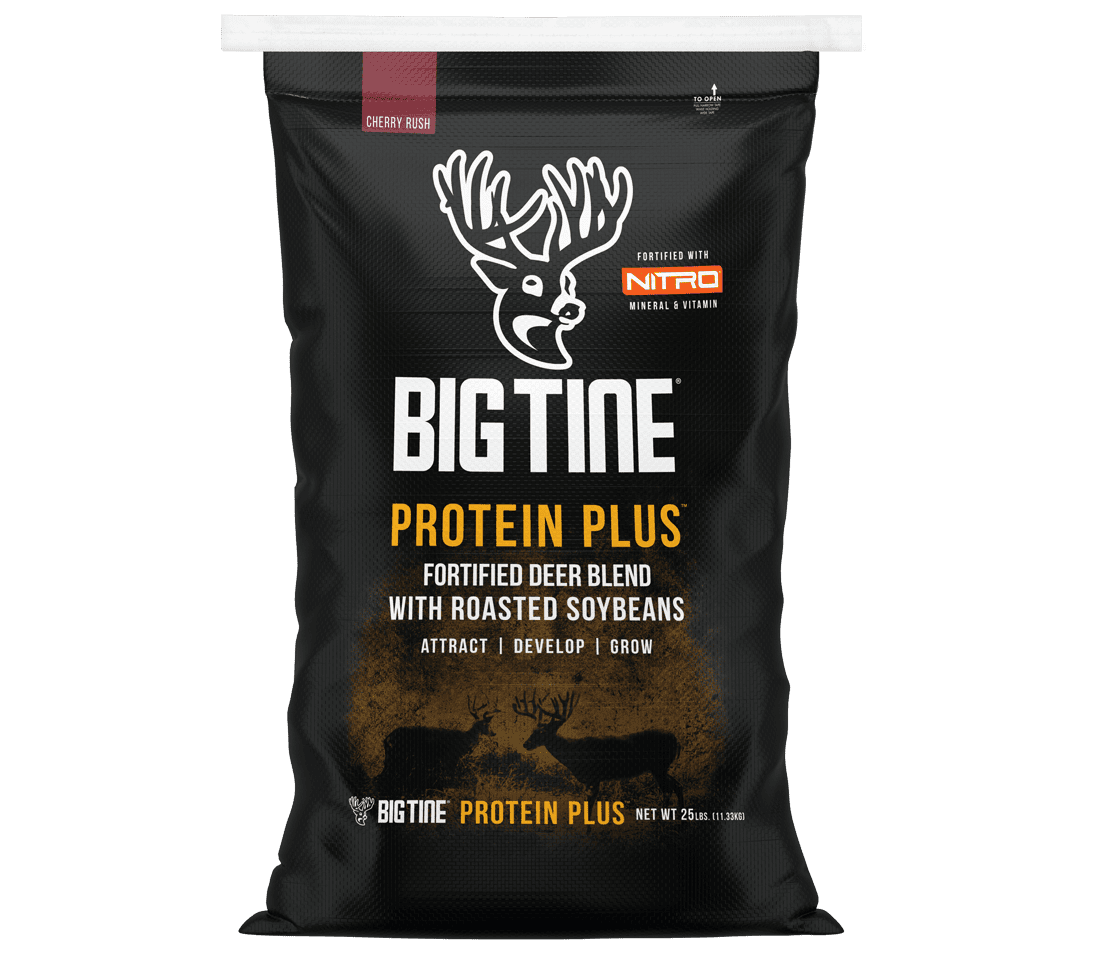
Big Tine’s Protein Plus earns its slot as the low-commitment entry point: a 25-lb bag you can run through a spin or gravity feeder without buying into a full program. When a hunter asked whether a Big Tine product could work in a gravity feeder with free-choice feeding, the official-style answer pointed to Protein Plus as the best Big Tine option for spin or gravity feeders — the 25-lb bag was linked at $19.99.
The honest math: $0.80 per pound makes it nearly twice the per-pound price of Record Rack. Buy it to test acceptance and feeder mechanics; graduate to 50-lb staple bags if the deer commit. Also watch the shelf: Big Tine’s NITRO blend, often shelved nearby, carries a guaranteed analysis of just 8.00% crude protein. It is an attractant, not a protein feed.
✅ Pros
❌ Cons
| Protein | Blend (protein % not verified) |
| Bag | 25 lb |
| Type | Protein blend |
| Price per bag | $19.99 (25-lb bag, TSC, checked Oct 2026) |
| Price per lb | $0.80 |
6. Antler King Grainiac Block — Best for Remote Spots
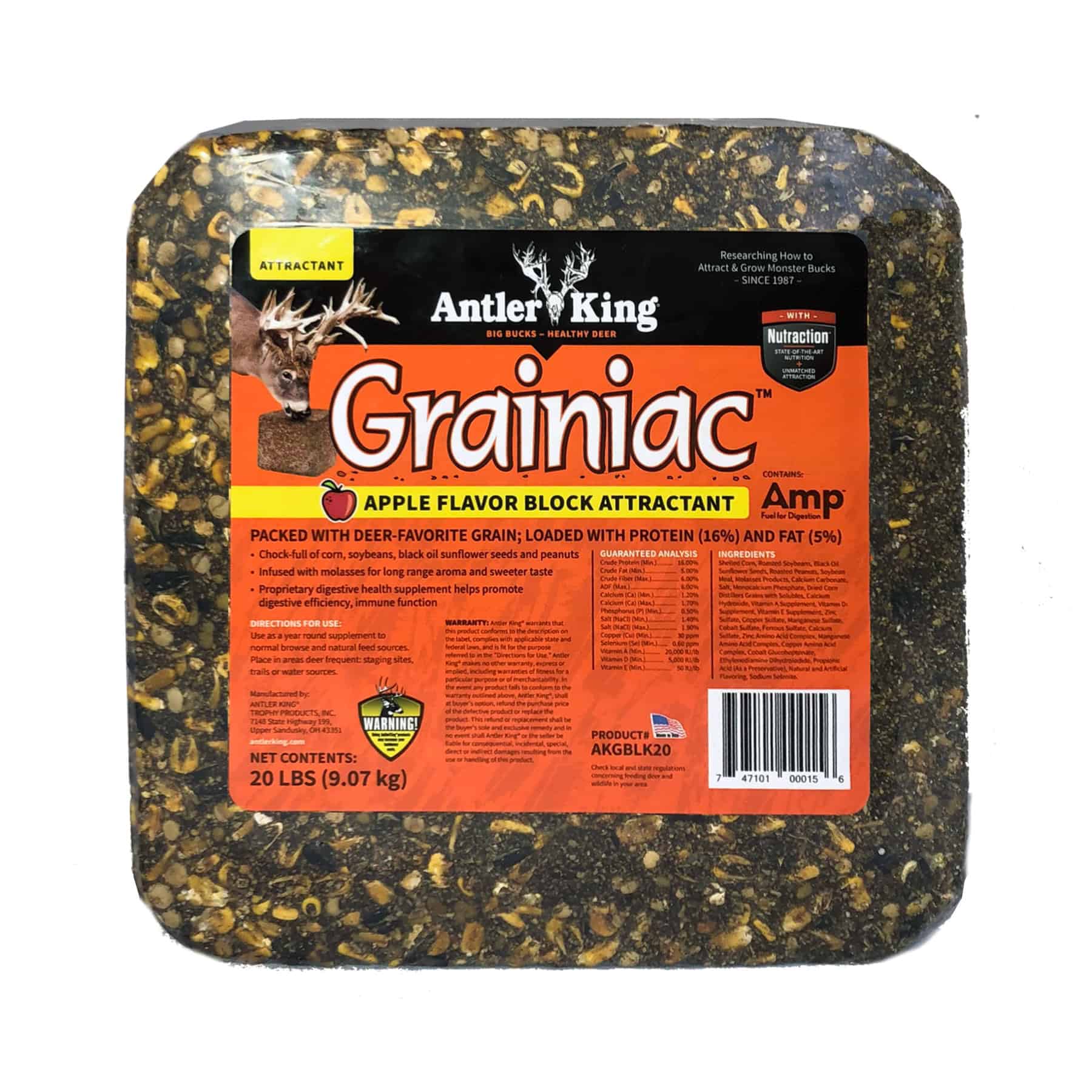
The Grainiac Block solves a different problem: places where you cannot run a feeder. Drop the 20-lb block in a remote corner and deer get 16% protein with zero equipment. It is conditioning-tier nutrition — below the 20% antler-growth tier — but it is infinitely better than nothing, and blocks are inherently weather-resistant.
Think of it as the “somewhere feeder” option: lease corners, public-land-adjacent spots, or properties you visit monthly. The 20-lb size is carryable; the block format means no trough, no tube, no spin plate to maintain. Just don’t expect pellet-tier results — at 16%, it supplements rather than drives antler growth.
✅ Pros
❌ Cons
| Protein | 16% |
| Bag | 20 lb block |
| Type | Feed block |
| Price per bag | Not verified at a major retailer (checked Oct 2026) |
| Price per lb | Not verified |
7. F-R-M Mid-Way 20% — Best Regional Pick (Southeast)
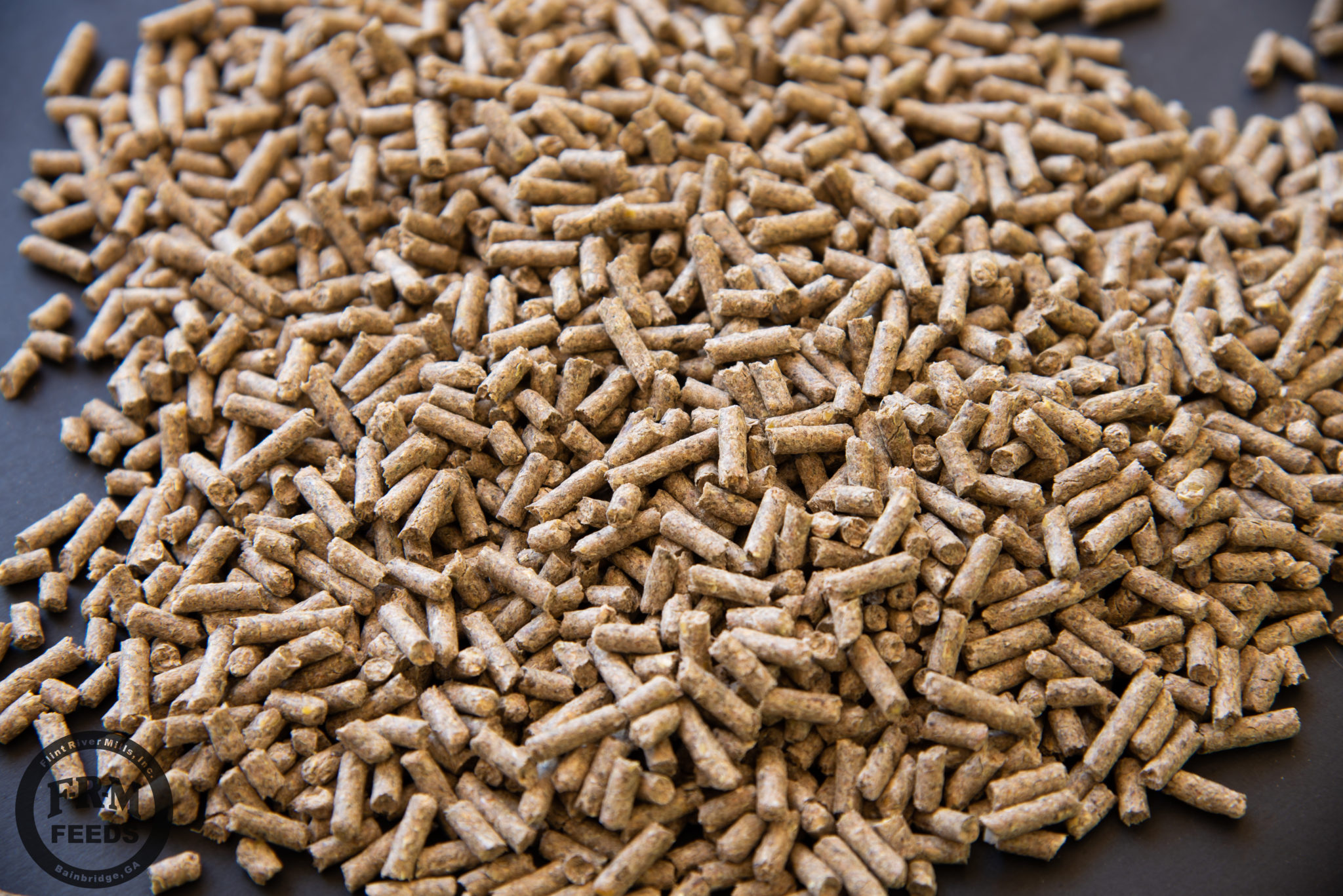
F-R-M (Flint River Mills) is an old-line Georgia feed mill, and Mid-Way 20% is the kind of regional pellet that outperforms national brands on value in its home territory. A true 20% pellet in a 50-lb bag, sold through local feed stores across the Southeast.
The catch is distribution: outside the Southeast, you may never see it. And we found thinner owner evidence for this specific product than for the national brands. If you are in F-R-M country, ask your feed store — the local pellet at local prices is often the smartest buy of all.
✅ Pros
❌ Cons
| Protein | 20% |
| Bag | 50 lb |
| Type | Pellets |
| Price per bag | Not verified at a major retailer (checked Oct 2026) |
| Price per lb | Not verified |
What we deliberately excluded — and why
Several products rank on competing “best protein feed” lists. We left them out on purpose — and this is the part those lists don’t write.
Whitetail Institute 30-06 Mineral/Vitamin Supplement — It is a mineral, not a feed. Ranking a mineral inside a protein-feed list is a category error; it belongs in a mineral guide, not here.
Acorn Rage and similar attractants — Attractants pull deer to a spot; they do not grow antlers. Big Tine NITRO (8.00% crude protein) and Record Rack Golden Deer Nugget (13%) are the same story: fine for what they are, but not protein feeds.
Moultrie feeder heads and other equipment — A feeder head is not a feed. One competing list ranks a feeder head inside its “protein feed” top 5; we mention it here so you don’t wonder why it’s missing.
Corn — Corn is roughly 9% protein and mostly energy. It is bait and calories, not a protein program. Feed it if you like, but don’t confuse it with nutrition.
Watch protein feeding in action
Reading tags only goes so far. These are real videos — a side-by-side feed preference test, the pellet-conversion method, a manager’s supplemental-feeding playbook, and a spring protein program in the antler-growing window:
8 deer feeds tested side-by-side with trail cameras
Eight popular feeds and attractants — including Antler King Booner Blend — poured out in equal rows and monitored daily by trail camera to see which feeds whitetail deer actually prefer. Watch this before paying premium prices: the deer vote with their mouths, and the winner may surprise you.
Getting deer onto protein pellets: the conversion method
Deer don’t recognize pellets as food — but they know corn. This walks through the patient conversion method this guide recommends: start around 75% corn / 25% pellets, place a mineral block nearby as an enticement, and give them a low-stress environment to habituate. The single most important skill in protein feeding.
A deer manager’s supplemental feeding playbook
Starting a supplemental feeding program for the first time? The key message here matches the research: feed is a small part of an overall program — combine good habitat and the right deer numbers with the supplemental kicker, and the result beats pouring feed into a system every time.
Spring protein program during antler-growing season
Filmed in late April 2026 at Realtree Farms: filling protein feeders right as bucks are actively growing antlers and does prepare to drop fawns. Note the timing — this is the March–October window in action — and the 20% gravity pellets going into the feeders.
What a protein program really costs per season
The bag price is the smallest number in protein feeding. Here is the honest math, built from verified October 2026 prices and owner-reported consumption:
| Cost item | What the numbers say | Notes |
|---|---|---|
| Cost per lb, cheapest verified 20% | $0.44/lb | Record Rack Sportsman 20, $21.99/50 lb at Tractor Supply (checked Oct 2026) |
| Cost per lb, reference pellet | $0.48/lb | Purina AntlerMax Water Shield 20, $23.99/50 lb at Tractor Supply (checked Oct 2026) |
| Cost per deer per day | ~$0.72 | 1.5 lb/day at $0.48/lb; scales linearly with herd size |
| Daily cost, 25-deer program | ~$18/day | 25 deer × 1.5 lb/day = 37.5 lb/day; a 50-lb bag lasts ~1.3 days |
| Season cost (March–October, ~240 days) | ~$4,300 | Feed alone — before feeder, delivery, and storage |
| Trial-bag premium | $0.80/lb | 25-lb bags cost ~80% more per lb than 50-lb staple bags; fine for trials, not programs |
| Price context | +59% since 2017 | 20% feed was ~$0.28/lb in 2017 vs ~$0.44/lb now — 2017 is historical context only, not a current price |
| Supplement vs staple | 2.5× the staple price | Purina Extreme Energy at $60.49/50 lb is targeted energy, not a base ration |
The takeaway: budget protein as a multi-year program, not a one-bag experiment. A Texas rancher running three protein feeders year-round puts it plainly: it has helped, but “it has taken a few years” — and protein has gotten expensive. Biologists warn “don’t stop, ever” once deer depend on the feed. And scale matters: as one experienced feeder cautions, throwing a couple hundred pounds a month at 10–20 deer won’t move antler size — match the program to the herd, or don’t start one.
How to choose the right protein feed
How protein feed actually works (no hype)
Antlers and bodies run on digestible protein, roughly a 2:1 calcium-to-phosphorus ratio, and 10–20% fiber. The critical word is digestible: the tag’s protein percentage can lie. As one expert guide puts it, 16–20% is the sweet spot “if the pellet is actually digestible” — some 22% pellets are full of cheap filler that deer never turn into antlers. Judge protein quality (soybean meal, alfalfa, by-pass amino acids) over the tag number, and be wary of cottonseed meal, milo, and corn by-products as primary protein sources.
Seasonal biology sets the window. Winter protein is largely wasted — deer are in survival mode and the antler machinery is idle. Fall conditioning with a 16% ration builds the body reserves that set up spring antler growth; then 20% protein from March through October feeds antler growth, fawning, and milk production directly. And the honest ceiling: age is the biggest factor in antler size, bigger than any feed. A 30-year protein feeder estimates an effective multi-year program can add roughly 10–15% to antler growth — meaningful, but it plays out over seasons, not one summer.
Getting deer onto pellets
Deer don’t recognize protein pellets as food — but they know corn. The conversion method comes straight from Texas A&M’s Caesar Kleberg Wildlife Research Institute: start at roughly 75% corn / 25% pellets, then shift gradually toward mostly pellets. Deer dislike abrupt feed changes, so patience is the method — expect tentative first bites, then growing acceptance over days and weeks. Placing a mineral block near the pellets can entice investigation, and a low-stress, protected feeding site helps deer habituate faster. If your deer are truly pellet-shy, a palatable blend like Booner Blend can be the bridge.
How to feed it right: methods, placement, moisture
Delivery method matters. Gravity tube feeders handle straight pellets best — free-choice feeding with no moving parts. Spin (timed) feeders work too, but mix in at least ~25% corn to keep pellets flowing through the spinner. A raised trough with a roof is the biologist-recommended setup. What you must never do: pour pellets on bare ground. Moisture causes mold, mold causes digestive problems, and over-protein in a bad delivery setup can cause fatal digestive issues — the delivery system is part of the nutrition.
Placement: plan on roughly one free-choice feeder per 25 deer (or per 300–400 acres), sited near cover with escape routes. Where hogs or cattle roam, build an exclosure — the research recommendation is an 80×80-foot pen of 30-inch stockpanel — or your protein program becomes a hog-fattening program. Moisture discipline: sealed storage, dry handling, and check every bag for freshness at purchase — one buyer found bugs from a bad store batch. Moisture-resistant pellets help; they don’t replace a roof and a sealed bin. Match the feeder to the feed with our protein feeder guide, and check capacity planning at protein feeder capacity.
Protein feed vs corn vs minerals vs blocks
These do different jobs — confusing them is the most expensive beginner mistake. Corn is cheap winter energy (carbohydrates, ~7–10% protein): excellent for cold-month calories, useless for antler growth. Protein feed (16–20%) supplies the amino acids for antlers, milk, and body recovery in the warm months. Minerals are a supplement, not a feed — they complement a program but can’t carry one. Blocks are the low-equipment option: real 16% nutrition for remote spots with no feeder. Textured/sweet feeds are highly palatable but usually lower in protein — always check the tag before assuming.
The seasonal rotation most serious programs use: protein March through October, corn-heavy rations in the cold months. That pairing is also the budget strategy — see what to feed deer instead of corn and what to feed deer in winter. And if your goal is antlers specifically, read what to put in a deer feeder to attract big bucks — then remember that how long feeder corn lasts changes completely once protein enters the mix.
7 mistakes to avoid
- Buying an 8%-protein “protein” attractant. Big Tine NITRO’s guaranteed analysis reads 8.00% crude protein — it’s a corn/milo/sunflower attractant with cherry flavoring. The bag says protein; the tag says candy.
- Trusting 22% tags. Filler beats tag protein. Judge digestibility and protein sources, not the biggest number on the bag.
- Expecting one-season antlers. Age matters most; programs pay over years. A couple hundred pounds a month for 10–20 deer won’t move the needle.
- Pouring feed on the ground. Moisture → mold → digestive problems. Raised, roofed, or tubed — never bare dirt.
- Skipping the legality check. Several states ban deer feeding outright over disease (CWD) concerns, and rules change by state and sometimes county. Check your state wildlife agency before buying a single bag — start with our Texas 2026 rules guide.
- Quitting after one bag. Consistency is the program. Owners report it takes a few years to see the payoff — budget for years, not weekends.
- Confusing minerals, attractants, and feeders with protein feed. A mineral block, an 8% attractant blend, and a feeder head are three different categories. Buy the right category for the job.
Protein feeding resources & guides
Everything below goes deeper on one piece of the protein puzzle — plus the two authority sources this guide leans on:
- Best protein deer feeders — match the feeder to the feed
- Protein deer feeder capacity guide — size the feeder to your program
- What to feed deer instead of corn
- What to feed deer in winter — the corn-heavy half of the rotation
- How long does deer feeder corn last?
- What to put in a deer feeder to attract big bucks
- Are deer feeders legal in Texas? (2026 rules) — check before you buy
- Best deer feeders 2026 — the main buying guide
- Texas A&M Kingsville: Protein Feeding Deer — the research bulletin on conversion, timelines, and realistic expectations
- Grand View Outdoors: Does Supplemental Feeding Work? — biologist guidance on protein levels, timing, and the honest trade-offs
- Texas Parks & Wildlife Department — the authority on feeding rules and wildlife management in Texas
Best protein feed for deer: FAQ
Final verdict
The best protein feed for deer for most hunters in 2026 is Purina AntlerMax Water Shield Deer 20 — the reference 20% pellet: true antler-season protein, moisture-resistant, flavored for intake, and $23.99 per 50-lb bag at Tractor Supply (checked October 2026). It is the feed we would buy with our own money to start a multi-season program.
But “most” isn’t everyone. Buying in volume on a tight budget? Record Rack Sportsman 20 gives you the same 20% tier at $0.44/lb — the cheapest verified price. Fighting humidity or feeding from an exposed trough? Climate Guard 20 is the moisture-tech upgrade. Deer ignoring pellets? Antler King Booner Blend is the palatable bridge. Just testing? Big Tine Protein Plus answers the acceptance question for $19.99. No feeder at a remote spot? The Grainiac Block puts 16% nutrition down with zero equipment. Southeast, buying local? F-R-M Mid-Way 20% from your feed store.
Whichever you choose, remember the three rules the evidence keeps repeating: feed March through October, never pour it on bare ground, and check your state’s feeding rules before the first bag. Then match the feeder to the feed — our protein feeder guide is the other half of this program.
Last updated: October 20, 2026. Prices and availability change frequently — the links above always show the live Amazon listing.