
Deer Feeder Corn: 14 Powerful Checks for Smart Refills
BESTDEERFEEDERS.COM · US EQUIPMENT GUIDE · RESEARCH CHECKED OCTOBER 10, 2026
How long does deer feeder corn last? The useful answer starts with pounds, not a guess about how many deer visit your property. Divide the usable corn in the hopper by the pounds the feeder actually releases each day. Then schedule an inspection before that calculated empty date. This guide explains that process, shows worked examples, and helps you decide whether your current feeder needs better settings, easier service access, or a different capacity.
Quick answer: A 50-pound load lasts 25 days when measured output is one pound per run and the feeder runs twice daily. The same load lasts 50 days at half a pound per run, twice daily. These are calculations, not product performance promises or feeding recommendations. Corn condition, interruptions, unauthorized access and changes in output can make the real interval different.
The goal is a dependable refill routine that you can afford and maintain. Buying a larger hopper before measuring your current setup can solve the wrong problem. A smaller unit near home may be easier to own than a larger one on difficult terrain. Conversely, a modest increase in usable capacity may save repeated long drives. You will learn how to compare these possibilities using your own records instead of an invented average owner.
Research disclosure: This is an equipment planning guide based on manufacturer instructions, wildlife agency guidance and original arithmetic examples. We did not field-test the feeders or measure their individual output. Product recommendations belong in the linked buying guides. Some linked buying guides contain affiliate links; qualifying purchases may earn us a commission. No numerical example here establishes a safe ration for deer.
In this guide
1. Calculate deer feeder corn use before changing equipment
The simplest refill calculation uses three numbers: usable pounds in the hopper, measured pounds released per run, and programmed runs per day. Multiply the last two to estimate daily use. Divide usable pounds by daily use to estimate days until empty. Keep units consistent. If your scale displays ounces, convert to pounds before entering the output figure. Sixteen ounces equals one pound. Recording that conversion beside the calculation avoids a surprisingly common planning mistake.
Suppose you load 50 pounds and measure a half-pound release on each of two daily runs. Daily output is one pound, so the calculated interval is 50 days. Increase the measured release to one pound per run without changing frequency, and daily output becomes two pounds. The interval becomes 25 days. Your feeder did not lose capacity; your operating plan changed. This is why a refill promise based on hopper size alone is incomplete.
Keep a distinction between the calculated interval and the inspection interval. The first is an arithmetic estimate. The second is a management choice shaped by weather, access, equipment condition and how much uncertainty you can tolerate. A hopper estimated to last several weeks still needs attention if a storm damages the installation or the discharge stops. Reserve capacity gives you scheduling flexibility, but it does not excuse ignoring feed quality or obvious equipment problems.
| Illustrative load | Output per run | Runs daily | Daily output | Calculated days |
|---|---|---|---|---|
| 50 lb | 0.25 lb | 2 | 0.5 lb | 100 |
| 50 lb | 0.5 lb | 2 | 1 lb | 50 |
| 50 lb | 1 lb | 2 | 2 lb | 25 |
| 50 lb | 1 lb | 3 | 3 lb | 16.7 |
Every row assumes unchanged output, usable corn, and no unauthorized removal or missed runs. A result of 100 days does not mean corn will remain suitable for 100 days. Nor does the table recommend that operating schedule. Its purpose is to show how the math responds to different measured values. Use a separate decision about legality, wildlife guidance and feed condition before choosing whether to operate any feeding setup.
2. Measure output safely instead of treating seconds as pounds
A timer duration tells you how long a mechanism operates. It does not establish a universal weight of corn. Different kits, feed characteristics and settings can produce different releases. An older manual may include an estimated pounds-per-duration table for its own equipment, but that table should not be transferred to an unrelated feeder. Begin with the current manual for the exact kit and model you own. Record its identification before looking for instructions online.
Read the manufacturer’s test procedure and observe its clearance requirements. Keep hands and clothing away from moving parts. A collection method must not obstruct the spinner, interfere with normal discharge or place you beneath an unsafe suspended load. If the instructions do not support the test arrangement you are considering, ask the manufacturer how to measure output appropriately. Measuring corn is useful only when the procedure is suitable for the equipment and installation.
Use a scale that can resolve the expected quantity and a container whose empty weight you know. Record the tare or subtract the container weight from the combined reading. Measure more than one normal release under the same conditions. A single unusually small or large run can distort an entire month’s planning. Write down each result rather than relying on a memory that the amount looked approximately right. Visual volume estimates are less useful than a consistent weighed measurement.
Here is an invented measurement example: three comparable runs yield 0.46, 0.50 and 0.54 pounds. Together they total 1.50 pounds, and dividing by three gives a 0.50-pound average. Two daily runs at that average suggest one pound per day. Also retain the range. If later readings move outside it, investigate what changed before assuming that the original average remains useful. The numbers illustrate the method; they are not results from a tested feeder.
Do not repeatedly run a test simply to produce a pleasing average. A sequence of unusual readings may itself be the finding. Note whether output varies with the hopper level, a change in corn or another visible condition. Compare a normal scheduled release with the instructions for test mode rather than assuming all modes are equivalent. For timer controls and model-specific setup checks, use our deer feeder timer programming guide alongside your manual.
3. Understand advertised capacity and usable capacity
Advertised capacity describes the manufacturer’s stated load under its specified conditions. Your refill calculation needs the usable amount actually loaded and available for normal dispensing. Do not exceed the equipment’s rated capacity to stretch the interval. A hopper, supporting legs, hanging hardware and service arrangement must all be used according to their instructions. A capacity figure is not permission to overload an installation or replace a structural assessment with arithmetic.
Keep bag weights and hopper labels separate. Two bags marked 50 pounds nominally provide 100 pounds before accounting for what was already used, spilled or left elsewhere. If you pour only part of a bag into the feeder, do not record the entire label weight as the new load. A reasonable written estimate is better than no record, but identify it as an estimate. When you need precision for a cost comparison, improve the measurement instead of hiding uncertainty.
Residual corn complicates the calculation. A refill may begin with material already in the hopper, and that remainder may differ in age or condition from the fresh load. Check it rather than treating every refill as a complete reset. If you add 50 pounds to an estimated 15 pounds, write both figures and identify how the remainder was assessed. That makes the next comparison understandable. Recording just “filled feeder” loses the information needed to interpret the interval.
Leave unexplained inaccessible material out of an optimistic estimate until you know why it remains. Corn at a lower edge, around an outlet or in a bridge may not move through the hopper as expected. A large amount present is not necessarily a large amount available to the mechanism. Inspect according to the manual and correct the cause before increasing duration. A longer timer run does not necessarily resolve a feed-flow obstruction and can make later measurements harder to interpret.
4. Compare 30-, 40-, 50- and 200-pound loads fairly
Compare capacities using the same hypothetical daily output so that the effect of capacity is visible. At one pound per day, 30 usable pounds calculate to 30 days and 40 to 40 days. At two pounds per day, those figures become 15 and 20 days. The larger load offers more reserve, but neither number describes a universal service interval. Travel burden, inspection needs and feed condition still belong in the decision.
For a near-home setup, carrying and accessing a smaller hopper may matter more than maximizing theoretical days. If you can inspect comfortably during normal property visits, a compact arrangement might fit your routine. For a distant property, reserve capacity may reduce emergency refills. Yet a larger load can also increase the amount affected if moisture or another problem develops. Compare convenience and exposure together rather than treating the largest number in the catalog as automatically superior.
| Usable load | At 1 lb/day | At 2 lb/day | At 4 lb/day |
|---|---|---|---|
| 30 lb | 30 days | 15 days | 7.5 days |
| 40 lb | 40 days | 20 days | 10 days |
| 50 lb | 50 days | 25 days | 12.5 days |
| 200 lb | 200 days | 100 days | 50 days |
Long calculated intervals in this table are deliberately mathematical. They do not establish storage life, battery endurance, inspection frequency or feeding suitability. A 200-pound load divided by one pound per day produces 200 days on paper; it does not prove that unattended corn and equipment will remain acceptable for that period. Treat the table as a capacity comparison and choose actual inspections from current conditions, instructions and local requirements.
If you are deciding between suspended designs, our hanging deer feeder buying guide compares exact models and their power arrangements. For a wider range of capacities and mechanisms, use the main deer feeder comparison. Make the calculation first, then compare the installation and service routine. This order helps you buy for a measured need instead of a vague fear that your current hopper is too small.
5. Separate hopper depletion from animal consumption
An automatic feeder’s hopper normally loses corn when its mechanism dispenses, although unauthorized access, leakage or other faults can create additional loss. Animals eating released corn on the ground are a separate part of the system. More visits do not automatically mean the hopper empties faster when output and settings remain unchanged. Avoid changing refill estimates solely because you saw more deer in a camera clip. Check what the equipment actually released.
This distinction matters when investigating raccoons, squirrels or hogs. An animal eating ground corn creates a different problem from one opening the lid or reaching the spinner. Buying a guard without identifying the access route may leave the relevant cause untouched. Observe the equipment, outlet and surroundings. Where permitted and useful, camera timestamps can help connect visible activity with scheduled releases, but incomplete coverage does not establish that an unrecorded event never occurred.
Gravity designs need another measurement approach because consumption can draw more feed through a passive opening. A timer-based pounds-per-run calculation does not describe that mechanism. Compare loads added and usable material remaining over a recorded period, while noting losses and uncertainty. If practical weighing is unavailable, use consistent estimates and treat the result as a range. Our spin versus gravity feeder guide explains the difference between timed release and passive access.
Do not interpret a faster-emptying gravity hopper as proof that deer numbers increased. Other animals, weather, access changes or material loss can affect the result. Likewise, an automatic hopper staying full can reflect missed releases rather than low animal activity. Before making a wildlife conclusion, check the physical mechanism and the observation method. Good records make equipment decisions clearer, but they do not turn a feeder into a reliable census of the local deer population.
6. Corn lasting in the hopper is different from corn staying suitable
A refill interval describes how long a quantity might take to dispense. Feed condition describes whether the material remains appropriate to use. These are different questions. A hopper containing corn after several weeks can still need attention if the material becomes wet, contaminated or otherwise unsuitable. Do not use a mathematically long interval as evidence of quality. Inspect the actual load and follow current manufacturer and wildlife guidance.
There is no defensible universal day count for every bag, hopper and property in the United States. The corn’s original condition, packaging, handling, humidity, water entry and installation all matter. A reader in a humid coastal location faces different conditions from a reader using the same equipment in a drier setting. Even two feeders on one property can have different exposure. An exact shelf-life promise without relevant evidence should not drive the purchase or refill plan.
Moultrie’s troubleshooting page for its identified metal broadcast models lists dusty material, differing granule sizes and humidity-related bridging among possible flow problems. It also describes moisture entry through lid or seam issues and advises hopper inspection and cleaning before refilling. These are model-specific manufacturer observations, not our test results. Read the original troubleshooting instructions for the applicable equipment and do not transfer every detail to an unrelated hopper.
When a load looks questionable, stop treating it as inventory that must be used because you paid for it. Seek appropriate guidance about disposal, cleaning and whether the equipment should remain in operation. Do not conceal a problem by adding fresh corn over the existing material. Preserve enough observations to identify the source, such as lid position, seams, outlet condition and the timing of recent weather. A refill that hides the evidence makes the next problem harder to explain.
7. Wildlife rules and welfare come before refill optimization
This guide explains equipment arithmetic where operation is lawful and appropriate. It is not a recommendation to start feeding wild deer. Check the current wildlife agency rules for the exact state, county, property, season and purpose. Feeding for viewing and hunting over bait may have different requirements. Restrictions can also depend on disease management areas or public land conditions. A national buying article cannot settle permission for a particular installation.
Minnesota DNR advises against feeding deer and explains that concentrated feeding can create disease and other wildlife problems. That agency guidance belongs in the decision even when a feeder appears convenient. Other jurisdictions have their own requirements and advice. Read your relevant agency’s current information rather than treating a feeder seller’s availability as permission. The Minnesota DNR feeding guidance is a source for its position, not a nationwide legal rule.
Do not convert the example output amounts into a diet plan. The tables were chosen to make multiplication and division easy to follow, not to establish what any animal should receive. Corn dispensing, deer nutrition and habitat management are separate subjects. If your reason for operating a feeder is wildlife care, seek qualified local advice before acting. Equipment settings cannot resolve broader wildlife management concerns simply because the timer provides several daily scheduling slots.
Where the appropriate decision is to avoid or stop feeding, the financially sensible purchase may be no feeder at all. A useful affiliate site should make that outcome visible. Helping a reader reject unsuitable equipment is part of helping them select well. Keep this checkpoint before a shopping recommendation: lawful use, appropriate purpose, workable installation and service access. Only then compare capacity, accessories and seller packages for the equipment that actually fits.
8. Keep a refill log that answers practical questions
A good log can be a notebook, spreadsheet or printed page. It does not need a subscription, a connected feeder or a complicated dashboard. Record the date, model, load added, estimated remainder, schedule, measured output and observations. Add the next planned inspection. Keep the units beside the numbers. The point is to make another visit understandable, including to a family member or property manager who did not perform the last refill.
Use separate columns for measurements and estimates. A weighed output figure and a visual remaining-load estimate have different confidence. When both are written simply as numbers, later calculations can look more precise than the evidence supports. Label the uncertain input, and carry a range through the planning if needed. For example, a remainder assessed as 10 to 15 pounds should not silently become exactly 15 just because that gives a more convenient refill date.
Record changes immediately. If you adjust duration, change daily runs, replace batteries or switch the corn, write the date and reason. Otherwise, a new refill pattern may be wrongly blamed on animals or hopper capacity. Changes introduced together are especially difficult to interpret. Where possible, make one relevant adjustment, observe the result and then decide what to do next. A clear before-and-after record is more useful than a long list of guesses.
| Log field | Example entry | Why it matters |
|---|---|---|
| Date and load | Oct 10; 50 lb added | Starts the comparison period |
| Remainder | About 10 lb; visual estimate | Identifies uncertainty |
| Schedule | Two runs daily | Explains planned demand |
| Measured output | 0.5 lb/run average | Supports the calculation |
| Observations | Lid checked; no visible moisture | Records service checks |
| Next visit | Scheduled separately from empty date | Keeps inspection intentional |
After several comparable periods, look for patterns rather than demanding perfect agreement. Does output change after a particular adjustment? Do weather events coincide with problems? Are service visits consistently difficult because of access? The answers can justify a targeted equipment improvement. A log should help you decide, not become paperwork you never read. Keep it simple enough that you will actually update it while servicing the feeder.
9. Troubleshoot a feeder that empties too quickly
Begin with the recorded inputs. Confirm the load, timer clock, saved daily runs and duration. Read the settings on the equipment instead of assuming that your intended changes were saved. Check whether extra tests or manual releases occurred during the period. A feeder can appear to exceed the estimate when the estimate omitted those releases. Document the difference before changing the normal schedule.
Next, distinguish release from loss. Inspect the hopper, lid, outlet and surroundings according to the manual. Look for a plausible access route, spilled material or a physical problem. Do not assume the most dramatic explanation first. A mislabeled partial load can create the same empty date as a larger amount disappearing unexpectedly. Recheck measurement and recordkeeping before spending on protective equipment or concluding that the timer is faulty.
If output has changed, repeat a suitable measurement under recorded conditions. Compare with the earlier readings and note any different corn, setting or equipment condition. If the difference is substantial and unexplained, use manufacturer support with the exact model and your log. Specific observations help support more than “it uses too much corn.” Our raccoon and hog feeder guide can help you distinguish access problems before choosing an accessory.
A shorter interval does not automatically justify a larger hopper. If the cause is unintended release or unauthorized removal, more capacity can simply increase the amount exposed to the same problem. Fix the cause, measure again and then reassess capacity. This order protects your budget. Reserve capacity is valuable when the operating routine is understood; it is less useful when you are using a bigger load to conceal a fault that continues unchecked.
10. Troubleshoot corn remaining when scheduled output should have emptied it
Unexpected corn remaining should prompt inspection before a celebration that the feeder is economical. Confirm whether scheduled releases occurred and whether the mechanism received power. Check the timer’s actual clock and saved program. A full hopper alongside little observed discharge can indicate an operating issue. It can also reflect an incorrect original load estimate, so keep several explanations open until the evidence narrows them.
Look for a feed-flow problem using the manufacturer’s instructions. A hopper can contain material while the outlet receives little or none. Do not reach into moving parts, run unsafe tests or force an obstruction through the mechanism. Disconnect or secure equipment only as its procedure directs. The proper repair may involve cleaning or another model-specific step, and an unsupported shortcut can damage the kit or make the problem recur.
Power checks need the exact voltage, battery type and connector arrangement specified for your feeder. A battery guide can explain selection, but it cannot replace the kit manual. Avoid buying a higher voltage merely because a motor seems weak. If the battery or charging routine is the actual issue, use our 6V and 12V feeder battery guide to compare the appropriate category and verify the exact compatible part before ordering.
Once the cause is addressed, return to a fresh output measurement and clearly mark the interruption in your log. Do not calculate a normal average daily use across a period that included several missed releases unless that is explicitly what you intend to measure. Separate reliable operation from downtime. This makes the next refill estimate more useful and prevents a previous malfunction from making a smaller hopper appear adequate for a schedule it was not actually delivering.
11. Compare corn cost and service cost separately
First calculate the cost of the corn itself. Divide the amount paid for a bag by its stated pounds, then multiply by expected pounds dispensed during the comparison period. Use your actual receipt and bag size. A sale price, delivered price and local pickup price can differ. Write which one you used. Do not assume a national average price when your decision depends on a purchase you can verify locally.
For a purely illustrative example, a 50-pound bag priced at $12 costs $0.24 per pound. A measured daily output of two pounds implies $0.48 in corn per day, before waste or other losses. Over a 30-day calculation period, that is 60 pounds and $14.40. The $12 price is invented for the example and is not a current market quotation. Replace it with your receipt before comparing products or planning a budget.
Next consider visits. A refill may require driving, carrying supplies, lowering equipment, checking feed, charging or replacing power sources and documenting settings. Some visits overlap with other work, while others are made only because the hopper is nearly empty. Count the additional burden rather than assigning every property trip to the feeder. That distinction prevents an equipment upgrade from appearing to save costs it would not actually remove.
Suppose an optional capacity upgrade costs $120 and each genuinely additional refill trip costs you an estimated $20 in time and travel. Dividing $120 by $20 gives six avoided trips to match the initial difference. This is a simplified decision example, not a return-on-investment promise. Accessories, reliability, maintenance and ownership duration can change the comparison. Use the calculation to ask a better question, then check whether the larger equipment truly avoids those trips.
12. Make service access part of the capacity decision
A hopper’s capacity is only useful if you can fill and inspect it comfortably using the approved installation. Think through carrying the load, reaching the lid, checking the underside and restoring the equipment to service. A convenient product photo may omit uneven ground, a narrow approach or the distance from your vehicle. These practical details can matter more than a small difference in advertised capacity.
For hanging equipment, include the entire suspended arrangement in the service plan. Feed weight is only one component of the load, and a tree branch’s appearance is not a rating. Follow the manufacturer’s requirements and use appropriate support and hardware. A lowerable arrangement may help access when correctly designed, but a forum photograph does not establish an engineered solution for your location. Obtain suitable help when the support or handling procedure is uncertain.
For standing equipment, examine fill height, stability and available working space. Do not select a tall hopper simply because the capacity promises fewer refills if servicing requires an arrangement you cannot use appropriately. The purchase should suit the person who will actually perform routine checks, including when tired or working in poor weather. Ease of service is a repeatable process, not an assumption that you can improvise each visit.
Write a short service sequence before buying: approach, secure equipment, inspect, fill, close, verify and record. Identify what supplies and instructions each step needs. If an obvious difficulty appears, compare another installation or model before spending. Our hanging and main feeder buying guides are useful here because they connect capacity with model differences. A well-matched setup improves the routine without requiring you to buy every available accessory.
13. Buy the equipment that addresses the measured problem
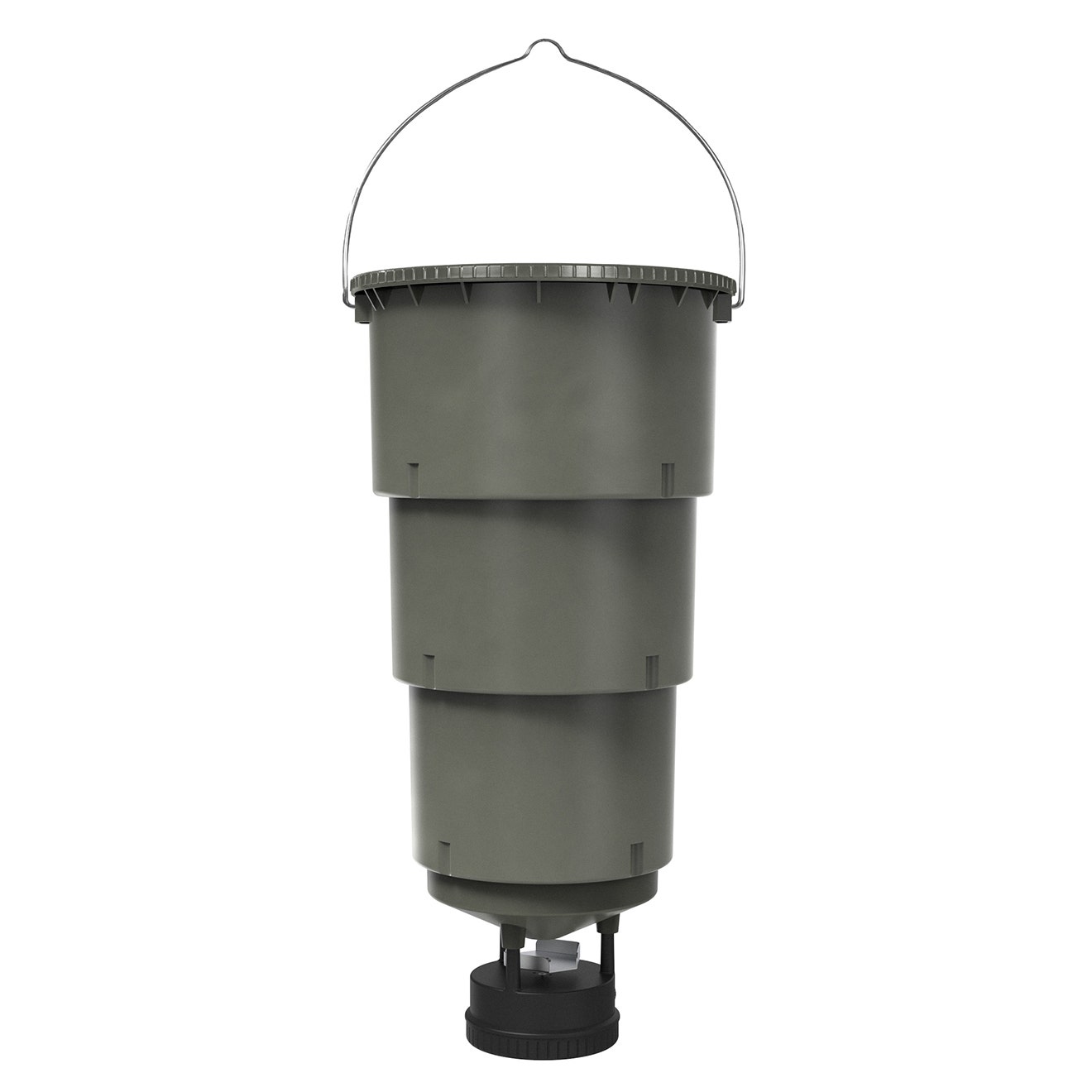
If measured output and usable capacity are appropriate but visits remain inconvenient, prioritize access and logistics. If power interruptions prevent normal releases, prioritize a compatible power solution. If water entry or feed-flow problems recur, identify the cause before purchasing more corn or a larger hopper. Different symptoms deserve different decisions. A feeder upgrade should have a written purpose that you can later compare with the result.
A solar panel is relevant only when the exact feeder supports the charging arrangement and the installation provides suitable exposure. It does not automatically solve every battery problem, and it does not change hopper capacity. Match voltage, connector, battery requirements and manufacturer instructions before shopping. Our deer feeder solar panel guide is the appropriate supporting article if maintaining a compatible rechargeable system is the problem you have identified.
A motor purchase belongs later in troubleshooting, after the applicable checks establish that it is appropriate. A clogged outlet, incorrect wiring or unsuitable power source should not become a blind replacement order. Identify the kit and part compatibility, and use manufacturer support when the diagnosis is unclear. The replacement motor buying guide helps compare relevant parts after that decision, rather than encouraging a purchase as the first response to inconsistent output.
Connected monitoring can suit a buyer who needs information between physical visits, but it does not remove inspection. Ask what the system measures, whether it estimates feed level, what connectivity is required and which equipment is included. An app icon alone does not establish remote capability. Our camera and app-control feeder guide helps investigate that category when remote visibility is useful enough to justify its costs and dependencies.
Need easier refill access?
Compare hanging designs by exact model, capacity and service arrangement.
Need fewer extra trips?
Use measured daily output to compare a wider range of capacities and mechanisms.
Need a dependable power plan?
Check the exact kit’s battery specification before comparing compatible replacements.
14. Use a practical first-month review
Start with a documented baseline rather than a promise to leave the feeder alone for a month. Confirm appropriate operation, record the load and settings, perform a suitable output measurement and choose an inspection schedule. Photograph identifying labels and the relevant installation details for your own record if useful. Those photographs support later troubleshooting; they are not evidence that wildlife outcomes are guaranteed.
At each early visit, compare expected use with what you can reasonably observe. Look for feed condition, the lid and outlet, power status and physical changes. Note the difference without immediately changing several variables. If you cannot assess remaining pounds accurately, say so. The first month should improve your understanding of the equipment and routine, not produce an artificially precise chart from uncertain measurements.
At the review, ask four questions: Did operation follow the saved program? Was the feed suitable at inspections? Were visits practical? Did the estimate provide useful scheduling information? A negative answer points toward a specific next step. Improve a measurement, address an equipment fault, change the service arrangement or reconsider whether operation remains appropriate. Buying a new hopper is only one possible outcome and should follow the finding.
Keep the useful baseline when you change something. A new battery or revised duration should start a clearly marked comparison period. Do not discard old records just because the new plan seems better. They explain why you made the change and help you recognize recurring problems. Over time, a modest log of consistent observations can make your ownership choices more deliberate than relying on packaging claims or another owner’s unmatched experience.
FIELD CHECK • Updated October 12, 2026
Corn remains in the hopper: distinguish storage from failed delivery
A hopper that still contains corn has not necessarily completed its planned feedings. Before extending the refill interval, establish whether feed is reaching the ground. Keep the inspection of corn condition separate from the inspection of the powered mechanism.
Use this decision sequence: Observe delivery → isolate power for inspection → document feed and outlet condition → follow the model’s restart procedure → recheck the next scheduled event. Do not reach into a powered outlet or force a spinner to clear a blockage.
| Check | What to photograph or note | What it helps distinguish |
|---|---|---|
| Evidence of a completed feed | Time-stamped observation of actual discharge | A schedule entry versus a delivered feeding |
| Material in the hopper | Visible clumps, debris, insects or uneven remaining feed | A feed-flow issue versus normal depletion |
| Outlet and surrounding parts | Visible interference, damage or displaced components | A physical obstruction versus an electrical symptom |
| After the approved restart | Test outcome and next scheduled feeding | A one-time correction versus a recurring problem |
What actual owners reported
In the November 2020 Deer Hunter Forum discussion “Volume Feeder Options,” Fishman reported insects clogging a dispenser and corn remaining where the hopper geometry did not guide every kernel toward the outlet. Cedar Ridge described older AA-powered units getting hung up with less-clean corn. These are attributed observations about individual equipment, not failure rates or proof that a current model has the same problem.
The useful question is therefore not simply “How many pounds remain?” Ask “Can this remaining feed reach the outlet, and did the feeder actually deliver its programmed run?” Do not infer a dependable refill interval from a single top-up measurement after a suspected missed feed.
Restart the measurement after a fault
Mark the affected interval as unreliable in your refill log. After following the manufacturer’s inspection and restart instructions, begin a fresh observation period with the starting quantity, feed settings and service date recorded. Compare subsequent visits using the same method. Keep measured amounts separate from estimates.
A simple service entry is: “Date: __. Starting quantity: __. Scheduled feeds: __. Observed delivery: __. Remaining feed condition: __. Action taken: __. Next feed checked: __.” This prevents an unnoticed interruption from making the feeder appear unusually economical.
If the fault returns, send the log and photographs to support instead of increasing runtime to compensate. For a feeder that does not spin at all, use our symptom-first diagnosis checklist. For possible purchases, visit the parts and upgrades catalogue after checking the maker’s exact fit requirements.
Frequently asked questions about deer feeder corn and refills
How long does 50 pounds of deer feeder corn last?
Divide 50 by your measured daily output in pounds. At one pound per day, the arithmetic gives 50 days; at two pounds, 25 days; at four pounds, 12.5 days. These are depletion estimates. They do not establish storage life, a recommended feeding amount or an inspection interval. Check material condition and equipment separately.
How long does 200 pounds of deer feeder corn last?
At a measured output of two pounds daily, 200 usable pounds calculate to 100 days. At four pounds daily, the result is 50 days. Long results do not justify leaving a feeder unattended for that period. The amount loaded, weather, feed condition, power and operating interruptions still affect the practical service plan.
How many pounds does a six-second run release?
There is no universal amount for all feeders. Use the current manual’s model-specific information and measure output through an appropriate test procedure. A duration estimate from another kit may not match your mechanism, corn and settings. Record repeated readings so you can calculate a useful average and recognize meaningful changes.
Can I make the corn last longer by running the feeder less often?
Reducing total measured daily output changes the depletion calculation, but settings should follow lawful and appropriate operation. A refill table does not determine a feeding recommendation. Separate the equipment arithmetic from wildlife guidance. If you change frequency or duration, record the change and update the estimate rather than using the previous daily output.
Does more deer activity empty an automatic hopper faster?
Not necessarily. If the mechanism releases the same amount on the same schedule, animals consuming ground corn do not themselves alter that scheduled output. Unauthorized hopper access or other loss is different. Identify the mechanism before interpreting camera activity or buying a guard. Gravity systems require a consumption-based record instead of a run-based calculation.
Should I fill the hopper completely every time?
Follow the rated capacity and current instructions. A full load is not automatically the best practical choice when conditions or inspection needs make a smaller load more appropriate. Consider the amount exposed to an unresolved problem, usable capacity and your service routine. Do not exceed the rating to stretch time between trips.
Can a feed-level estimate replace physical checks?
No estimate establishes that corn is dry, the installation is sound or every scheduled run occurred normally. Understand what the specific system measures and what it calculates from settings. Compare its information with actual inspections and your log. Treat remote information as a supporting tool, especially when conditions or operation have changed.
Is wet corn acceptable after it dries?
Do not assume that appearance after drying resolves the original issue. Assess questionable feed with appropriate manufacturer and wildlife guidance, identify water entry, and clean or dispose of material as directed. Adding fresh corn over a suspect remainder hides the problem. This guide does not provide a method for certifying contaminated material as suitable.
What should I buy first if output is inconsistent?
Start with the manual, records and a diagnosis. Check the saved program, appropriate power and feed flow before choosing parts. A battery, motor, solar panel and larger hopper solve different problems. Buy the compatible item only when it addresses the cause you have identified, and ask manufacturer support when that cause remains unclear.
A refill plan you can use before the next purchase
Write down the exact equipment, usable load and measured output. Calculate daily use, then estimate depletion. Choose inspections separately, based on actual conditions and the equipment instructions. Keep legality and wildlife guidance ahead of settings. If something is wrong, identify the cause before filling again or adding accessories. This sequence keeps a simple capacity question connected to responsible, affordable ownership.
Use the linked buying guides when the records reveal a specific equipment need. Compare capacity for reserve, access for servicing, power for consistent operation and connected features for useful information. Keep them as separate decisions rather than buying the biggest package on the assumption that it solves everything. A good feeder purchase should make your routine clearer and more practical. If it does not, revisit the problem you intended to solve before spending more.
Sources and editorial method
Manufacturer sources were reviewed October 10, 2026. Their instructions apply to identified models and generations. All refill tables, measurement examples and cost examples are original illustrations; none is a field-test result or current price quotation. Wildlife guidance is attributed to its issuing agency. This article makes no independent durability, battery-life, animal-attraction or nutritional-performance claims.


