Cheap Deer Feed: The Cheapest Ways to Feed Deer Through a Feeder (2026)
Affiliate disclosure: BestDeerFeeders.com is reader-supported. As an Amazon Associate we earn from qualifying purchases, at no extra cost to you. Our picks are not sponsored and no brand reviewed or paid for placement.
The short answer
If you want cheap deer feed that works in almost any feeder, start with whole shelled corn — the cheapest of them per pound. In the retail listings we checked in October 2026 it worked out at roughly 22 to 27 cents a pound in bags — about half the per-pound cost of a bagged protein feed — and it flows cleanly through spin, gravity, trough and tube feeders alike. Cracked corn costs about the same but spoils faster. Rice bran and soybeans are the cheap ways to add fat and protein, wheat and oats sit in the middle on both price and protein, and the one cheap feed to handle with real care is bargain corn itself: buy it labelled and tested, because cheap corn is exactly where aflatoxin hides. The full cost table, the safety rules and the feeder-by-feeder fit for each option are below.
One rule before any of this: feeding deer is regulated state by state, and some states and CWD zones ban it outright. Check your state agency’s current rules before you fill anything — the legality section near the end explains what to check.
The cheap feeds at a glance
Every feed on this page is a legitimate, widely used deer feed — “cheap” here means commodity feeds bought by the bag or the ton, not attractant gimmicks in small bags. Protein and energy figures are typical composition values from the FAO feedstuffs tables (corn, wheat, oats), a peer-reviewed soybean analysis, and manufacturer feed labels (rice bran); the research notes behind this page list every source. Cost per pound is covered in its own dated table further down — judge every feed there, not by the bag price.
| Feed | Protein (typical) | Energy profile | Runs best in | Watch out for |
|---|---|---|---|---|
| Whole shelled corn | About 9% | Highest energy of the grains (TDN 81% in FAO tables) | Everything: spin, gravity, trough, PVC tube | Aflatoxin in unlabelled bags; low protein |
| Cracked corn | About 9% | Same grain, slightly more waste | Spin and gravity feeders | Fines cake in humidity; spoils faster than whole corn |
| Rice bran | 12% minimum on pelleted labels; 15–18% for stabilised bran | High fat (15%+) — energy from oil, not starch | Troughs and wide gravity heads; pellets flow better than meal | Bridges and cakes in spin feeders and tubes; goes rancid |
| Soybeans | About 35% (raw seed analysis) | High protein and high fat (about 17.5%) | Spin and gravity, usually blended with corn | Retail bags are scarce; blends cost more than plain corn |
| Feed wheat | About 12.7% | Close to corn (TDN 78%) | Spin feeders; check gravity heads | Small kernels can dribble through wide head openings |
| Oats | About 11.8% | Lowest energy here (TDN 68%) — the hull is fibre | Troughs and gravity heads | Light kernels bridge in narrow tubes |
| Sweet potatoes / cull produce | Low; mostly water and sugar | Short-lived attraction, not a ration | Ground or trough only | Spoils in days; never in a mechanical feeder; legality varies |
| Protein pellets (the contrast) | 16–20% in programme feeds | Formulated: protein, fat, minerals together | Gravity protein feeders; spin feeders with the right pellet size | Roughly double corn’s cost per pound — see the cost table |
TDN (total digestible nutrients) is the standard energy yardstick in the FAO feed tables; figures are typical values, and any single load of grain varies around them. What each feed does inside each feeder type — what flows, what bridges, what cakes — is covered feed by feed below.
Whole shelled corn: the feed everything else is priced against
- ProteinAbout 9% crude protein (FAO typical composition)
- EnergyTDN 81% — the highest-energy common grain in the FAO tables
- Feeder fitSpin ✓ · Gravity ✓ · Trough ✓ · PVC tube ✓
- Biggest riskAflatoxin in unlabelled, untested bags
Whole corn is the default deer feed for a reason: it is the cheapest energy you can buy by the pound, deer everywhere already know it, and the whole kernel is the best-flowing feed shape there is. It runs through spin plates without grinding them, pours through gravity heads without bridging, and slides down a PVC tube feeder without caking — no other feed on this page is as forgiving in every feeder type.
The honest weaknesses are nutritional and toxicological, not mechanical. At roughly 9% protein, corn alone cannot support antler growth or late-gestation does the way a formulated feed can — it is an energy feed, full stop. And corn is the classic aflatoxin carrier: the mould toxins produced by Aspergillus fungi concentrate in exactly the stressed, drought-year, bargain-bin corn that looks like the best deal. That risk is manageable — buy labelled, tested corn and store it dry — and it gets its own section below because it is the one place where cheap can turn expensive.
Cracked corn: fine in the feeder, worse in the bin
- ProteinAbout 9% — it is the same grain, broken
- EnergySame as whole corn before storage losses
- Feeder fitSpin ✓ · Gravity ✓ · Trough ✓ · PVC tube — with caution
- Biggest riskFines absorb moisture, cake, and mould faster
Cracked corn is whole corn run through a roller mill, and in the listings we checked it sells for about the same per pound as whole corn — sometimes a cent or two less, sometimes a cent or two more. It feeds perfectly well through spin and gravity feeders, and some hunters prefer it because smaller pieces scatter less far from a spin plate and are easier for smaller animals to pick up.
The trade is shelf life. Cracking exposes the kernel’s oily interior, so cracked corn picks up moisture faster, cakes into clumps in a humid hopper, and gives mould far more surface to colonise than whole kernels do. The dust and fines also settle around spin plates and in tube bends, where they hold moisture against the mechanism — if a feeder starts jamming after a switch to cracked corn, the fines are the first suspect, and our feeder not working diagnosis walks through clearing exactly that kind of build-up. Buy cracked corn in quantities you will use within a few weeks, and never as the load you leave sitting in a feeder over a warm, wet month.
Rice bran: high energy, high protein — and fussy about feeders
- Protein12% minimum guaranteed on pelleted labels; 15–18% for stabilised bran
- EnergyFat 15% or more — energy from oil; pelleted labels guarantee at least 1,400 kcal/lb digestible energy
- Feeder fitTrough ✓ · Wide gravity head ✓ · Spin ✗ (meal) · PVC tube ✗ (meal)
- Biggest riskBridges and cakes; unstabilised bran goes rancid fast
Rice bran is the milling by-product left when brown rice is polished, and on paper it is the best cheap upgrade to plain corn: the King Brand pelleted label guarantees at least 12% protein and 15% fat, and stabilised bran runs 15–18% protein with 15–22% oil. That oil is also its weakness. The manufacturer Insta-Pro notes that unstabilised bran oxidises rapidly — a large share of its oil can turn to free fatty acids within a week in warm storage — so buy stabilised or pelleted bran, buy it fresh, and treat an open bag as a short-life product.
Feeder fit is where rice bran earns its warnings. The meal form is a fine, oily powder: it bridges over spin plates, packs into arches inside narrow tubes, and cakes hard the first time humidity reaches it. It belongs in a trough feeder or a wide gravity head where deer eat it directly, and the pelleted form flows noticeably better than the meal if a gravity head is the plan. It is also the feed most often sold in small, expensive attractant bags — the cost table below shows a 5 lb bag working out at several times the per-pound price of bagged corn, which is why bran should be bought from a feed store in full-size bags, not from the hunting aisle in snack sizes.
Soybeans and corn-soy blends: protein without the pellet price
- ProteinAbout 35% crude protein in raw seed analysis
- EnergyHigh — about 17.5% fat alongside the protein
- Feeder fitSpin ✓ · Gravity ✓ · Trough ✓ · PVC tube ✓ (whole beans flow like corn)
- Biggest riskAvailability: few retailers bag whole soybeans for deer
A published analysis of raw soybean seed puts it at about 35% crude protein and 17.5% fat — nearly four times corn’s protein with real energy behind it. Whole beans are round and hard, so mechanically they behave like corn: they spin, pour and tube-feed without drama. Blended with corn, they are the closest a commodity ration gets to a protein programme without buying pellets.
The catch is the supply chain. Feed mills handle soybeans by the ton; retail shelves mostly do not, which is why the realistic retail route is a ready-made corn-and-roasted-soybean blend — the one in our cost table worked out at roughly double plain corn’s per-pound price, still below most protein pellets, with the roasting done for you. If a local mill or co-op will sell whole or roasted beans by the bag or the bin, that is usually the cheapest soybean route of all — run it through the cost-per-pound method in the next section before assuming so.
Feed wheat and oats: better protein than corn, regional prices
- ProteinWheat about 12.7% · Oats about 11.8% (FAO tables)
- EnergyWheat TDN 78% (near corn) · Oats TDN 68% (hull fibre drags it down)
- Feeder fitWheat: spin ✓, check gravity heads · Oats: trough/gravity ✓, tubes can bridge
- Biggest riskRegional price swings — both are priced as livestock feed, not deer feed
Wheat is the quiet overachiever of the cheap grains: at about 12.7% protein it beats corn by a third, and its energy (TDN 78% in the FAO tables) is close behind corn’s 81%. The kernel is small and dense, so it pours beautifully through a spin feeder — and that same smallness is its one mechanical trap, because wheat can trickle through gravity-head openings sized for corn or pellets. Test a new head with a small load before filling the hopper.
Oats carry similar protein (about 11.8%) but the hull changes the maths: with 11% crude fibre, their energy drops to a TDN of 68%, the lowest of the grains here, and the light, bulky kernels can arch and bridge in narrow tubes. In a trough or a gravity head they feed without trouble. Both grains are priced as farm commodities, so in wheat and oat country the local mill price can beat bagged deer corn outright — and in corn country it usually cannot. These are the two feeds where the cost-per-pound method matters most, because there is no national “deer wheat” price to quote.
Sweet potatoes and cull produce: the ground-feeding option
- ProteinLow — mostly water, sugar and starch
- EnergyBrief attraction, not a ration
- Feeder fitGround or trough only — never inside a mechanical feeder
- Biggest riskSpoils within days; legality varies sharply by state
Cull sweet potatoes, pumpkins past Halloween, windfall apples and similar farm produce are the traditional zero-budget deer feed: deer eat them readily, and a produce stand or packing shed may give culls away or sell them for very little. Treat them as what they are — a short-lived attractant and a supplement to natural browse, not a ration. Their feed value per load is low and mostly water, and we make no protein claims for them here because composition swings wildly by crop and condition.
Two hard limits. First, produce never goes inside a spin, gravity or tube feeder: it jams mechanisms, ferments, and draws insects and raccoons to the feeder itself. It goes on the ground or in a trough, in quantities deer will finish within a day or two, and anything uneaten and rotting should be cleared away. Second, produce is where feeding law bites hardest — several states treat scattered produce as baiting even where bagged feed is tolerated, and some ban deer feeding entirely. Read the legality section before the first pumpkin run.
Protein pellets: the not-cheap option, and why people pay
Every feed above is a commodity: one ingredient (or two), priced by the pound, with gaps a deer fills from natural browse. Protein pellets are the opposite model — a formulated feed, typically 16–20% protein, with fat, fibre, vitamins and minerals balanced into every pellet. Our best protein feed for deer guide covers the leading 20% feeds and the seasonal programme behind them in full; the short version is that pellets are the only option on this page designed to replace missing nutrition rather than supplement energy.
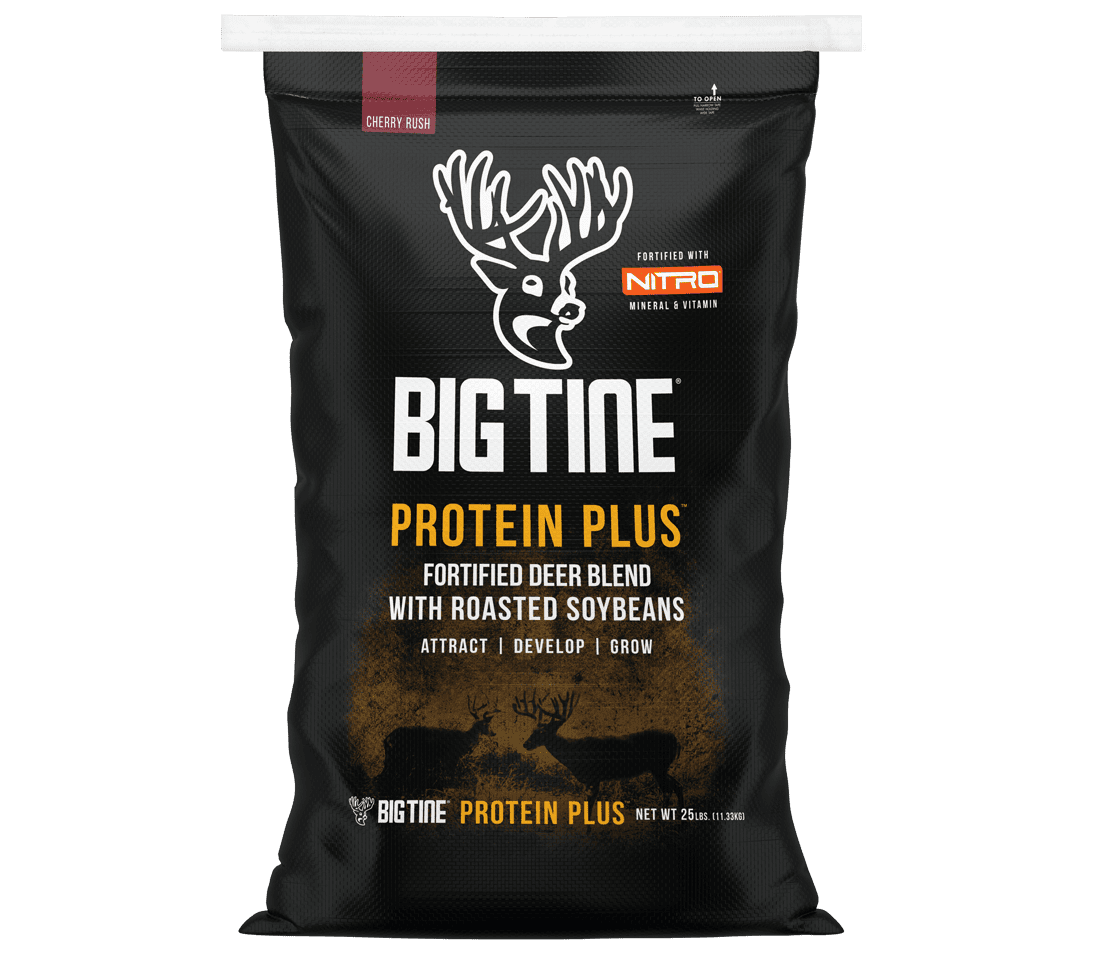
The cost table below puts the gap in hard numbers: in October 2026 listings, bagged protein feeds worked out at roughly double the per-pound price of bagged whole corn. What that premium buys is protein percentage and consistency — the same guaranteed analysis in every bag, sized to flow through gravity protein feeders without bridging. What it does not buy is magic: a deer herd with good natural browse and a corn feeder for energy may gain little from pellets outside the antler-growing and fawning months, which is exactly the seasonal split covered in the trade-offs section.
What cheap deer feed actually costs per pound
Bag prices lie; cost per pound does not. The table below is built from retailer listings checked in October 2026 (Tractor Supply Co. listings, plus one feed-listing price for the small-bag example), and every per-pound figure is simple arithmetic: the listed bag price divided by the listed bag weight. Retail feed prices move with the grain markets and vary by store — treat these as a dated snapshot and a ranking, not a promise, and re-run the same division on whatever shelf you are standing in front of.
| Feed (listing checked October 2026) | Bag | Listed price | Cost per pound |
|---|---|---|---|
| Field & Stream Deer Corn (whole corn) | 40 lb | $8.99 | $0.22 |
| Producer’s Pride All-Purpose Whole Corn | 50 lb | $11.49–$12.99 | $0.23–$0.26 |
| Producer’s Pride Cracked Corn | 50 lb | $12.49 | $0.25 |
| treeline Whole Kernel Corn Deer Feed | 40 lb | $10.99 | $0.27 |
| treeline Prime Blend (roasted soybeans + corn) | 40 lb | $17.99 | $0.45 |
| Record Rack Sportsman 20 protein pellets | 50 lb | $21.99 | $0.44 |
| Antler King Booner Blend protein feed | 40 lb | $18.99 | $0.47 |
| Wildgame Buck Bran (rice bran attractant bag) | 5 lb | $7.99 | $1.60 |
Prices checked October 2026 and shown to make the ranking concrete; the same products were seen at slightly different prices between stores and listing updates, which is normal for commodity feed. The per-pound column is the number to compare at your own store.
Three lessons fall out of the arithmetic. First, plain whole corn is the cheapest feeder fuel there is — every flavoured, blended or fortified variation starts from corn and charges for the additions. Second, small bags are a trap: the 5 lb rice bran attractant bag costs about seven times more per pound than bagged corn, and more than three times the per-pound price of protein pellets. Buy bran by the feed-store bag, never by the attractant bag. Third, protein costs roughly double energy: the protein feeds cluster around $0.44–$0.47 a pound against corn’s $0.22–$0.27.
The cost-per-pound method (use it on any feed, anywhere)
Cost per pound = bag price ÷ bag weight in pounds. That is the whole method, and it settles most feed-aisle arguments in ten seconds. Worked example, clearly labelled as an illustration using the table’s own figures: corn at $0.23 a pound means 2,000 lb bought at bag prices would total about $460 — so when a mill quotes you a per-ton price for bulk corn, that is the bag-price benchmark it has to beat, and it usually beats it by a wide margin once you are buying a ton at a time. The same division exposes sweet feeds, blends and attractants instantly: divide first, admire the packaging second.
For feeds we could not price from a fetched listing — bulk rice bran and bagged whole soybeans are the two on this page — we have deliberately printed no price at all. Get the local bag or bin price, divide by the weight, and compare the answer against the corn row above.
The cheap corn risk: aflatoxin
Aflatoxin is a poison produced by Aspergillus moulds that grow on corn and other grains, especially in drought-stressed crops and in warm, humid storage. It is invisible, it has no smell you can rely on, and cheap corn is its classic vehicle — which makes this the one section of this page to read before saving money anywhere else.
The numbers that matter come from Texas A&M AgriLife Extension’s wildlife guidance: corn with 100 ppb or more aflatoxin should not be fed to wildlife, and to be safe, specialists recommend using only corn labelled as less than 20 ppb. The same guidance caps the related toxin fumonisin at 5 ppm. Those are not cautious abstractions. When Texas surveyed retail deer corn, 44% of samples in the 1998 study ran over 20 ppb and one in five hit 100 ppb or more; after labelling rules tightened, the over-100 share fell to about 1% — which is the whole argument for buying labelled corn. Arkansas Game & Fish sampling later found aflatoxin in field corn samples as high as 897.7 ppb.
Storage can undo a good purchase. Record Rack’s aflatoxin guidance for hunters makes the point plainly: toxin levels can rise after purchase in warm, moist storage, and clean feed can pick up contamination from a feeder or bin that previously held contaminated grain. Aflatoxin damages the liver, suppresses the immune system and interferes with blood clotting; fawns are the most susceptible deer, and turkeys, quail, doves and songbirds visiting the same feeder are more sensitive still. The practical defences are boring and effective: keep corn dry (never let it get wet in storage), store it cool, clean out bins and feeders between fills, and in warm humid weather keep feeder fill levels low so corn is eaten before fungus has time to grow in the barrel — the Arkansas agency’s own advice. If feed smells musty, looks mouldy or has gotten wet and clumped, discard it. No saving on a bag is worth poisoning the herd the bag was bought for, and there is no way to wash, dry or dilute aflatoxin out of a bad load.
The other cheap-corn risk: rumen acidosis
The second way cheap feed hurts deer has nothing to do with toxins — it is speed. A deer’s rumen is tuned to fibrous browse, and the Wisconsin DNR warns that corn and other rich feeds are not part of the natural winter diet: a sudden load of grain can trigger rumen acidosis, a crash in rumen pH as microbes ferment the starch surge, and the agency’s corn-toxicity guidance notes death can follow within 24 to 72 hours of excessive grain ingestion. The Pennsylvania Game Commission describes the same mechanism — an abrupt switch to a high-carbohydrate, low-fibre diet disrupts the rumen’s microbe balance before it can adapt.
The defence is a calendar, not a product: introduce any new feed gradually, mixing increasing amounts over one to two weeks so the rumen adapts, and never start a full corn feeder in mid-winter in front of deer that have not been eating grain — the classic well-meaning mistake the DNR warning is aimed at. Keep natural browse available alongside any feeder, and if you are starting a feeding site, start it before the hardest weather arrives, not during it.
Buying in bulk & storing it safely
Once a feeder programme outgrows a bag or two a week, the inexpensive way to feed deer is to stop buying bags. Farm co-ops and feed mills sell the same corn, soybeans and grains by the ton or the bulk bin at commodity prices, and the gap against bagged retail is usually wide — but “usually” is doing work in that sentence, so run the cost-per-pound method on any bulk quote (including delivery and any minimum-order fees) before committing. Mills will often crack, mix or blend to order — a corn-soy mix at your chosen ratio is a standard ask — and some will bag a bulk purchase into sacks for a small fee if you have no bin.
Storage rules that protect the saving
- Moisture is the enemy. Grain that gets wet moulds, and mould is where aflatoxin grows. Store off the ground, under a roof, in sealed metal bins or barrels with tight lids — which also answers the rodent problem.
- First in, first out. Date every bin or stack and use the oldest feed first. Whole corn keeps for months in cool, dry storage; cracked corn and rice bran are short-life feeds — buy weeks’ worth, not a season’s.
- Clean between fills. Old fines and dust harbour mould and can contaminate a fresh load; brush out bins, hoppers and tubes when they empty (and if a feeder starts bridging or jamming on old build-up, the not-working diagnosis covers the clean-out).
- Keep the feeder matched to the feed. Bulk savings evaporate if the feed cakes in the wrong feeder — bran in troughs, free-flowing grains in tubes and spinners, and if you are building the feeder itself, our DIY 55-gallon drum feeder build is the cheapest hopper any of these feeds will ever sit in.
What cheap feed gives up
Cheap feed is a trade, and it is worth naming both sides plainly. What you give up against a formulated protein programme is protein percentage and completeness: corn’s roughly 9% protein against the 16–20% of programme pellets, with none of the added minerals. Whether that gap matters depends on the calendar. In autumn and winter, deer run on energy — fat reserves, cold tolerance, surviving to spring — and corn’s high energy at the lowest cost per pound is a rational backbone, with browse supplying much of the rest. In spring and summer the equation flips: antler growth and fawn rearing are protein-demanding, and that is the window where the protein feed programme earns its premium, or where a corn-soy blend splits the difference at mid-shelf cost.
The second give-up is consistency. A pellet is the same feed in every bag; a commodity load varies by crop, season and supplier, which is why the buying discipline on this page — labelled bags, cost per pound, dry storage — matters more for cheap feed than for pellets. And the third is labour: cheap feed rewards the hunter who hauls, stores and rotates it properly, and quietly taxes the one who fills a feeder in October and visits it in December.
Check it is legal before you fill a feeder
Feeding and baiting rules are state law, they differ across state lines and sometimes across counties, and they change — so this page deliberately gives no state-by-state table. What to verify with your state fish and wildlife agency before feeding: whether supplemental feeding is permitted at all where you hunt, whether it is treated as baiting with season and distance restrictions, and whether your area sits in a chronic wasting disease (CWD) management zone, where feeding is commonly restricted or banned because concentrating deer spreads disease. The stakes are real, not theoretical: one of the corn listings checked for this page carries the retailer’s own notice that it is illegal to intentionally feed wild white-tailed deer and moose in New York State. Cheap feed that draws a fine is not cheap.
Related guides & resources
- Best protein feed for deer — the 16–20% programme feeds, seasonal timing and prices, for when cheap stops being enough
- Best deer feed troughs — the right feeder for rice bran, oats and other feeds that should not go through a spinner
- PVC deer feeder build guide — the cheapest gravity feeder there is, and which of these feeds flow through it
- DIY 55-gallon drum feeder — the low-cost hopper build for bulk corn and blends
- Deer feeder not working? — bridging, caking and jam diagnosis when a feed meets the wrong feeder
- Texas A&M AgriLife: Hunters Use Caution When Feeding Corn to Wildlife (PDF) — the aflatoxin guidance this page’s safety rules are built on
- Arkansas Game & Fish Commission: Think twice before filling the corn feeder — a state agency’s aflatoxin sampling results and feeder advice
Cheap deer feed FAQs
What is the best cheap deer feed for a spin feeder?
Whole shelled corn. In the listings checked in October 2026 it was the cheapest feed per pound on this page, and whole kernels flow through a spin plate more reliably than any alternative — no grinding, no bridging, no caking. Cracked corn also spins well but spoils faster in the hopper. Keep rice bran meal out of spin feeders: it bridges over the plate and cakes in humidity.
Is whole corn or cracked corn better in a deer feeder?
Whole corn for most people. The nutrition is identical — cracked corn is the same grain, broken — and it usually sells for about the same per pound. Whole kernels store for months and flow cleanly; cracked corn’s fines absorb moisture, cake in humid weather and mould faster. Cracked corn makes sense only for feeders you refill often in cool, dry conditions.
Can I put rice bran in a spin feeder or PVC tube?
Not the meal form. Rice bran meal is a fine, oily powder that bridges over spin plates, packs into tube bends and cakes hard when humidity reaches it. Feed it from a trough or a wide gravity head instead. Pelleted rice bran flows noticeably better and is the only form worth trying in a gravity feeder — and buy it in full feed-store bags, because small attractant bags cost several times more per pound.
What is aflatoxin, and how do I keep it out of cheap corn?
Aflatoxin is a poison made by Aspergillus moulds that grow on corn, especially drought-stressed crops and grain stored warm and wet. Texas A&M AgriLife Extension advises that corn at 100 ppb or more should not be fed to wildlife, and recommends buying corn labelled under 20 ppb. Buy labelled bags showing weight, manufacturer and a mycotoxin statement — in Texas surveys, unmarked bags were twice as likely to exceed 100 ppb — store corn dry and cool, and discard anything mouldy or wet.
Can deer live on corn alone?
No. Corn is an energy feed at roughly 9% protein; it supplements natural browse, it does not replace it. Deer on a corn-only offering through spring and summer miss the 16–20% protein that antler growth and fawn rearing demand. Use corn as the cheap energy backbone, lean on browse, and step up to soy blends or a protein programme in the growing season if herd nutrition is the goal.
What is the inexpensive way to feed deer in bulk without bags?
Buy from a farm co-op or feed mill by the ton or the bulk bin instead of by the bag. Before committing, run the cost-per-pound method on the bulk quote — price divided by weight, including delivery and any minimum-order fees — and compare it with the bagged price per pound. Mills will often mix a corn-soy blend to order. The saving only survives if storage is right: sealed, dry, off the ground, oldest feed used first.
Are sweet potatoes and cull produce good cheap deer food?
As a short-lived attractant, yes — deer eat cull sweet potatoes, pumpkins and windfall fruit readily, and the produce itself can be free. As a ration, no: it is mostly water and sugar, spoils within days, and must never go inside a mechanical feeder. Put it on the ground or in a trough in finish-it-today quantities, and check local law first, because produce is treated as bait in several states even where bagged feed is allowed.
Why do protein pellets cost more than corn?
Because a pellet is a formulated feed, not a commodity grain: 16–20% protein built from soybean meal and other protein sources, plus fat, fibre and a mineral package, processed into a consistent pellet that flows through protein feeders. In the October 2026 listings checked for this page, that worked out at roughly double corn’s cost per pound. You are paying for protein percentage and bag-to-bag consistency.
How do I work out the true cost per pound of any deer feed?
Divide the price by the weight: bag price ÷ pounds in the bag. That single number exposes small attractant bags (which can cost several times more per pound than the same feed in a full-size bag), lets you compare blends against plain corn honestly, and gives you the benchmark a bulk quote has to beat. For bulk, include delivery in the price before dividing.
Can feeding cheap corn in winter kill deer?
It can, if it is introduced suddenly. The Wisconsin DNR warns that corn is not part of a deer’s natural winter diet and that even a single heavy feeding can cause rumen acidosis, which can kill within 24 to 72 hours of excessive grain intake. The rumen needs time to adapt: mix new feed in gradually over one to two weeks, start feeding sites before the hardest weather, and keep natural browse available alongside the feeder.
Is it legal to feed deer in my state?
It depends entirely on your state — and sometimes your county. Some states allow supplemental feeding, some regulate it as baiting with season and setback rules, some ban deer feeding outright (New York is one example), and CWD management zones commonly add their own restrictions because feeding concentrates deer and spreads disease. Check your state fish and wildlife agency’s current rules before you fill any feeder.
What should I do with mouldy or wet feed?
Throw it out. Aflatoxin cannot be washed, dried or diluted out of a contaminated load, and mouldy feed can contaminate the bin or feeder it sits in — clean the hopper, bin or tube before refilling, because residue from a bad load can seed the next one. The money “saved” by feeding a suspect bag is never worth a poisoned herd.
Final verdict
Cheap deer feeding done properly is a system, not a product: whole shelled corn as the energy backbone, bought labelled and tested, costed per pound, stored dry, and introduced gradually. Rice bran tops up fat and protein in a trough, soybeans or a corn-soy blend lift protein where a mill makes them affordable, wheat wins where farm prices favour it, and produce is a legal-where-allowed bonus rather than a ration. Protein pellets remain the right spend in the antler-growing months for herds whose browse cannot carry them — at roughly double corn’s cost per pound, that is a seasonal decision, not a year-round default. Do those things and the cheapest deer feed is also the responsible kind: no mouldy bargains, no sudden winter corn dumps, no fines for feeding where feeding is banned.
Last updated: October 23, 2026. Prices are the October 2026 listing snapshots in the cost table and will move with grain markets; nutrition and safety guidance is drawn from the sources below.
Sources
- FAO, “Feedstuffs” chapter (Animal Production and Health series), Table 12, Typical Composition of Cereal Grains — crude protein, fat, fibre, TDN and digestible energy for corn, wheat, oats and barley (fao.org)
- INRAE / CIRAD / AFZ, Tables of composition and nutritional value of feed materials — maize grain crude protein 8.1% as fed, corroborating the FAO corn figure
- MDPI Animals (2020), soybean composition study — raw soybean seed at 34.8% crude protein and 17.5% fat, as fed
- King Brand, Rice Bran Plus Pellets guaranteed-analysis label — protein min 12.0%, fat min 15.0%, digestible energy min 1,400 kcal/lb, and the label’s storage warning
- Insta-Pro, stabilised rice bran data — 15–18% protein, 15–22% oil, and the rapid oxidation of unstabilised bran in warm storage
- Texas A&M AgriLife Extension, “Hunters Use Caution When Feeding Corn to Wildlife” — aflatoxin limits for wildlife corn (under 20 ppb recommended; 100 ppb do not feed), fumonisin 5 ppm cap, Texas retail survey results, unmarked-bag findings and storage guidance
- Record Rack, “Aflatoxin And Wildlife” — Texas “Wildlife Feed” labelling threshold (under 50 ppb), post-purchase toxin growth, feeder cross-contamination, effects on deer and other wildlife
- Arkansas Game & Fish Commission, “Think twice before filling the corn feeder” — retail and field aflatoxin sampling (up to 897.7 ppb in field samples) and the low-fill feeder advice
- Wisconsin DNR, winter deer feeding release and corn-toxicity guidance — corn as an unnatural winter feed, rumen acidosis risk, death possible within 24–72 hours of excessive grain intake
- Pennsylvania Game Commission, rumen acidosis guidance — sudden high-carbohydrate diet change as the mechanism
- Tractor Supply Co. product and category listings — all prices in the cost table, checked October 2026; Kentucky Gun Co. listing for the 5 lb rice bran attractant bag
- BestDeerFeeders protein feed research (October 2026) — 16–20% protein programme guidance and the Record Rack Sportsman 20 price used in the cost table