Boss Buck 200 vs 350 Gravity Protein Feeder: Which Size?
As an Amazon Associate I earn from qualifying purchases. Picks are based on manufacturer and retailer specifications, not hands-on testing.
Quick verdict
Both feeders share the same Boss Buck gravity head: three angled ports, drain holes, an internal cone and an adjustable inner sleeve. The real choice is size. Pick the 350 when you want more reserve between visits during protein season. Pick the 200 when a smaller, lighter station suits a tight or hard-to-reach spot.
Check Boss Buck 200 Gravity on Amazon Check Boss Buck 350 Gravity Protein on Amazon
Side-by-side specifications
| Feature | Boss Buck 200 Gravity (BB-1.200A.P) | Boss Buck 350 Gravity Protein (BB-1.2A.P) |
|---|---|---|
| Listed capacity | Up to 200 lb | About 350 lb corn / about 300 lb large protein pellets |
| Listed feed types | Corn, protein pellets; non-salt-based feed | Corn, grain, pellets |
| Hopper dimensions | 29 × 25 × 25 in | 34 × 32 × 35 in |
| Legs | Round galvanized legs, listed at 75 in | Sectional galvanized legs, listed at 78 in |
| Listed feeding height | Ports 34 in off the ground | 40 in |
| Feed head | Same design on both: 3 ports, 4 in inside diameter, 10° angle, 1 in overhang, drain hole per port, internal cone, 3-way adjustable inner sleeve | |
| Lid | Double-walled hatch lid on both | |
| Hopper material | Roto-molded HDPE plastic with galvanized hardware | |
| Automatic (spinner) conversion | Supported; automatic unit not included | Supported; 12V conversion kit sold separately |
| Fill method | see listing | Ladder (per retailer listing) |
Specifications: Bass Pro 200 lb listing, Academy 350 lb listing, Simmons 350 lb listing. Checked October 24, 2026.
Choose the model that fits your site
Choose the 350 Gravity Protein if
- Refill trips are long or infrequent and extra reserve matters.
- You plan to run protein pellets through spring and summer.
- You have the space, help and ladder access to fill a taller hopper.
Skip the 350 if
- The site is tight, or you carry everything in on foot.
- You refill often anyway, so extra storage just sits longer in the hopper.
Choose the 200 Gravity if
- You want a smaller station that is easier to move and set up.
- Your access is limited to an ATV or walking in.
- You check the site regularly and do not need a large reserve.
Skip the 200 if
- You want to feed salt-based mineral mixes through it (see below).
- Running out between visits is your main problem.
Differences that matter
Capacity: buy reserve only if you need it
The 350 holds roughly 75% more corn than the 200. Boss Buck lists the 350 at about 300 lb when filled with large protein pellets, because pellets pack differently from corn. Expect the same effect in the 200: its 200 lb figure is not a promise for every feed.
A bigger hopper only helps when refills are the hard part. Feed that sits too long in humid weather can cake or spoil, so match the hopper to how often you actually visit. Keep a simple log of fill dates and amounts for the first month. Our gravity deer feeder guide compares other sizes if neither fits.
Height and legs: think about filling day
The 350’s hopper is taller and wider, and one retailer lists a ladder as the fill method. Plan how you will lift bags to the lid before you order. The 200’s smaller hopper on 75 in legs is the easier station to service alone.
Leg design also differs. The 200 uses a round galvanized leg system, while the 350 is sold with sectional legs. Listings put the 200’s ports about 34 in off the ground and the 350’s feeding height at 40 in. Use our feeder height guide to decide what suits your deer and your site.
Feed head: the same design on both
You are not trading feed-flow quality between these two. Both use Boss Buck’s gravity head with three angled ports, a lip over each port, drain holes for rain and an internal cone that spreads feed to all three ports. The inner sleeve slides up to nearly close the flow or down to open it for larger pellets.
That sleeve is the setting to get right on day one. Start partly open, check how the feed flows, and adjust. A port that clogs is usually a feed-size or moisture problem, not a defect.
Salt and minerals: a warning for the 200
One retailer listing for the 200 states it is meant for non-salt-based feed and warns that salt-based mineral supplements may damage the feeder. If you want to offer minerals, put them out separately rather than mixing them into this hopper. Our attractants and minerals guide covers what to use instead.
Converting to a spinner feeder
Both hoppers can be converted to automatic broadcast feeding, which lets you run protein in summer and switch to timed corn in fall. Neither gravity package includes the automatic unit. Budget for the conversion kit, battery and timer separately, and confirm the kit is listed for your exact model before ordering. Read our feeder battery guide before buying power parts.
What’s not in the box
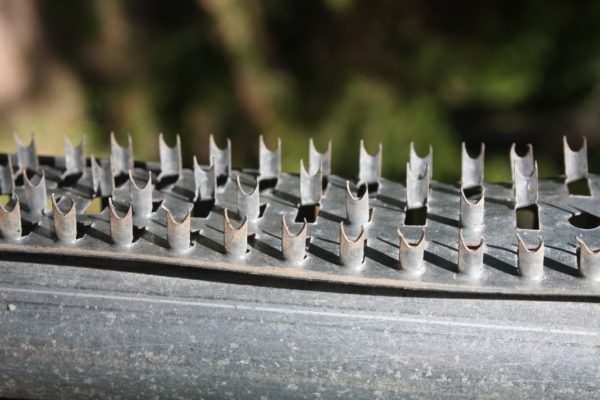
Treat both as gravity feeders only. The automatic spinner unit, 12V battery, timer and solar panel are separate purchases. Retailers list Boss Buck Shark Teeth deterrent strips as a separate add-on for the 350 if raccoons or squirrels climb the legs; see Boss Buck Shark Teeth on Amazon and confirm the fit for your leg type.
Feed, a ladder and any ground anchors are also on you. Lay out the hardware against the instructions before driving to the property, and resolve missing parts while the hopper is still empty.
Common problems and the right fixes
Feed stops flowing. Check the inner-sleeve setting first, then look for caked or wet feed above the cone. Empty and dry the hopper rather than poking through a packed column.
Raccoons or hogs emptying the ports. Gravity ports are open by design, so any animal that reaches them can eat. Raise the sleeve to slow flow, add leg deterrents and read our guide to keeping raccoons and hogs off a feeder.
Moldy feed. Smaller fills, a closed lid and cleaning the hopper between seasons help.
Frequently asked questions
What is the difference between the Boss Buck 200 and 350?
Mainly size. The 350 holds about 350 lb of corn or 300 lb of large protein pellets in a 34 × 32 × 35 in hopper. The 200 holds up to 200 lb in a 29 × 25 × 25 in hopper. Both use the same three-port gravity head, double-walled lid and galvanized hardware.
Can both Boss Buck feeders hold protein pellets?
Yes. Retailer listings name corn and protein pellets for both, and the adjustable inner sleeve is designed to handle different feed sizes. Expect less weight of pellets than corn in the same hopper.
Can I convert these gravity feeders to automatic?
Both hoppers are designed to convert to automatic broadcast feeding, but the automatic unit is not included with the gravity packages. Confirm that the conversion kit is listed for your exact model, and buy the battery and any solar panel separately.
Can I put mineral or salt mixes in a Boss Buck 200?
Avoid it. A retailer listing for the 200 specifies non-salt-based feed and warns that salt-based mineral supplements may damage the feeder. Offer minerals at a separate site instead.
Which one is easier to fill?
The 200. Its hopper is smaller and sits on shorter legs, so lifting feed to the lid is less work. A retailer lists a ladder as the fill method for the 350.
Final verdict
Buy the Boss Buck 350 Gravity Protein when you feed protein through the warm months at a site you cannot visit often. The extra reserve is the whole reason to step up, and you get the same feed head as the smaller model.
Buy the Boss Buck 200 Gravity when you can check the station regularly, want easier filling, or carry gear in on foot. It is the simpler station to own and still converts to automatic later.
Check price: Boss Buck 200 Gravity Check price: Boss Buck 350 Gravity ProteinMore options: our best protein deer feeders and every Boss Buck feeder compared.
Products mentioned in this guide
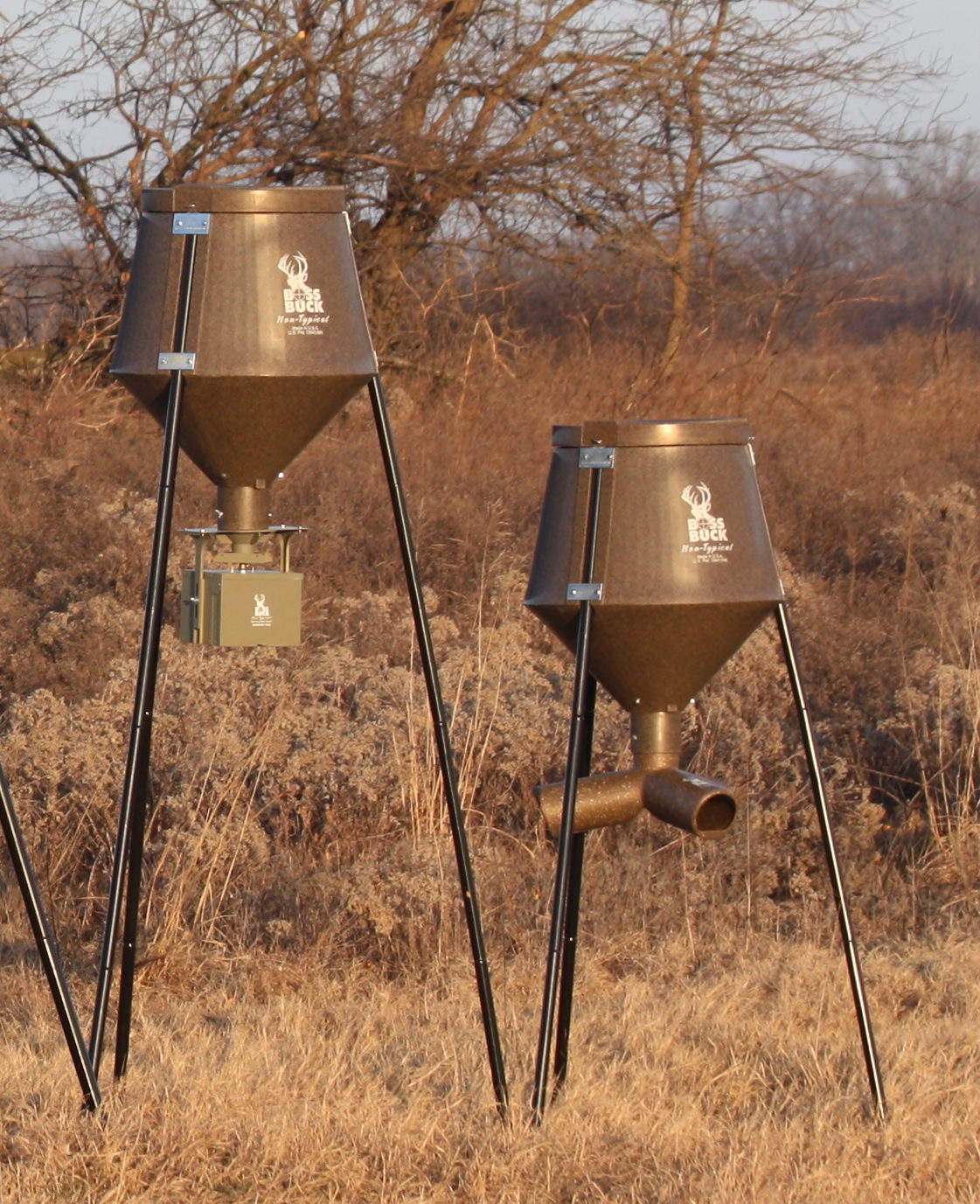
Boss Buck 200 lb All In Gravity Feeder
Check Price on Amazon →Confirm price and availability on Amazon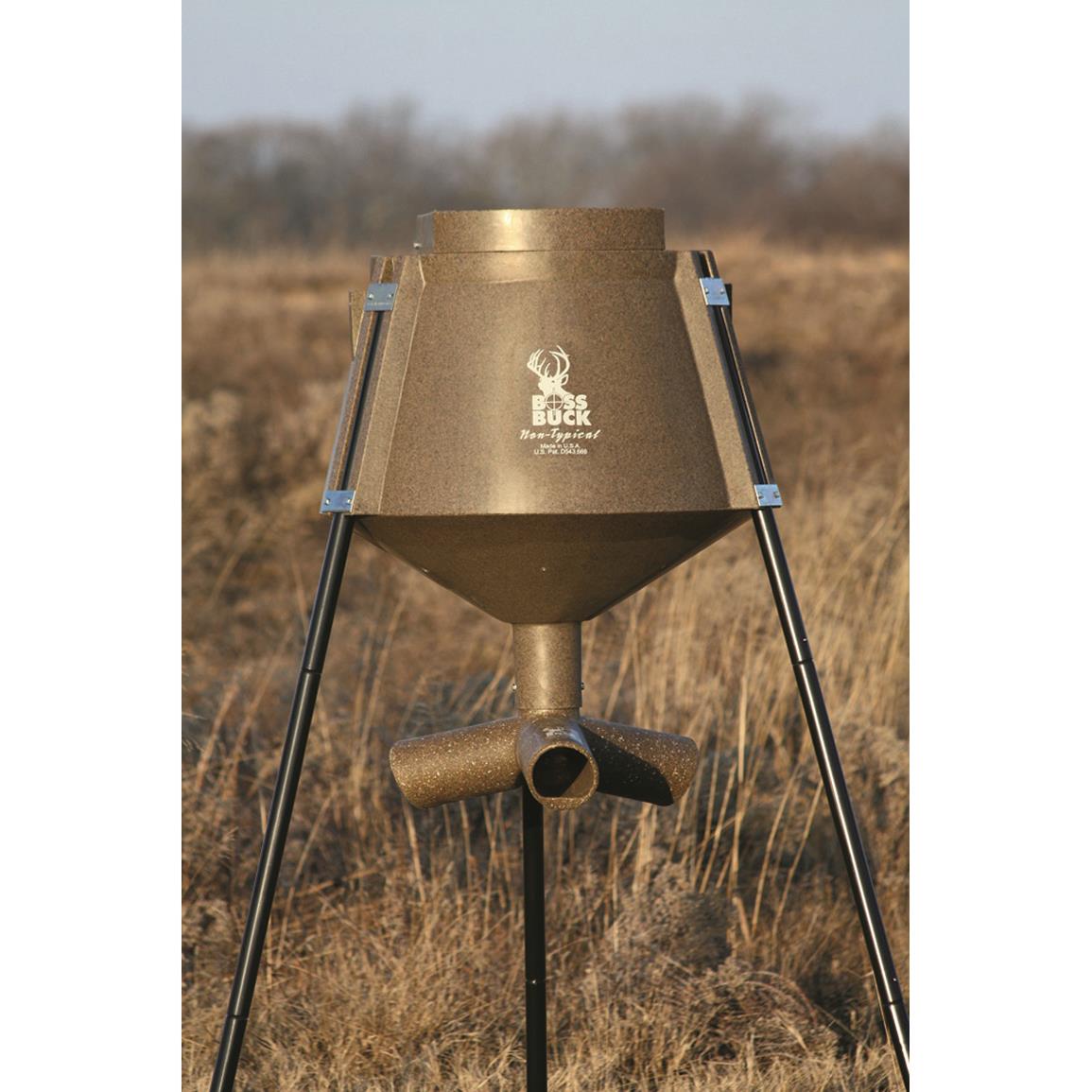
Boss Buck 350 lb Gravity Protein Feeder
Check Price on Amazon →Confirm price and availability on AmazonBoss Buck Shark Teeth Varmint Guard
Check Price on Amazon →Confirm price and availability on AmazonAs an Amazon Associate, we earn from qualifying purchases.