Best Moultrie Deer Feeders (2026)
Disclosure: This post contains affiliate links. As an Amazon Associate, we earn from qualifying purchases at no extra cost to you.
On this page:
The short answer
If you want one Moultrie deer feeder for a typical US hunting property, buy the Moultrie Pro Hunter III 250. It holds 250 pounds of corn, broadcasts in a full 360-degree circle, and lets you set up to 10 feed times a day from the free Moultrie app over Bluetooth, with no subscription. If your property is hours away and you want to change feed times from home, step up to the Moultrie Connected 250, the only feeder here with built-in cellular control. If you have no power, no timer patience, and a spot deer already visit, the Moultrie 250 Gravity feeder does the job with no battery at all. The comparison table below puts all eight models side by side.
One thing this guide does that the rest of the first page of Google does not: it lines up the whole current Moultrie lineup in one place. The October 2026 search results for “moultrie deer feeder” are mostly stores (Moultrie itself, Bass Pro, Cabela’s), one Field & Stream hands-on review of the Connected model, an eBay listing page, and a single YouTube review of a Pro tripod. None of them compares gravity against spin, broadcast against directional, or Bluetooth against cellular across the full range. That is the gap this guide fills, using Moultrie’s own manuals and listings, retailer specs, and real owner reports.
At-a-glance comparison table
| Product | Best for | Capacity | Type | Power / timer | Price |
|---|---|---|---|---|---|
| Moultrie Pro Hunter III 250 | Most properties | 250 lb | Tripod, 360° broadcast | 6V tab-top battery; up to 10 feeds/day, 1–60 sec; Bluetooth | Check Price → |
| Moultrie 250 Standard (replaces the 200 lb) | Best value tripod | 200 lb | Tripod, 360° broadcast | 4 or 8 AA batteries; up to 4 feeds/day, 1–20 sec; Bluetooth | Check Price → |
| Moultrie Pro Hunter III Directional 250 | Trails, lanes, pond banks | 250 lb | Tripod, directional | 6V tab-top battery; up to 10 feeds/day, 1–60 sec; Bluetooth | Check Price → |
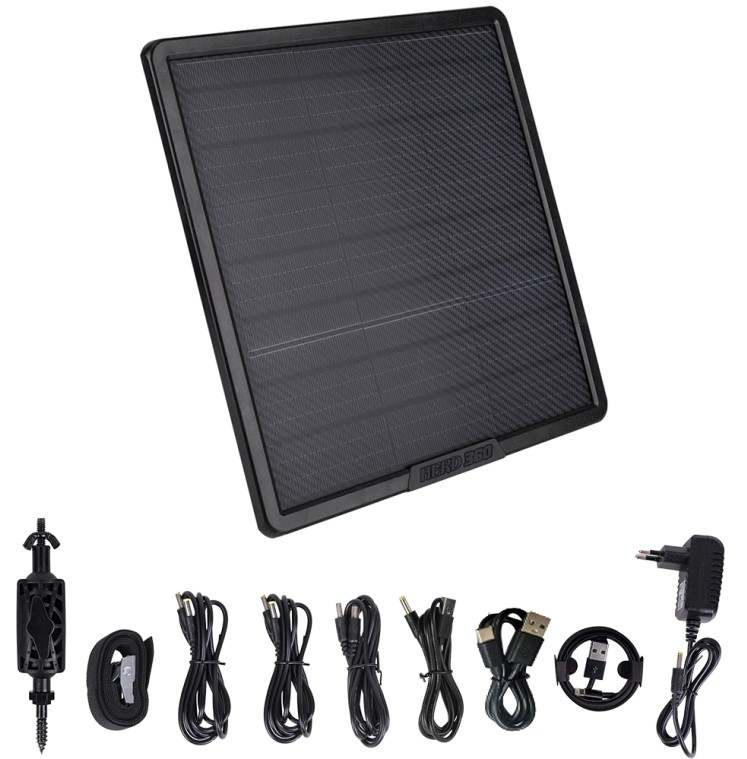
| Moultrie Connected 250 | Remote control from anywhere | 250 lb | Tripod, 360° broadcast, cellular | 6V battery + solar panel included; up to 10 feeds/day, 1–60 sec; app subscription required | Check Price → |
| Moultrie 250 Gravity | No power, no timer | 250 lb (30-gallon hopper) | Tripod, gravity | No battery, no motor, no app | Check Price → |
| Moultrie 40 lb Directional Hanging | Hanging feeder for a trail or pond | 40 lb | Hanging, directional | Pro Hunter III Directional kit; Bluetooth | Check Price → |
| Moultrie 40 lb Hanging | Small hanging broadcast feeder | 40 lb | Hanging, 360° broadcast | 4 AA batteries; up to 4 feeds/day, 1–20 sec; Bluetooth | Check Price → |
| Moultrie 30 lb Hanging | Backyard and portable spots | 30 lb | Hanging, 360° broadcast | 4 or 8 AA batteries; up to 4 feeds/day, 1–20 sec; Bluetooth | Check Price → |
Three fast choices. Most buyers should start with the Pro Hunter III 250: biggest useful capacity, the most flexible timer, and Bluetooth programming without a subscription. Buy the Connected 250 only if you genuinely manage the feeder from far away, because the subscription is a real running cost. Buy the 250 Gravity if you want the simplest possible setup and you are happy for deer to eat on their own schedule rather than yours.
Which Moultrie feeder fits your property?
- Step 1 — How far away is the feeder? If you can only visit every few weeks or you live hours away, go cellular: the Connected 250. If you visit weekly, Bluetooth models are enough, because you program them from your phone while standing near the feeder.
- Step 2 — Broadcast or directional? If deer can approach from any side in an open food plot, choose a 360-degree broadcast model. If the feeder sits on a game trail, a narrow lane, or a pond bank where you want feed in one direction only, choose a directional model: the Pro Hunter III Directional 250 or the 40 lb Directional Hanging.
- Step 3 — Do you want a timer at all? If you want feed on a schedule, pick any spin model. If you want zero electronics, zero batteries, and feed available all day, pick the 250 Gravity.
- Step 4 — How much feed, and how will you fill it? Tripods hold 200–250 pounds and fill from the ground at 5.5 to 6 feet. Hanging feeders hold 30–40 pounds, hang from a limb or cable, and suit small spots, backyards, and ponds — but you will refill them far more often. Match the capacity to how often you can realistically visit.
How we picked
We did not test these feeders in a field. No one on this site claims otherwise, and any review that claims hands-on testing of eight current Moultrie models without showing its work should be read with suspicion. What we did instead: we pulled the current Moultrie lineup from Moultrie’s own product pages and instruction manuals, cross-checked the specs against US retailers that stock the same models (Bass Pro Shops, Cabela’s, Academy Sports, Sportsman’s Warehouse, MidwayUSA, Scheels), and read owner reviews and Moultrie’s own support troubleshooting pages to find where each model actually frustrates people.
Three weaknesses in the existing first-page results shaped this guide. First, store listings describe one model at a time and never explain how the three feeder kits differ, so buyers cannot tell a Pro Hunter III from an ALL-IN-ONE II. Second, the only independent review covers the Connected model alone, so there is no gravity-versus-spin or broadcast-versus-directional comparison anywhere on page one. Third, almost nobody states the subscription question plainly: Bluetooth programming on most Moultrie feeders is free, but the Connected feeder’s cellular control requires a paid Moultrie app plan. We fixed all three, and where a fact could not be sourced — most notably throw distance, which Moultrie does not publish for these models — we say so instead of inventing a number.
We also did not invent prices. Amazon prices move daily and vary by seller, so every “Check Price” button below goes to the live Amazon listing. The only prices stated in this article are Moultrie-direct list prices seen in October 2026, clearly dated, in the cost section.
The 8 Moultrie deer feeders, reviewed
1. Moultrie Pro Hunter III 250 — Best for most properties
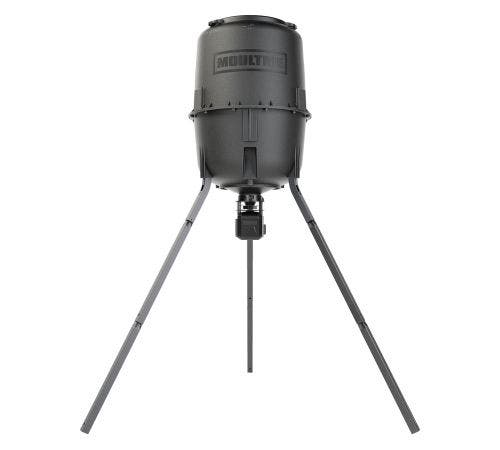
The Pro Hunter III 250 is Moultrie’s flagship broadcast tripod, and it is the default recommendation for a reason: it combines the largest practical capacity in this lineup with the most flexible timer Moultrie sells. The 250-pound hopper sits at a 6-foot fill height on six powder-coated steel leg sections, so most adults can fill it standing on the ground without a ladder, and the metal spin plate broadcasts corn in a full 360-degree circle. Programming is done either on the built-in Universal Digital Timer III or from the free Moultrie app over Bluetooth, with no subscription, and you can set up to 10 feed times a day at 1 to 60 seconds each, with high, medium, and low motor speeds to change how widely the corn spreads.
The honest weaknesses are the ones that come with any 6-volt system. The 6V tab-top rechargeable battery is sold separately, so budget for it on day one, and the feeder only reports an estimated feed level rather than a weighed one, so treat the app’s remaining-feed figure as a guide, not a gauge. If you already run an EDGE 3 Series camera, the feeder can pair with it for cellular control of feed times; note that Moultrie’s own support pages say this bridge needs an EDGE 3 specifically — earlier EDGE and EDGE 2 cameras are not compatible — and the feeder and camera must sit within about 300 feet of each other.
✅ Pros
- 250 lb capacity with a ground-level 6-foot fill height
- Up to 10 feed times a day, 1–60 seconds each, with three motor speeds
- Bluetooth programming with no subscription; EDGE 3 pairing for cellular control
- Quick-Lock mount swaps feeder kits without tools
- Solar-ready for the Moultrie 6V feeder solar panel
❌ Cons
- 6V tab-top battery sold separately
- Feed level reporting is estimated, not measured
- Cellular control needs a separate EDGE 3 camera, not just the feeder
🧑🌾 From the field: Owner reports on the Pro Hunter III kit are genuinely mixed, and that is useful information. On Scheels, the kit averages 3.5 stars across 28 reviews: one owner who runs two 200-pound feeders and a 250 wrote that they love the feeder overall but were disappointed to find only two connectors in the box, while another reported the kit worked well for about a month, then lost its connection, spun all the corn out, and killed the battery — but also reported that Moultrie support walked them through tests, replaced the unit promptly, and even sent a replacement battery. The pattern to take away: the kit is capable, support does respond, and you should test a new unit at home before hauling it to a remote property.
| Spec | Detail |
|---|---|
| Model | MFG-15104 (Pro Hunter III kit MFG-15097) |
| Capacity | 250 lb |
| Distribution | 360° broadcast, metal spin plate |
| Feed times | Up to 10 per day, 1–60 seconds each |
| Motor speeds | High / medium / low |
| Power | 6V tab-top rechargeable battery (sold separately); solar compatible |
| Connectivity | Bluetooth via free Moultrie app; cellular via EDGE 3 Series camera pairing |
| Fill height | 6 feet; six powder-coated steel leg sections |
| Operating temperature | 14°F to 140°F |
| Warranty | 1 year |
2. Moultrie Connected 250 — Best for remote control from anywhere
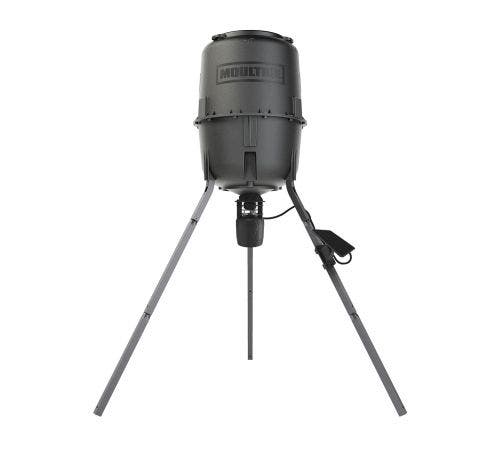
The Connected 250 is the only feeder in this lineup with its own cellular connection. It carries a Feed Hub Kit with an integrated cellular timer plus a Feed Level Detector mounted under the hopper lid, so from the Moultrie app you can change feed times, run the feeder on demand, watch estimated feed and battery levels, and get alerts for clogs and jams — from anywhere, not just from within Bluetooth range. The 250-pound hopper, 6-foot fill height, and 360-degree broadcast match the Pro Hunter III, and the 6V feeder solar panel is included in the box, which matters because a cellular feeder that goes dark is worse than a dumb one.
The cost that catches buyers out is the subscription. Moultrie states plainly that an active Moultrie app subscription is required to set up and use this feeder, at $6.99 per month or $49.99 per year (seen October 2026). That is a fair price for genuine remote control, but it is a running cost the Bluetooth models do not have, so do not buy this feeder and then resent the plan. The second gotcha comes from Field & Stream’s hands-on test: setup took under 45 minutes with only a Phillips screwdriver, but the tester discovered in the field that the motor battery was sold separately and had to order one and return to finish setup. Order the battery with the feeder.
✅ Pros
- True cellular control: change schedules and run feeds on demand from anywhere
- Feed Level Detector plus clog, jam, and low-battery alerts in the app
- 6V solar panel included for season-long power
- 250 lb capacity, 6-foot fill height, 10 feed times a day
❌ Cons
- Requires a paid app subscription ($6.99/month or $49.99/year, seen October 2026)
- Motor battery sold separately despite the included solar panel
- Cellular coverage at the feeder site is a precondition — check signal before you buy
🧑🌾 From the field: Field & Stream’s tester, who ran the feeder for a couple of weeks ahead of a full review, called setup “painless” at under 45 minutes including app sign-up and pairing, praised the large capacity and the included solar panel, and listed the subscription and the separately sold battery as the two real downsides. That matches Moultrie’s own spec sheet almost exactly, which is reassuring: what the box promises is what the tester found, with the battery surprise as the one thing to plan around.
| Spec | Detail |
|---|---|
| Model | MFG-15106 (Feed Hub Kit) |
| Capacity | 250 lb |
| Distribution | 360° broadcast, metal spin plate |
| Feed times | Up to 10 per day, 1–60 seconds each |
| Motor speeds | High / medium / low |
| Power | 6V battery; 6V feeder solar panel included |
| Connectivity | Cellular, all major networks with auto-connect; Moultrie app |
| Fill height | 6 feet; six steel leg sections |
| Operating temperature | 14°F to 140°F |
| Warranty | 1 year |
3. Moultrie Pro Hunter III Directional 250 — Best for trails, lanes, and pond banks
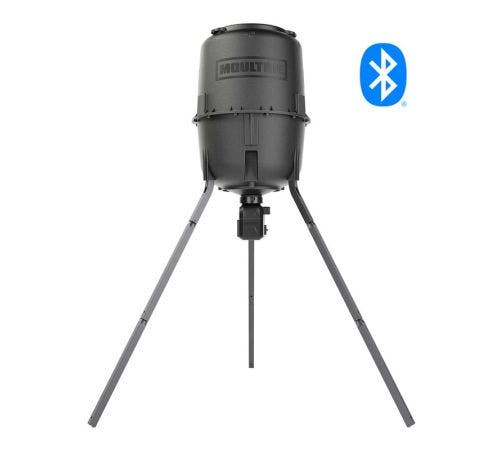
Most broadcast feeders waste corn where deer never stand. The Directional 250 solves that with a directional kit that throws feed forward in a concentrated path instead of a full circle, which is exactly what you want on a game trail, a narrow lane between bedding and food, or a pond bank where broadcast feed would land in the water or the brush. Everything else matches the standard Pro Hunter III: 250-pound capacity, 6-foot fill height, six steel leg sections, Universal Digital Timer III with Bluetooth, up to 10 feed times a day at 1 to 60 seconds, high/medium/low motor speeds, and a metal spin plate.
Two honest limits. First, Moultrie does not publish a throw-distance or spread-angle figure for this kit in its product listing, so we do not print one — use the motor-speed settings and the kit’s test-feed button to check the actual pattern on your own ground before hunting over it. Second, a directional feeder only pays off if you aim it well: point it down the trail or lane, not across it, and remember that deer still need room to approach the feed without feeling trapped against a fence or water.
✅ Pros
- Directional feeding puts corn where deer actually walk, not into brush or water
- Same 250 lb capacity and 10-feed timer as the flagship broadcast model
- Bluetooth programming with no subscription
- Suits fish ponds as well as deer trails (Moultrie markets it for both)
❌ Cons
- No published throw-distance or spread-angle figure — verify the pattern yourself
- Useless if aimed badly; placement matters more than with a broadcast feeder
- 6V tab-top battery sold separately
🧑🌾 From the field: The directional kit’s manual and Moultrie’s support pages both stress the same practical points: position the feeder for the trail or water’s edge, and use the test-feed function to confirm the pattern. Long-running forum owners of older Moultrie directional kits report the same lesson from the other direction — a directional feeder that is hung or aimed without a test throw is the one that ends up feeding the brush. Treat the first test spin as part of setup, not an optional extra.
| Spec | Detail |
|---|---|
| Model | MFG-15105 (Pro Hunter III Directional kit) |
| Capacity | 250 lb |
| Distribution | Directional, metal spin plate |
| Feed times | Up to 10 per day, 1–60 seconds each |
| Motor speeds | High / medium / low |
| Power | 6V tab-top battery (sold separately); solar compatible |
| Connectivity | Bluetooth via free Moultrie app |
| Fill height | 6 feet; six steel leg sections |
| Operating temperature | 14°F to 140°F |
| Warranty | 1 year |
4. Moultrie 200 lb Standard — Best value tripod
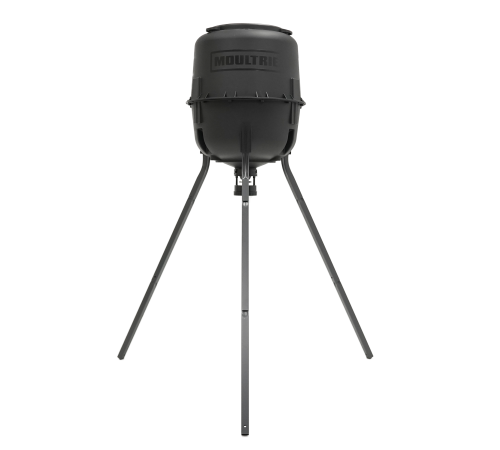
The 200 lb Standard is the cheapest way into a proper Moultrie tripod, and for many properties it is all you need. The 200-pound hopper fills at 5.5 feet — slightly lower than the 250-pound models, which makes refills easier — and the ALL-IN-ONE II kit broadcasts in a full 360-degree circle with a programmable timer and Bluetooth control through the free Moultrie app. It runs on ordinary AA batteries (4, or 8 for extended operation) instead of a 6-volt battery, which means you can buy power at any gas station on the way to the lease, and it accepts Moultrie’s 6V feeder solar panel if you want to stop swapping batteries.
The trade-offs against the Pro Hunter III are real but clearly bounded: up to 4 feed times a day instead of 10, run times of 1 to 20 seconds instead of 1 to 60, and no high/medium/low motor-speed settings. For a dawn-and-dusk corn schedule, none of that matters. For a manager running many short feeds through the day, it does. Long-term owners on hunting forums report the AA-powered Moultrie feeders lasting 8 to 9 years with occasional spinner-plate replacement every 3 to 5 years, but also note the AA motor is less strong and can hang up if the corn is not clean — buy clean, dry corn and the problem mostly goes away.
✅ Pros
- Lowest-priced Moultrie tripod in the lineup
- Runs on AA batteries available anywhere; solar compatible
- 5.5-foot fill height is the easiest tripod here to refill
- Bluetooth programming with no subscription; EDGE 3 pairing for cellular control
❌ Cons
- Only 4 feed times a day, 1–20 seconds each
- No motor-speed settings to tune spread
- AA motor is less strong than the 6V kits and can hang up on dirty corn
🧑🌾 From the field: Retailer ratings put this feeder in the solid middle: 3.7 stars across 208 reviews at Academy and 4.0 across 43 at Sportsman’s Warehouse. The forum owner quoted above, who runs five Moultrie 200-pound feeders, calls battery life “fantastic in both types” (AA and 6-volt), prefers the AA models’ throw pattern, and swears by a low-tech varmint fix — petroleum jelly on the bottom two to three feet of the legs, which he says makes the legs unclimbable for raccoons. It is the kind of cheap, field-proven detail no spec sheet carries.
| Spec | Detail |
|---|---|
| Model | MFG-15103 (ALL-IN-ONE II kit) |
| Capacity | 200 lb |
| Distribution | 360° broadcast, metal spin plate |
| Feed times | Up to 4 per day, 1–20 seconds each |
| Power | 4 AA batteries, or 8 for extended operation (not included); solar compatible |
| Connectivity | Bluetooth via free Moultrie app; cellular via EDGE 3 Series camera pairing |
| Fill height | 5.5 feet; powder-coated steel legs |
| Warranty | 1 year limited |
5. Moultrie 250 Gravity — Best for no power, no timer, no fuss
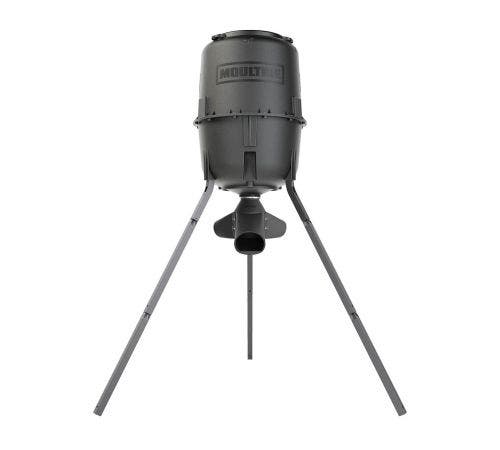
The 250 Gravity is the only feeder here with nothing to program, charge, or troubleshoot. Its 30-gallon hopper holds up to 250 pounds of corn, protein pellets, or mixed grain, and a triple-funnel distribution system with adjustable flow lets feed fall by gravity whenever deer eat. There is no battery, no motor, and no app — which also means there is nothing to fail in a remote spot in January. A twist-on lid keeps feed dry and discourages raccoons, and the integrated Quick-Lock adapter means you can later convert the same hopper to a motorized Moultrie kit instead of buying a whole new feeder.
The trade-off is control. Gravity feeders feed all day, so consumption depends on deer traffic rather than your schedule, and in a high-traffic spot a 250-pound hopper can empty faster than a timed feeder’s would. They also suit corn and pellets differently: the adjustable funnels handle both, but pellets bridge and cake more easily in damp weather, so check the funnels after rain. If your goal is supplemental nutrition through spring and summer rather than timed attraction during hunting season, those trade-offs point in gravity’s favor.
✅ Pros
- No battery, motor, timer, or subscription — nothing electronic to fail
- 250 lb capacity in a 30-gallon hopper; protein-pellet ready
- Triple funnel system with adjustable flow for corn, pellets, or mixed grain
- Quick-Lock adapter allows later conversion to a motorized kit
❌ Cons
- No feeding schedule — deer eat on their own timetable
- High-traffic spots can drain the hopper faster than a timed feeder would
- No Bluetooth, app, or feed-level reporting of any kind
🧑🌾 From the field: Gravity-feeder owners consistently report the same two lessons: site selection matters more than with a spin feeder, because the feeder is always “on,” and a locking, twist-on lid is worth more than any varmint gadget once raccoons find the spot. The conversion adapter is the feature experienced buyers mention most — buy gravity now, and if you later want timed feeding, you swap the kit rather than replacing the feeder.
| Spec | Detail |
|---|---|
| Model | MFG-15107 |
| Capacity | 250 lb (30-gallon hopper) |
| Distribution | Gravity, triple funnel with adjustable flow |
| Feed types | Corn, protein pellets, mixed grain |
| Power | None required |
| Connectivity | None (Quick-Lock adapter allows later motorized-kit conversion) |
| Lid | Twist-on / snap-on locking lid |
| Warranty | 1 year (per Moultrie lineup standard) |
6. Moultrie 40 lb Directional Hanging — Best hanging feeder for a trail or pond

Hang this feeder from a limb, cable, or bracket over a trail or pond bank and it does the same job as the big Directional tripod at a fraction of the size and price. The 40-pound metal hopper and lid protect feed from weather and varmints better than a plastic bucket, and the Pro Hunter III Directional kit throws feed in a targeted direction rather than scattering it in a circle — which is the whole point on a narrow trail or a pond bank, where broadcast feed would land where nothing eats it. Bluetooth programming through the free Moultrie app means you can change the schedule without climbing up to the feeder.
The limit is capacity: 40 pounds is roughly one bag of corn, so this is a supplement to a main feeder or a dedicated spot feeder, not a season-long food source. Refill frequency is the price of the small, hang-anywhere format. Moultrie-direct list pricing seen in October 2026 put it at $99.99, which makes it the cheapest directional option in the lineup by a wide margin.
✅ Pros
- Directional feeding from a hanging mount — ideal for trails and pond banks
- Metal hopper and lid for weather and varmint resistance
- Pro Hunter III Directional kit with Bluetooth programming, no subscription
- Hang-anywhere placement without legs or a tripod footprint
❌ Cons
- Only 40 lb capacity — plan on frequent refills
- Needs a strong limb, cable, or bracket rated for a full hopper plus the feeder
- Directional aim must be checked with a test feed after hanging
🧑🌾 From the field: Retail listings for this feeder consistently highlight the same two uses — fish ponds and game trails — and local-store stock checks show it carried at Bass Pro Shops and Cabela’s locations, which matters if you want to see one before buying. Owners of older Moultrie hanging directional feeders report the same practical warning as tripod directional owners: hang it, test it, and only then walk away.
| Spec | Detail |
|---|---|
| Model | 40 lb Hanging Directional (Pro Hunter III Directional kit) |
| Capacity | 40 lb |
| Distribution | Directional |
| Hopper | Metal hopper and lid |
| Connectivity | Bluetooth via free Moultrie app |
| Mounting | Hanging (limb, cable, or bracket) |
| Warranty | 1 year (per Moultrie lineup standard) |
7. Moultrie 40 lb Hanging — Best small hanging broadcast feeder
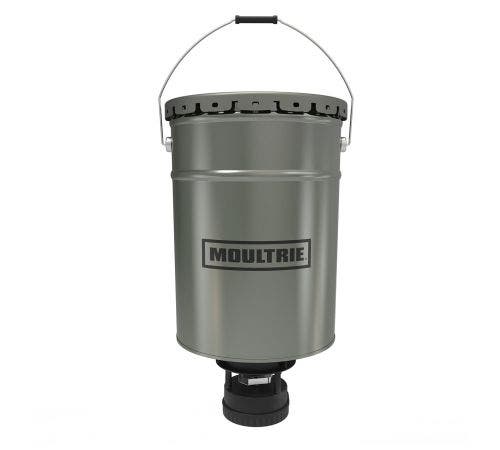
The 40 lb Hanging is the straightforward choice for a small spot: a powder-coated steel hopper that holds 40 pounds of corn, a digital timer with up to 4 feed times a day at 1 to 20 seconds each, and Bluetooth programming through the free Moultrie app, all in a unit that hangs from a limb or cable. There is no tripod to assemble, no legs to anchor, and no 6-volt battery to buy — it runs on 4 AA batteries. For a backyard feeding station, a small food plot corner, or a first feeder on a new lease, that simplicity is the appeal.
The limits are the same as any small hanging feeder. Forty pounds goes quickly once deer find it, so expect weekly refills in season, and the hanger itself has to carry the full weight of a loaded hopper safely — use a rated cable or bracket, not a light rope. The 4-feed, 20-second timer is also the simpler ALL-IN-ONE-style schedule, not the Pro Hunter III’s 10-feed, 60-second range, so if you want many short feeds through the day, look at the tripods instead.
✅ Pros
- Simple hanging setup — no tripod, no legs, no 6V battery
- Steel hopper with a lid that protects feed from weather and pests
- Bluetooth programming with no subscription
- Lowest fuss of any timed Moultrie feeder here
❌ Cons
- Only 40 lb capacity — frequent refills in season
- Simpler timer: 4 feeds a day, 1–20 seconds each
- Hanger must be rated for the full loaded weight
🧑🌾 From the field: The 40-pound hanging format is the one small-property owners buy twice: once to try a spot, and again for the next spot once the first one works. Its manual stresses the same basics as the rest of the lineup — fill only with dry feed, secure the lid, and verify the schedule in the app or on the unit if a feed is missed — which is a reminder that most “feeder stopped working” stories end at batteries, a jam, or a schedule that was never saved.
| Spec | Detail |
|---|---|
| Model | MFG-15101 |
| Capacity | 40 lb |
| Distribution | 360° broadcast |
| Feed times | Up to 4 per day, 1–20 seconds each |
| Power | 4 AA batteries (sold separately) |
| Connectivity | Bluetooth via free Moultrie app |
| Hopper | Powder-coated steel with lid |
| Mounting | Hanging |
| Warranty | 1 year |
8. Moultrie 30 lb Hanging — Best for backyards and portable spots
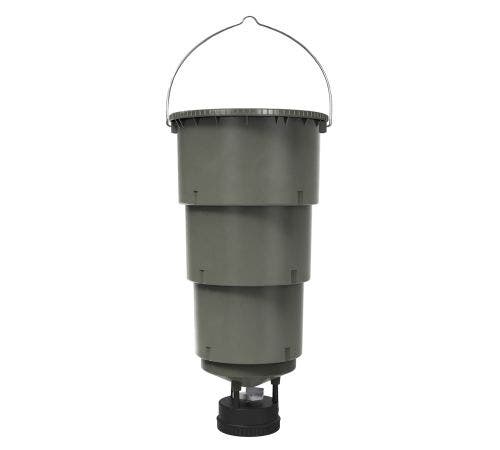
The 30 lb Hanging is the smallest, lightest feeder in this guide, and its trick is the collapsible bucket: it packs down to 13.05 by 12.65 by 7.6 inches and weighs just 5.49 pounds empty, so it travels in a truck bed or a storage tote without a second thought. Set up, it is a 30-pound ALL-IN-ONE II feeder with 360-degree broadcast, a digital timer with up to 4 feed times a day at 1 to 20 seconds each, Bluetooth programming with no subscription, and a removable battery tray that makes AA swaps quick. Moultrie pitches it for “honey holes,” backyards, and wildlife viewing, and that is exactly where it fits.
Thirty pounds is the obvious limit — this is a spot feeder, not a herd feeder — and the manual’s own troubleshooting section is a useful warning label: Bluetooth only works within about 300 feet, feed can jam if it gets damp or clumpy, and missed feeds are most often low batteries, a schedule that was never saved, or the feeder being out of range. Keep the feed dry, keep spare AAs in the truck, and it does what it promises.
✅ Pros
- Collapsible bucket packs flat for transport and storage
- Lightest feeder here at 5.49 lb empty
- Removable battery tray for fast AA swaps
- Bluetooth programming with no subscription; EDGE 3 pairing for cellular control
❌ Cons
- Only 30 lb capacity — the most frequent refills in this guide
- Simpler timer: 4 feeds a day, 1–20 seconds each
- Bluetooth range is about 300 feet — you program it on site, not from home
🧑🌾 From the field: Retailers describe this feeder the same way Moultrie does — a compact, portable answer for focused spots rather than a property-wide solution — and that consistency is the point. Buyers who expect a 30-pound hanging feeder to feed a herd all season will be disappointed; buyers who want a cheap, portable feeder for one trail, one backyard, or one pond corner get exactly what the box describes.
| Spec | Detail |
|---|---|
| Model | MFG-15100 (ALL-IN-ONE II kit) |
| Capacity | 30 lb |
| Distribution | 360° broadcast |
| Feed times | Up to 4 per day, 1–20 seconds each |
| Power | 4 AA batteries, or 8 for extended operation (not included) |
| Connectivity | Bluetooth via free Moultrie app; cellular via EDGE 3 Series camera pairing |
| Dimensions (collapsed) | 13.05″ × 12.65″ × 7.6″ |
| Weight (empty) | 5.49 lb |
| Warranty | 1 year |
Video: what to watch before you buy
No YouTube video ID was verified for embedding in this guide, so no video is embedded here — embedding an unverified ID would risk a dead or wrong video on a money page. Before publishing, the publisher should confirm IDs on Moultrie’s official channel and on the Field & Stream Connected review, and embed only confirmed videos. What to look for in a useful video: a Pro Hunter III setup walkthrough showing the Quick-Lock mount and the timer door, a Connected app walkthrough showing a schedule change and a feed-on-demand trigger, and a directional test throw showing the actual spread pattern on open ground. A video that only shows a feeder spinning corn in a yard proves nothing about scheduling, battery life, or app behavior — skip those.
What a Moultrie feeder really costs
The feeder price is only the first line. The table below uses Moultrie-direct list prices seen in October 2026 for the feeder itself and its common accessories, plus the Connected subscription. Amazon prices will differ and change daily — use the Check Price buttons for the live figure.
| Cost item | What owners report / list figure | Notes |
|---|---|---|
| Pro Hunter III 250 (feeder) | $169.99 Moultrie-direct list, seen October 2026 | Battery not included — add it below |
| Connected 250 (feeder) | $199.99 Moultrie-direct list, seen October 2026 | Solar panel included; motor battery sold separately |
| Pro Hunter III Directional 250 (feeder) | $169.99 Moultrie-direct list, seen October 2026 | Battery not included |
| 200 lb Standard (feeder) | $119.99 Moultrie-direct list, seen October 2026 | AA batteries not included |
| 250 Gravity (feeder) | $159.99 Moultrie-direct list, seen October 2026 | No power costs at all |
| 40 lb Directional Hanging (feeder) | $99.99 Moultrie-direct list, seen October 2026 | Plus hanger/cable if you do not own one |
| 40 lb Hanging (feeder) | $79.99 Moultrie-direct list, seen October 2026 | Plus hanger/cable; AA batteries not included |
| 30 lb Hanging (feeder) | $69.99 Moultrie-direct list, seen October 2026 | Plus hanger/cable; AA batteries not included |
| 6V tab-top rechargeable battery | $12.99 Moultrie-direct list, seen October 2026 | Required for the Pro Hunter III models; buy it with the feeder |
| 6V feeder solar panel | $49.99 Moultrie-direct list, seen October 2026 | Included with Connected; optional on the other 6V and solar-ready models |
| Connected app subscription | $6.99/month or $49.99/year, seen October 2026 | Required for the Connected feeder; not needed for any Bluetooth model |
| AA batteries (per season) | A few dollars per set; 4 or 8 per feeder | The 200 lb Standard and both small hanging feeders run on AAs |
Takeaway: the cheapest feeder to own over three years is the 250 Gravity, because it has no power or subscription cost at all. The most expensive is the Connected 250, but only because of its subscription — roughly $150 to $210 over three years on top of the feeder — and that cost buys something no other feeder here offers: control from anywhere. The Bluetooth tripods sit in the middle: one battery and optionally one solar panel, then nothing.
How to choose
Broadcast or directional: which pattern does your spot need?
Broadcast feeders throw a full circle and suit open food plots, clearings, and anywhere deer approach from every direction. Directional feeders throw forward in a concentrated path and suit trails, lanes, fence lines, and pond banks. The mistake is buying a broadcast feeder for a trail: half the corn lands where deer never walk. The reverse mistake — a directional feeder in an open plot — starves half the plot. Walk the spot, look at the trails deer actually use, and let that decide. If you are unsure, buy broadcast; it is the forgiving choice.
Bluetooth, EDGE 3 pairing, or full cellular: how much remote control do you really need?
Three levels exist in this lineup, and they are easy to confuse. Level one is Bluetooth: free, no subscription, works within about 300 feet of the feeder — you program it from your phone while you are at the property. Level two is Bluetooth plus an EDGE 3 Series camera: the camera bridges the feeder to cellular, so feed times can be managed remotely, but you must own the camera and keep it within about 300 feet of the feeder, and earlier EDGE and EDGE 2 cameras do not work for this. Level three is the Connected 250’s built-in cellular timer: no camera needed, control from anywhere, but a paid subscription is required. Buy the lowest level that matches how often you visit. Most hunters who visit weekly never need level three.
6V or AA power: what happens when the battery dies mid-season?
The Pro Hunter III models and the Connected run on a 6V tab-top rechargeable battery, which is stronger and pairs with Moultrie’s 6V solar panel for season-long power — but it is a specialty battery you must order, and if it dies you cannot replace it at a gas station. The 200 lb Standard and both small hanging feeders run on AA batteries, which are weaker per Moultrie’s own support guidance (Moultrie recommends alkaline or lithium AAs, not rechargeables, for its kits) but available everywhere. Whichever you choose, carry spares and check the battery level in the app or on the timer screen before the season, not after the first missed feed. Moultrie’s support pages note that a feeder showing below 20 percent battery can start missing feeds.
Capacity and fill access: how often can you honestly visit?
A 250-pound tripod at a 6-foot fill height is a two-person-friendly, ground-level refill every few weeks for a typical corn schedule. A 200-pound tripod at 5.5 feet is slightly easier to fill. A 30- or 40-pound hanging feeder is a weekly refill in season and a ladder or lowered-cable job every time. Be honest about visit frequency before you fall in love with a small feeder: the best feeder is the one that still has corn in it on the morning you hunt. If you cannot visit weekly, buy tripod capacity or go gravity, and put a solar panel on anything with a battery.
Resources hub
- Moultrie vs Wildgame deer feeders: which brand fits your property?
- Best tripod deer feeders: 7 stable, high-capacity picks
- Best deer feeder timer: 7 replacement checks
- Best deer feeders 2026: 16 top-rated models compared
- Best gravity deer feeders: 10 models compared
- Best protein deer feeders: 7 models, evidence and trade-offs
- Deer feeder solar panel: 6V and 12V buying checks
- Deer feeder batteries: best 6V and 12V picks
- Are deer feeders legal in Texas? 2026 rules explained
- Are deer feeders legal in Georgia? 2026 rules explained
- Moultrie support: Pro Hunter III feeder kit will not spin (official troubleshooting)
- Moultrie: 250 lb Deer Feeder Connected (official product page)
Frequently asked questions
Which Moultrie deer feeder is best overall?
The Moultrie Pro Hunter III 250. It holds 250 pounds, broadcasts in a full circle, offers up to 10 feed times a day at 1 to 60 seconds each with three motor speeds, and programs over Bluetooth with no subscription. Buy the Connected 250 instead only if you need cellular control from far away, and buy the 250 Gravity if you want no electronics at all.
What is the difference between the Pro Hunter III kit and the ALL-IN-ONE II kit?
The Pro Hunter III kit is Moultrie’s premium kit: up to 10 feed times a day, 1 to 60 seconds each, high/medium/low motor speeds, and a 6V tab-top battery. The ALL-IN-ONE II kit is the simpler, cheaper kit on the 200 lb Standard and the 30 lb Hanging: up to 4 feed times a day, 1 to 20 seconds each, and AA batteries. Both program over Bluetooth with no subscription.
Do Moultrie feeders require a subscription?
Most do not. Bluetooth programming through the free Moultrie app requires no subscription on the Pro Hunter III, Standard, and hanging models. The exception is the Connected 250: its built-in cellular control requires an active Moultrie app subscription, $6.99 per month or $49.99 per year as seen in October 2026. Pairing a Bluetooth feeder with an EDGE 3 camera for cellular control uses the camera’s own cellular plan, not a feeder subscription.
Can I control a Moultrie feeder from home?
Only with cellular. Bluetooth works within about 300 feet of the feeder, so you program it while you are at the property. For control from home you need either the Connected 250 with its built-in cellular timer and paid app plan, or a Bluetooth feeder paired with an EDGE 3 Series camera (not EDGE or EDGE 2) sitting within about 300 feet of the feeder.
How far does a Moultrie feeder throw corn?
Moultrie does not publish a throw-distance figure for these models in its product listings or manuals. Instead, the Pro Hunter III models offer high, medium, and low motor-speed settings, and the kits include a test-feed function. Use a test spin on your own ground to see the real pattern before hunting over the feeder, and do not trust any review that prints an exact distance for these models without a source.
What batteries do Moultrie feeders take?
It depends on the model. The Pro Hunter III 250, Pro Hunter III Directional 250, and Connected 250 use a 6V tab-top rechargeable battery, sold separately except where noted. The 200 lb Standard uses 4 AA batteries, or 8 for extended operation. The 40 lb Hanging uses 4 AAs. The 30 lb Hanging uses 4 AAs, or 8 for extended operation. Moultrie recommends alkaline or lithium AAs for its kits, not rechargeables, and notes that feeders showing below 20 percent battery can start missing feeds.
Can I add a solar panel to a Moultrie feeder?
Yes on the solar-ready models. Moultrie’s 6V feeder solar panel fits the Pro Hunter III models, the 200 lb Standard, and the hanging models that list solar compatibility, and it is included in the box with the Connected 250. A panel does not replace the battery — it keeps the battery charged — so you still need the right battery installed.
What is Moultrie’s Quick-Lock system?
Quick-Lock is Moultrie’s tool-free mount between the feeder kit and the hopper. It lets you attach or swap a feeder kit — for example, upgrading the 250 Gravity hopper to a motorized kit later — without tools. It also means a kit from one Quick-Lock Moultrie hopper can move to another compatible Moultrie hopper.
Is a gravity feeder or a spin feeder better for protein pellets?
Both work, with different trade-offs. The 250 Gravity handles pellets through three adjustable funnels and never runs out of battery, but pellets can bridge and cake in damp weather, so check the funnels after rain. A spin feeder meters pellets on a schedule and keeps them sealed in the hopper until each feed, but a jammed spin plate stops feeding entirely until you clear it. For spring and summer nutrition, gravity is simpler; for timed attraction in hunting season, spin wins.
Can a Moultrie directional feeder be used for a fish pond?
Yes — Moultrie markets its directional feeders for fish ponds as well as game trails. The point of directional feeding at a pond is the same as on a trail: feed lands in the water where fish feed, not on the bank or in the brush. Hang or mount the feeder so the throw lands on open water, and test the pattern before leaving it.
Should I buy a tripod or a hanging Moultrie feeder?
Buy a tripod if you need 200 to 250 pounds of capacity and ground-level refills, and you have open ground for legs. Buy a hanging feeder if the spot is small, wooded, or over water, if you need directional feeding from a limb or cable, or if you want a cheap second feeder for one trail. The price of hanging is capacity: 30 to 40 pounds means weekly refills in season.
What warranty do Moultrie feeders carry?
The 200 lb Standard is described as carrying a 1-year limited warranty. Warranty terms vary by model, so check the manual for the exact feeder you buy, and keep your proof of purchase: Moultrie’s manuals and support pages ask for the model number and proof of purchase for warranty claims.
Final verdict
Buy the Moultrie Pro Hunter III 250 if you want the best all-around Moultrie deer feeder: 250 pounds, a full-circle broadcast, the most flexible timer in the lineup, and free Bluetooth programming. Buy the Connected 250 if you manage the feeder from far away and accept the subscription as the price of real remote control. Buy the Pro Hunter III Directional 250 if your feeder sits on a trail, lane, or pond bank. Buy the 200 lb Standard if you want the cheapest good tripod and are happy with four feeds a day on AA batteries. Buy the 250 Gravity if you want nothing electronic at all. Buy the 40 lb Directional Hanging for a trail or pond spot, the 40 lb Hanging for a simple small broadcast feeder, and the 30 lb Hanging for a backyard or portable spot.
Before you hunt over any timed feeder, check your state’s feeding and baiting rules — they vary, and a feeder that is legal for supplemental feeding may not be legal to hunt over in your state. And whatever you buy, order the battery with the feeder, run a test feed on your own ground, and save the schedule in the app before you walk away. Most “feeder stopped working” stories are a dead battery, a jam, or a schedule that was never saved.
Check the Pro Hunter III 250 on Amazon →
Last updated: October 25, 2026.
Products mentioned in this guide
Moultrie Pro Hunter III 250 lb Deer Feeder
Check Price on Amazon →Confirm price and availability on AmazonSee this product on Amazon
Check Price on Amazon →Confirm price and availability on AmazonMoultrie Pro Hunter III Directional 250 lb Feeder
Check Price on Amazon →Confirm price and availability on AmazonMoultrie Connected 250 lb Deer Feeder
Check Price on Amazon →Confirm price and availability on Amazon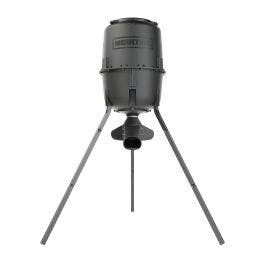
Moultrie 250 lb Gravity Deer Feeder
Check Price on Amazon →Confirm price and availability on AmazonMoultrie 40 lb Directional Hanging Feeder
Check Price on Amazon →Confirm price and availability on AmazonMoultrie 40 lb Hanging Feeder
Check Price on Amazon →Confirm price and availability on AmazonMoultrie 30 lb All-in-One Hanging Feeder
Check Price on Amazon →Confirm price and availability on AmazonAs an Amazon Associate, we earn from qualifying purchases.