Best Hog Trap Gate (2026)
As an Amazon Associate I earn from qualifying purchases.
Updated November 2, 2026 · by Zia
Hog trap gate parts sold on Amazon
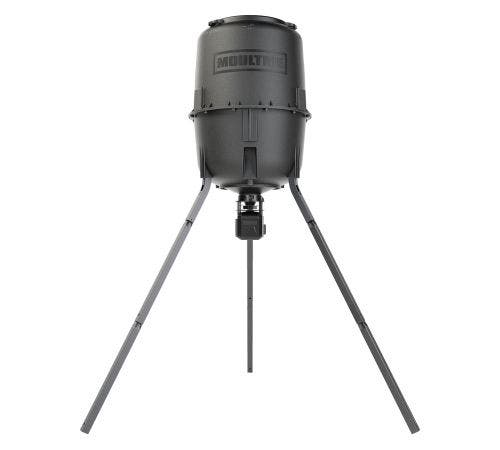
- The Hunt Supply 6 ft Hog Trap Gate: a welded steel gate for a corral-style trap. Check price on Amazon
 Hog Trap Trigger: a remote trigger for closing a trap gate on the whole sounder. Check price on Amazon
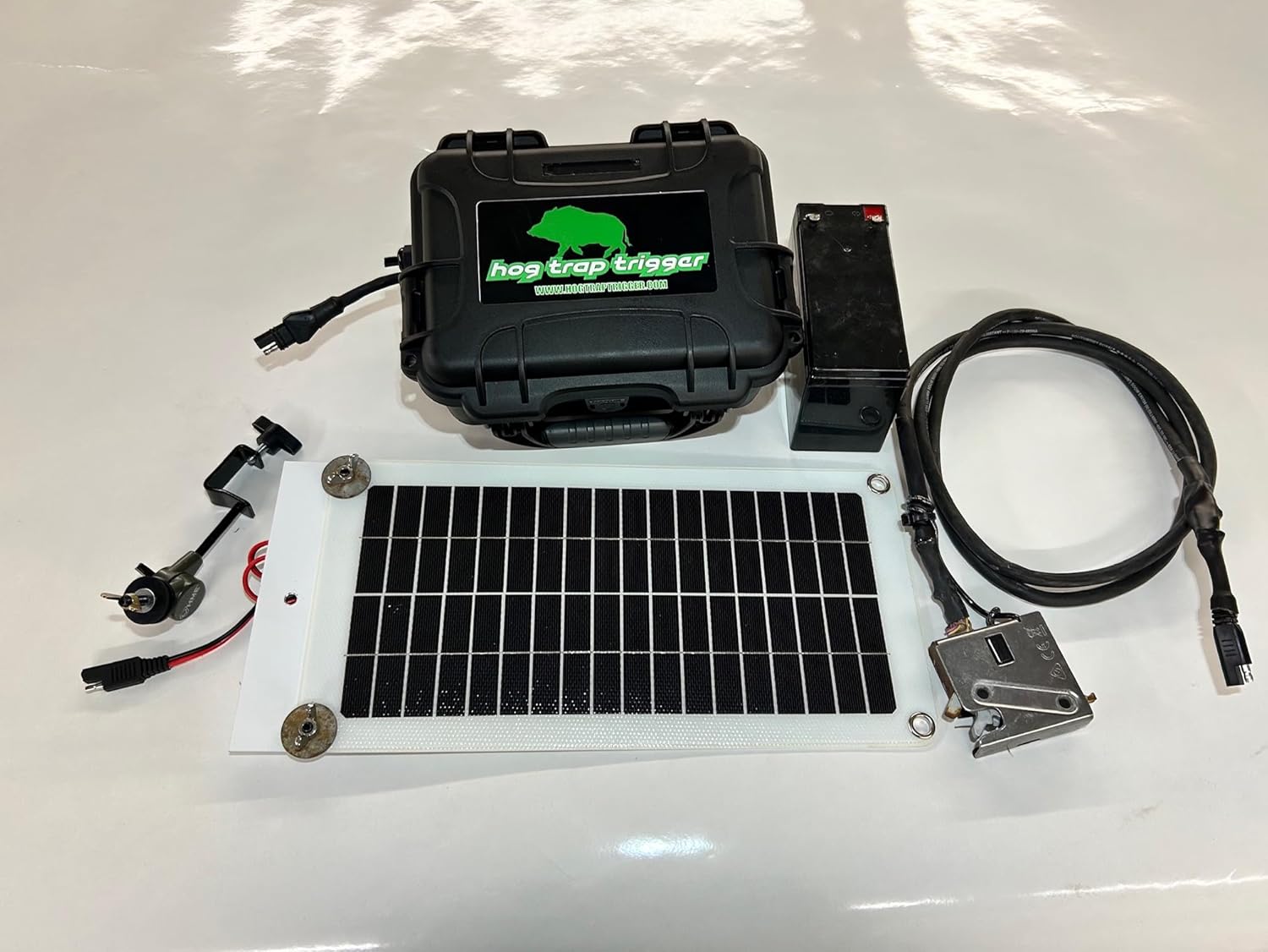
Both have few Amazon reviews so far; check dimensions against your trap first. As an Amazon Associate we earn from qualifying purchases.
On this page
- The short answer
- The five gate types, compared
- At-a-glance comparison table
- Which gate fits your ground? Four steps
- How we picked
- Gate and trap reviews
- Watch: gates dropping in the field
- What a hog trap gate really costs
- How to choose a hog trap gate
- Resources
- Frequently asked questions
- Final verdict
The short answer: buy the gate that catches the whole sounder, not the first pig
Quick answer: With cell service at the trap, the best hog trap gate is a remote drop gate such as the JAGER PRO M.I.N.E. Corporal. Without service, use the Pig Brig net system. On a small budget, fit a spring-loaded saloon gate or a welded steel gate to a corral built from livestock panels.
A hog trap door — the gate on a hog trap — is the part that decides whether your trapping program works or just educates hogs. If you have regular hog pressure and cell service at the trap site, the best hog trap gate for most Southern landowners is a remotely triggered drop gate on a large round corral — the JAGER PRO M.I.N.E. Corporal package is the single-gate version, listed at $3,500 on the maker’s site in October 2026. If you have no cell service, or you want to set a trap and walk away, the Pig Brig Trap System ($2,500, October 2026) catches whole sounders with no gate at all: hogs root under a flexible net and keep coming in. If your budget is small and your hog problem is a few animals at a time, a spring-loaded saloon gate — the Game Winner Hog Trap Saloon Gate ($149.97 at Academy, in-store only, October 2026) or the Hog Slammer ($319.95, October 2026) — fitted to a corral you build from livestock panels is the honest starting point.
The comparison table below lines up all nine options side by side, and the gate-type section explains why the gate matters more than the panels around it.
The five gate types, compared
Searchers call it a hog trap door or a hog trap gate interchangeably; extension services usually say “trap door” or “gate” for the same part. University extension services in the hog belt describe the same handful of gate designs, and the differences between them are not cosmetic. They decide whether late hogs can still enter after the first ones are caught, whether one animal can trip the trap early, and whether you need to be watching a phone at midnight. Mississippi State University Extension divides trap doors into two families: single-catch doors and multi-catch doors, and that split is the single most useful idea in this whole guide.
1. Guillotine and drop gates — single-catch
A guillotine or drop gate is a flat panel held up above the trap opening. When the trigger fires, the panel slides or falls straight down and closes the opening. Mississippi State calls these “single-catch” doors for a precise reason: once the door has closed, no more animals can enter until you walk out and reset it by hand. That makes baiting and timing everything. The university’s advice is blunt — the trap must be baited so that most or all of the pigs in a sounder have entered before the door is released, and with proper pre-baiting and trail-camera footage, a single-catch door can be just as effective as any other type. Texas A&M AgriLife Extension publishes the same design as a build-it-yourself project: a simple, easy-to-build guillotine-style drop gate, with diagrams for the frame, runners, and trigger wire.
Drop gates are also the design behind the remotely triggered systems. The gate itself is the same idea; what changes is who pulls the trigger — a hog stepping on a trip wire, or you watching a camera feed on your phone. The manual for the JAGER PRO M.I.N.E. system carries a crush-hazard warning in capital letters: a heavy drop gate can cause serious injury or death, the gate area must be clear before testing, and at least two people are required for assembly and installation. Treat any drop gate with that level of respect, bought or built.
2. Saloon gates — multi-catch, spring-loaded
A saloon gate is a pair of spring-loaded doors, like the swinging doors of an old western saloon, that hogs push open to enter. Heavy springs snap the doors shut behind each animal, and — critically — hogs still outside can push their way in after the trap has sprung. Mississippi State classes saloon doors as multi-catch doors, alongside rooter doors, and notes that both types are equally effective and that a pig will rarely escape before the door closes. The university adds one caution from southeastern U.S. research: additional captures through a multi-catch door after the first catch are a rare event. In other words, a saloon gate gives late hogs a chance to enter, but do not count on it as a routine second catch.
Saloon gates are the most common buy-it-ready gate in the United States. They need no battery, no cell signal, and no app. Their weakness is the trigger: a trip wire, root stick, or bait-bucket mechanism fires when the first hog reaches it, which is usually before the whole sounder is inside. That is why experienced trappers pre-bait with the gate wired open for days or weeks before they ever set it.
3. Rooter and lifter gates — multi-catch, gravity-closed
A rooter gate (also called a lifter gate) is a one-way door that a hog pushes up or roots under to enter, then falls shut by gravity. Texas A&M lists rooter gates alongside funnels as “continuous” headgates: new pigs can still access the trap after the gate closes on the first pigs to enter — but only if pre-baiting has taught the pigs to use the gate comfortably. The classic rooter design is the three-door box trap sold at farm stores: hogs push through inward-swinging root doors and cannot push them back out. Rooter gates are simple and cheap, and they are the right choice when the target is one to three hogs at a time rather than a whole sounder.
4. Remotely triggered gates — you choose the moment
A remotely triggered gate replaces the trip wire with a camera and a phone. A cellular camera watches the trap and sends photos or live video to your phone; when you can see the whole sounder inside, you send the command and the gate drops. Mississippi State calls the remote-controlled gate “the Cadillac of trap doors and gates”: it can greatly increase the chances of capturing entire sounders, and it saves trips and fuel, but the camera’s SIM card usually needs a monthly renewal, the site needs cell signal, and the system is expensive. One practical tip from the same article: neighbors can share the cost and move the gate between properties as needed.
The key advantage is timing. With a mechanical trigger, the first hog to reach the bait trips the trap. With a remote trigger, the trapper decides. That is the entire difference between catching two pigs and catching twenty, and it is why every professional-grade system on the market now works this way.
5. No gate at all — continuous-catch nets
The newest design removes the gate entirely. A flexible net sits at ground level and hogs root under it to reach bait, the same way they root under brush. Because there is no door to slam and no trigger to time, hogs keep entering, and the net’s shape and stakes are supposed to stop them rooting back out. Pig Brig, developed by wildlife biologists, is the best-known version of this idea. It is not a gate, and we include it here because a buyer comparing hog trap gates in 2026 will meet it in every search — and because for a landowner without cell service, “no gate to watch” can be the right answer.
At-a-glance comparison table
| Product | Best for | Key spec | Gate type | Owner signal | Price (October 2026) |
|---|---|---|---|---|---|
| JAGER PRO M.I.N.E. Sergeant | Whole-sounder removal, two entrances | Two 8 ft gates; 32 ft diameter corral | Remote drop gate | Professional-grade system; used by wildlife-control contractors | Check price at JAGER PRO → ($4,800) |
| JAGER PRO M.I.N.E. Corporal | Whole-sounder removal, one gate | One 8 ft gate; 30 ft diameter corral | Remote drop gate | Same gate and panels as Sergeant, single-gate package | Check price at JAGER PRO → ($3,500) |
| Pig Brig Trap System | No cell service; set and walk away | Approx. 20 ft diameter; 5 ft tall net | No gate — continuous-catch net | 4.8 stars from 468 reviews on the maker’s site | Check price at Pig Brig → ($2,500) |
| BoarBuster | Trap-shy hogs; suspended pen | Circular pen suspended 3–4 ft above ground | Remote suspended drop pen | Developed with the Noble Foundation; dealer network in Texas | Check price at dealer → (price on application) |
| J4 Welding Boar Door gate + trigger | Retrofitting a gate to your own panels | 6 ft wide drop gate; cell-activated trigger | Remote drop gate | Includes 1 year of cell service, 12V battery, solar panel | Check price at J4 Welding → ($1,350) |
| Texas Swine Saloon | Portable saloon-door trap you can roll | 51 in tall × 9.5 ft diameter; approx. 230 lbs | Spring saloon doors | Maker’s best-selling trap for over 10 years | Check price at Red River Arenas → |
| Texas Swine Saloon XL | Larger hogs and mature boars | 6 ft tall × 9.5 ft diameter; approx. 330 lbs | Spring saloon doors | Same design as original, taller sides | Check price at Red River Arenas → |
| Hog Slammer gate | Gate-only saloon build on your own panels | Outside 37¼ in wide × 48 in tall; inside opening 33⅜ in × 42 in | Spring saloon doors | Two 4- and 5-star reviews on the maker’s site | Check price at maker → ($319.95) |
| Game Winner Hog Trap Saloon Gate | Lowest-cost saloon gate | Steel tube, powder-coated; includes 50 ft rope and trigger stick | Spring saloon doors | 4.7 stars from 22 reviews at Academy | Compare saloon gates on Amazon → ($149.97, in-store only) |
| Voorhies 3-Door Feral Hog Trap | Ready-made box trap for a few hogs | 4 ft × 8 ft × 3 ft; 165 lbs; three root doors | Root doors | 4.1 stars; 84% of 189 reviewers recommend it at Tractor Supply | Compare 3-door hog traps on Amazon → ($549.99) |
Prices above come from the makers’ and retailers’ own pages, checked in October 2026. Hog-trap prices move and several of these systems are sold through dealers, so treat every figure as a starting point and confirm before ordering.
Which gate fits your ground? Four steps
- Step 1 — Do you have cell service at the trap site? No: skip remote gates entirely and go to Step 3. Yes: a remote drop gate is on the table — go to Step 2.
- Step 2 — Is your goal the whole sounder? Yes: choose a remote drop gate on a large round corral — the JAGER PRO M.I.N.E. Corporal for one gate, or the Sergeant if you want two entrances. No, a few hogs at a time is enough: a saloon gate will do — go to Step 4.
- Step 3 — No cell service, but you still want whole-sounder catches? Choose the Pig Brig Trap System: no gate, no signal, no watching a phone. If you only need a few hogs and want the cheapest working option, go to Step 4.
- Step 4 — Small budget, small catch? Build a corral from livestock panels and fit a Game Winner or Hog Slammer saloon gate, or buy the ready-made Voorhies 3-Door box trap. Pre-bait with the gate wired open before you ever set it.
How we picked
We did not trap hogs for this guide, and we do not claim otherwise. What we did was aggregate the sources a buyer would actually want: university extension publications from Mississippi State and Texas A&M, manufacturer specification pages and manuals, retailer review summaries, and long-running forum threads where trappers report what worked and what broke. Every specification in the reviews below comes from one of those sources, and the source list lists them.
Three weaknesses in competing roundups shaped this guide. First, most “best hog trap” lists quote a single catch number — “catches 20 hogs!” — without saying whether the gate was remote, mechanical, or a net, which is the detail that decides whether that number is repeatable. Second, several lists present drop-gate prices without the camera, data plan, or battery those gates need to work, so the real cost is hidden. Third, almost none of them mention that state trapping rules differ — a legal setup in one state can be an illegal one across the line — so this guide keeps the legal section general and points you at your own state wildlife agency instead of inventing a rule.
What we did not do: invent test results, invent prices, or invent owner quotes. Where a product’s price could not be verified on a live page, the table says so. Where a product appeared in a search result but had no verifiable maker page — one example is “Drop’N gates,” a name that shows up in video titles but for which we found no manufacturer product page — we left it out rather than guess. The same rule removed several Amazon listings: few hog traps are sold on Amazon at all, and only the two listings we could verify appear in the box above, marked as affiliate links.
Gate and trap reviews
1. JAGER PRO M.I.N.E. Sergeant — Best for whole-sounder removal with two entrances
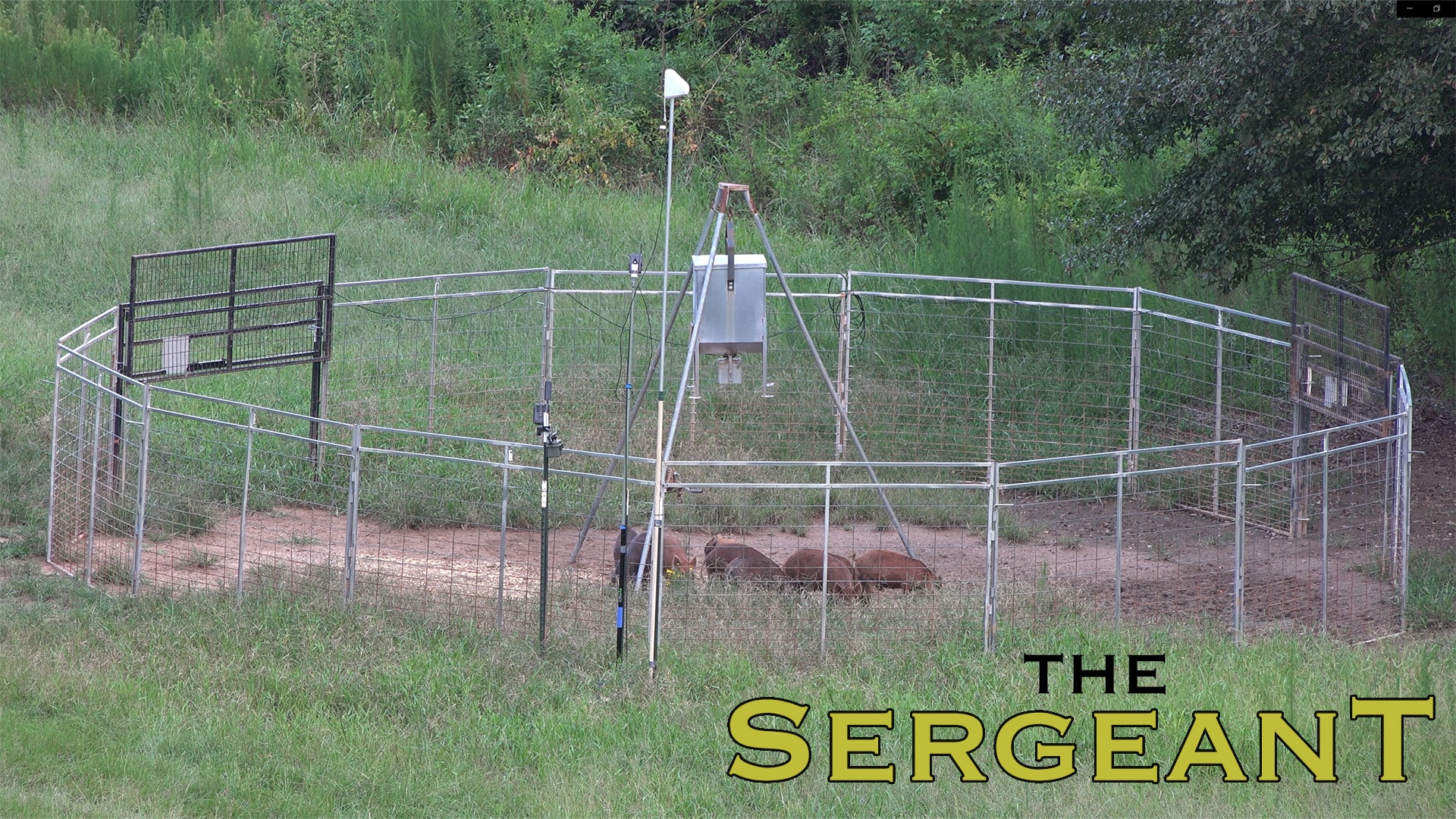
The Sergeant is JAGER PRO’s double-gate remote trap package, built around the M.I.N.E. system — Manually Initiated Nuisance Elimination, meaning the trapper, not a hog, decides when the gate closes. The package includes two M.I.N.E. gates with cellular triggers, one 4G/LTE camera (texting or live stream, Verizon or AT&T), a control box with a 9 amp-hour battery and gate trigger receiver, 18-60 rigid panels, and a push-button remote with a 300-plus-yard range for on-site triggering. The gates are 8 feet wide with no threshold, built from 2-inch by 4-inch welded 6-gauge steel, with openings 40 inches tall by 96 inches wide — wide enough, in the maker’s words, for adult hogs to feed sideways during pre-baiting. Panels and gates are 68 inches tall, and the base configuration forms a 32-foot-diameter corral that can be expanded with more panels. A 24-foot gate opening for pass-through baiting lets hogs walk in and out freely during conditioning, which is exactly how you teach a trap-shy sounder that the trap is safe.
The honest weaknesses are cost and complexity. At $4,800 on the maker’s site in October 2026, this is the most expensive option in this guide before you count the camera data plan, and it needs cell signal, a charged battery, and a trapper willing to watch a phone. If your site has no signal, this system cannot do its job at all. It is also a two-person assembly job by the manufacturer’s own manual, and the drop gates carry a crush hazard that demands the gate area be clear before every test.
✅ Pros
- Two 8 ft threshold-free gates: hogs enter from either side, and trap-shy animals face no frame to step over
- Remote triggering from a phone, tablet, computer, or on-site remote — you choose the moment
- 32 ft diameter base corral with room for a whole sounder, expandable with more panels
- Heavy 6-gauge gate steel and 4-gauge panels, 68 in tall throughout
❌ Cons
- $4,800 before data plan costs (October 2026)
- Useless without cell service at the trap site
- Two-person assembly; heavy drop gates are a crush hazard
🧑🌾 From the field: Realtree’s long-form account of a landowner switching to M.I.N.E. trapping describes the core experience well: after years of indiscriminate trapping and shooting that still left the property losing ground, the remote system let the trapper watch photos, count the sounder, and drop the gate only when the group was inside — the article calls this kind of real-time monitoring “the most effective method for whole-sounder trapping.” On the Georgia Outdoor News forum, one trapper reported a home-built cell-monitored gate rig — solar panel, battery, receiver and relay — for about $700 in parts, which had trapped over 100 hogs in two years; that is the DIY version of the same idea, and it shows both the appeal and the price gap the Sergeant sits in.
| Spec | Detail |
|---|---|
| Gate | Two M.I.N.E. gates, 8 ft wide, no threshold, 2 in × 4 in welded 6-gauge steel |
| Gate opening | 40 in tall × 96 in wide |
| Panels | 18-60 rigid panels, 8 ft wide, 4-gauge galvanized steel, full-length connecting rods |
| Height | 68 in (gates and panels) |
| Base corral | 32 ft diameter, expandable |
| Camera | 4G/LTE M.I.N.E. camera, texting or live stream, Verizon or AT&T |
| Trigger | Phone, tablet, computer, or push-button remote (300+ yard range) |
| Price | $4,800 on jagerpro.com (checked October 2026) |
2. JAGER PRO M.I.N.E. Corporal — Best single-gate remote trap
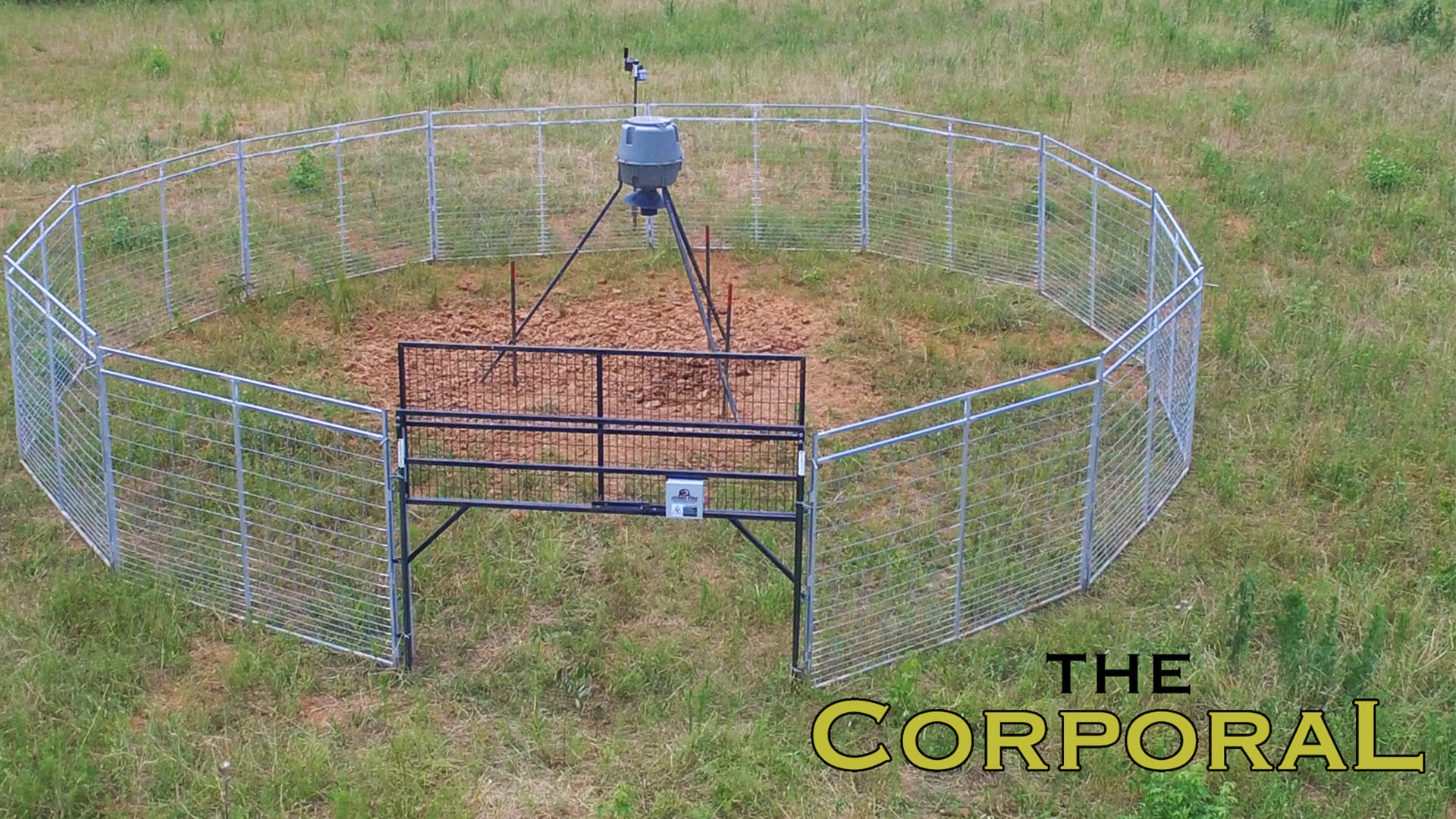
The Corporal is the same system with one gate instead of two. It includes a single M.I.N.E. gate with cellular trigger, one 4G/LTE camera, a control box with a 12V battery, 18-60 rigid panels with 5-foot connecting rods, and the same push-button remote with a 300-plus-yard range. Gate openings are the same 40 inches tall by 96 inches wide, panels and gates are the same 68 inches tall, and the base corral is 30 feet in diameter, expandable. The maker positions it as a step up from its Private package because it uses rigid panels instead of flex panels.
For most single-property owners, the Corporal is the more sensible of the two JAGER PRO packages: one gate is one fewer mechanism to maintain and one fewer entrance to condition hogs through, and the $3,500 October 2026 price saves $1,300 against the Sergeant. The trade-off is real, though — a single entrance means the whole sounder must commit to one opening, and on a property where hogs travel two trails, the Sergeant’s second gate is genuinely useful. The same caveats apply: cell service required, data plan extra, two-person assembly, crush hazard on the drop gate.
✅ Pros
- Same 8 ft threshold-free gate and rigid panels as the Sergeant, at a lower price
- Remote triggering plus on-site remote; live-stream camera option
- 30 ft diameter base corral, expandable for larger sounders
- Assembles and disassembles with one person according to the maker (manual still requires two people for gate installation — follow the manual)
❌ Cons
- $3,500 before data plan costs (October 2026)
- One entrance only — the whole sounder must use a single opening
- Needs cell service; drop gate is a crush hazard
🧑🌾 From the field: The most useful field note on single-gate remote trapping comes from a HuntTalk thread, where a trapper described a contractor’s setup — panels with two gates on opposite sides, two cameras, and a remote trigger — as “the best set up I’ve seen,” adding that “if you use it right and you’re patient it will get the whole sounder,” while noting the contractor had about $7,000 in the rig. That thread also carries the counterpoint that matters for a single-gate buyer: another experienced trapper advised building a heavy-wire corral with T-posts first, because “both traps caught groups at a time, which kept pigs off the place until another group moved in.” A single remote gate is a precision tool; it is not the only way to get groups.
| Spec | Detail |
|---|---|
| Gate | One M.I.N.E. gate, 8 ft wide, no threshold, 2 in × 4 in welded 6-gauge steel |
| Gate opening | 40 in tall × 96 in wide |
| Panels | 18-60 rigid panels, 8 ft wide, 4-gauge galvanized steel |
| Height | 68 in (gates and panels) |
| Base corral | 30 ft diameter, expandable |
| Trigger | Phone, tablet, computer, or push-button remote (300+ yard range) |
| Price | $3,500 on jagerpro.com (checked October 2026) |
3. Pig Brig Trap System — Best for no cell service
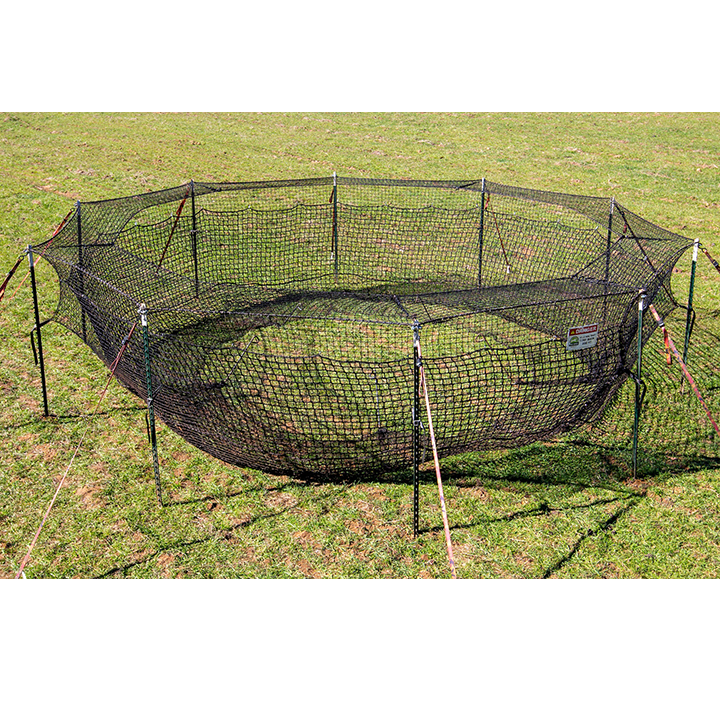
Pig Brig is the odd one out in this guide because it has no gate, and that is the point. The system is a flexible net, about 20 feet in diameter and 5 feet tall when deployed, hung on T-posts and anchored to the ground. Hogs root under the net’s edge to reach bait — the net feels like brush on their backs — and once inside they settle and feed. A bowl-shaped net design and internal anchor stakes are meant to stop root-outs by counteracting bottom-edge lift, and a double-walled inner layer called the Boar Shield is built to resist chewing by large boars. There is no trigger, no camera requirement, and no cell service requirement: setup is listed as a one-person job, and the maker offers a 100-day return window.
The weaknesses are the ones the maker itself acknowledges in its own FAQ. A net is not steel: lifespan is estimated at about 5 years, varying with sun, weather, and trapping frequency, and the net must be stored properly when not in use. And because there is no gate to close, there is no moment of control — if a hog does find its way out, you cannot “re-drop” anything. The Arkansas angle is worth noting: Pig Brig systems were approved under the Arkansas Feral Hog Conservation Incentive Program, which in its 2024 round approved 251 landowners and reported more than 8,400 feral hogs removed; that is program evidence, not a promise that any incentive is open today, so check current program status before counting on reimbursement.
✅ Pros
- No gate, no trigger, no cell service, no watching a phone at night
- One-person setup; packs down for transport by truck or ATV
- Continuous entry: hogs keep rooting in after the first ones are caught
- 100-day return window from the maker
❌ Cons
- $2,500 (October 2026) for a net system — a lot of money for something that is not steel
- Net lifespan estimated around 5 years; sun and weather shorten it
- No positive “close” moment — you cannot seal the trap on command
🧑🌾 From the field: Pig Brig’s own product page carries a 4.8-star average from 468 reviews, which is a strong owner signal for a product in this category, though it is the maker’s own storefront and should be read that way. The more independent-sounding evidence is the Arkansas program data: a state conservation program approved the system and reported thousands of removals through it. On forums, the continuous-catch idea shows up repeatedly in a different form — trappers describing corral traps where hogs “push through the bottom to enter” after the top of a gap is tied shut — which is the same principle in homemade form, and a reminder that Pig Brig productized a technique trappers were already improvising.
| Spec | Detail |
|---|---|
| Design | Flexible net, approx. 20 ft diameter, approx. 5 ft tall when deployed |
| Entry | 360° root-under entry; no gate, no trigger |
| Containment | Double-walled net with Boar Shield; bowl shape with internal anchor stakes |
| Setup | One person; T-posts and anchors included in the full system |
| Cell service | Not required |
| Return window | 100 days (maker’s policy) |
| Price | $2,500 on pigbrig.com (checked October 2026) |
4. BoarBuster — Best suspended trap for trap-shy hogs
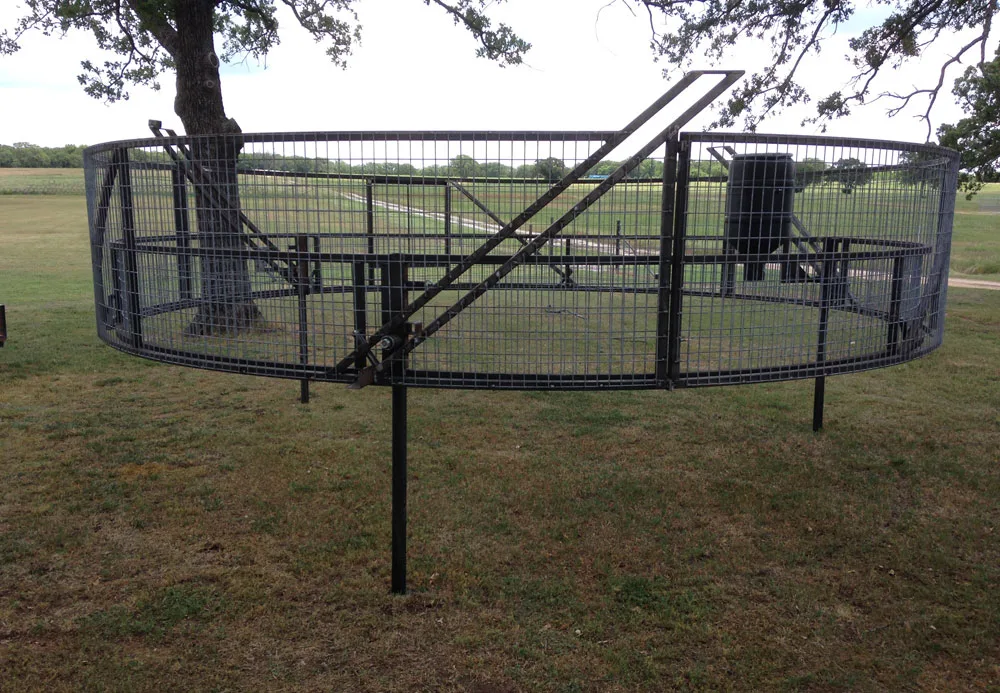
BoarBuster takes a different approach to trap shyness: instead of hiding a gate, it removes the walls. The system is a circular steel pen suspended 3 to 4 feet above the ground, with bait laid in the center. Hogs walk underneath it from any direction, because — as the developers put it — hogs generally do not look up, having no natural predators that attack from above. A camera system watches the site and sends motion alerts and live video to the operator’s phone; when the sounder is inside, the operator drops the pen from the phone. The design came out of work by the Samuel Roberts Noble Foundation with Tactical Electronics, and it is sold in the United States through dealers including Morgan Livestock Equipment in Texas, which notes the trap can be set up within about 30 minutes, runs on 4G LTE (AT&T or Verizon), and has an integrated load-out door for removing hogs.
The honest gaps: we could not verify a current retail price on a live page — BoarBuster is sold through dealers, and the dealer page lists no price — so the table says “price on application” rather than guessing. The system also needs the same things every remote system needs: cell service, a charged camera, and an operator watching at the right moment. And a suspended pen needs overhead clearance and a level site, which not every brushy trap location offers.
✅ Pros
- Hogs enter from any direction with no walls or gate to distrust
- Remote live video and one-button drop from a phone
- Integrated load-out door for removing captured hogs
- Mobile: moves to where the hogs are
❌ Cons
- No verified retail price — dealer pricing only
- Needs cell service and live monitoring, like every remote system
- Suspended design needs overhead clearance and a suitable site
🧑🌾 From the field: The Noble Foundation’s own reporting gives the numbers that made BoarBuster famous: in its trials, drop-net-style capture took up to 86 percent of hogs in an area, compared with 49 percent for standard corral traps, and one account describes a single capture of 44 hogs. Treat those as trial results from the developer, not guarantees for your property — but they explain why the suspended-pen idea exists. A Texas dealer page adds the practical detail that matters to an owner: 24/7 motion alerts, live video, and a trap that “can be set up within 30 minutes” and moved to the hogs rather than waiting for hogs to come to a fixed corral.
| Spec | Detail |
|---|---|
| Design | Circular steel pen suspended 3–4 ft above ground |
| Entry | From any direction underneath the suspended pen |
| Trigger | Remote drop from a phone, via live camera feed |
| Connectivity | 4G LTE, AT&T or Verizon |
| Load-out | Integrated load-out door |
| Price | Dealer pricing; no verified retail price found (October 2026) |
Check price at Morgan Livestock Equipment →
5. J4 Welding Boar Door gate + trigger — Best retrofit remote gate

If you already own panels, or you want to build a corral from cattle panels and T-posts and only buy the gate, the J4 Welding Boar Door package is the most interesting mid-price option we verified. It pairs a 6-foot-wide drop gate with a cell-activated trigger mechanism, and the package includes one year of cell service, a 12V battery for the trigger, and a solar panel to keep it charged. The gate opens to about 4 feet tall, and the maker also sells an 8-foot-wide gate with a winch system, plus trigger-only packages that hook up to any existing drop gate.
The appeal is modularity: you are not buying a whole trap system, just the gate and the trigger, which keeps the verified price at $1,350 in October 2026 — less than half the Corporal package. The risk is integration: your panels, your posts, and your trigger placement have to work together, and unlike a packaged system there is no single manual covering the whole rig. Cell service is still required, and the trigger’s first year of service is included — after that, confirm the ongoing cost before you depend on it.
✅ Pros
- Gate + trigger only: retrofit to panels you already own
- Cell-activated trigger with 1 year of service, battery, and solar panel included
- $1,350 verified price — the cheapest remote gate we found
- 8 ft gate with winch available for wider openings
❌ Cons
- You build the corral; no single manual covers the whole rig
- Still needs cell service
- Ongoing cell-service cost after year one is not stated on the product page we checked
🧑🌾 From the field: The retrofit idea is exactly what forum trappers describe building themselves: a Georgia Outdoor News member reported a home-built cell-monitored gate with solar panel, battery, receiver, and relay for about $700 in parts, trapping over 100 hogs in two years. The J4 package is the commercial version of that build, with the trigger, battery, and solar charging bundled instead of sourced separately. For a trapper who can weld or bolt panels but does not want to wire a cellular trigger from scratch, that bundle is the whole point.
| Spec | Detail |
|---|---|
| Gate | 6 ft wide drop gate, opens approx. 4 ft tall |
| Trigger | Cell-activated trigger mechanism |
| Included | 1 year of cell service, 12V battery, solar panel |
| Options | Trigger-only package; 8 ft gate with winch; 2- or 3-gate traps |
| Price | $1,350 on j4welding.com (checked October 2026) |
6. Texas Swine Saloon — Best portable saloon-door trap
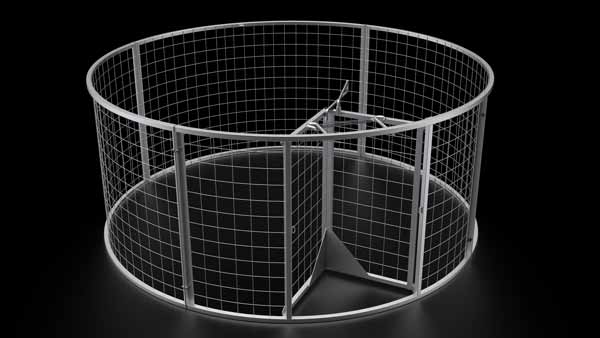
The Texas Swine Saloon is a round, open-top trap built around spring-loaded saloon doors, made by Red River Arenas in the United States. The original measures 51 inches tall and 9.5 feet in diameter, ships in four sections, assembles with eight bolts, and weighs approximately 230 pounds. Because it is round, the assembled trap can be rolled to a new location by hand as hog activity moves — no tractor, loader, or skid steer required. The maker says it has been its best-selling and most proven trap for over 10 years, and the open-top design is intended to help prevent deer and other non-target wildlife from becoming trapped.
The trade-offs are inherent to saloon doors: the trigger fires when the first hog reaches it, so whole-sounder catches depend on your pre-baiting discipline, and the 51-inch height is modest for a big boar that decides to test the fence. That is what the XL version is for (see below). We could not map a verified price to a specific Swine Saloon model on the maker’s collection page — the page shows a $1,950 variant without labeling which model it belongs to — so we list no price here rather than attach a figure to the wrong trap. Confirm the model and price with the maker before ordering.
✅ Pros
- Round design rolls to a new location by hand — no tractor needed
- Four sections, eight bolts, approx. 230 lbs — genuinely portable
- Open-top design helps non-target animals escape
- Maker’s best-selling trap for over 10 years
❌ Cons
- 51 in height is modest for large boars
- Mechanical trigger: first hog to the bait can spring it early
- No model-mapped price verified on the maker’s page
🧑🌾 From the field: The portability claim is the one forum trappers keep coming back to for round traps: a Deer Hunter Forum member with a 40-foot corral wrote that hogs “bang on it pretty good but never have I lost one,” while another wished he had built larger and used a drop gate instead — the two comments together capture the real choice with a portable round trap. It holds hogs well and moves easily; it does not choose its moment the way a remote gate does. For a landowner who moves traps between food plots and creek bottoms through the season, that trade is often worth it.
| Spec | Detail |
|---|---|
| Design | Round, open-top, spring-loaded saloon doors |
| Size | 51 in tall × 9.5 ft diameter |
| Weight | Approx. 230 lbs |
| Ships | Four sections; assembles with eight bolts |
| Moving | Roll by hand |
| Price | Confirm with maker; collection page shows an unmapped $1,950 variant (October 2026) |
Check price at Red River Arenas →
7. Texas Swine Saloon XL — Best saloon-door trap for larger hogs
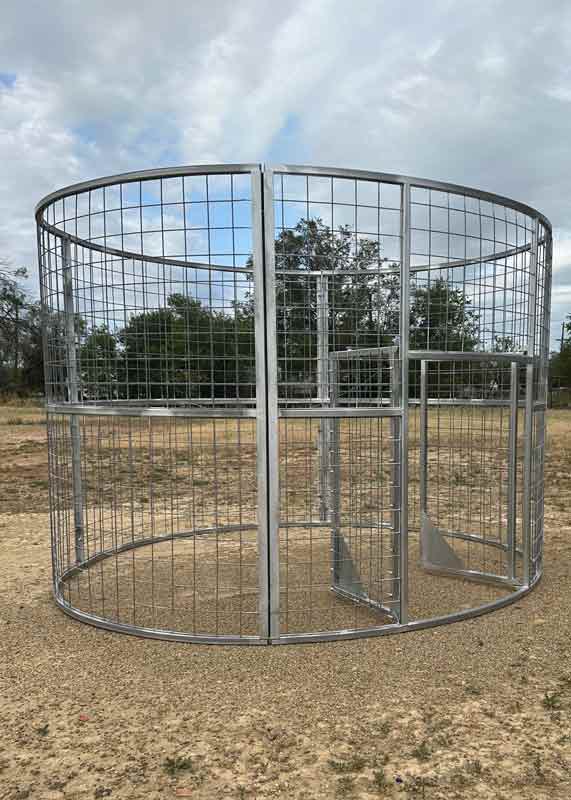
The XL is the same round, open-top, spring-loaded saloon-door trap with taller sides: 6 feet tall instead of 51 inches, same 9.5-foot diameter, approximately 330 pounds, built from 1¼-inch square tubing and 4-inch by 4-inch welded wire. It still ships in four sections, assembles with eight bolts, and rolls by hand to a new location. The maker positions it for customers wanting more height and greater containment — larger hogs, mature boars, and added security.
The extra height and weight are the whole story: 100 more pounds than the original, and a taller wall for a boar that tries to climb or charge out. Everything else — the mechanical trigger, the need for pre-baiting discipline, the unverified model-mapped price — carries over from the original. If your hogs run large, or you have already had a boar test a shorter fence, the XL is the version to price first.
✅ Pros
- 6 ft sides for larger hogs and mature boars
- Same portable round design: four sections, eight bolts, rolls by hand
- 1¼ in square tubing and 4 in × 4 in welded wire construction
- Open-top design helps non-target animals escape
❌ Cons
- Approx. 330 lbs — heavier to roll than the original
- Mechanical trigger: first hog to the bait can spring it early
- No model-mapped price verified on the maker’s page
🧑🌾 From the field: Height is the detail forum trappers argue about most. A Georgia Outdoor News thread from 2006 records the lesson in one line: a hog “had gone over the top of our 38-inch wire,” with hair found on the barbed wire at the top of the woven wire — and the thread’s advice ever since has been to build taller, not wider. Another GON member’s rule of thumb is blunter: “without a bottom and a top a good size hog will not stay in it. They will root out or jump out.” The XL’s 6-foot sides are a direct answer to that experience, and the open top is the deliberate trade the maker chose so deer can escape.
| Spec | Detail |
|---|---|
| Design | Round, open-top, spring-loaded saloon doors |
| Size | 6 ft tall × 9.5 ft diameter |
| Weight | Approx. 330 lbs |
| Construction | 1¼ in square tubing; 4 in × 4 in welded wire |
| Ships | Four sections; assembles with eight bolts |
| Moving | Roll by hand |
| Price | Confirm with maker (October 2026) |
Check price at Red River Arenas →
8. Hog Slammer gate — Best gate-only saloon build
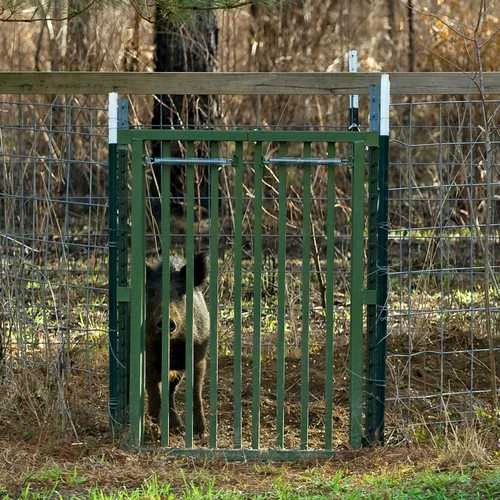
The Hog Slammer is a gate, not a trap: a spring-loaded saloon-style gate you fit to a corral you build yourself from livestock panels and T-posts. When a hog knocks over the bait bucket inside, the trigger rod engages and the spring-loaded doors slam shut; hogs already inside cannot escape, and the maker says other hogs can still enter afterwards. The gate is heavy-duty steel with a leaf-green powder-coat finish, and it includes the end-to-end rod used with the trip wire plus a free bag of Evolved Habitat’s Hog Heaven attractant. Assembly materials for the pen itself are not included — you supply the panels, posts, wire, bucket, and block.
The maker’s own setup guide is unusually specific and worth following: 9 livestock panels (50 inches by 16 feet), 30 metal fence posts, a roll of wire, a concrete block, a metal bucket, and a brick or stones for the bottom of the bucket, in a teardrop or round pen 20 to 30 feet in diameter with no 90-degree corners. It also warns that the gate’s spring tension can injure fingers caught between gate and frame, and that you must obey all state and federal game laws. The weakness of any gate-only product is that the pen is on you: if your panels are light or your posts are shallow, the best gate in the world will not hold a 200-pound sow.
✅ Pros
- Gate-only price: $319.95 (October 2026) — the pen is panels you may already own
- Spring-loaded saloon doors with a bait-bucket trigger — simple, no battery, no signal
- Detailed maker setup guide with a full materials list
- Free bag of hog attractant included
❌ Cons
- Pen materials not included — total cost depends on your panel and post prices
- Mechanical trigger: first hog to the bucket can spring it early
- Only two reviews on the maker’s site — thin owner evidence
- Spring tension is a finger injury risk during setup
🧑🌾 From the field: The two reviews on the maker’s site are both positive — “very well built with solid welds and finish” from a buyer installing it on a 30-foot circular catch pen, and a repeat buyer (“this is my second one”) praising the quality. Mississippi State’s trap-door page names the Hog Slammer specifically in its tip for spring-loaded doors: prop the doors open and drive a stake into the ground behind both doors to prevent the trap springing while hogs are being conditioned. That tip is the difference between a gate that catches hogs and a gate that catches one hog and educates the rest.
| Spec | Detail |
|---|---|
| Design | Spring-loaded saloon doors, bait-bucket trigger |
| Outside dimensions | 37¼ in wide × 48 in tall |
| Inside opening | 33⅜ in wide × 42 in tall |
| Construction | Heavy-duty steel, leaf-green powder coat |
| Included | End-to-end trip rod; free bag of Hog Heaven attractant |
| Not included | Pen panels, posts, wire, bucket, block |
| Price | $319.95 on the maker’s site (checked October 2026) |
9. Game Winner Hog Trap Saloon Gate — Best budget saloon gate
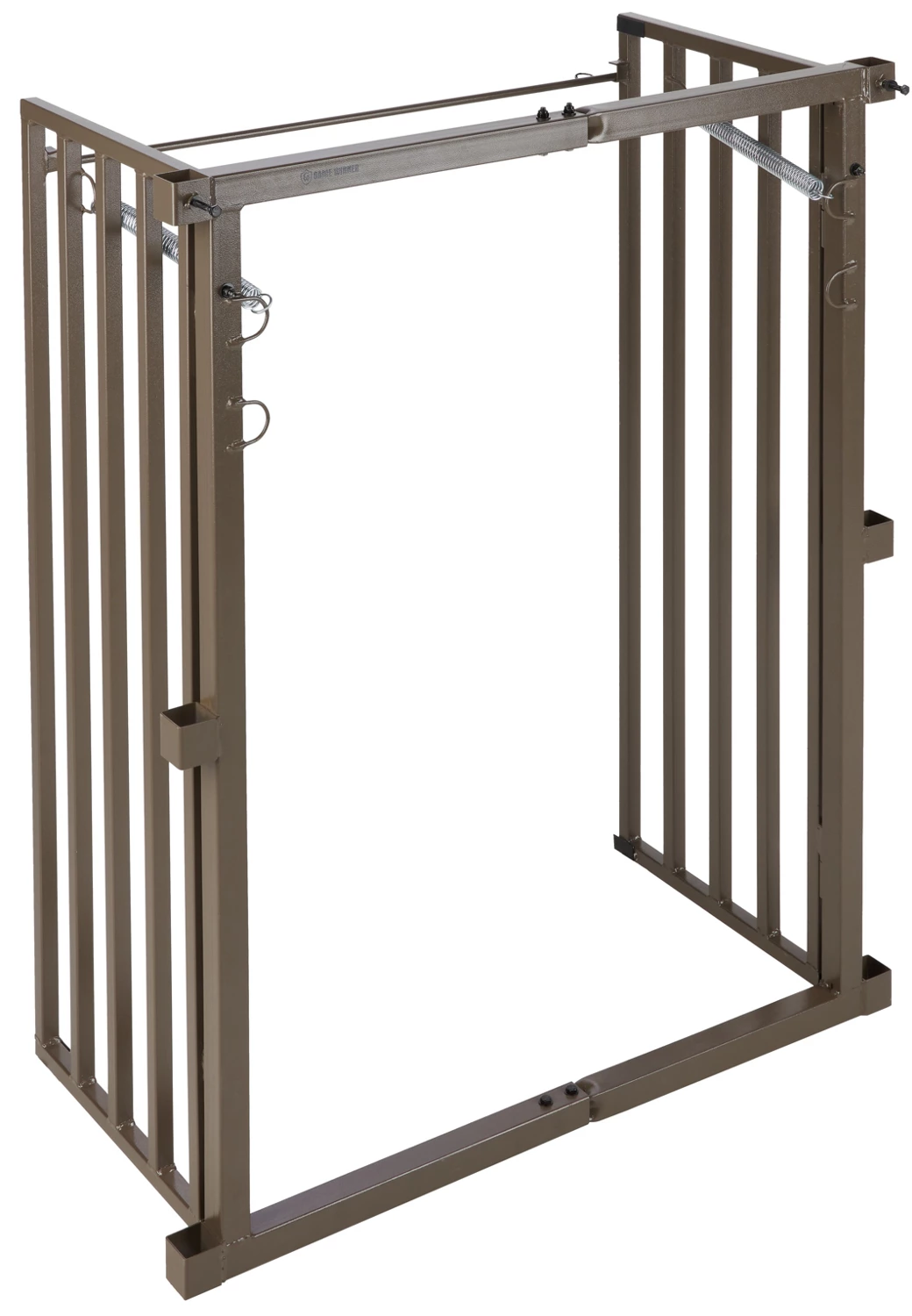
The Game Winner saloon gate is Academy Sports’ house-brand answer to the same job: a spring-loaded, saloon-style gate with a trigger stick, steel tube construction, powder coating, multiple spring attachment points for tension adjustment, and 50 feet of nylon rope for the trigger mechanism. It is designed for use with standard T-posts and fencing, needs no batteries, and comes with an owner’s manual. At $149.97 on Academy’s site in October 2026 — and listed as in-store only — it is the cheapest gate in this guide by a wide margin.
The trade-offs track the price. This is a gate, not a system: you build the pen, you set the trigger, and you accept a mechanical trigger’s timing. Academy’s listing carries a 4.7-star average from 22 reviews, which is encouraging but thin. And “in-store only” matters: you cannot have it shipped, so it is only a deal if you live near an Academy store that stocks it. For a landowner who wants to try saloon-door trapping for the price of a tank of gas and a few panels, though, there is no cheaper honest entry point.
✅ Pros
- $149.97 (October 2026) — cheapest gate in this guide
- Spring tension adjustable via multiple spring attachment points
- Includes trigger stick and 50 ft of nylon rope
- No batteries, no signal, no app
❌ Cons
- In-store only at Academy — no shipping
- Gate only: you build the pen and set the trigger
- Mechanical trigger: first hog to the bait can spring it early
- Thin review base: 22 reviews
🧑🌾 From the field: The best field evidence for this class of gate is not a review but a pattern across forums: Georgia trappers repeatedly report that the difference between a saloon gate that works and one that does not is the conditioning period. One GON member’s advice on a home-built trap applies word for word to the Game Winner: leave the door open for days, let hogs get comfortable feeding in the trap, and only then set the trigger — and a member who ignored that advice reported hogs eating corn “right up to the gate and sometimes even right up to the trigger” without tripping it, because the hogs had learned what the trigger was. The gate is cheap; the patience is not optional.
| Spec | Detail |
|---|---|
| Design | Spring-loaded saloon gate with trigger stick |
| Construction | Steel tube, powder-coated |
| Adjustment | Multiple spring attachment points for tension |
| Included | Trigger stick, 50 ft nylon rope, owner’s manual |
| Power | None — no batteries required |
| Availability | In-store only at Academy |
| Price | $149.97 at Academy (checked October 2026) |
Compare saloon gates on Amazon →
10. Voorhies 3-Door Feral Hog Trap — Best ready-made box trap

The Voorhies trap is the box trap that Georgia forum members keep recommending to beginners: a 4-foot by 8-foot by 3-foot welded cage with three root-style doors, weighing 165 pounds, sold at Tractor Supply. Hogs push through the inward-swinging root doors to reach bait and cannot push them back out. There are no springs, no triggers, no electronics — the doors are the mechanism. It is solo-loadable, ready to use out of the store, and at $549.99 at Tractor Supply in October 2026 it is the only ready-made complete trap in this guide under $1,000.
The limitation is capacity, and it is worth stating plainly: a box trap catches a few hogs at a time, not a sounder. A comparison of the Voorhies against larger systems notes it typically catches one to three pigs at a time, requires frequent resets, and misses smart hogs that watch other hogs get trapped and stay away. The Georgia Outdoor News thread that made this trap famous tells the same story from the other side: two club members using two of them caught as many as five smaller pigs at a time, and found the traps “easier to use” than the bigger trap one of them had built — but they also noted that bigger hogs were reluctant to enter the tight door space until they strapped two doors together with zip ties to make one larger opening. That is useful, honest owner engineering, and it tells you exactly what this trap is for: a few hogs, close to the house, with minimal fuss.
✅ Pros
- Complete trap, ready to use — no panels, posts, or assembly project
- $549.99 at Tractor Supply (October 2026)
- Three root doors; no springs, triggers, batteries, or signal to maintain
- 165 lbs and solo-loadable
❌ Cons
- Box-trap capacity: a few hogs at a time, not a whole sounder
- Tight door openings can put off larger hogs (owners report strapping two doors together)
- Frequent resets; educated hogs learn to avoid it
🧑🌾 From the field: Tractor Supply’s review base is the largest in this guide — 4.1 stars with 84 percent of 189 reviewers recommending it — and the recent reviews read like a how-to: one East Texas buyer pinned the doors open, baited in the evening, found the corn gone the next morning, dropped one door, then all doors, and had four hogs the next morning. A South Carolina buyer gave it four stars with no complaint about the trap itself. The pattern is consistent: condition first, set second, and the box trap does its job.
| Spec | Detail |
|---|---|
| Design | Box trap with three inward-swinging root doors |
| Size | 4 ft × 8 ft × 3 ft |
| Weight | 165 lbs |
| Mechanism | None — root doors only; no springs, triggers, or electronics |
| Rating | 4.1 stars; 84% of 189 reviewers recommend it (Tractor Supply) |
| Price | $549.99 at Tractor Supply (checked October 2026) |
Compare 3-door hog traps on Amazon →
Watch: gates dropping in the field
Two videos show the gate types in this guide working in real captures. Watch the gate, not the hog count: the timing of the drop, the width of the opening, and how the hogs behave in the seconds before it are the details that matter.
JAGER PRO M.I.N.E. gate in action
A second look at the M.I.N.E. gate dropping on a sounder, with conditioning and setup context.
153 hogs removed: a month of remote trapping
A compilation of remote-gate captures showing the range of sounder sizes a single system handles in a month.
What a hog trap gate really costs
The gate price is rarely the whole price. Remote gates need a camera plan, mechanical gates need a pen, and every trap needs bait, fuel, and your time. The table below separates the costs so the comparison is honest.
| Cost item | What owners and makers report | Notes |
|---|---|---|
| Remote gate package (JAGER PRO Corporal) | $3,500 (October 2026) | Gate, camera, control box, battery, panels, remote included |
| Remote gate package (JAGER PRO Sergeant) | $4,800 (October 2026) | Two gates instead of one; larger base corral |
| Continuous-catch net (Pig Brig) | $2,500 (October 2026) | Full system with anchors; no camera or data plan needed |
| Retrofit remote gate (J4 Boar Door) | $1,350 (October 2026) | Gate, trigger, 1 year of cell service, battery, solar panel; panels extra |
| Camera data plan (remote systems) | Monthly SIM renewal; JAGER PRO live-stream camera page lists a $55/month plan for up to 5 GB | Mississippi State warns the SIM card usually needs monthly renewal; confirm current plan pricing |
| Saloon gate only (Game Winner) | $149.97, in-store only (October 2026) | Pen materials extra |
| Saloon gate only (Hog Slammer) | $319.95 (October 2026) | Pen materials extra; maker’s guide lists approx. $15 per panel and $3.50 per post |
| Box trap, complete (Voorhies) | $549.99 (October 2026) | Nothing else required except bait |
| DIY cell-monitored gate rig | About $700 in parts (solar panel, battery, receiver, relay), per a GON forum member | Home-built; no warranty, no support line |
| Bait | Shelled corn, often soured; attractants sold separately | Pre-baiting for days or weeks before setting is the norm, so budget bait for conditioning, not just capture night |
| Your time and fuel | Remote gates cut site visits; mechanical gates need regular checks | Mississippi State notes remote gates can reduce time and fuel expenses; some states also set how often traps must be checked (see FAQ) |
The takeaway: a $150 gate on a $200 panel pen can cost less than $400 all-in and catch hogs, while a $4,800 remote system can cost $5,500 or more in its first year once the data plan is counted. The right budget is the one that matches how many hogs you need to remove and how often you can visit the site — not the biggest number you can afford.
How to choose a hog trap gate
Start with the sounder, not the gate
Before you price anything, find out how many hogs you actually have. A trail camera on a bait site for a week or two tells you the sounder size, the time hogs visit, and whether you are dealing with one group or several. Texas A&M’s trapping guidance is built around this: get pigs on bait before erecting a trap, use a camera to judge sounder size, and build the trap big enough for the group you measured. A gate on a trap that is too small for the sounder will catch the bold hogs and educate the rest. Mississippi State’s recommendation for corral traps is 15 to 20 feet in diameter as the most effective size for removal; the packaged systems in this guide run 20 to 32 feet for the same reason.
Pre-bait like it is the whole job — because it is
Every source in this guide agrees on one practice: bait with the gate held open until hogs enter freely and routinely, and only then set the trap. The Hog Slammer guide says it may take several weeks for hogs to find the trap and several more for them to enter, and to wait until you see evidence of hogs entering for several days before setting the trigger. Texas A&M’s advice is the same in different words: allow hogs to gain confidence in entering the trap long before setting the gate to catch, and place the trigger toward the back of the trap so as many hogs as possible are inside before it fires. The most common beginner mistake is setting the trap on the first night hogs appear. The second most common is visiting the bait site too often: as one long Realtree account puts it, frequent visits contaminate the site with human scent and produce “an educated hog population that avoids any and all trap configurations.”
Match the trigger to your patience and your signal
Mechanical triggers — trip wires, root sticks, bait-bucket rods — are cheap, need no power, and fire when the first hog reaches them. That is their flaw as well as their virtue. Pig-specific triggers help: a rooter stick or tire trigger that relies on rooting behavior, or a trigger set near the back of the trap and adjusted so only a large animal can fire it, both cut down on raccoons and other non-targets tripping the gate. Remote triggers fix the timing problem completely but add a monthly cost and a signal requirement. If your trap site has no bars on your phone, do not buy a remote gate and hope — buy a net system or a mechanical gate and spend the savings on bait and panels.
Build the pen like a big boar will test it
Forum experience is unanimous on pen construction, and it is worth more than any specification sheet. Build round or teardrop, never square: corners give hogs a point to concentrate on, and Texas A&M warns that corners can lead to escape. Make it tall enough — the 38-inch wire that a Georgia hog jumped over is a standing warning — and make sure the bottom cannot be rooted under: cover any floor wire with dirt, leave no gaps at the bottom of the panels, and consider a top or partial top if your hogs climb. One GON member’s summary is worth quoting: “without a bottom and a top a good size hog will not stay in it. They will root out or jump out.” And remember the drop gate itself: keep the gate area clear, never test it with anyone standing under it, and use two people for assembly, per the manufacturer’s own safety manual.
Check your state’s rules before you set anything
Trapping rules are set state by state, and they differ on licenses, trap tagging, check intervals, and whether captured hogs may be moved or released. Mississippi’s rules illustrate how specific they get: live cage-type traps used for wild hogs must be tagged in plain view with the owner’s name, address, phone number, or trapper license ID, must be checked every 36 hours, and non-target animals caught must be released immediately upon detection. Your state will have its own version — possibly very different — so check with your state wildlife agency before trapping, and never assume a rule from another state applies on your ground. If you hunt deer on the same property, remember the other direction of this problem too: hogs raid deer feeders, and our guide to keeping raccoons and hogs off a deer feeder covers feeder protection while your trapping program does its work.
Resources
- How to Keep Raccoons and Hogs Off a Deer Feeder — feeder protection while you trap
- Mississippi State University Extension: Trap Doors — single-catch vs multi-catch doors explained
- Texas A&M AgriLife Extension: Trapping — corral traps, headgates, and trigger types
- Texas A&M AgriLife Extension: Door Modifications for Feral Hog Traps — guillotine, spring/swing, and rooter/lifter door modifications
- Texas A&M: Selecting a Manual Pig Trap Trigger (PDF) — trigger types and placement
- JAGER PRO M.I.N.E. Sergeant Trap Package — specifications and price
- JAGER PRO M.I.N.E. Corporal Trap Package — specifications and price
- Pig Brig Trap System — specifications, FAQ, and price
- J4 Welding Boar Door Gate and Trigger Package — specifications and price
- Red River Arenas Hog Traps — Texas Swine Saloon, XL, and Boar Boss
- Hog Slammer Trap Gate — specifications, setup guide, and price
- Game Winner Hog Trap Saloon Gate (sold at Academy) — specifications and price
- Voorhies 3-Door Feral Hog Trap (sold at Tractor Supply) — specifications and reviews
- BoarBuster at Morgan Livestock Equipment — system description and dealer contact
Frequently asked questions
What is a hog trap door?
A hog trap door — also called a hog trap gate — is the door on a hog trap. It lets hogs enter to reach bait and then closes — by dropping, swinging shut on springs, or falling by gravity — so they cannot leave. The gate type decides whether late hogs can still enter after the first catch, whether one animal can trip the trap early, and whether you need to watch the trap remotely or can set it and walk away.
What is the best hog trap gate for catching a whole sounder?
A remotely triggered drop gate on a large round corral is the strongest option, because you decide the moment the gate closes after watching the whole sounder enter on camera. The JAGER PRO M.I.N.E. Corporal (single gate, $3,500 in October 2026) and Sergeant (two gates, $4,800) are the packaged versions. If you have no cell service, the Pig Brig net system ($2,500) is the leading alternative because hogs keep entering without any gate to time.
What is the difference between a saloon gate and a guillotine gate?
A saloon gate is a pair of spring-loaded doors that hogs push open to enter; the springs snap them shut, and hogs outside can still push in afterwards, so it is a multi-catch door. A guillotine (drop) gate is a flat panel that falls straight down when triggered; once closed, no more hogs can enter until you reset it by hand, so it is a single-catch door. Mississippi State Extension draws exactly this distinction, and it is the most important choice in this guide.
Are hog trap gates legal in my state?
It depends on your state. Trapping rules — licenses, trap tagging, how often traps must be checked, and whether captured hogs may be moved or released — are set by each state wildlife agency and differ widely. As one example, Mississippi requires live hog traps to be tagged with the owner’s information and checked every 36 hours. Check your own state wildlife agency’s current rules before you trap, and do not assume another state’s rules apply on your ground.
How long should I pre-bait before setting a hog trap gate?
Until hogs enter freely and routinely — often days, sometimes several weeks. The Hog Slammer setup guide says it may take several weeks for hogs to find the trap and several more for them to enter, and advises waiting until you see evidence of hogs entering for several days before setting the trigger. Texas A&M gives the same advice: let hogs gain confidence in entering long before the gate is set to catch. Setting the trap on the first night hogs appear is the most common beginner mistake.
Do I need cell service for a remote hog trap gate?
Yes. Remote gates work through a cellular camera that sends photos or live video to your phone, and you send the close command back the same way. Without signal at the trap site, a remote gate cannot do its job. Mississippi State also notes that the camera’s SIM card usually needs a monthly renewal, which is an ongoing cost on top of the gate package.
Can hogs escape from a saloon gate trap?
Rarely through the gate itself — Mississippi State notes that both saloon and rooter doors close fast enough that a pig will rarely escape before the door shuts. Escapes usually happen elsewhere: hogs rooting under panels, jumping over low wire, or charging a weak corner. Build round or teardrop pens with no corners, leave no gaps at the bottom of the panels, and make the fence tall enough for the hogs on your ground.
What size corral trap do I need?
Mississippi State reports that most experts agree corral traps 15 to 20 feet in diameter are the most effective for wild hog removal. The packaged systems in this guide run 20 to 32 feet for the same reason: a bigger trap holds more hogs and gives late hogs room to enter before the gate closes. Texas A&M adds that the trigger should sit at the back of a large corral, away from the door, so many hogs are inside before it fires.
What bait works best in a hog trap?
Shelled corn is the standard bait, often soured by soaking, and commercial hog attractants are widely used alongside it. The Hog Slammer guide suggests souring corn by soaking it in water or beer for several days, which also discourages deer and raccoons, and notes that sow-in-heat scents can help. Whatever bait you use, the technique matters more than the recipe: bait outside the gate first, then through it, then deep inside, so hogs learn the whole route before the trap is ever set.
Is it safe to handle trapped hogs?
Trapped hogs are dangerous and can carry disease. Approach carefully and dispatch from a safe distance, largest animal first, as the Hog Slammer guide advises. Wear rubber gloves when handling hogs, dispose of carcasses properly, and cook meat thoroughly — the same guide specifies an internal temperature of 170 degrees Fahrenheit or freezing for at least 20 days to kill parasites. Keep children away from drop-gate equipment at all times, and never test a drop gate with anyone standing under it.
When is the best time of year to trap hogs?
Late winter is the peak time, according to Mississippi State Extension, and Pig Brig describes peak trapping season as late fall through winter, when natural food is scarce and hogs respond best to bait. In practice, your trail cameras are the best calendar: when hogs show up consistently at bait and mast crops are eaten down, that is the time to trap aggressively rather than wait.
Can I build a hog trap gate myself instead of buying one?
Yes. Texas A&M publishes build-it-yourself guillotine drop-gate diagrams, and Mississippi State notes that a single-catch drop door can be built cheaply from 2×4 and 2×2 lumber and ¾-inch plywood. Forum trappers also report home-built cell-monitored gates for around $700 in parts. A DIY gate saves money but carries the same responsibilities: a heavy drop gate is a crush hazard, the pen must be strong enough for a charging boar, and your state’s trapping rules apply exactly the same as they do to a bought gate.
Final verdict
The best hog trap door is the one that matches your ground, your signal, and your goal. For whole-sounder removal with cell service, buy the JAGER PRO M.I.N.E. Corporal ($3,500, October 2026) — or the two-gate Sergeant ($4,800) if hogs use two trails onto your property. For whole-sounder removal without cell service, buy the Pig Brig Trap System ($2,500). For a remote gate on panels you already own, the J4 Welding Boar Door package ($1,350) is the value pick. For a portable saloon-door trap, the Texas Swine Saloon and taller XL are the proven round options. For a gate-only build, the Hog Slammer ($319.95) and the Game Winner ($149.97, in-store only) are the budget entries. And for a few hogs close to the house with no project at all, the Voorhies 3-Door box trap ($549.99) is the honest choice.
Whichever gate you choose, the work that decides success is the same: camera the sounder first, pre-bait with the gate open until hogs enter freely, set the trigger at the back of a round pen, and check your state’s wildlife agency rules before you set anything. Do that, and the gate will do its job. Skip it, and the most expensive gate on this page will catch two pigs and educate the rest.
Last updated: October 25, 2026.
Products mentioned in this guide
See this product on Amazon
Check Price on Amazon →Confirm price and availability on AmazonSee this product on Amazon
Check Price on Amazon →Confirm price and availability on AmazonAs an Amazon Associate, we earn from qualifying purchases.