

Best Solar-Powered Deer Feeders
As an Amazon Associate, I earn from qualifying purchases. Some links in this guide go to Amazon. If you buy through them, the site may earn a commission at no extra cost to you. That commission does not change which feeders are ranked here, and it never turns a solar-capable feeder into a solar-powered one.
Quick Answer: What Is the Best Solar-Powered Deer Feeder?
The best solar-powered deer feeder in this guide is the All Seasons Feeders 600 lb EZ Broadcast, because it is the only ranked feeder whose dealer specification sheets list a 12-volt solar panel in the box, alongside a 12-volt motor and an EZ digital timer. It is a big, galvanized, ground-fill broadcast feeder, so it suits large properties and long intervals between visits better than it suits a small woodlot. If you want a feeder you can buy through a verified Amazon link in this article instead, the best solar-ready pick is the Moultrie Pro Hunter III 250 lb: Moultrie lists it as solar compatible, it has a dedicated solar panel port, and its matching 6-volt panel is sold separately. Read that distinction carefully, because it is the whole point of this guide. Solar-powered, solar-ready, solar-compatible and pre-wired for solar are four different claims, and this article labels every feeder with the exact claim its manufacturer or dealer specification actually supports. A feeder with no panel in the box is never called solar-powered here, even when a panel can be added later.
In this guide: Solar feeders at a glance | How to choose a solar feeder | 6V vs 12V and panel sizing | The 7 ranked feeders | Cost and ownership | FAQs | Verdict
Best Solar-Powered Deer Feeders at a Glance
| Product | Best for | Capacity / key spec | Type | Photo |
|---|---|---|---|---|
| All Seasons Feeders 600 lb EZ Broadcast | Solar in the box; large properties | 600 lb; 12V solar panel listed as included | Broadcast, stand and fill |  |
| American Hunter 350 lb Tripod with Sunslinger Kit | Built-in solar charger; varmint cage | 350 lb; built-in 6V solar charger | Tripod, spin | |
| Moultrie Pro Hunter III 250 lb | Solar-ready with app control | 250 lb; 6V, solar compatible, panel port | Tripod, broadcast |  |
| Texas Hunter TF300L4 Stand & Fill 300 lb | Steel build; pre-wired for 12V solar | 300 lb; 12V battery included, SP12 panel extra | Stand and fill, broadcast | |
| American Hunter XDE-Pro 30-Gallon | Most feedings; budget solar-ready | 30 gal (about 180 lb corn); pre-wired for solar panel | Tripod, spin | |
| Wildgame Quick-Set Pro 270 lb | Varmint country; add-on 6V solar | 270 lb; 6V, add-on panel | Tripod, spin | |
| Wildgame Quick-Set 225 lb | Value; add-on 6V solar | 225 lb; 6V, add-on panel | Tripod, spin |
Three ranked feeders in this guide — the All Seasons 600 EZ, the Texas Hunter TF300L4 and the American Hunter Sunslinger 350 — carry no Check Price button. That is deliberate. No Amazon ASIN for those exact models was verified for this article, and a guessed link would be worse than no link. Their reviews say so plainly, and no button is shown for them until a link for the exact model is verified. The four feeders with buttons use only ASINs verified from the site’s own research records. A blank photo cell means the same thing: no verified photo of that exact model was on file, so the cell is left blank rather than filled with a photo of a different feeder.
How to Choose a Solar Deer Feeder
1. Start with the solar claim, not the headline
Retailer headlines love the word solar. Manufacturer specifications are more careful, and this guide follows the specifications. There are four honest tiers. Solar included means the panel ships with the feeder: the All Seasons 600 EZ is the only ranked feeder here that clearly meets that test, and even there, dealer listings disagree about whether the battery is included, so check the listing before you order. Solar charger built in means the charging electronics are part of the feeder kit but the battery is still bought separately: the American Hunter Sunslinger kit fits that description, with a built-in 6-volt solar charger and a 6-volt rechargeable battery that is not included. Solar-ready or solar compatible means the feeder has a port, pre-wiring or a stated compatible panel, but the panel itself costs extra: the Moultrie Pro Hunter III, the Texas Hunter TF300L4 and the American Hunter XDE-Pro all sit in this tier, each with a different named panel or panel family. Solar-capable with an add-on panel means the feeder runs on a standard rechargeable battery voltage and an owner can add a matching panel, but the manufacturer does not advertise a factory solar port for that model: both Wildgame Quick-Sets sit here. None of these tiers is a trick, but they are not the same purchase, and the price and the parts list change with the tier.
A second trap is the gravity feeder. Gravity feeders need no power at all, so they never need solar, and they do not belong in a solar ranking. The site’s gravity feeder guide covers them properly. If your real problem is that you cannot reach the feeder often, a gravity feeder may be the better answer than a solar feeder, because there is no battery, timer or panel to maintain at all. Solar earns its keep on timed, spin-cast feeders at sites you visit rarely, where a dead battery would otherwise mean a missed week of feeding.
2. Match the feeder to the site before you match the panel
Solar does not fix a feeder in the wrong place. A panel in deep shade charges poorly no matter how good the feeder is, and a feeder under a dense canopy is a bad solar site even if the clearing twenty yards away would be a good one. Put the panel where it sees open sky for most of the day, facing the sun’s path rather than tucked under the hopper for neatness. The site’s deer feeder solar panel guide works through the 6-volt and 12-volt buying checks in detail, and the companion placement advice matters just as much: cable length, a mount that will not work loose, and a position you can actually reach to wipe clean. A panel caked in dust, pollen or bird droppings is a panel running at a fraction of its rating, and the cheapest maintenance in this whole guide is a rag and a five-minute wipe when you refill.
Capacity follows the same site-first logic. A 600 lb feeder makes sense when the drive is long, the herd is large, or refills are a real chore; it is a heavy, semi-permanent installation that needs a firm site and a way to get feed to it. A 225 lb or 250 lb tripod is easier to move, easier to fill, and easier to reposition when deer patterns change. Do not buy capacity you cannot fill: a half-empty big feeder still needs the same panel, battery and timer care as a full one, and damp feed left sitting through a wet season is a problem in any size of hopper.
3. Count the whole power system, not just the feeder
The honest first-season bill for a solar feeder has up to four lines: the feeder, the battery, the panel, and the charger or cable that connects them. On the All Seasons 600 EZ, the panel is listed as included and the battery question must be checked per listing. On the Pro Hunter III, the battery and the panel are both extra. On the Texas Hunter TF300L4, the battery is included and the SP12 panel is extra. On the XDE-Pro and the Sunslinger kit, the battery is extra and the panel situation differs: pre-wired for the XDE-Pro, built-in charger for the Sunslinger. On both Quick-Sets, battery and panel are extra, and panel fit must be confirmed rather than assumed. Anyone who quotes you a feeder price without asking which of those lines are included has not finished the quote. This guide prints no prices, because prices go stale and a snapshot without a date misleads; check the current listing rather than trusting any figure here.
4. Plan for the failure, not just the sunny day
Solar stretches battery life; it does not abolish maintenance. Connections corrode, cables get chewed, timers drift on a weak battery, and a panel knocked out of alignment by a storm stops helping until someone notices. Keep a spare charged battery at home, write the program down on paper as well as in the app, and test-run the timer before you leave the site. If the feeder stops, the first checks are always the same: is the battery actually charged, is the panel clean and aimed at open sky, are the connectors seated and free of corrosion, and has the timer kept its program? The site’s feeder troubleshooting guide works through that order. A solar feeder that nobody checks is just a battery feeder with a more expensive excuse.
6V vs 12V Matching and Panel Sizing for Feeders
This is the section that prevents the most expensive mistake in solar feeding: buying a panel whose voltage does not match the feeder. A 6-volt feeder needs a 6-volt charging setup, and a 12-volt feeder needs a 12-volt setup. Voltage is not a preference, and a bigger panel does not fix a voltage mismatch. The site’s solar panel guide starts with the same rule — read the feeder voltage first — and this section applies it to the feeders ranked here.
The 6-volt family
Four ranked feeders run on 6 volts: the Moultrie Pro Hunter III 250 lb, the American Hunter XDE-Pro 30-gallon, the American Hunter Sunslinger kit, and both Wildgame Quick-Sets. On all of them the battery is a separate purchase unless a listing says otherwise, and the panel must be a 6-volt panel with the right connector for that feeder. The cleanest pairing in this family is the Pro Hunter III with Moultrie’s own 6-volt feeder solar panel, model MFA-15110: the feeder kit is described by Moultrie as solar compatible with a solar panel port, the panel is rated at 2.5 watts and 6 volts with tab-top connections, and the panel’s bracket is made to fit square Moultrie feeder legs. That is a matched system, not a generic guess. The XDE-Pro is pre-wired for American Hunter’s solar panel and the recommended battery is listed as DE-30045, so the panel to buy is the American Hunter panel for that kit, not a random 6-volt panel with the wrong plug. The Sunslinger kit goes further and builds the 6-volt charger into the kit itself, which removes the separate-panel question but still leaves the battery to buy. The Quick-Sets are the cautionary case: their manuals say to consider a solar panel for continuous charging, and Wildgame has sold a 6-volt solar panel for these feeders, but the control box is a closed compartment, and at least one owner reported having to drill a small hole for the panel wires. Do not buy a Quick-Set expecting a factory solar port, and do not order a panel for one until you have confirmed how its cable enters the control box on your exact model.
The 12-volt family
Two ranked feeders run on 12 volts: the All Seasons 600 EZ Broadcast and the Texas Hunter TF300L4. Twelve-volt systems suit bigger motors, bigger hoppers and longer runs between visits, which is why both of these are large, steel, stand-and-fill style feeders rather than light tripods. The All Seasons panel is lid-mounted and listed at 12 volts, matched to its 12-volt motor and 12-volt rechargeable battery. The Texas Hunter is pre-wired for its optional and recommended SP12 solar charger, a 12-volt charger, and the feeder ships with a 12-volt rechargeable battery included. In both cases the panel is a maintainer, not a miracle: it tops the battery up between feedings and across sunny days, and it cannot rescue a battery that is already dead, sulfated from a season of neglect, or wired backwards. Polarity and connector fit matter here exactly as they do at 6 volts, and the feeder’s own manual is the authority for which wire is which, not a forum post.
| Feeder | System voltage | Panel situation | What to buy with it |
|---|---|---|---|
| All Seasons 600 EZ Broadcast | 12V | 12V panel listed as included | Confirm battery inclusion on the listing; check panel and timer warranty |
| American Hunter Sunslinger 350 | 6V | 6V solar charger built into the kit | 6V rechargeable battery (not included) |
| Moultrie Pro Hunter III 250 | 6V | Solar compatible; panel port | 6V tab-top battery + Moultrie 6V panel MFA-15110 |
| Texas Hunter TF300L4 | 12V | Pre-wired for SP12 | SP12 12V solar charger (battery included) |
| American Hunter XDE-Pro | 6V | Pre-wired for American Hunter panel | DE-30045 battery + American Hunter panel |
| Wildgame Quick-Set Pro 270 | 6V | Add-on 6V panel; confirm cable entry | 6V battery + matching 6V panel |
| Wildgame Quick-Set 225 | 6V | Add-on 6V panel; confirm cable entry | 6V battery + matching 6V panel |
How big a panel do you actually need?
For a feeder, the panel is almost always a battery maintainer, not the motor’s direct power supply. The motor runs off the battery in short bursts — a few seconds, a few times a day — and the panel spends the rest of the day putting that small amount of charge back. That is why a small panel can work: Moultrie’s 2.5-watt 6-volt panel is sold for exactly this job, and the 12-volt panels on the big steel feeders are likewise maintainers for a system that feeds in bursts. What matters more than raw wattage is sunlight hours, panel angle, shade, cleanliness and the feeder’s own appetite. More feedings per day, longer run times, cold weather and an older battery all increase the load, and a panel that keeps up in June may only just keep up in December when days are short and the battery is cold. If your feeder runs many times a day on long runs, or sits under partial shade, budget for a larger panel from the same voltage family and the same connector system, and treat any claim that one panel size fits every feeder as marketing rather than engineering.
Three sizing rules cover almost every buyer. First, match voltage exactly: 6-volt feeder, 6-volt panel system; 12-volt feeder, 12-volt panel system. Second, match the connector and polarity before you buy, using the feeder manual and the panel listing, not the shape of the plug alone. Third, size for winter, not summer: if the panel only just keeps up on long summer days, it will fall behind when days shorten, so a shaded or heavy-use site needs more panel, a cleaner mount, or a simpler feeding program. A panel that is too small fails quietly — the battery slowly loses charge, the timer drifts, and the feeder misses feeds before anyone notices. Checking the battery voltage on a visit, and writing down what you find, turns that quiet failure into a visible one.
The 7 Best Solar-Powered and Solar-Capable Deer Feeders, Ranked
1. All Seasons Feeders 600 lb EZ Broadcast — Best Solar-Powered Deer Feeder Overall
This is the only feeder in the ranking that earns the words solar-powered without qualification, because its dealer specification sheets list a 12-volt solar panel, a 12-volt motor, an EZ digital timer and a QuadCast spinner plate as included equipment, with the timer and battery located under the lid and the panel mounted on the lid. It holds about 600 lb of corn, throws an even 40-foot spread, and is built from galvanized metal in a varmint- and hog-resistant design that is made to be set up and relocated without a ladder for filling. For a remote property, that combination is the point: a huge hopper, a panel that maintains the battery between visits, and a steel body that does not invite raccoons to chew through the week. The manufacturer’s own warranty list gives its solar panels a one-year warranty, which is worth knowing before you assume the panel is covered for the life of the feeder.
The honest weaknesses start with buying it. All Seasons feeders are heavy steel feeders sold through dealers, and the buying experience is nothing like ordering a tripod in a box: freight, pickup and dealer stock all matter, and one dealer listing for this exact model showed it out of stock at the time of checking. Battery inclusion is genuinely inconsistent across dealer listings — one dealer lists the 12-volt rechargeable battery as included, another lists the battery as not included — so check the actual listing rather than trusting this paragraph. The feeder is also simply more feeder than a small property needs, and its weight and footprint make it a semi-permanent choice, not something to move every weekend. A dead battery still stops everything, because the whole system runs off the one 12-volt circuit; the panel is the mitigation, not a second power system.
Pros: 12V solar panel listed as included, not an add-on; 600 lb capacity for long intervals; ground-level filling without a ladder; galvanized, varmint- and hog-resistant build; even 40-foot QuadCast spread.
Cons: Battery inclusion varies by dealer listing — check before ordering; heavy steel feeder with freight and dealer-stock realities; no verified Amazon button in this article; a single dead battery still stops the whole system.
From the field: the site’s own research notes record owners reporting that All Seasons timers last for years, which is encouraging but thin as evidence — it is a general owner signal, not a measured test, and it says nothing about any individual feeder’s panel or battery. Treat the panel as a maintainer that needs a clean, sun-facing mount and an occasional connection check, not as a fit-and-forget device.
| Spec | Detail |
| Capacity | About 600 lb corn |
| Power | 12V motor; 12V solar panel listed as included; battery inclusion varies by listing |
| Timer | EZ digital timer; dispenses about 1.5 lb of corn per 4 seconds per dealer specification |
| Spread | About 40 ft, QuadCast spinner plate |
| Build | Galvanized metal; varmint- and hog-resistant design |
| Fill | Ground level; designed for setup and relocation |
| Solar claim | Solar panel included (dealer specification sheets) |
No Amazon button is shown for this feeder because no ASIN for this exact model was verified for this article. Buy it through an All Seasons dealer or direct from the manufacturer after confirming battery inclusion on the listing.
2. American Hunter 350 lb Tripod Feeder with Sunslinger Kit — Best Built-In Solar Charger
The Sunslinger is the most genuinely solar-integrated kit in this guide, and the 350 lb tripod version turns it into a complete feeder rather than a parts project. The kit’s built-in 6-volt solar charger continuously tops up the feeder’s rechargeable battery, the timer programs up to 16 feed times per day with adjustable run times, and the fully enclosed varmint cage protects the spinner assembly that raccoons love to attack. The hopper is heavy-duty steel at 350 lb, carried on three 8-foot sectional galvanized steel legs, so this is a substantial tripod that still moves more easily than a 600 lb steel broadcast feeder. For a hunter who wants solar without shopping for a separate panel, bracket and cable, the built-in charger is a real simplification: there is one fewer part to mismatch.
The weaknesses are equally plain. The 6-volt rechargeable battery is not included, so the feeder does not run on solar alone out of the box — it runs on a battery that solar keeps charged, and a buyer who forgets the battery has bought a feeder that cannot feed. Retailer listings differ on the fine print of run times, with some listing 1 to 30 seconds and others 1 to 60 seconds, so the exact program range should be confirmed on the listing for the unit you buy. The feeder is also a heavier, taller tripod than the light poly-barrel Quick-Sets, which matters when you are filling it alone. And like the All Seasons feeder, it carries no verified Amazon button in this article, because no ASIN for this exact complete feeder was verified.
Pros: Built-in 6V solar charger — no separate panel to match; up to 16 feed times per day; fully enclosed varmint cage; 350 lb steel hopper; jam and reverse-polarity protection on the kit.
Cons: 6V battery not included; retailer listings differ on run-time range — confirm before ordering; heavier and taller than light poly tripods; no verified Amazon button in this article.
| Spec | Detail |
| Capacity | 350 lb |
| Power | 6V rechargeable battery (not included); built-in 6V solar charger |
| Timer | Up to 16 feed times per day; adjustable run times (listing range varies — confirm) |
| Build | Heavy-duty steel hopper; 3 sectional 8 ft galvanized steel legs |
| Protection | Fully enclosed varmint cage; metal spin plate |
| Solar claim | Built-in 6V solar charger (kit specification) |
No Amazon button is shown for this feeder because no ASIN for this exact complete feeder was verified for this article. See also the site’s SunSlinger guide for setup and timer detail.
3. Moultrie Pro Hunter III 250 lb — Best Solar-Ready Feeder with App Control
The Pro Hunter III is the best solar-ready feeder in this guide for a simple reason: it is the one where the solar path is fully specified. Moultrie’s own product page lists power as a 6-volt tab-top battery plus solar compatibility, and the Pro Hunter III feeder kit is described in its manual as solar-ready, with a designated port for a compatible Moultrie solar panel. The matching panel is Moultrie’s 6-volt feeder solar panel, model MFA-15110, a 2.5-watt panel with tab-top connections and a bracket made for square Moultrie feeder legs. Buy the feeder, the battery and that panel, and nothing about the connection is a guess. Around that power system sits the most flexible timer here: up to 10 feed times per day, runs of 1 to 60 seconds, high, medium and low spin-plate speeds, Bluetooth control through the free Moultrie app with no subscription, sunrise and sunset syncing, and an estimated feed-level reading in the app. The 250 lb hopper fills at 6 feet, the legs are steel, and a directional version of the same kit suits trails and pond edges where a full circle would waste feed.
The weaknesses are the cost of that flexibility. The 6-volt tab-top battery is sold separately, and so is the panel, so the first-season bill is feeder plus battery plus panel, and a buyer who compares feeder prices alone will under-budget. The app adds menus and setup time that a simple keypad feeder does not, and one owner reported no obvious hookup for an existing Moultrie solar panel, which is exactly why this guide insists on confirming the connector before ordering: solar-ready does not mean every old panel plugs straight in. The 6-foot fill height also means lifting bags higher than on a ground-fill feeder, and there is no factory varmint cage, so heavy raccoon country still needs a guard plan from the site’s varmint guard guide.
Pros: Dedicated solar panel port and a named matching 6V panel; up to 10 feedings a day, 1–60 seconds each; Bluetooth app with sunrise/sunset sync, no subscription; adjustable spin speed; directional version available.
Cons: Battery and panel both sold separately; more menus than a basic timer; one owner reported connector confusion with an existing panel — confirm fit first; no factory varmint cage.
From the field: the site’s research notes record app users rating the Pro Hunter III highly through a retailer, and the same build records the connector complaint quoted above. Both points are owner signals from retailer reviews, not hands-on testing by this site, and the connector point is the more useful of the two — it is the mistake this guide is written to prevent.
| Spec | Detail |
| Capacity | 250 lb |
| Power | 6V tab-top rechargeable battery (sold separately); solar compatible, panel port |
| Matching panel | Moultrie 6V feeder solar panel MFA-15110, 2.5 watts, tab-top connections (sold separately) |
| Timer | Universal Digital Timer III; up to 10/day, 1–60 seconds |
| Control | Keypad + Bluetooth app; pairs with EDGE 3 camera for cellular control |
| Fill height | 6 ft |
| Spread | 360° broadcast; metal spin plate; high/medium/low speeds |
| Solar claim | Solar compatible / solar-ready (manufacturer) |
4. Texas Hunter TF300L4 Stand & Fill 300 lb — Best Steel Solar-Ready Feeder
Texas Hunter’s TF300L4 is the steel, ground-fill answer to the solar question at 12 volts. The manufacturer specification lists a 300 lb stand-and-fill feeder with 4-foot heavy-duty extension legs, footpads and stabilizing stakes, an EZ Set digital timer feeding 1 to 9 times per day for 1 to 60 seconds, a 12-volt rechargeable battery included, a premium 12-volt high-torque motor, a varmint-proof guard, a sight glass for feed level, and a lockable compartment for the battery and timer. Most importantly for this guide, it is pre-wired for the optional and recommended SP12 solar charger. Pre-wired is a stronger claim than merely compatible: the wiring is already there, waiting for the named charger, so the solar upgrade is a purchase rather than a project. The galvanized steel body with a powder-coated finish, stainless hardware and a stainless spinner plate with gate stops is built for years outdoors, and the timer keeps its settings through a battery swap, which is a small detail that prevents a large silent failure.
The weaknesses are price class and panel cost. The SP12 panel is extra, so the solar system is not complete out of the box, and this is a premium-priced steel feeder rather than a budget tripod. The research behind this guide also notes a thin independent review base for this model, with only a couple of dealer ratings behind its reputation, so its quality case rests more on the manufacturer’s specification and the brand’s dealer network than on a deep pool of owner reviews. It is also a heavier, more permanent installation than a poly tripod, and its 300 lb capacity, while generous, is half the All Seasons hopper — a real difference on a large property with a long refill interval.
Pros: Pre-wired for the named SP12 12V solar charger; 12V battery included; steel, powder-coated, varmint-guarded build; ground-fill legs with footpads and stakes; timer keeps settings through a battery swap.
Cons: SP12 panel costs extra; premium price class; thin independent review base; heavier and more permanent than a poly tripod; no verified Amazon button in this article.
From the field: the site’s research notes record a small dealer-rating base for this feeder and explicitly warns against treating its reputation as independent proof. That caution is kept here: the specification is strong, the owner evidence is thin, and a buyer should weigh those two facts together.
| Spec | Detail |
| Capacity | 300 lb |
| Power | 12V rechargeable battery included; pre-wired for SP12 solar charger (extra) |
| Timer | EZ Set digital; 1–9/day, 1–60 seconds, test run 1–60 seconds |
| Build | Galvanized steel, powder-coated; stainless hardware and spinner plate |
| Fill | Stand and fill; 4 ft extension legs, footpads, stabilizing stakes |
| Protection | Varmint-proof guard; lockable battery and timer compartment; sight glass |
| Solar claim | Pre-wired for optional SP12 solar charger (manufacturer) |
No Amazon button is shown for this feeder because no ASIN for this exact model was verified for this article. The manufacturer photo retrieved for this model showed only components — including the SP12 charger itself — rather than the complete feeder, so no feeder figure is shown here rather than a misleading one.
5. American Hunter XDE-Pro 30-Gallon — Best Budget Solar-Ready Feeder
The XDE-Pro is the budget end of honest solar readiness. It is a 30-gallon nesting-hopper tripod — about 180 lb of corn, the smallest load in this ranking — with an EZ-Touch digital timer, two Q-Set preset programs, a simple spin plate broadcasting a full circle, and up to 16 feedings a day at 1 to 60 seconds each, which is the most feedings of any feeder here. The solar point is explicit in the kit specification: it is pre-wired for American Hunter’s solar panel, and the recommended battery is DE-30045. That makes the solar upgrade a defined purchase — panel plus battery — rather than a research project, and the light, compact nesting hopper is easy to move and store between seasons. For a small property, a first solar feeder, or a site where 16 short feeds a day matter more than a huge hopper, the XDE-Pro is a sensible, low-cost way into solar feeding.
The weaknesses follow the price. The battery is not included, the panel is not included, and the 30-gallon hopper needs refilling far more often than the 300 lb and 600 lb feeders above it. The research behind this guide records a thin instruction manual and fiddly first-time alignment, so a first-time buyer should budget extra setup time and read the manual before the first field visit. There is also no factory varmint cage of the kind the Quick-Set Pro offers, so raccoon country again needs a separate guard plan. None of that makes it a bad feeder; it makes it a budget feeder, and budget feeders should be bought with their limits in view.
Pros: Pre-wired for American Hunter solar panel; up to 16 feedings a day, 1–60 seconds; Q-Set presets for fast programming; light, compact nesting hopper; lowest-cost solar-ready entry here.
Cons: Battery and panel both extra; about 180 lb corn is the smallest load here; thin manual and fiddly first-time alignment; no factory varmint cage.
From the field: the site’s research notes record a 4.1 out of 5 rating across 23 reviews at a sporting-goods retailer for this feeder, a modest but real owner base that fits its budget position — liked for its programming flexibility, marked down on the setup experience. That rating is a retailer signal, not a test result from this site.
| Spec | Detail |
| Capacity | 30 gal (about 180 lb corn) |
| Power | 6V; recommended DE-30045 battery (not included); pre-wired for American Hunter solar panel |
| Timer | EZ-Touch digital; up to 16/day, 1–60 seconds; two Q-Set presets |
| Spread | 360° broadcast, simple spin plate |
| Legs | 8 ft sectional |
| Solar claim | Pre-wired for American Hunter solar panel (kit specification) |
6. Wildgame Quick-Set Pro 270 lb — Best Solar-Capable Feeder for Varmint Country
The Quick-Set Pro 270 earns its place for one feature no other light tripod here offers: a factory varmint cage over the spinner and control unit. In raccoon country, that cage is often worth more than app control or an extra feed time, because a feeder that raccoons can spin dry is not feeding deer at all. The feeder itself is a 270 lb poly-barrel tripod with a built-in funnel, a digital timer offering up to 6 feedings a day at 1 to 30 seconds each, and a throw of about 50 feet in a full circle — the widest throw in this ranking. Setup is genuinely quick, at about 15 minutes, and the square-leg design is stable on uneven ground. Its solar story is honest but limited: it runs on a 6-volt battery that is not included, and a matching 6-volt panel can be added to keep that battery charged, but Wildgame does not advertise a factory solar port for this model in the material reviewed for this guide, so panel fit and cable entry must be confirmed before ordering rather than assumed.
The weaknesses are the control experience and the evidence. Every schedule change happens at the keypad, standing at the feeder — there is no app — and the site’s research notes record some timer quality-control complaints, so a test run before leaving the site is not optional. Owner reviews at a major retailer also include a lid-latch installation complaint and the plain observation that no battery or solar charger is included, which is fair warning rather than a defect: this feeder is sold as a feeder, and solar is your addition. The 6-volt battery, the panel and any cable work are all extra, and the panel installation may need more care than a plug-and-play port.
Pros: Factory varmint cage over spinner and control unit; widest throw here at about 50 ft; 270 lb poly barrel; about 15-minute setup; stable square legs.
Cons: No factory solar port stated — confirm panel fit and cable entry; battery and panel extra; keypad only, no app; some timer quality-control complaints in owner reports.
From the field: retailer reviews for this feeder praise its easy setup and effective cage, while also recording a lid-latch problem, battery-connection complaints and condensation reports in a mixed overall picture. One owner specifically recommended adding a solar panel to keep the battery charged, which is the right instinct — provided the panel’s cable route into the control box is worked out before purchase, not discovered in the field.
| Spec | Detail |
| Capacity | 270 lb |
| Power | 6V battery (not included); add-on 6V panel — confirm fit |
| Timer | Digital; up to 6/day, 1–30 seconds |
| Spread | About 50 ft, 360° |
| Build | Poly barrel; factory varmint cage; about 50 lb |
| Setup | About 15 minutes |
| Solar claim | Solar-capable with a matching add-on 6V panel (not a factory solar port) |
7. Wildgame Quick-Set 225 lb — Best Value Solar-Capable Feeder
The Quick-Set 225 is the simplest feeder in this ranking, and that simplicity is its case. A 30-gallon poly barrel, a simple four-time timer with fixed run lengths of 5, 10, 15 or 20 seconds, a 30-foot 360-degree spread, and a setup time of about 15 minutes make it the easiest feeder here to buy, assemble and program — and the cheapest route to a solar-maintained system, provided you accept its limits. It runs on a 6-volt battery that is not included, and its manual advises considering a solar panel for continuous charging, which puts it in the same solar-capable tier as its Pro sibling: a matching 6-volt panel can maintain the battery, but there is no factory solar port to plug into, and the closed control-box compartment means the cable route needs checking. For a value buyer who wants a second feeder, a feeder for a small lease, or a first feeder to learn on, the 225 is a rational pick.
The weaknesses are the price of that simplicity. Four fixed run times with no per-second adjustment, no app, no sunrise syncing, and no varmint guard: in raccoon country the missing cage is the difference between this feeder and the Pro 270, and it is a difference worth paying for if raccoons are your main problem. Retailer reviewers like the setup speed but wish it came with a guard, and the same cable-entry caution applies as on the Pro: one owner of this model reported drilling a small hole for the panel wires and finding it easy, but a buyer should not have to drill anything on the assumption that a panel will fit. Confirm the panel, the battery and the cable route together, before the feeder goes into the field.
Pros: Lowest-cost entry in this ranking; simplest timer here — hard to mis-program; 225 lb poly barrel; about 15-minute setup; 30 ft spread suits smaller sites.
Cons: No factory solar port stated — confirm panel fit and cable entry; battery and panel extra; no varmint guard; fixed run times only (5/10/15/20 seconds).
From the field: retailer reviewers praise the Quick-Set 225’s setup speed, and one owner reported adding a solar panel charger after trying a standard 6-volt battery, drilling a small hole for the wires without affecting performance. That is a useful, honest owner datapoint — and a reminder that solar on this feeder is an owner-installed addition, not a factory feature.
| Spec | Detail |
| Capacity | 225 lb |
| Power | 6V battery (not included); add-on 6V panel — confirm fit |
| Timer | Digital; 4/day; 5, 10, 15 or 20 seconds |
| Spread | About 30 ft, 360° |
| Build | Poly barrel; galvanized steel spinner plate; about 37 lb |
| Setup | About 15 minutes, riveted leg kit |
| Solar claim | Solar-capable with a matching add-on 6V panel (not a factory solar port) |
What a Solar Feeder Really Costs to Own
The feeder price is the smallest part of the solar decision, because the power system decides how often you drive out. A battery-only feeder costs you trips: every swap is fuel, time and scent in the area. A solar-maintained feeder costs you parts up front — battery, panel, sometimes a bracket or cable — and then mostly costs you attention: a wipe of the panel, a check of the connectors, a glance at the battery voltage when you refill. Over a season, the solar feeder usually wins on trips, but only if the panel actually sees sun. A shaded panel on an expensive feeder is worse than a plain battery feeder you check regularly, because it invites you to stop checking.
Budget in this order. First, the feeder itself, sized to the site. Second, the battery the feeder actually takes — 6-volt tab-top for the Pro Hunter III, DE-30045 for the XDE-Pro, the feeder’s stated 6-volt or 12-volt battery for the rest — bought at purchase, not discovered missing on the first field day. Third, the panel that matches that voltage and connector: the named panel where one exists (MFA-15110 for Moultrie, SP12 for Texas Hunter, the American Hunter panel for the XDE-Pro), or a confirmed matching 6-volt panel for the Quick-Sets. Fourth, a spare battery kept charged at home, which is cheaper than a missed week of feeding during the season. Skip the spare and you have built a system with a single point of failure and no backup; skip the panel and you have built a system that needs you on a schedule the deer do not keep.
Winter deserves its own line in the budget. Cold saps battery capacity, short days cut panel output, and wet feed can freeze in the funnel or on the spinner plate. Before a cold snap, fit a fresh battery or confirm the panel is charging, clear damp feed, and confirm the timer still holds its program. A timer running on a weak battery is a timer that may drift, miss, or forget — and a solar panel cannot fix a battery that has already given up. If you hunt where winters are hard, the 12-volt steel feeders with larger batteries and lid-mounted panels have a structural advantage over small 6-volt tripods, and that advantage is worth more than any headline wattage figure.
Solar Accessories Worth Adding to a Feeder You Already Own
Not every reader needs a new feeder. If the feeder you own already runs on 6 volts, the most direct solar upgrade is a matched 6-volt panel, and Moultrie’s panel for its own feeder kits is the cleanest example in this article’s verified set. If the battery itself is tired, replace it before blaming the panel: a panel maintains a healthy battery, it does not resurrect a dead one. The two accessory links below are verified ASINs from the site’s records, and they are accessories only — neither is a ranked feeder.
Check Price on Amazon — Moultrie 6V Solar Panel MFA-15110 — 6 volts, 2.5 watts, tab-top connections, bracket for square Moultrie legs, waterproof armored cable. The matching panel for the Pro Hunter III and other compatible Moultrie 6-volt feeder kits.
Check Price on Amazon — Power-Sonic PS-640 6V Battery — sealed 6-volt battery commonly used as a feeder battery. Confirm terminal type and fit for your exact feeder before ordering; a battery with the wrong terminals is a wasted trip.
For the full accessory picture, see the site’s feeder parts and accessories guide, battery guide, timer guide, and automatic feeder guide. If you are choosing between a solar feeder and a gravity feeder for a remote site, read the tripod guide and the gravity guide together before deciding — the right answer depends on how often you can visit, not on which technology sounds newer.
Solar-Powered Deer Feeder FAQs
What is the best solar-powered deer feeder?
The All Seasons Feeders 600 lb EZ Broadcast, because its dealer specification sheets list a 12-volt solar panel in the box. If you want a verified Amazon link in this article, the best solar-ready alternative is the Moultrie Pro Hunter III 250 lb with its matching 6-volt panel bought separately.
What is the difference between solar-powered and solar-ready?
Solar-powered means the panel ships with the feeder or is built into its kit. Solar-ready or solar compatible means the feeder has a port or pre-wiring for a panel, but the panel costs extra. Solar-capable means a matching panel can be added to a standard battery feeder, even without a factory solar port. This guide labels every feeder with the exact claim its specification supports.
Can I put a 12V solar panel on a 6V deer feeder?
No. Match voltage exactly: a 6-volt feeder needs a 6-volt charging setup and a 12-volt feeder needs a 12-volt setup. A bigger panel does not fix a voltage mismatch, and the connector and polarity must also match the feeder’s manual.
What size solar panel does a deer feeder need?
Most feeder panels are battery maintainers, not motor power supplies, because the motor only runs for seconds at a time. Moultrie’s 6-volt feeder panel is rated at 2.5 watts for exactly this job. Size for winter and shade, not for a sunny summer day, and clean the panel regularly.
Does a solar panel mean I never have to change the battery?
No. A panel stretches battery life and reduces swap trips, but batteries age, connections corrode, and a panel in shade charges poorly. Keep a spare charged battery at home and check voltage on visits.
Is the Moultrie Pro Hunter III solar-powered?
No — it is solar compatible and solar-ready. It has a solar panel port and Moultrie sells a matching 6-volt panel, model MFA-15110, but the battery and the panel are both sold separately.
Is the Texas Hunter TF300L4 solar-powered?
Not out of the box. It ships with a 12-volt battery included and is pre-wired for the optional and recommended SP12 solar charger, which is bought separately.
Can I add a solar panel to a Wildgame Quick-Set feeder?
Yes, with a matching 6-volt panel, but confirm fit first. The Quick-Set manuals advise considering a solar panel, yet no factory solar port is stated for these models in the material reviewed here, and the closed control box means the cable route must be checked on your exact model.
Do gravity feeders need solar panels?
No. Gravity feeders need no power at all, so they need no panel and no battery. If you cannot visit often, a gravity feeder may be a better answer than any solar feeder.
Where should I mount a deer feeder solar panel?
Where it sees open sky for most of the day, facing the sun’s path, on a mount that will not work loose, and where you can reach it to clean it. A panel under a dense canopy, or caked in dust and droppings, will underperform no matter how good the feeder is.
Will a solar panel work in winter?
It will work less well: short days cut output and cold cuts battery capacity. Before a cold snap, confirm the panel is charging, fit a fresh battery if needed, and check that the timer still holds its program.
Are deer feeders legal where I hunt?
That depends on your state and sometimes your county, and rules change. Check your state wildlife agency’s current regulations before feeding, and do not assume a feeder that is legal in Texas is legal everywhere else.
Verdict: Which Solar Feeder Should You Buy?
Buy the All Seasons Feeders 600 lb EZ Broadcast if you want solar in the box, a 600 lb hopper, and a steel feeder for a large or remote property — and check battery inclusion on the actual dealer listing before you order. Buy the American Hunter 350 lb Tripod with Sunslinger Kit if you want a built-in 6-volt solar charger and a varmint cage, and you accept buying the battery separately. Buy the Moultrie Pro Hunter III 250 lb if you want the cleanest solar-ready system with a verified Amazon link here: feeder, 6-volt tab-top battery, and the matching MFA-15110 panel, plus the most flexible app timer in the ranking. Buy the Texas Hunter TF300L4 if you want steel, ground-fill convenience and factory pre-wiring for the SP12 charger. Buy the American Hunter XDE-Pro if budget matters most and 16 short feeds a day matter more than a big hopper. Buy the Wildgame Quick-Set Pro 270 if raccoons are your main enemy and you are happy to add a confirmed 6-volt panel yourself. Buy the Wildgame Quick-Set 225 if you want the simplest, lowest-cost route into a solar-maintained feeder. Whichever you choose, match the voltage, confirm the connector, put the panel in open sun, and check your local feeding regulations before the first bag of corn goes in.
Related reading on this site: Best Deer Feeders, Deer Feeder Solar Panel guide, Deer Feeder Batteries, Best Automatic Deer Feeders, Where to Place a Deer Feeder, Boss Buck Feeders.
Products mentioned in this guide
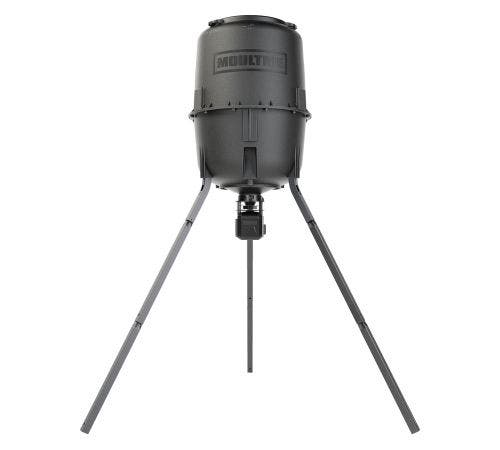
Moultrie Pro Hunter III 250 lb Deer Feeder
Check Price on Amazon →Confirm price and availability on Amazon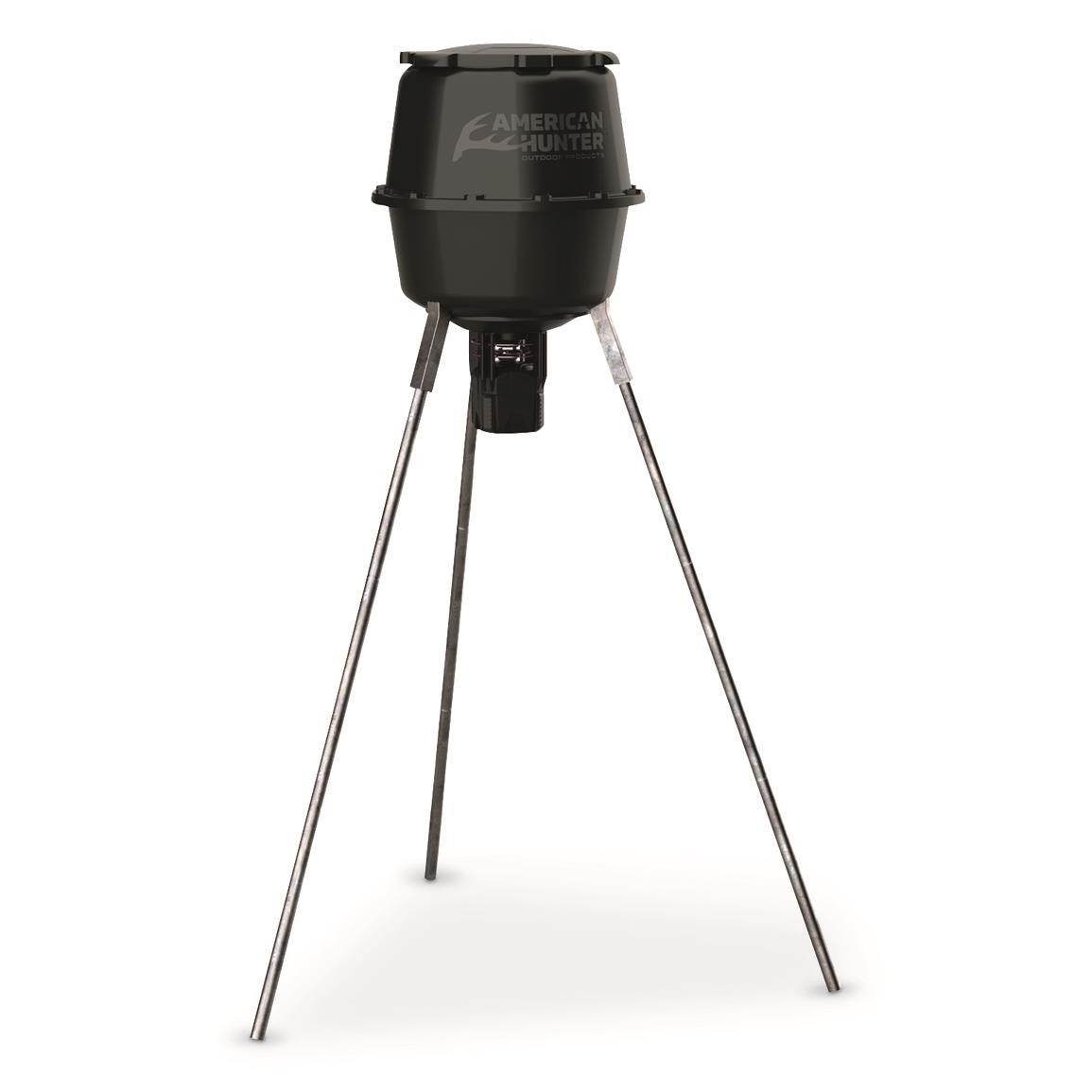
American Hunter XDE-Pro 30-Gallon Feeder
Check Price on Amazon →Confirm price and availability on Amazon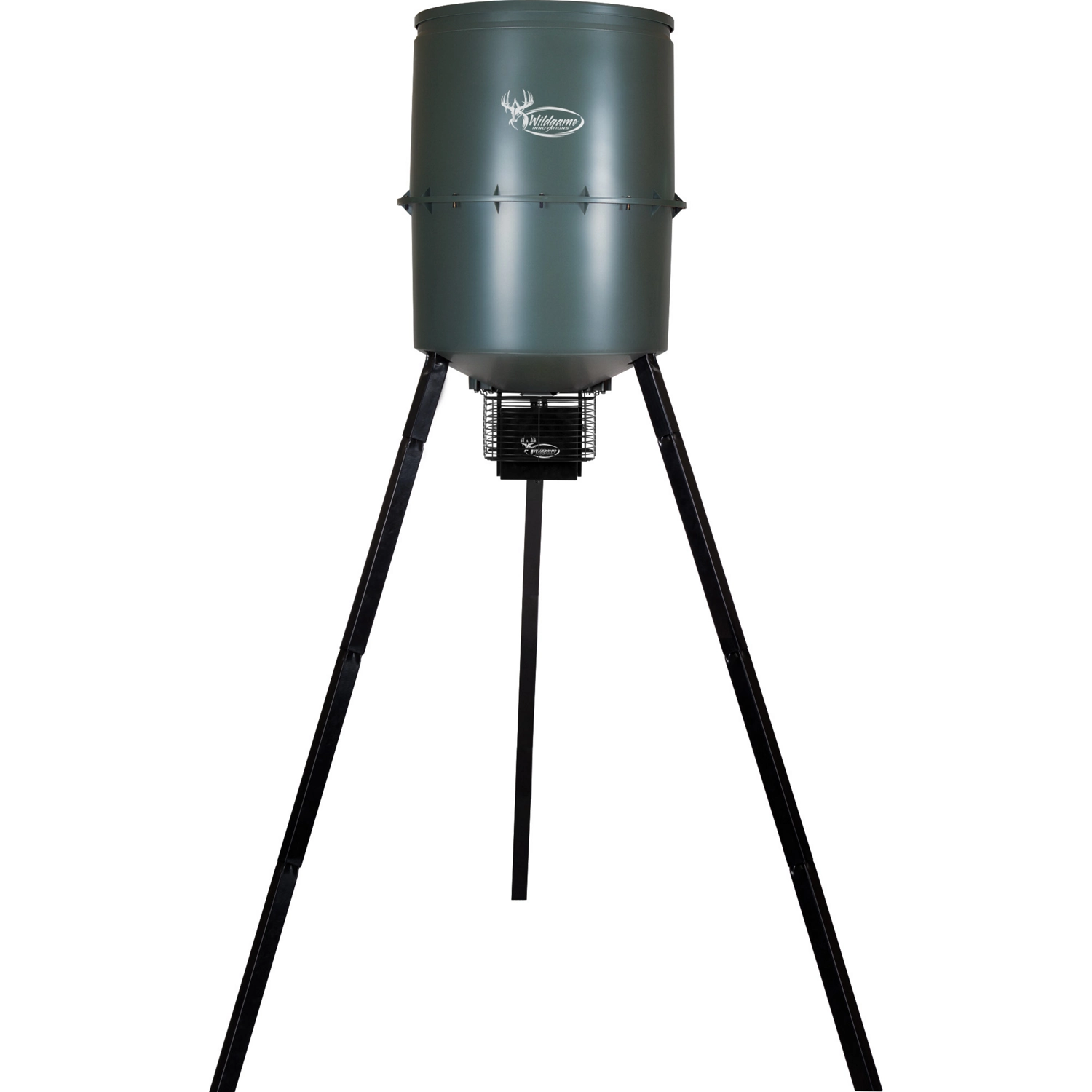
Wildgame Innovations Quick-Set Pro 270 Feeder
Check Price on Amazon →Confirm price and availability on Amazon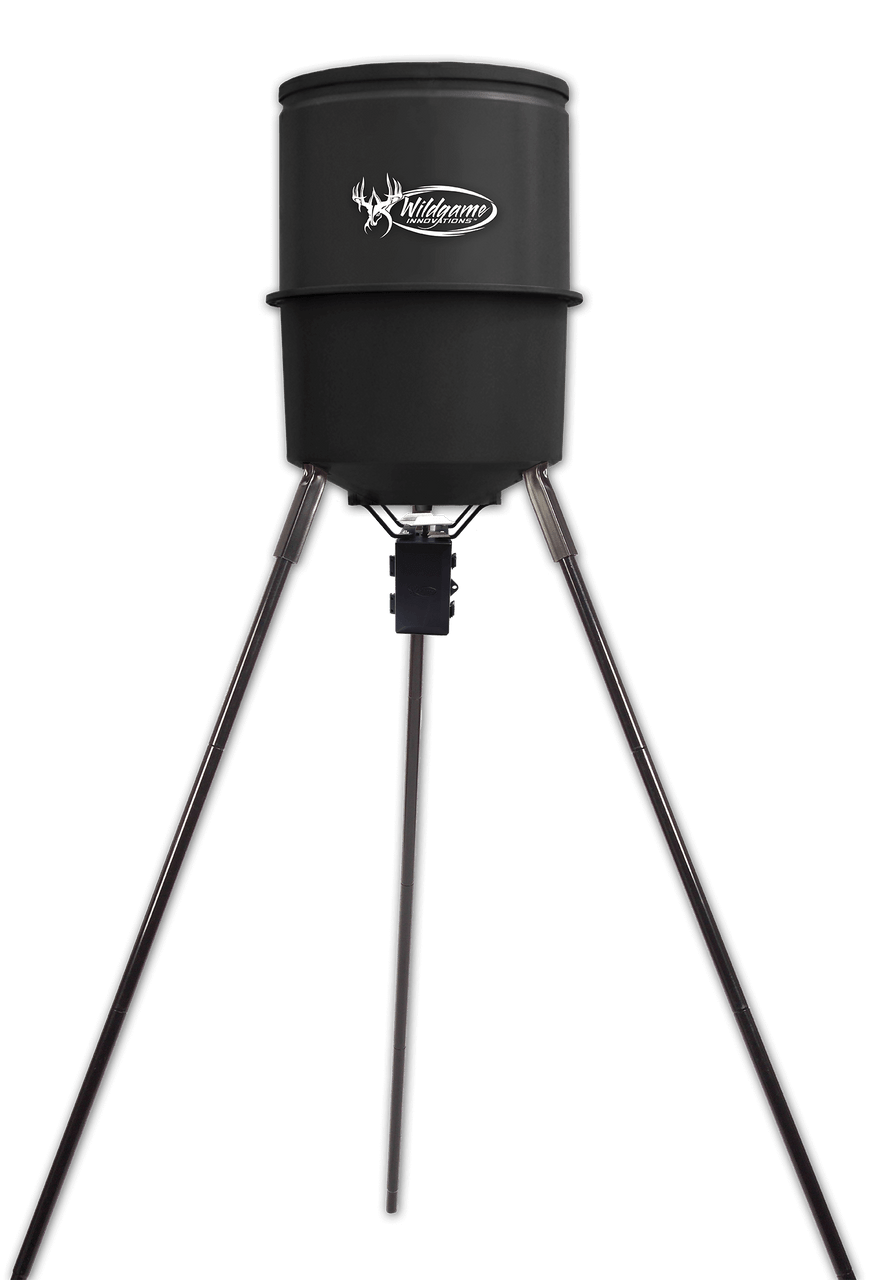
Wildgame Innovations Quick-Set 225 Feeder
Check Price on Amazon →Confirm price and availability on Amazon
Moultrie 6V Feeder Solar Panel
Check Price on Amazon →Confirm price and availability on Amazon
Power-Sonic PS-640 F1 6V Feeder Battery
Check Price on Amazon →Confirm price and availability on AmazonAs an Amazon Associate, we earn from qualifying purchases.


