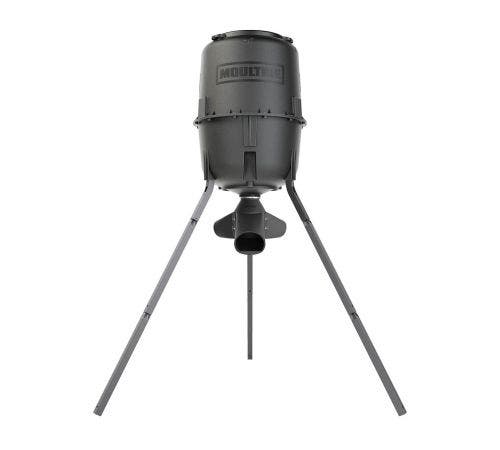
Best Deer Feeders for Remote Properties
Disclosure: This post contains affiliate links. As an Amazon Associate, I earn from qualifying purchases. As an Amazon Associate, I earn from qualifying purchases at no extra cost to you when you buy through a link on this page.
On this page: Quick Answer | At a Glance | Decision Guide | Ranked Reviews | Refill Math | Solar and Battery Sizing | Placement for Remote Sites | Cost and Ownership Math | FAQs | Verdict
Quick Answer: Best Deer Feeder for a Remote Property
For a property you visit rarely, the best deer feeder is the Texas Hunter XPF600 Xtreme Protein Feeder. It holds 600 pounds of feed, it feeds by gravity, and it has no battery, no motor, and no timer to fail between visits. That combination is exactly what a remote site needs: the largest practical interval between refills, and the fewest parts that can stop working while nobody is there to notice. A gravity feeder cannot be switched off or reprogrammed from home, so if remote control matters more to you than maximum capacity, the Moultrie Connected 250 is the remote-control pick in this guide, with cellular control and a solar panel included. Everything else in this ranking sits between those two poles: big gravity capacity on one side, and timed feeding with solar-backed power on the other. Choose capacity first if your visits are months apart, and choose control first only if you can accept a smaller hopper and an app subscription in exchange for feed-level alerts and on-demand feeding.
A remote property changes the whole buying question. On land near home, a feeder that needs a battery swap, a timer reset, or a weekly top-up is an inconvenience. On land two or three hours away, that same feeder is a failed feeding program, a wasted trip, and a stretch of days when deer learn that the site is unreliable. The feeders ranked here were picked for the things that actually decide whether a remote setup keeps working: how long a full hopper lasts, whether the power system can look after itself, whether the construction survives weather and animals without attention, and whether you can learn anything about the site without driving out to it. Cameras are not ranked as products in this guide. A camera can tell you what visited, and a cellular camera can tell you sooner, but it cannot feed deer, and a feeder does not earn its place here because a camera sits nearby. Where a feeder genuinely works with a camera or an app, that compatibility is noted as a supporting feature, and the feeder still has to justify itself on capacity, power, and durability first. Our companion guides cover feeders with camera and app control and cellular trail cameras for feeder sites in full, and both are worth reading before you spend money on connectivity for its own sake.
One honesty note runs through the whole guide, and it is worth stating up front. This site researches feeders from manufacturer specifications, retailer listings, and published owner reports. It does not hands-on test these feeders, and no review below claims otherwise. Where a specification is a manufacturer claim, the text says so. Where a capacity figure depends on the feed type, both figures are given, because a hopper that holds 600 pounds of corn does not necessarily hold 600 pounds of protein pellets. Where a price is not printed, that is deliberate: no dated price snapshot for these models is on file for this article, and a guessed or stale price would mislead you more than no price at all. Check the current listing at the time you buy, confirm the exact configuration, and confirm your state and local feeding and baiting rules before you order, because feeding rules vary and they change.
Best Deer Feeders for Remote Properties at a Glance
| Product | Best for | Capacity / key spec | Type | Photo |
|---|---|---|---|---|
| Texas Hunter XPF600 Xtreme Protein Feeder | Longest interval between visits | 600 lb; gravity; no battery or motor | Gravity | |
| Boss Buck 350 Gravity | Best all-round remote gravity feeder | About 350 lb corn; about 300 lb large protein pellets; 3 ports | Gravity | |
| Banks Feedbank 300 | Permanent post-mounted site | 300 lb; 4 adjustable ports at 42 inches | Gravity | 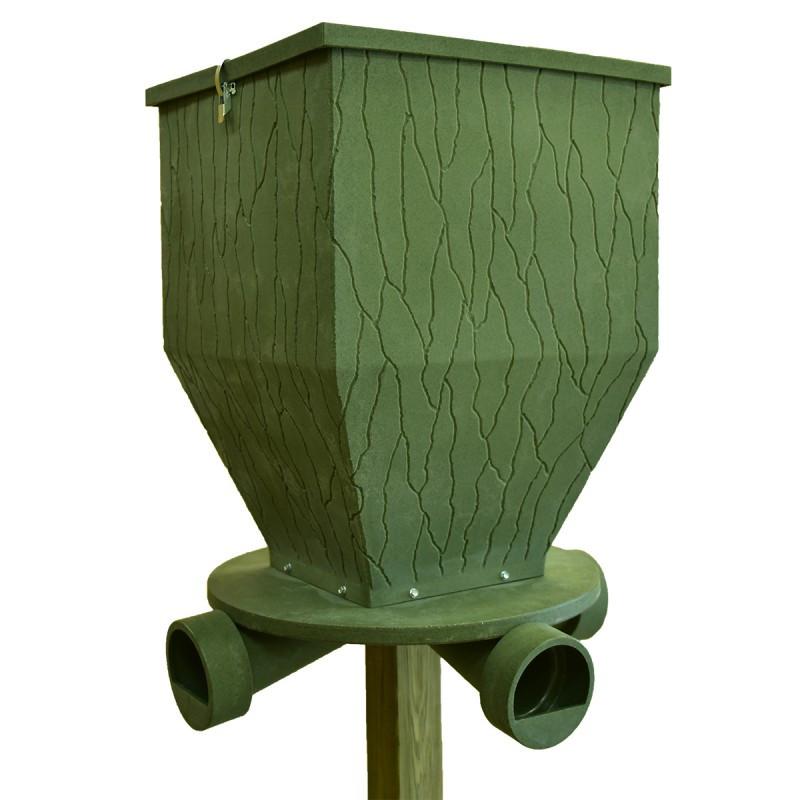 |
| Moultrie Connected 250 | True remote control and alerts | 250 lb; cellular app control; 6V solar panel included | Timed broadcast |  |
| Moultrie Pro Hunter III 250 | Bluetooth control without a subscription | 250 lb; Bluetooth app; 6V solar compatible | Timed broadcast | |
| American Hunter XDE-Pro 30-Gallon | Simple, heavily programmable timed feeding | 30-gallon hopper; up to 16 feed times per day; pre-wired for solar | Timed broadcast | |
| Moultrie 250 Gravity | No-power backup and movable sites | 250 lb; battery-free gravity; 3 adjustable funnels | Gravity |
The table makes the central trade-off visible at once. The three gravity feeders at the top of the ranking ask nothing of a power system, because they have none, and that is a genuine advantage on a remote property rather than a missing feature. The timed feeders below them give you control over when and how much feed goes out, which stretches corn and trains daylight visits, but every one of them adds a battery, and usually a solar panel, to the list of things that must keep working between your visits. Neither side is right for every property. A gravity feeder is the right answer when your main problem is distance and your deer already use the site. A timed feeder is the right answer when waste, hog pressure, or a strict feeding schedule matters more than the extra maintenance, and when you are willing to build the power system properly instead of treating solar as an afterthought.
How to Choose a Feeder for a Remote Property
Start with visit frequency, not with brand
Work out, honestly, how often you will actually get to the property. Not how often you intend to go, but how often weather, work, and distance have allowed you to go in the past year. If the answer is once a month or less, capacity is your first filter, and it should eliminate small feeders before you compare anything else. A 250-pound hopper on a site using 5 pounds a day lasts about 50 days in a worked example, which sounds generous until a wet spell, a hog visit, or a heavier deer group pushes daily use higher. A 600-pound hopper on the same 5-pounds-a-day example lasts about 120 days. The arithmetic is simple, and it is laid out in full in the refill-math section below, but the decision rule is simpler still: buy the capacity your worst month needs, not your average month, because the refill trip you cannot make is the one that empties the feeder. If you visit weekly, a 250-pound timed feeder is perfectly workable and gives you far more control. If you visit quarterly, only the largest gravity feeders in this guide make sense, and even then you should plan a mid-interval check by camera or by a neighbour if one is available.
Visit frequency also decides how much complexity you can afford. A timed feeder with a Bluetooth app is a pleasure to adjust when you are standing next to it, and a frustration when a setting needs changing from three hours away and the feeder is out of Bluetooth range. That is the gap the cellular model fills, and it is also why this guide is careful about the word remote. Bluetooth control from your phone at the feeder is not remote control of a remote property. Cellular control through an app, with feed-level reporting and clog or jam alerts, is. The distinction matters because it changes what you are paying for: with Bluetooth you are paying for convenience during a visit, and with cellular you are paying, through a subscription, for information between visits. Neither is a bad purchase, but buying Bluetooth and expecting cellular behaviour is the most common disappointment in this category, and it is entirely avoidable if you read the connectivity line in each spec table before you order.
Gravity or timed: what fails, and what it costs when it fails
Every feeder fails in some way eventually, and on a remote property the failure mode matters more than the failure rate. A gravity feeder fails by bridging, by moisture, or by running empty. Bridging is when feed packs or swells in the hopper or at a port so that deer find an empty port above a full hopper. It is most common with fine, dusty feed, with damp pellets, and with mixed feeds whose small particles settle and lock together. A gravity feeder fails quietly: nothing beeps, nothing alerts, and the first sign is often a camera full of deer nosing an empty port. A timed feeder fails differently. Its battery dies, its timer loses its program, its spinner plate jams, or its motor stops, and feeding stops on a schedule nobody is watching. The advantage of a timed feeder is that its failures are at least partly predictable: batteries age, solar panels get shaded or dirty, and a feed-level detector or a camera can report the problem. The advantage of a gravity feeder is that there is simply less to fail. This guide ranks gravity first for the most remote sites for that reason alone, and it ranks the cellular timed feeder next among timed models because its alerts close the information gap that makes timed-feeder failures expensive.
Feed type sharpens the choice further. Gravity feeders suit free-choice protein feeding, where deer eat when they want and the feeder is available around the clock. That is a strength for a protein program and a weakness for a corn budget, because free-choice corn disappears faster than timed corn and attracts more non-target visitors. Timed broadcast feeders suit corn programs, where a few short, predictable feeds each day concentrate deer movement at daylight and stretch a hopper much further. If you plan to feed protein in spring and summer and corn in autumn, the Boss Buck family is worth a particular look, because its gravity head converts to an automatic system, so one hopper can serve both seasons. That conversion is a real feature, but it is not free: the automatic kit, the battery, and any solar panel are separate parts of the system, and you should price and plan the whole system, not just the hopper, before you commit to it.
Power: the system, not the accessory
On a remote property, power is a system, not an accessory you add later. The rule that governs every timed feeder in this guide is simple, and it is the rule our deer feeder solar panel guide and our feeder battery guide both repeat: match the voltage first, then confirm the connector, then check that the panel can keep up with your feeding program in winter light, not just in summer. A 6-volt feeder needs a 6-volt panel and a 6-volt battery system. A 12-volt feeder needs a 12-volt system. Voltage is not a detail you can work around with an adapter you happen to own, and a panel from a different brand may not use the same connector even when the voltage matches. One owner report cited in our automatic-feeder coverage complained that there was no obvious hookup for an existing Moultrie solar panel on a Pro Hunter III kit, which is exactly the kind of small mismatch that turns a remote feeder into a dead feeder. Confirm the matching panel for your exact feeder kit before you order, and treat a feeder whose battery is sold separately as a feeder whose true first cost includes that battery and a charger.
Solar does not make a feeder maintenance-free. It makes a feeder maintenance-light, and only if the panel faces the sun, stays clean, and is not shaded by the canopy that grows over a remote site during the season. A panel tucked under branches, coated in dust or pollen, or angled for summer sun will underperform in winter, when days are short and feeding matters most. Plan the panel position when you plan the feeder position, not after the feeder is already staked down. Check the panel on every visit, even if the feeder seems to be working, because a battery that is slowly losing charge will fail on the coldest week, not on the visit when you notice it. And keep a spare battery plan: a charged spare carried on a visit is cheap insurance against a return trip, and a timer that remembers its program through a battery swap is worth more on a remote site than a timer with more features that forgets everything when power is interrupted. Our feeder timer guide covers that distinction in detail.
Construction and animals: steel, plastic, and the visitors you did not invite
Durability on a remote property is not about surviving one season. It is about surviving seasons of sun, rain, freezing, hogs, raccoons, and the occasional bear investigation without anyone there to repair a cracked lid or a bent leg. Roto-molded polyethylene hoppers, used by Texas Hunter and Boss Buck, do not rust, and that is a real advantage over steel in wet ground, but plastic ages in ultraviolet light, and a hopper left in open sun will fade and eventually embrittle faster than the same hopper under partial canopy. Powder-coated steel, used in stands, sleds, and some hoppers, resists impact and animal damage better, but its coating is its protection: once it chips down to bare metal, rust follows, and a remote feeder is not inspected often enough to catch a chip early. Neither material is simply better. Plastic wins where rust and weight matter, steel wins where impact, hogs, and a permanent installation matter, and the honest answer for most remote sites is to match the material to the site: plastic gravity hoppers for wet, low-supervision protein sites, and steel stands and guards where hogs work a feeder hard.
Animal pressure deserves its own paragraph because it decides more remote purchases than any specification sheet. Raccoons empty gravity ports, hogs tip and push tripods, and both learn a feeder faster than deer do. A varmint guard, a lockable lid, a spinner plate that stays closed between feeds, and legs that can be staked or anchored all help, but none of them makes a feeder animal-proof, and this guide does not claim that any feeder here is bear-proof, because no feeder in this ranking carries that claim from its manufacturer. The practical remote-site answer is layered: pick a feeder whose weak points are the ones you can protect, stake or anchor it properly on the first visit, keep the lid latched every time without exception, and use a camera to learn which animal is actually causing the loss before you buy a guard for the wrong animal. Our varmint and hog guides cover those defences in full, but the purchase decision here is simpler: if hogs are your main problem, favour steel, low, anchored, and guarded designs over tall, light tripods, and accept that a feeder that is easy for you to move is also easy for a hog to move.
The 7 Best Deer Feeders for Remote Properties, Ranked
1. Texas Hunter XPF600 Xtreme Protein Feeder — Best for the Longest Interval Between Visits
The Texas Hunter XPF600 earns the top spot for a reason that has nothing to do with technology and everything to do with arithmetic. It holds 600 pounds of feed, it feeds by gravity, and the manufacturer states plainly that there are no batteries, motors, or moving parts. On a property you visit rarely, that is not a primitive design. It is the design with the fewest ways to stop working while you are away. The hopper is roto-molded, which means it will not rust, and the manufacturer describes it as built to last a lifetime, with a UV inhibitor to maintain its appearance. The stand is heavy-duty powder-coated steel with skids, so the feeder can be moved and repositioned without dismantling it, and the four large 6-inch feed ports use adjustable feed-flow baffles, which let you tune flow for different pellet sizes and for the volume of feed you want available. A heavy-duty hinged lid with built-in lid stops keeps the lid from flopping back or slamming shut during filling, which matters more than it sounds when you are filling a 600-pound hopper by yourself on a remote site.
The honest weaknesses start with the same thing that makes it strong: free-choice gravity feeding. Deer eat when they want, which is excellent for a protein program and expensive for a corn program, because there is no timer to ration feed, no schedule to concentrate visits at daylight, and no way to shut the feeder off from home if hogs or raccoons move in. At 600 pounds, the hopper is also a serious physical commitment. Filling it takes feed, time, and transport, and the feeder ships by motor freight, which tells you something about its size and weight before you ever see it. The four-port design serves several deer at once, which is good for herd feeding, but it also means four points where moisture, bridging, and animal pressure can act at once, so port inspection on every visit is not optional. And the XPF600 is a protein feeder first. It will hold corn, and the capacity figure for corn is higher than for protein in some retailer listings, but you should plan with the figure that matches the feed you actually intend to run, and confirm that figure on the exact listing before you order, because corn and pellet capacities are not interchangeable.
Pros: 600-pound capacity stretches refill intervals further than any other feeder in this guide; no battery, motor, or timer to fail between visits; roto-molded hopper will not rust; powder-coated steel stand with skids for repositioning; four large adjustable ports serve several deer at once.
Cons: No timer, schedule, or remote shut-off; free-choice feeding uses corn faster than timed feeding; filling a 600-pound hopper is a heavy job; motor-freight size and weight complicate delivery to a truly remote site; four ports mean four points to inspect for moisture and bridging.
Owner-evidence note: No verified owner-experience set specific to the XPF600 is cited in this article, and none is invented here. The claims above are manufacturer specifications and retailer descriptions. Treat the lifetime-build language as a manufacturer claim, not as a tested result, and judge the feeder on the two facts that do not depend on marketing: its capacity, and the absence of parts that need power or programming.
| Spec | Detail |
|---|---|
| Capacity | 600 lb (manufacturer figure; confirm the figure for your feed type on the exact listing) |
| Feed type | Gravity, free choice |
| Ports | Four large 6-inch ports with adjustable feed-flow baffles |
| Construction | Roto-molded hopper; heavy-duty powder-coated steel stand with skids; stainless steel hardware |
| Power | None required: no battery, motor, or moving parts (manufacturer description) |
| Lid | Heavy-duty hinged lid with built-in lid stops |
| Monitoring | None built in; pair with a separate trail camera if you want visit information (see the cellular camera guide) |
2. Boss Buck 350 Gravity — Best All-Round Remote Gravity Feeder
The Boss Buck 350 is the feeder to buy when you want the remote-site advantages of gravity feeding without committing to a 600-pound hopper. Its capacity is approximately 350 pounds of corn and approximately 300 pounds of large protein pellets, and that distinction is printed here deliberately, because it is the single most common planning mistake in this category. Use the corn figure for corn and the pellet figure for pellets, and do not let a retailer headline that says 350 pounds lead you to plan a pellet program around 350 pounds of pellets. The hopper is thick-walled, UV-protected HDPE plastic that the manufacturer describes as maintenance-free and as material that will not rot, rust, or leak. The feeding head is the patented free-choice protein and gravity head, with three ports angled at 10 degrees, each 4 inches in inside diameter, each with a drain hole to disperse water that enters the tip of the port, and an internal cone that dispenses feed evenly to the three ports. A three-way inner sleeve lets you control flow for almost all feed shapes and sizes, pushing it up to virtually shut off flow or easing it down to the flow you want. The legs are 78-inch galvanized steel, and all hardware is galvanized.
The weaknesses are the weaknesses of a mid-size gravity feeder on a remote site. At 350 pounds of corn, it needs refilling sooner than the 600-pound models, and on a high-use site that difference can be the difference between a comfortable monthly visit and a rushed mid-month trip. Gravity feeding is free-choice feeding, so it does not ration corn, it does not schedule daylight visits, and it does not stop hogs or raccoons from eating at night. The hopper weight and the leg system make it a two-person job to set up well, even though the hopper itself is lighter than a steel hopper of the same capacity, and a poorly levelled or poorly anchored tripod will lean, shift, or invite hog pressure over a season. The conversion to an automatic system is a genuine strength, and it is also a trap for the unwary: the spinner system is optional, a 12-volt battery is included only with the single-leg option in some listings, and a solar panel is sold separately, so the converted feeder is a system you must build deliberately, with matched voltage and connectors, not a feature you switch on.
Pros: Proven gravity head with moisture-conscious ports and drain holes; flow control by inner sleeve for corn, pellets, and blends; HDPE hopper will not rot, rust, or leak; galvanized legs and hardware; converts from gravity to automatic feeding.
Cons: Smaller capacity than the 600-pound class, so refill trips come sooner; free-choice feeding does not ration corn or schedule visits; conversion kit, battery, and solar panel are separate system parts, not included by default; tripod setup and anchoring need care on uneven or hog-worked ground; pellet capacity is lower than corn capacity, so pellet planning must use the lower figure.
Owner-evidence note: No verified owner-experience set specific to the Boss Buck 350 is cited in this article, and none is invented here. The description above rests on manufacturer and retailer specifications for the 350 model, including the port angle, port diameter, drain holes, and leg length, all of which are consistent across multiple retailer listings for this exact model.
| Spec | Detail |
|---|---|
| Capacity | About 350 lb corn; about 300 lb large protein pellets |
| Feed type | Gravity, free choice; converts to automatic with the optional spinner system |
| Ports | Three ports, 4-inch inside diameter, 10-degree angle, 1-inch overhang, drain hole each; internal cone; 3-way inner sleeve |
| Construction | Thick-wall HDPE UV-protected plastic hopper; 78-inch galvanized legs; all-galvanized hardware |
| Power (gravity mode) | None required |
| Power (converted mode) | Spinner system optional; solar panel sold separately; confirm kit voltage and connectors before ordering a panel |
| Monitoring | None built in; a separate camera is the monitoring route for this feeder |
3. Banks Feedbank 300 — Best Permanent Post-Mounted Remote Site
The Banks Feedbank 300 is the right answer when the site is proven, the feeder will not move, and you want the simplest possible machine doing the job for years. It holds 300 pounds of feed, it mounts on a single 8-foot 4-by-4 post set 3 feet into the ground, with the post itself not included, and its four adjustable feeding ports stand at 42 inches, which the manufacturer describes as an optimal height for deer feeding. The single-post design is the point. A tripod puts three legs in the feeding area, and a mature buck can catch antlers or simply avoid the clutter. A single centre post leaves the feeding area open on all sides, and the manufacturer states that the single post will not interfere with or damage antler growth. The hopper is UV-stabilized polyethylene, the cover is large and watertight, which makes filling easy and keeps feed fresh, and the ports are adjustable, so you can control flow for seasonal conditions and for the deer numbers actually using the site. There is no battery, no motor, and no timer, which is, again, a feature on a remote property rather than an omission.
The weaknesses follow directly from permanence. A post set 3 feet into the ground is not a feeder you relocate on a whim, so the Feedbank 300 punishes a bad site choice more than any tripod in this guide. Prove the site first with a movable feeder or a season of camera evidence, and only then commit to a post. At 300 pounds, it also sits below the 600-pound class, so on a high-use site it will need refilling sooner, and a single post concentrates all of the feeder’s stability in one footing: soft ground, a leaning post, or hog rooting around the base will matter more than it would on a tripod. The post is not included, so the true first cost and the true first job include buying, transporting, and setting a post, which is easy to forget when comparing hopper prices. And as with every gravity feeder, there is no schedule, no rationing, and no alert. If flow stops, if moisture gets in, or if the hopper empties, you will learn about it on your next visit or from a separate camera, not from the feeder itself.
Pros: Single-post design leaves the feeding area open and avoids antler interference; 300-pound capacity with four adjustable ports; UV-stabilized polyethylene hopper; large watertight cover for easy filling and feed freshness; no power system to maintain.
Cons: Permanent post installation punishes a wrong site choice; post not included, so first cost and first job are larger than the hopper alone; smaller capacity than the 600-pound class; single footing concentrates stability risk in soft or hog-worked ground; no schedule, rationing, or alerts.
Owner-evidence note: No verified owner-experience set specific to the Feedbank 300 is cited in this article, and none is invented here. The specifications above are the manufacturer’s own: 300 pounds, single 8-foot 4-by-4 post set 3 feet into the ground, adjustable ports, 42-inch port height, and a large watertight cover.
| Spec | Detail |
|---|---|
| Capacity | 300 lb |
| Feed type | Gravity, free choice |
| Ports | Four adjustable ports at 42 inches |
| Construction | UV-stabilized polyethylene; large watertight cover |
| Mounting | Single 8-foot 4-by-4 post (not included), set 3 feet into the ground |
| Power | None required |
| Monitoring | None built in; a separate camera is the monitoring route for this feeder |
4. Moultrie Connected 250 — Best True Remote Control and Alerts
The Moultrie Connected 250 is the only feeder in this guide that genuinely answers the question a remote property owner actually asks between visits, which is not what happened yesterday, but whether the feeder is working right now. It is a 250-pound timed broadcast feeder with a Feed Hub Kit and a Feed Level Detector, which use an integrated cellular timer to enable remote control from the Moultrie app. From the app you can update feed times, monitor remaining feed levels, get alerts for clogs and jams, and run the feeder on demand. The manufacturer lists cellular connectivity across all major networks with auto-connect, up to 10 feed times per day at 1 to 60 seconds each, high, medium, and low spin-plate speeds, 360-degree coverage, a 6-foot fill height, and powder-coated steel legs. Crucially for a remote site, the 6-volt feeder solar panel is included, so the power system is part of the purchase rather than a separate decision you might postpone, and the battery system is a 6-volt system with solar included. The feed-level reporting is described by the manufacturer as an estimated feed level, which is an honest limitation worth remembering: it is a guide to when a refill trip is due, not a scale reading.
The weaknesses are equally clear, and they should decide the purchase. First, an active Moultrie app subscription is required to set up and use this feeder, so the feeder’s remote features are not a one-time purchase. They are an ongoing cost, and you should check the current plan terms before you buy, because plan terms change and this article deliberately prints no subscription price from a snapshot that could already be stale. Second, cellular control depends on cellular signal at the feeder site. A feeder in a valley, behind a ridge, or in a dead zone will not deliver the alerts that justify its price, and no app can fix a site with no signal. Test signal at the exact feeder location, not at the gate or the cabin, before you commit. Third, at 250 pounds, this is the smallest hopper among the top four in this guide, so it trades capacity for information. If your site uses feed quickly, you will still make refill trips, and the alerts will tell you sooner that a trip is due, which is valuable, but it is not the same as not needing the trip. Finally, the Feed Level Detector itself needs its own small batteries, separate from the feeder battery, which is one more small part to check on a visit.
Pros: True cellular control from anywhere through the Moultrie app; feed-level monitoring and clog, jam, and low-battery alerts; run the feeder on demand; 6-volt solar panel included, so power is part of the purchase; up to 10 feed times per day with adjustable spin speed.
Cons: Active app subscription required to set up and use the feeder; cellular features depend on signal at the exact feeder site; 250-pound hopper is smaller than the gravity leaders in this guide; feed-level reporting is estimated, not exact; feed-level detector needs its own small batteries.
Owner-evidence note: No verified owner-experience set specific to the Connected 250 is cited in this article, and none is invented here. The features and limits above are the manufacturer’s own specifications for model MFG-15106, including the subscription requirement, the included solar panel, and the estimated nature of feed-level reporting.
| Spec | Detail |
|---|---|
| Capacity | 250 lb |
| Feed type | Timed broadcast, 360-degree coverage |
| Connectivity | Cellular, all major networks with auto-connect; Moultrie app control; subscription required |
| Feed times | Up to 10 per day, 1 to 60 seconds each; spin speed high, medium, low |
| Power | 6-volt battery system; 6-volt feeder solar panel included |
| Fill height / legs | 6 feet; powder-coated steel legs, 6 leg sections |
| Monitoring | Feed Level Detector: estimated feed level, plus clog, jam, and low-battery alerts through the app |
5. Moultrie Pro Hunter III 250 — Best Bluetooth Control Without a Subscription
The Moultrie Pro Hunter III 250 is the timed feeder to buy when you want app control during a visit, a flexible schedule, and solar-backed power, without paying a subscription for features you will not use. It holds 250 pounds of feed in a thick plastic hopper, with a 6-foot fill height that is high enough to broadcast corn widely and low enough to fill without extra gear, and it uses the Pro Hunter III feeder kit with 360-degree coverage. You can program up to 10 feed times per day at 1 to 60 seconds each, either at the built-in timer or through the Moultrie app over Bluetooth, with no subscription required for Bluetooth control. Spin-plate speed is adjustable across high, medium, and low settings, which lets you tune how far and how fast feed spreads, and the kit attaches through the Quick-Lock adapter without tools, which matters when a kit needs swapping on a remote site. Power is a 6-volt tab-top rechargeable battery, sold separately, and the feeder is solar compatible with the matching Moultrie 6-volt feeder solar panel. The manufacturer also states that pairing the feeder with an EDGE 3 Series camera adds remote feeder control and updates over cellular, which is a supporting compatibility, not the feeder’s own cellular feature, and it should be read that way: the feeder itself is Bluetooth, and cellular behaviour arrives only through a separate camera system.
The weaknesses are the usual timed-feeder weaknesses, plus one specific to this model. The 6-volt battery is sold separately, so the headline feeder is not a complete power system until you add the battery and, for a remote site, the matching solar panel. Bluetooth range is limited, so you cannot adjust this feeder from home, and anyone who buys it expecting cellular control without a camera will be disappointed. One owner report cited in our earlier automatic-feeder coverage complained that there was no obvious hookup for an existing Moultrie solar panel on a Pro Hunter III kit, which is a useful warning: confirm your panel’s connector against this exact kit before you order, rather than assuming that any panel with the right voltage will fit. The operating temperature range published by the manufacturer runs from 14 degrees Fahrenheit to 140 degrees Fahrenheit, so in a hard freeze below that floor, timer and battery behaviour deserve a check on your next visit rather than an assumption that everything ran. At 250 pounds, it is also a feeder that needs refilling on a regular rhythm, and its value depends on you keeping that rhythm.
Pros: Bluetooth app control with no subscription; up to 10 feed times per day with adjustable spin speed; 6-foot fill height for easy filling; Quick-Lock tool-free kit changes; solar compatible with the matching 6-volt panel; cellular control possible through a paired EDGE 3 Series camera.
Cons: 6-volt battery sold separately, so first cost is higher than the feeder alone; Bluetooth only, so no control from home without a separate camera; panel connector must be confirmed for this exact kit; 250-pound hopper needs regular refills on high-use sites; published low-temperature floor needs checking in hard freezes.
Owner-evidence note: One owner report is paraphrased here from our earlier automatic-feeder coverage of this kit: an owner using the app reported no obvious hookup for an existing Moultrie solar panel, and the guidance drawn from it is to confirm the panel connector before ordering. No other owner experience is claimed for this model, and no hands-on testing by this site is claimed.
| Spec | Detail |
|---|---|
| Capacity | 250 lb |
| Feed type | Timed broadcast, 360-degree coverage |
| Connectivity | Bluetooth through the Moultrie app, no subscription; cellular only through a paired EDGE 3 Series camera |
| Feed times | Up to 10 per day, 1 to 60 seconds each; spin speed high, medium, low |
| Power | 6-volt tab-top rechargeable battery (sold separately); solar compatible with the Moultrie 6-volt feeder solar panel |
| Fill height / legs | 6 feet; powder-coated steel legs |
| Operating temperature | 14 degrees Fahrenheit to 140 degrees Fahrenheit (manufacturer figure) |
6. American Hunter XDE-Pro 30-Gallon — Best Simple, Heavily Programmable Timed Feeder
The American Hunter XDE-Pro with a 30-gallon hopper is the feeder to buy when you want a timed feeder that is easy to program, easy to understand, and easy to keep running, and you do not need app control at all. Its EZ-Touch digital timer has a large LCD display, two Q-Set preconfigured settings for fast setup, and a simple spin plate that broadcasts feed in a full 360-degree pattern. You can feed 1 to 16 times per day at 1 to 60 seconds per feed, which is the widest program range in this guide, and that range is genuinely useful on a remote site: a short, frequent program stretches corn, a longer, rarer program suits a site you visit rarely, and the Q-Set presets let you start with a sensible program and adjust from camera evidence rather than from guesswork. The unit is pre-wired for an American Hunter solar panel, which is the right kind of solar readiness for a remote site, because pre-wiring removes a whole class of connector and installation mistakes, and the recommended battery is the DE-30045, which is not included. The hopper is a 30-gallon nesting hopper, and retailer listings describe its feed capacity as up to 225 pounds, which is the figure to use for planning until you confirm the exact listing for the configuration you buy, because gallons and pounds are not the same measure and feed density changes the conversion.
The weaknesses are straightforward. The battery is not included, so the feeder is not a complete system out of the box, and the solar panel, while pre-wired, is also a separate purchase, so the remote-site power system must be bought deliberately. There is no app control, no Bluetooth, and no cellular feature in this feeder itself, so if you want to know whether it ran, or to change its program without visiting, you need a separate camera, and the feeder will not tell you itself. The 30-gallon hopper is also the smallest capacity in this guide in practical terms, which makes it a poor first choice for a property visited quarterly, even though its programming range is the best. Finally, the wide program range is a double-edged sword: 16 feeds a day at 60 seconds each will empty any hopper quickly, so the programming freedom this feeder offers must be paired with the refill discipline in the math section below, or the feeder will do exactly what you told it to do and run empty sooner than you expected.
Pros: Widest program range in this guide: 1 to 16 feeds per day at 1 to 60 seconds; large LCD timer with Q-Set presets for fast setup; pre-wired for an American Hunter solar panel; simple 360-degree spin plate; nesting hopper design for setup.
Cons: Battery not included; solar panel is a separate purchase despite pre-wiring; no app, Bluetooth, or cellular control in the feeder itself; smallest practical capacity in this guide; wide programming range can empty the hopper fast if set aggressively.
Owner-evidence note: No verified owner-experience set specific to the XDE-Pro 30-gallon configuration is cited in this article, and none is invented here. The program range, timer features, pre-wiring, and recommended battery are retailer and manufacturer descriptions for model AH-225XDE, and the 225-pound planning figure is a retailer description of the 30-gallon hopper’s feed capacity.
| Spec | Detail |
|---|---|
| Capacity | 30-gallon hopper; retailer listings describe up to 225 lb of feed (confirm on the exact listing) |
| Feed type | Timed broadcast, 360-degree pattern |
| Timer | EZ-Touch digital timer, large LCD, two Q-Set presets; 1 to 16 feeds per day, 1 to 60 seconds each |
| Power | Recommended DE-30045 battery (not included); pre-wired for an American Hunter solar panel |
| Construction | Plastic nesting hopper; three 8-foot sectional heavy-duty metal legs in retailer listings for this configuration |
| Monitoring | None built in; a separate camera is the monitoring route for this feeder |
7. Moultrie 250 Gravity — Best No-Power Backup and Movable Site Feeder
The Moultrie 250 Gravity closes this ranking for a reason that is easy to overlook when comparing capacities: it is the cheapest insurance policy in the guide. It holds 250 pounds of feed in a 30-gallon hopper, it feeds by gravity through three adjustable funnels, and it needs no battery, no motor, and no timer. On a remote property, that makes it two different feeders in one purchase. First, it is a perfectly serviceable primary feeder for a site you visit monthly, where 250 pounds is enough and where the absence of electronics is a benefit rather than a limitation. Second, it is the backup feeder to put on a second site, or alongside a timed feeder, so that if the timed feeder’s battery dies or its motor jams, deer still have feed and still have a reason to visit the property. Its tripod design is movable, which matters on land where you have not yet proven a site, and its Quick-Lock adapter compatibility means the same hopper can later accept a different Moultrie feeder kit if you decide to convert a proven gravity site to timed feeding. The hopper is rugged, UV-resistant plastic, and the lid is designed for quick refills and secure closure.
The weaknesses are the weaknesses of a 250-pound gravity feeder, stated plainly. It is the joint-smallest gravity hopper in this guide, so on a high-use or multi-month site it will need refilling sooner than the Boss Buck 350, the Banks 300, or the Texas Hunter 600, and free-choice feeding will use corn faster than a timed program would. It has no schedule, no rationing, and no alerts, so it cannot tell you it is empty, bridged, or being worked by hogs. Its tripod, while movable, is also more vulnerable to hog pressure and wind than a post-mounted or skid-mounted feeder, so anchoring and site choice matter more, not less, because the feeder is light enough to move. And the conversion path, while real, is not free: a feeder kit, a battery, and a panel are separate purchases, and the converted feeder inherits all of the timed-feeder maintenance that the gravity version avoids. Buy this feeder for what it is, a simple, movable, no-power feeder, and do not buy it as a cheap route to a timed feeder you have not yet budgeted for.
Pros: No battery, motor, or timer to fail; three adjustable funnels for corn, pellets, and mixed grains; movable tripod for unproven sites; Quick-Lock compatibility for a later kit conversion; UV-resistant plastic hopper with quick-refill lid.
Cons: Smallest gravity capacity in this guide alongside the timed models; free-choice feeding uses corn faster than timed feeding; no schedule, rationing, or alerts; tripod is more vulnerable to hogs and wind than post or skid mounts; conversion to timed feeding is a separate purchase, not included.
Owner-evidence note: No verified owner-experience set specific to the Moultrie 250 Gravity is cited in this article, and none is invented here. The capacity, funnel design, battery-free operation, and Quick-Lock compatibility are manufacturer and retailer descriptions for this model.
| Spec | Detail |
|---|---|
| Capacity | 250 lb; 30-gallon hopper |
| Feed type | Gravity, free choice; three adjustable funnels |
| Construction | Rugged UV-resistant plastic hopper; tripod legs; quick-refill lid |
| Power | None required |
| Conversion | Quick-Lock adapter compatibility for a later Moultrie feeder kit (kit, battery, and panel separate) |
| Monitoring | None built in; a separate camera is the monitoring route for this feeder |
Two capacity notes belong outside the ranking, because they affect the decision without changing it. First, the Boss Buck family does not stop at 350 pounds. The same gravity family runs to a 600-pound model, at approximately 600 pounds of corn and approximately 500 pounds of large protein pellets, and to a 1200-pound model, at approximately 1200 pounds of corn and approximately 1000 pounds of large protein pellets, with adjustable height on the 1200. Those larger Boss Buck models are sold through dealers rather than through a verified Amazon listing used in this article, so no Amazon button is printed for them here, and no button is invented. If your property genuinely needs more than 600 pounds between visits, talk to a Boss Buck dealer about the 600 or 1200, and judge them on the same criteria as the ranked feeders: capacity for your feed type, port design, and the cost of filling a hopper that large. Second, the site’s gravity guide, best gravity feeders, covers ten gravity models in full, and our main best deer feeders guide covers sixteen feeders across types. This remote-property ranking is narrower on purpose: it ranks only the feeders whose capacity, power, or monitoring behaviour actually suits a rarely visited property.
Refill Math for Infrequent Visits: Capacity Divided by Daily Use
Refill planning for a remote property is one division, done honestly. Days between refills equals the usable capacity of the hopper, in pounds, divided by the daily feed use, in pounds per day. The formula is simple. The honesty is in the two numbers you put into it, because both are easier to overstate than to measure. Usable capacity is not the headline capacity. It is the headline capacity for the feed type you actually run, minus the feed that bridges, spoils, or is lost to non-target animals before deer eat it. Daily use is not the amount you intend deer to eat. It is the amount that actually leaves the feeder each day, including waste, spillage, and visits by raccoons, hogs, turkeys, and squirrels. A feeder that you think uses 5 pounds a day but actually loses 8 pounds a day will empty 37 percent sooner than your plan, and on a remote property that error is the whole problem. Measure daily use from camera evidence and from refill records over a full cycle, not from a single good week, and plan from the highest daily use you have actually seen, not from the average.
| Hopper capacity | At 3 lb per day | At 5 lb per day | At 10 lb per day | At 20 lb per day |
|---|---|---|---|---|
| 250 lb | About 83 days | About 50 days | About 25 days | About 12 days |
| 300 lb | About 100 days | About 60 days | About 30 days | About 15 days |
| 350 lb corn | About 117 days | About 70 days | About 35 days | About 17 days |
| 600 lb | About 200 days | About 120 days | About 60 days | About 30 days |
Read the table as worked examples, not as promises. A 600-pound feeder at 3 pounds a day lasts about 200 days in arithmetic, and in real life it lasts until moisture, bridging, hogs, or a change in deer numbers intervenes, which is why the table is a planning tool and not a guarantee. The practical use of the table is to work backwards from your visit schedule. If you can visit every 60 days, and your site uses 10 pounds a day, you need a 600-pound hopper, and even then you have no margin. If you can visit every 30 days, a 300-pound hopper at 10 pounds a day is exactly enough, which means it is not enough, because exactly enough leaves no room for a missed visit, a wet spell, or a hog visit. Buy one size larger than the table says you need, or cut daily use with a timed program, or accept that you will make an extra trip. Those are the only three honest options, and the cheapest of them is usually the timed program, because a timed feeder that throws a measured amount twice a day uses less corn than a free-choice feeder on the same site, even though it adds a battery and a panel to maintain.
Timed feeders need a second piece of arithmetic, and it is just as simple. Daily use on a timed feeder equals the number of feeds per day, multiplied by the seconds per feed, multiplied by the pounds thrown per second for your feeder and feed. The pounds per second figure is feeder-specific, and it is not printed in this article because no verified pounds-per-second figure for these exact models is on file, and inventing one would be worse than omitting it. Measure it yourself on the first visit: run the feeder for a known number of seconds into a bucket, weigh the result, and divide. Do that once, write the figure on the feeder lid with a marker, and your refill math becomes exact instead of estimated. That single measurement, done once, is worth more than any table in this guide, because it turns your feeder from a guessed system into a measured one. Our guide to how long deer feeder corn lasts and our protein feeder capacity guide both cover the capacity-by-feed-type problem in more depth, and both are worth reading before you buy feed in bulk for a remote site.
Feed freshness is the limit that capacity alone cannot solve. A hopper that holds feed for 200 days does not keep feed fresh for 200 days in every climate. Protein pellets absorb moisture and spoil faster than whole corn, and a pellet program in a humid summer needs more frequent inspection than a corn program in a dry winter, even if the arithmetic says the hopper is still half full. A partial-fill strategy helps in summer: fill less, refill more often, and keep stored feed dry between fills, rather than filling a large hopper to the top in spring and assuming it will stay fresh until autumn. Lid discipline is part of freshness: a lid left ajar after a hurried refill, a lid seal damaged by hogs, or a port drain hole blocked by debris will all let moisture in, and moisture in a remote feeder is discovered weeks later, when the feed is already spoiled. Plan a freshness check into every visit, even if the hopper looks full, by opening the lid, smelling the feed, and checking the ports for bridging or mould, and do not refill a wet hopper with dry feed on top of wet feed.
Solar and Battery Sizing: 6-Volt Versus 12-Volt, Done Properly
Solar and battery sizing for a feeder is governed by one rule and two checks. The rule is to match the voltage of the whole system: feeder, battery, and panel must all be the same voltage. A 6-volt feeder, such as the Moultrie Pro Hunter III 250 and the Moultrie Connected 250, needs a 6-volt battery system and a 6-volt panel. A 12-volt feeder system, such as the Boss Buck spinner conversion and many larger timed feeders, needs a 12-volt battery and a 12-volt panel. Mixing voltages is not a shortcut, and it is not fixed by a panel that happens to fit the connector. The two checks are the connector and the winter performance. The connector must fit your exact feeder kit, not just a feeder of the same brand, and the panel must keep up with your feeding program in winter light, when days are short, the sun is low, and the battery is cold, not just in summer when every panel looks adequate. Our solar panel guide covers 6-volt and 12-volt buying checks in full, and our battery guide covers 6-volt and 12-volt battery choices, and both should be read before you buy a panel for a feeder you have already ordered.
The feeders in this guide fall into three power groups, and the group decides how much sizing work you have to do. The first group needs no power at all: the Texas Hunter XPF600, the Boss Buck 350 in gravity mode, the Banks Feedbank 300, and the Moultrie 250 Gravity. For these feeders, solar and battery sizing is not a task, because there is nothing to power, and that is a genuine advantage on a remote site. The second group includes solar in the purchase: the Moultrie Connected 250, whose 6-volt feeder solar panel is included. For this feeder, the sizing work is mostly done by the manufacturer, and your job is to position the panel for sun, keep it clean, and check the battery on visits. The third group is solar-ready or pre-wired but not solar-included: the Moultrie Pro Hunter III 250, which is solar compatible with the matching Moultrie 6-volt feeder solar panel, and the American Hunter XDE-Pro, which is pre-wired for an American Hunter solar panel. For these feeders, you must buy the battery and the panel separately, confirm the voltage, confirm the connector for your exact kit, and confirm that the panel is the manufacturer’s matching panel rather than a generic panel that happens to share a voltage.
No wattage figure is printed in this article for any panel, because no verified wattage for the matching panels of these exact models is on file, and a wattage copied from a different panel would be worse than omitting it. The same discipline applies to battery life claims. A manufacturer may describe a battery as lasting all season, and that description is repeated in this guide only where the manufacturer actually makes it, and it should be read as a description of a typical season on a typical program, not as a guarantee for your site, your program, and your winter. Battery life depends on the number of feeds per day, the seconds per feed, the temperature, the age of the battery, and whether the panel is actually charging it. A battery that lasts a season on two short feeds a day in mild weather will not last a season on ten long feeds a day in a cold, shaded site. The practical sizing method is to start with the manufacturer’s matching battery and panel, set a conservative program, check the battery on the first two visits, and only then extend the program. A conservative program that runs all season beats an ambitious program that dies in January, and a panel that is checked on every visit beats a larger panel that is never checked.
Three maintenance habits make the difference between a solar system that works and one that slowly fails. First, position the panel for winter sun, not summer sun, and keep it clear of branches that will grow over it during the season. A panel that was in full sun in May can be in shade by September, and shade is the most common reason a remote solar system underperforms. Second, clean the panel on every visit. Dust, pollen, bird droppings, and leaves all cut output, and a panel that is never cleaned will charge less every month even if nothing else changes. Third, carry a charged spare battery on at least one visit per season, and test the timer’s memory by disconnecting and reconnecting power before you leave the site. A timer that forgets its program on a battery swap is a feeder that silently stops feeding, and discovering that on the next visit, weeks later, is a preventable failure. Write the battery type, the panel model, and the program settings on a card inside the feeder lid, so that anyone who visits the property, including a neighbour or a future you, can service the system without guessing.
Placement for Remote Sites: Where to Put a Feeder You Rarely Visit
Placement decides whether a remote feeder works at all, and it decides it before capacity, power, or brand have a chance to matter. A feeder in the wrong place on a remote property is not a feeder that underperforms. It is a feeder that deer ignore, hogs find, or weather destroys, while you are not there to move it. Our full placement guide, where to place a deer feeder for best results, covers the subject in depth, and the rules below are the remote-site essentials from that guide, applied to a property you visit rarely. Put the feeder in a staging area, where deer pause between bedding cover and a feeding area, or along a travel corridor deer already use, rather than in a place you wish deer would use. Put it within 200 yards of water, because deer limit their movement in hot weather and a feeder far from water will be visited less often, especially in summer. Never put it in the centre of an open field, where deer have no cover, no escape route, and no reason to visit in daylight. A site with cover on at least two sides, a clear approach, and a quick escape route will draw more relaxed, daylight visits than a site in the open, and daylight visits are what a remote feeder is for, because a feeder that is only visited at night is not helping your hunting or your herd management.
Distance from bedding and from your own activity matters as much as distance from water. A feeder placed directly on a bedding area can disturb deer and concentrate activity where you do not want it. A feeder placed far from both bedding and water may be visited less often, especially in hot weather. A middle distance, on a travel corridor deer already use, is the practical starting point. For a remote property, there is an additional placement rule that does not apply to land near home: place the feeder where you can service it without disturbing the whole property. A feeder that requires driving through the best bedding cover to refill, or walking past a stand site to reach it, will cost you deer every time you service it. Plan a service route that approaches the feeder from downwind and from outside the core deer area where possible, and keep that route consistent, so that your visits become a predictable, low-disturbance event rather than a new intrusion each time. If the only access to a site runs through bedding cover, that site is a worse site than a slightly less perfect site with clean access, and the access question should decide the placement, not the other way round.
The settling rule is the part of remote placement that impatient owners get wrong most often. Give a new feeder two to three weeks, with no hunting over it, before you judge whether the site works. Deer need time to find a new feeder, to trust it, and to build it into their daily routine, and hunting over a new feeder in its first days teaches deer to avoid it at exactly the moment they are learning to use it. On a remote property, that rule is even more important, because you cannot watch the site daily and you cannot correct a mistake quickly. Set the feeder, scatter a little corn around it for the first week if that is lawful in your area, leave it alone, and let a camera tell you what is happening. If after two to three weeks there is no use, the site is wrong, not the feeder, and moving a tripod feeder to a better staging area or travel corridor is cheaper than buying a different feeder for the same bad site. If the site is a permanent post installation, the settling rule is a reason to prove the site with a movable feeder first, as the Banks Feedbank 300 review explains, rather than committing a post to a guess.
Finally, place the feeder with servicing in mind, not just with deer in mind. A 600-pound gravity feeder needs vehicle access for feed delivery, a stable surface for filling, and room to work around the hopper without climbing over a fence or standing in a bog. A solar panel needs sun, which means a clearing, even if the feeder itself sits in cover. A cellular feeder needs signal, which means testing signal at the exact feeder location, not at the gate. A tripod feeder needs level ground and anchoring, which means avoiding a slope where water collects or hogs work the downhill side. Walk the site, stand where the feeder will stand, look at the sun, the cover, the water, the access route, and the escape routes, and only then commit. A remote feeder is a long-term installation, and an hour spent on placement on the first visit saves a season of disappointing camera pictures and wasted trips.
Cost and Ownership Math: What a Remote Feeder Really Costs
The purchase price of a feeder is the smallest part of what a remote feeder costs, and it is the part this article deliberately does not print, because no dated price snapshot for these models is on file and a stale price would mislead you. The real cost of a remote feeder is the sum of the feeder, the power system, the feed, the transport, and the visits, and the visits are the part that remote owners underestimate most. A feeder that needs a battery swap every month, a refill every three weeks, and a timer reset after every power interruption will cost you in fuel, time, and disturbance far more than a feeder that costs more upfront but needs attention twice a season. Work out the cost per season, not the cost per feeder, and work it out in trips as well as in money: how many trips will this feeder require, how far is each trip, and what else could you do with those trips? A gravity feeder that needs two trips a season beats a timed feeder that needs six trips a season, even if the timed feeder’s hopper is cheaper, because the trips are the cost.
| Cost item | What to budget for | Remote-site note |
|---|---|---|
| Feeder hopper and kit | The feeder itself, in its exact configuration | Confirm the configuration: gravity head, spinner kit, legs, and guards are often separate items |
| Battery | 6-volt or 12-volt battery, matched to the feeder | Sold separately on the Pro Hunter III and the XDE-Pro; included in the Connected 250’s solar system description as a 6-volt system with solar included, but confirm the battery itself on the exact listing |
| Solar panel | Matching panel for the exact feeder kit | Included on the Connected 250; sold separately on the Pro Hunter III and the XDE-Pro; not needed on gravity feeders |
| Feed | Corn or protein pellets, by the pound, for the whole season | Use the capacity figure for your feed type, and budget for waste and non-target loss, not just deer intake |
| Transport and delivery | Delivery to a remote site, and feed transport on each visit | A 600-pound feeder ships by motor freight; feed for a 600-pound hopper is twelve 50-pound bags |
| Visits | Fuel, time, and disturbance for each refill and service trip | The dominant cost on a truly remote property; fewer trips is a real saving, not just a convenience |
| Monitoring | App subscription, where required, plus a separate camera if wanted | Subscription required for the Connected 250; cameras are accessories, not feeders, and are budgeted separately |
| Replacement parts | Lids, legs, spinner plates, guards, and batteries over time | Plastic ages in sun, steel coatings chip, and batteries age; budget a small annual parts allowance |
The ownership lesson is simple: spend money where it reduces trips, not where it adds features. A larger hopper reduces trips. A solar panel reduces trips. A cellular alert reduces wasted trips, because it tells you when a trip is actually needed instead of sending you on a schedule. A subscription that you do not use, a program with more feeds than your site needs, and a feeder that is too small for your visit schedule all increase trips, and trips are the cost that remote owners feel most. Before you buy, write down your visit schedule, your daily feed use from the refill-math table, and the power system each feeder needs, and choose the feeder whose total trips per season is lowest for your property. That feeder is the cheapest feeder you can buy, whatever its headline price, because on a remote property, the feeder you do not have to visit is the feeder that is actually working.
Frequently Asked Questions About Deer Feeders for Remote Properties
What is the best deer feeder for a property I visit only a few times a year?
The best feeder for very infrequent visits is a large gravity feeder, because it has no battery, motor, or timer to fail between visits, and its capacity stretches the interval between refills. The Texas Hunter XPF600, at 600 pounds, is the top pick in this guide for that reason. If you need information between visits as well as capacity, the Moultrie Connected 250 adds cellular alerts, but at a smaller 250-pound capacity and with a subscription required.
How long will a 600-pound deer feeder last between refills?
It depends entirely on daily use. Divide the capacity by daily use: 600 pounds at 5 pounds a day lasts about 120 days in arithmetic, at 10 pounds a day about 60 days, and at 20 pounds a day about 30 days. Real use includes waste and non-target animals, and feed freshness in humid weather may limit the interval before the hopper is empty, so plan from your highest observed daily use, not from an average.
Is a gravity feeder or a timed feeder better for a remote property?
A gravity feeder is better when distance is the main problem, because it has nothing electrical to fail and it feeds around the clock, which suits protein programs. A timed feeder is better when you want to ration corn, concentrate daylight visits, or control exactly when feed goes out. Timed feeders need a battery and usually a solar panel, so they trade control for maintenance. For the most remote sites, gravity wins. For sites where waste or hog pressure matters more, timed wins.
Do I need a solar panel for a deer feeder on a remote property?
You need solar, or a plan for regular battery swaps, for any timed feeder on a remote property. A timed feeder without solar will eventually run its battery down between visits, and the failure will be discovered weeks later. Gravity feeders need no solar at all, because they have no power system. If you buy a timed feeder, buy the manufacturer’s matching panel for your exact kit, match the voltage, and position the panel for winter sun.
Should the solar panel voltage match the feeder battery voltage?
Yes. Match the voltage of the whole system: feeder, battery, and panel must all be the same voltage. A 6-volt feeder needs a 6-volt battery system and a 6-volt panel. A 12-volt system needs 12-volt parts throughout. Voltage is not a detail you can work around with an adapter you happen to own, and a panel from a different brand may not use the same connector even when the voltage matches. Confirm both voltage and connector for your exact feeder kit.
Can I control a deer feeder from home with an app?
Only a feeder with cellular connectivity can be controlled from home. The Moultrie Connected 250 is the cellular feeder in this guide, and it requires an active app subscription. Bluetooth feeders, such as the Moultrie Pro Hunter III 250, can be controlled from your phone when you are near the feeder, but not from home. A Bluetooth feeder paired with a separate cellular camera can gain remote control through that camera system, but that is the camera’s feature, not the feeder’s own cellular feature, and it should be budgeted and judged that way.
Where should I place a deer feeder on a remote property?
Place it in a staging area between bedding cover and a feeding area, or along a travel corridor deer already use, within 200 yards of water, and never in the centre of an open field. A site with cover on at least two sides, a clear approach, and a quick escape route draws more relaxed daylight visits. Plan a service route that does not disturb the core deer area, test cellular signal at the exact feeder location if you use a cellular feeder, and position any solar panel for winter sun.
How long should I wait before hunting over a new deer feeder?
Give a new feeder two to three weeks, with no hunting over it, before you judge whether the site works. Deer need time to find the feeder, trust it, and build it into their routine, and hunting over it in its first days teaches deer to avoid it. On a remote property, use a camera to monitor the site during the settling period rather than visiting often, and if there is no use after two to three weeks, the site is likely wrong, not the feeder.
What capacity feeder do I need for a remote property?
Work backwards from your visit schedule and your daily feed use. Days between refills equals capacity divided by daily use. If you visit every 60 days and your site uses 10 pounds a day, you need 600 pounds, with no margin, so buy larger, cut daily use with a timed program, or accept an extra trip. Use the capacity figure for your feed type, because corn and protein pellet capacities differ, and plan from your highest observed daily use.
Are steel feeders better than plastic feeders for remote properties?
Neither is simply better. Roto-molded plastic will not rust, which matters in wet ground, but it ages in ultraviolet light and is lighter, so hogs can move it more easily. Powder-coated steel resists impact and animal damage better, but once its coating chips to bare metal, rust follows, and a remote feeder is not inspected often enough to catch a chip early. Match the material to the site: plastic for wet, low-supervision protein sites, and steel stands and guards where hogs work a feeder hard.
Do deer feeders need a cellular camera to work on a remote property?
No. A feeder works without any camera. A camera, cellular or otherwise, is an accessory that tells you what visited and when, and a cellular camera tells you sooner, without a visit. A feeder earns its place in this guide on capacity, power, and durability, not on whether a camera sits nearby. If you want monitoring, budget the camera separately, and read our cellular camera guide for feeder sites before you buy, because signal, subscription, and placement all affect whether a camera actually helps on your property.
Is it legal to use a deer feeder on a remote property?
Feeding and baiting rules vary by state and by locality, and they change, so check your state wildlife agency’s current rules for your exact location before you buy or install a feeder. Some areas restrict or prohibit feeding, some require permits or licenses, and some restrict feeding during certain seasons or for certain diseases. This guide does not give legal advice for any specific state, and a feeder that is lawful in one state may not be lawful in another.
Verdict: Which Remote-Property Feeder Should You Buy?
Buy the Texas Hunter XPF600 if your property is visited rarely and your main problem is distance: 600 pounds, no power system to fail, and four adjustable ports make it the feeder that keeps feeding longest between visits. Buy the Boss Buck 350 if you want the same gravity simplicity at a more manageable size and with a conversion path to timed feeding later. Buy the Banks Feedbank 300 if your site is proven and permanent, and you want a single-post feeder that leaves the feeding area open. Buy the Moultrie Connected 250 if information between visits matters as much as capacity, and you accept a subscription and a 250-pound hopper in exchange for cellular control and alerts. Buy the Moultrie Pro Hunter III 250 if you want Bluetooth app control without a subscription and are willing to add the battery and matching 6-volt panel. Buy the American Hunter XDE-Pro if you want the widest timed program and a simple large-display timer, and you do not need app control. Buy the Moultrie 250 Gravity if you want a movable, no-power feeder, or a backup feeder that keeps a site alive when a timed feeder fails. Whatever you buy, check your state and local feeding and baiting rules before you install it, prove the site before you commit to a permanent post, give a new feeder two to three weeks without hunting over it, and match your solar panel’s voltage and connector to your exact feeder kit. A remote feeder is not bought once. It is bought, placed, powered, and visited on a rhythm, and the feeder that fits your rhythm is the feeder that will still be feeding when you return.
For the next step, read our gravity feeder guide if you are leaning toward gravity, our timer guide if you are leaning toward timed feeding, and our protein feeder guide if your program is protein-led. If monitoring is the deciding factor, our camera and app control guide and our cellular camera guide cover the accessory side in full, without confusing a camera with a feeder. Start with placement, then capacity, then power, and let the feeder you buy be the one that fits the property you actually have, not the property you wish you visited more often.
Products mentioned in this guide
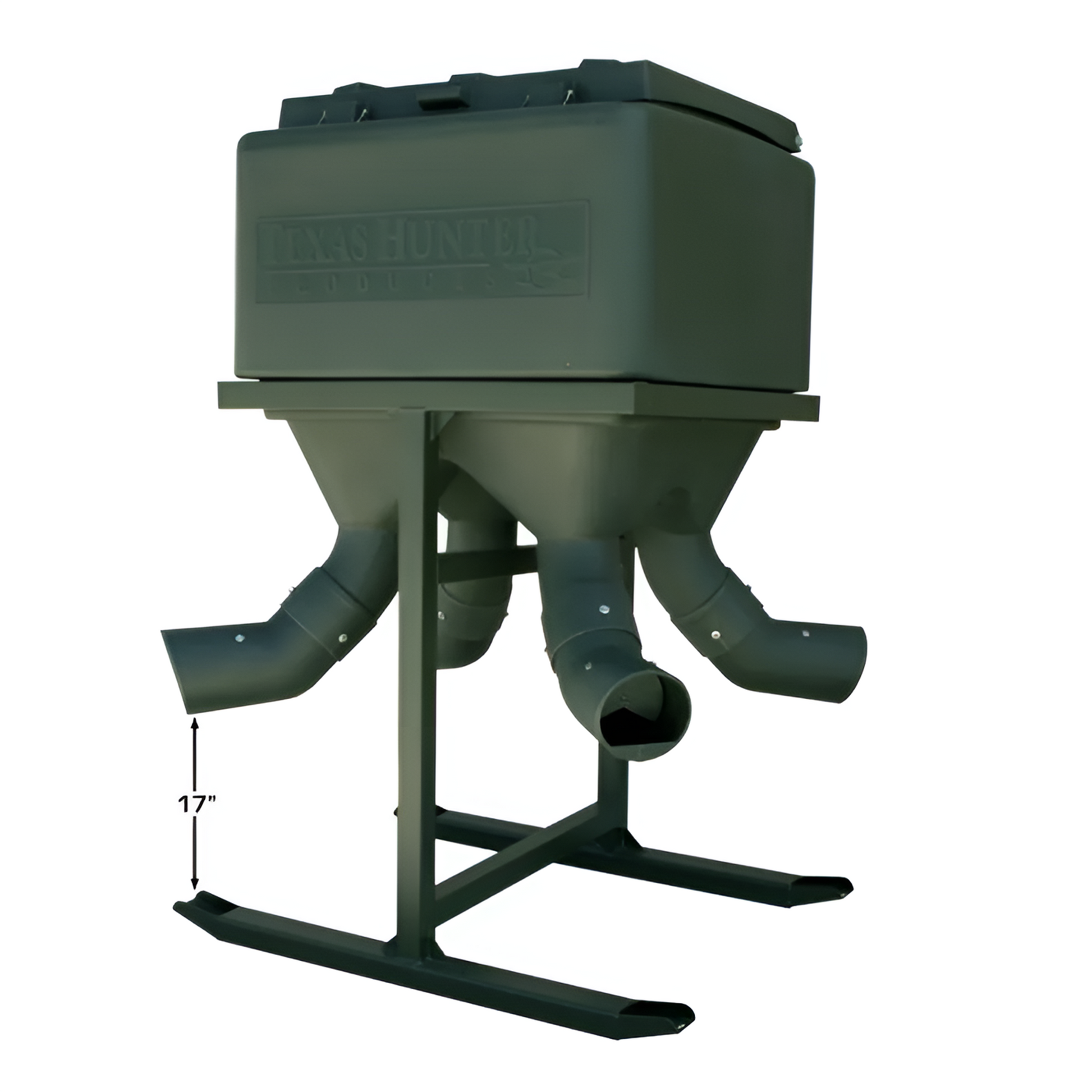
Texas Hunter Xtreme XPF600 Protein Feeder
Check Price on Amazon →Confirm price and availability on Amazon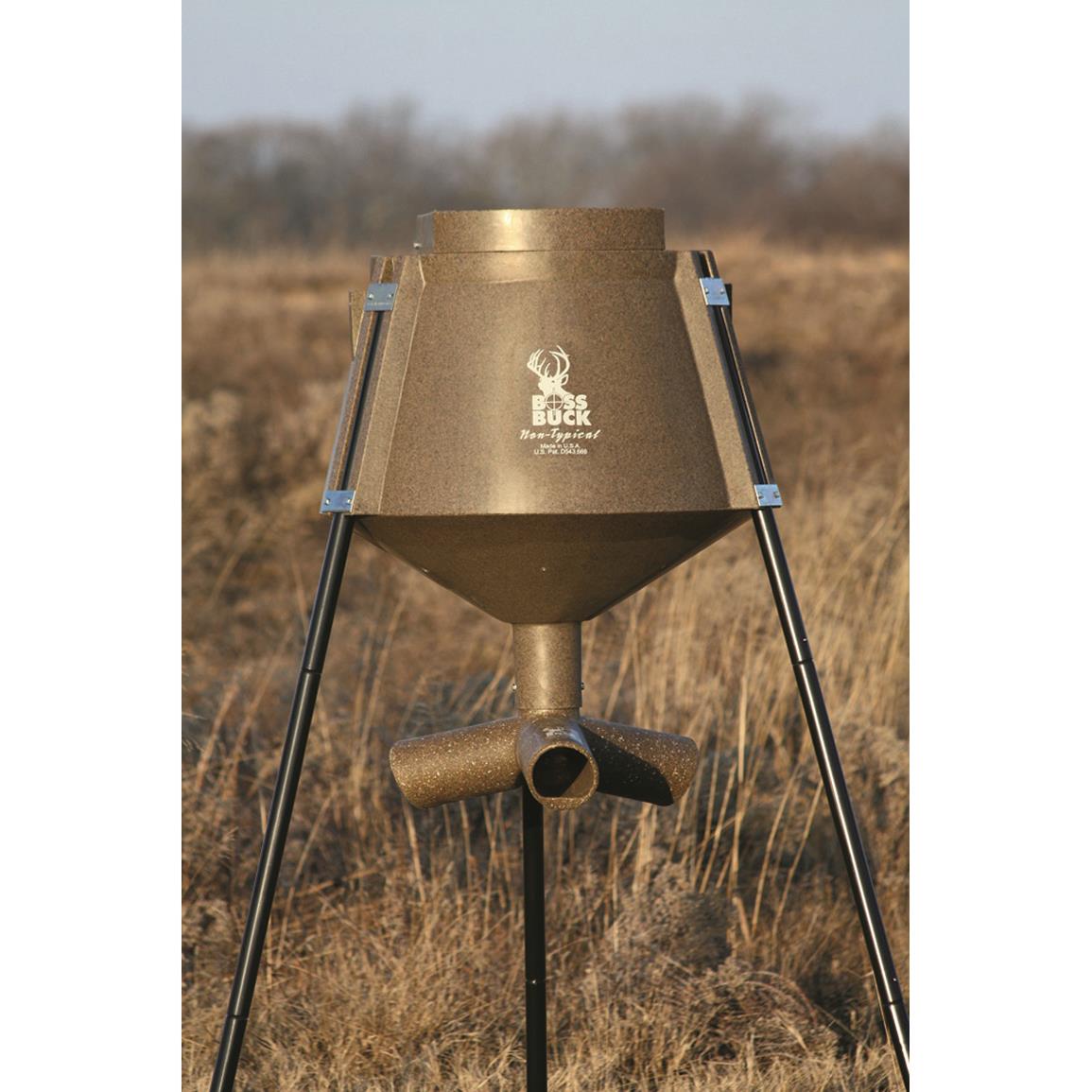
Boss Buck 350 lb Gravity Protein Feeder
Check Price on Amazon →Confirm price and availability on AmazonBanks Outdoors Feedbank 300 Feeder
Check Price on Amazon →Confirm price and availability on Amazon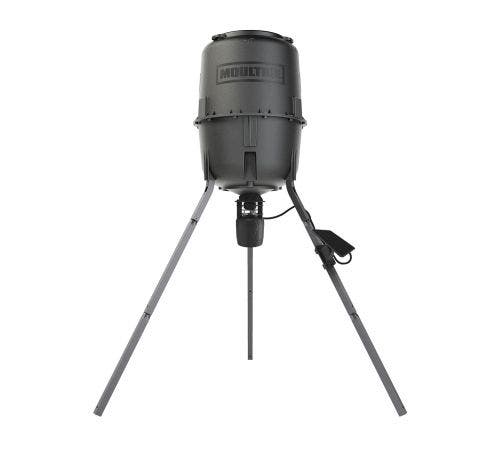
Moultrie Connected 250 lb Deer Feeder
Check Price on Amazon →Confirm price and availability on Amazon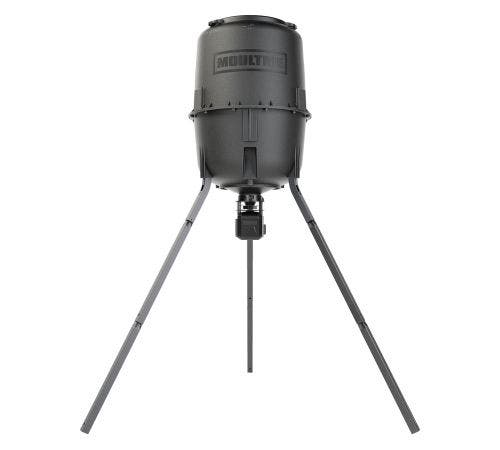
Moultrie Pro Hunter III 250 lb Deer Feeder
Check Price on Amazon →Confirm price and availability on Amazon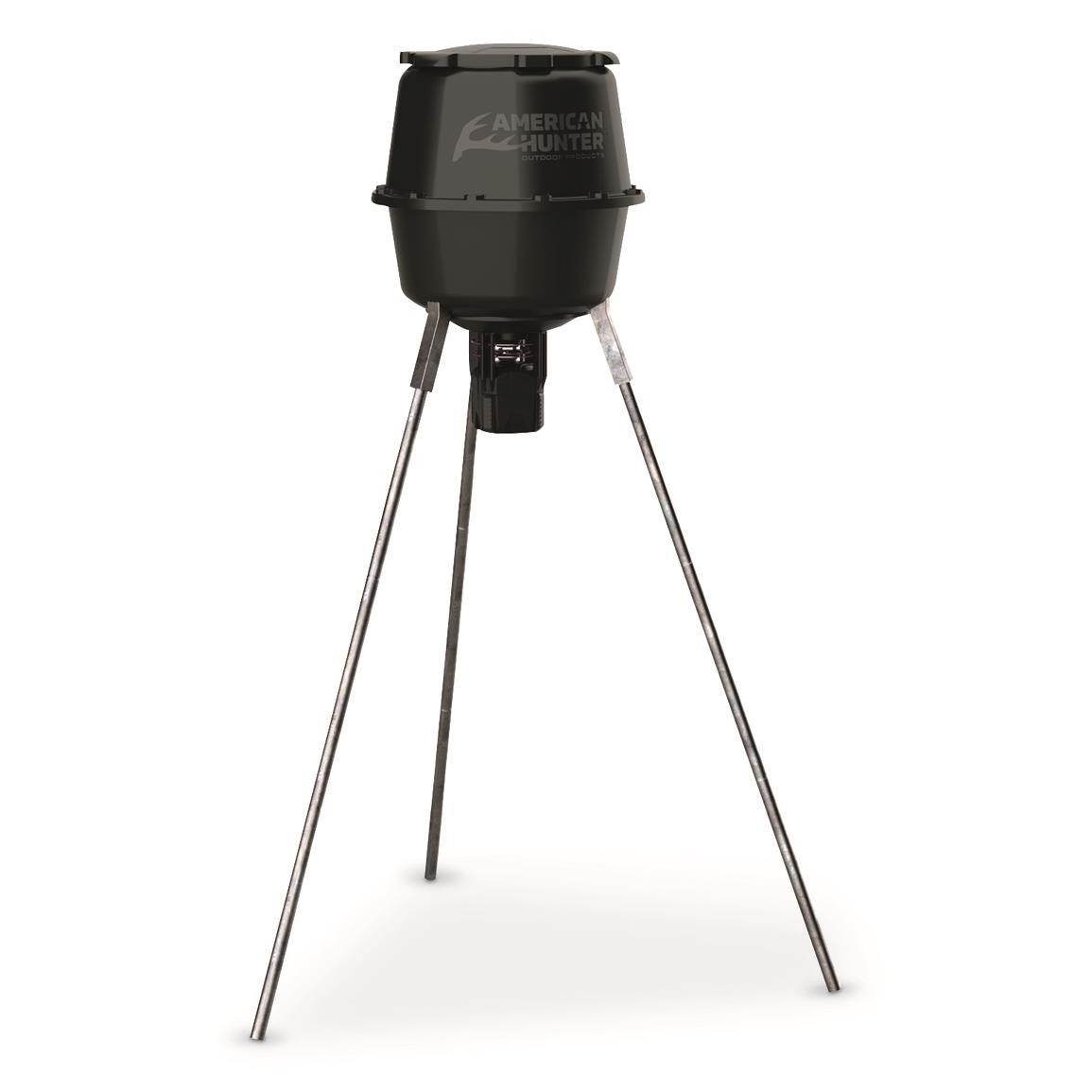
American Hunter XDE-Pro 30-Gallon Feeder
Check Price on Amazon →Confirm price and availability on Amazon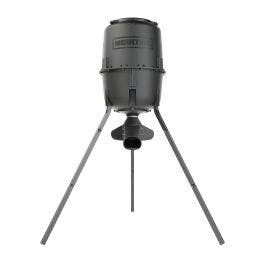
Moultrie 250 lb Gravity Deer Feeder
Check Price on Amazon →Confirm price and availability on AmazonAs an Amazon Associate, we earn from qualifying purchases.