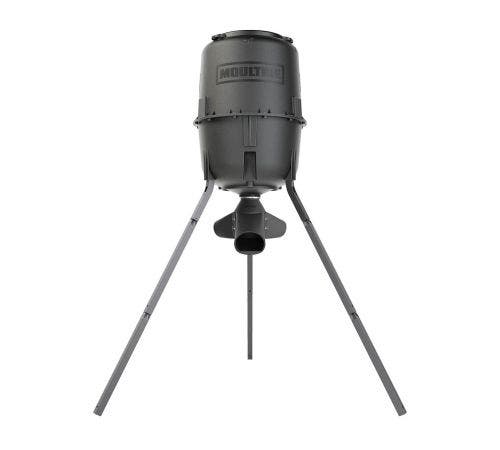
Best Hog-Proof Deer Feeders
Disclosure: This post contains affiliate links. As an Amazon Associate, I earn from qualifying purchases.
On this page: Quick Answer · At a Glance · How to Choose · Ranked Feeders and Setups · Cost and Ownership · FAQs · Verdict
Quick Answer: Best Hog-Proof and Varmint-Resistant Deer Feeders
The best hog-resistant deer feeder setup is the Boss Buck 350 Gravity feeder placed inside a 34-inch hog-panel pen, with Boss Buck Shark Teeth strips on the legs. No feeder on its own is truly hog-proof in absolute terms, and this guide does not pretend otherwise. Hogs push, root, bump, and climb, raccoons climb and reach, and squirrels chew and climb, so the honest winner is a combination: a sturdy gravity feeder whose feed ports sit well above hog snout level, leg protection that makes climbing and bumping painful and unrewarding, and a low wire pen that keeps hogs away from the feeder altogether. If you buy only one feeder, buy the Boss Buck 350 Gravity. If hogs are already emptying your feeder, add the pen first, because no leg guard or hanging height fixes a hog problem on its own.
That distinction matters, because most “hog-proof” marketing collapses three different animals into one problem. Hogs are a ground problem. They root under fences, push against legs, bump hoppers, and eat spilled corn off the ground. Raccoons are a climbing and reaching problem. They go up legs, across lids, and down into spin plates and ports. Squirrels are a chewing and climbing problem. They gnaw plastic, ride cables, and defeat height alone by climbing whatever the feeder hangs from. A feeder that handles one of those animals well can still fail against the other two, and a setup that looks strong in a product photo can fail in the field because the ground around it, the fence around it, or the lid on top of it was never addressed. This guide ranks feeders and feeder setups by how they handle all three animals together, not by how they handle deer alone.
The site’s own height guide already establishes the single most important correction in this whole topic: hogs are best handled with 34-inch hog-proof wire panels, not with height. Raising a feeder to 7 or 8 feet backfires for hogs, because spilled and broadcast feed still lands on the ground where hogs eat it, and because a very high feeder is harder to fill, harder to service, and no harder for a hog to benefit from. Raccoons, by contrast, are reduced when feed is kept above 6 feet, and squirrels are not beaten by height at all — leg baffles are the tool that works for squirrels. Keep those three rules in front of you while you read every ranking below, and you will avoid the most common expensive mistake in this category, which is buying a taller feeder to solve a hog problem.
This is a roundup, not a repeat of the site’s how-to guides. The detailed varmint-guard techniques live in the varmint guard guide, the raccoon and hog behaviour background lives in how to keep raccoons and hogs off a deer feeder, and squirrel-specific tactics live in the squirrel guide. Bear country is a different problem again, and it is covered separately in the bear-resistant feeder guide. This article links to those guides where they add depth and does not duplicate them. What it does is answer the buying question: which feeder, in which setup, gives you the best chance of feeding deer instead of hogs, raccoons, and squirrels.
A note on honesty before the rankings. This site researches feeders; it does not hands-on test them, and no testing claim is made anywhere in this article. Capacities, materials, and dimensions below come from the manufacturer’s own descriptions, retailer listings for the same models, the site’s earlier gravity-feeder research, or the Texas A&M Natural Resources Institute fencing research cited in the pen section. Where a manufacturer does not publish a figure, this guide says so instead of filling the gap with a guess. Where a feeder is described as resistant rather than proof, that wording is deliberate. A manufacturer that says its product deters hogs has not promised that no hog will ever defeat it, and a buyer who understands that difference will set up the feeder properly instead of assuming the purchase alone solved the problem.
Best Hog-Resistant Deer Feeders at a Glance
| Product / Setup | Best for | Capacity / Key Spec | Type | Photo |
|---|---|---|---|---|
| 1. Boss Buck 350 Gravity | Best overall hog-resistant station | About 350 lb corn; about 300 lb large pellets; 78-inch legs | Tripod gravity | 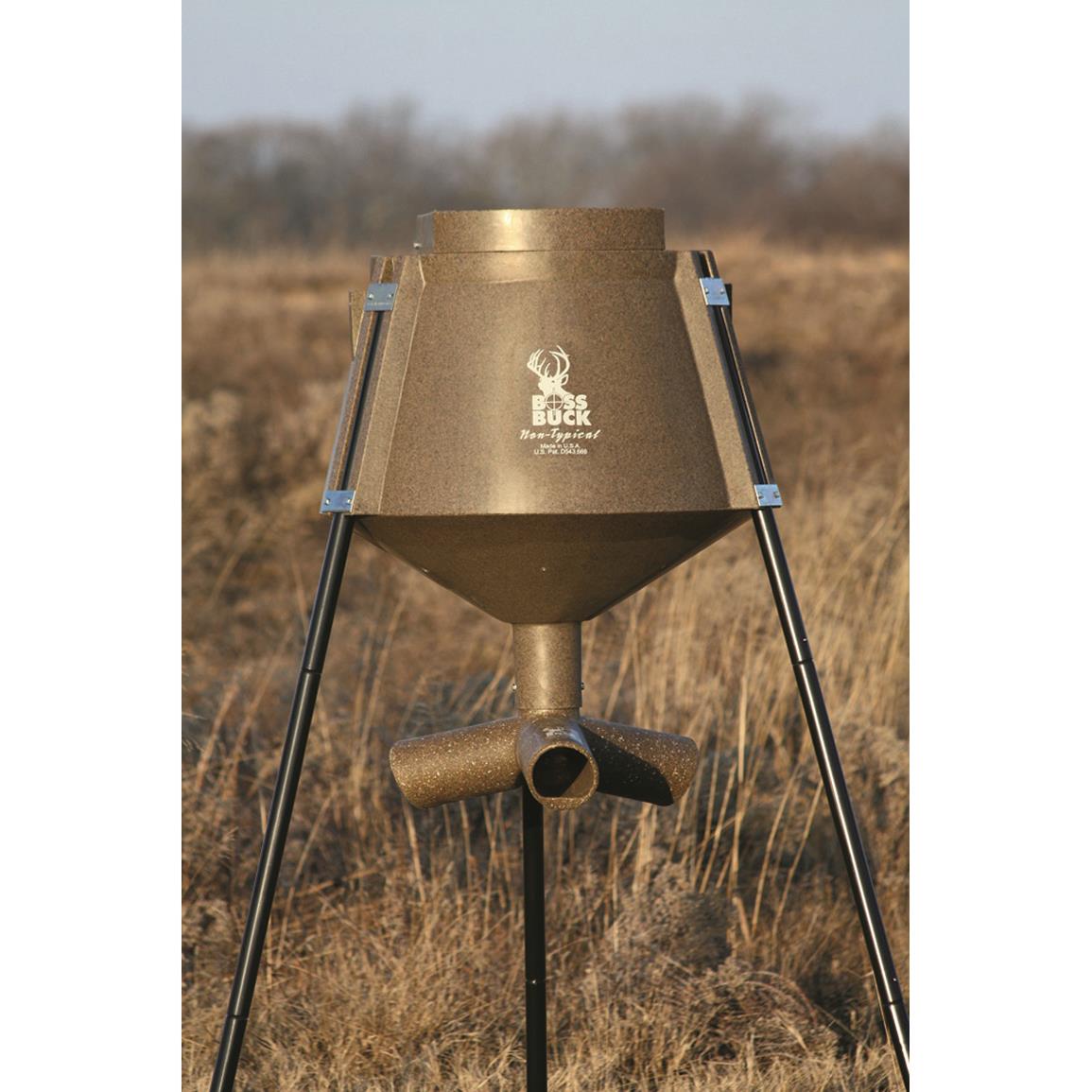 |
| 2. Banks Feedbank 300 | Best permanent hog-resistant site | 300 lb; single post; four adjustable ports at 42 inches | Single-post gravity | 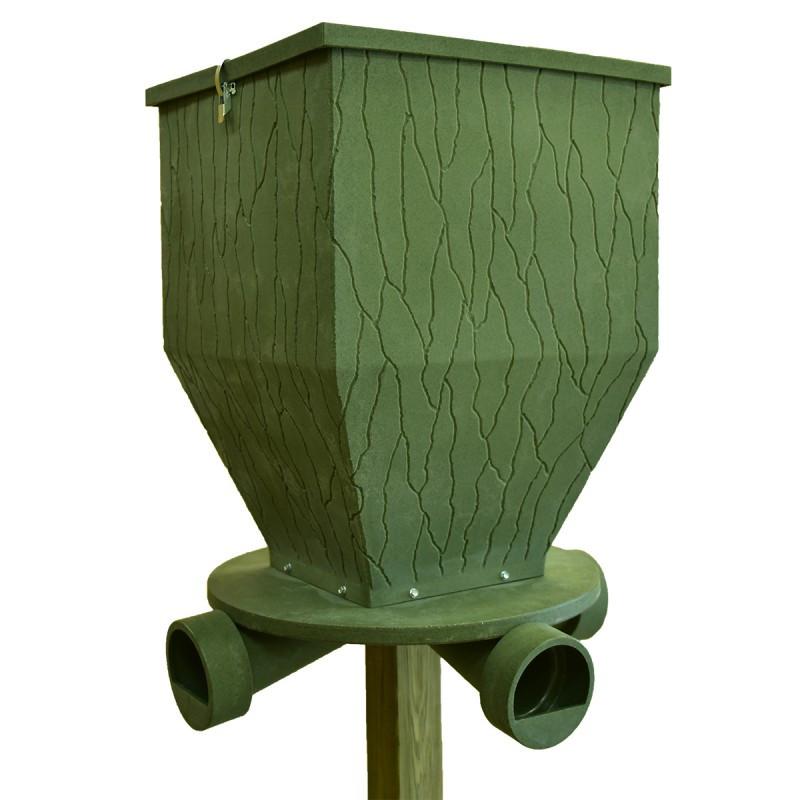 |
| 3. Boss Buck 200 Gravity | Best mid-size movable station | 200 lb corn; about 170 lb pellets | Tripod gravity | 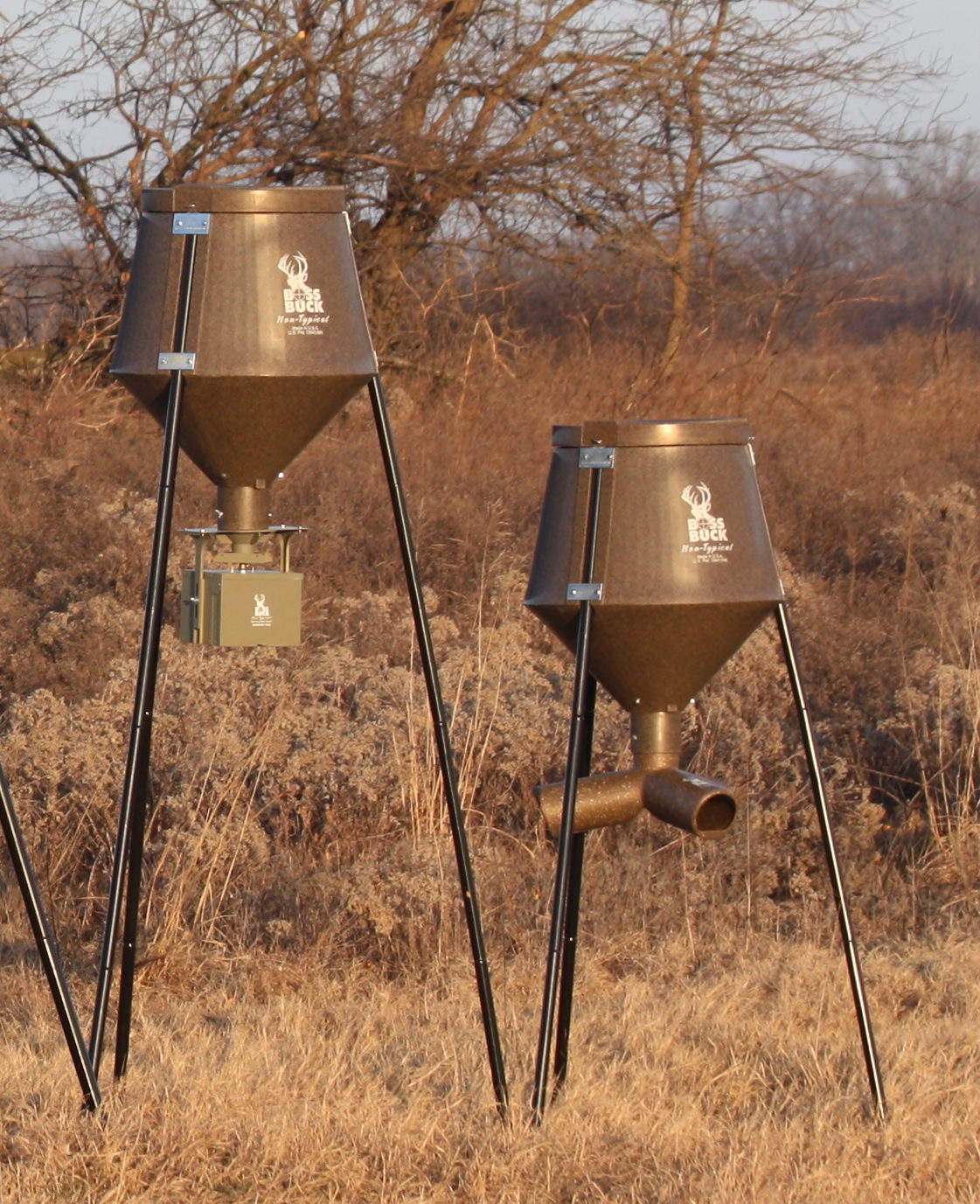 |
| 4. Moultrie 250 Gravity | Best movable station with a later spin-kit option | 250 lb; 6-foot fill height; Quick-Lock mount | Tripod gravity | |
| 5. Wildgame Treehugger 100 | Best portable trial station off the ground | Up to 100 lb; tree-strap tube | Tree-mounted gravity | 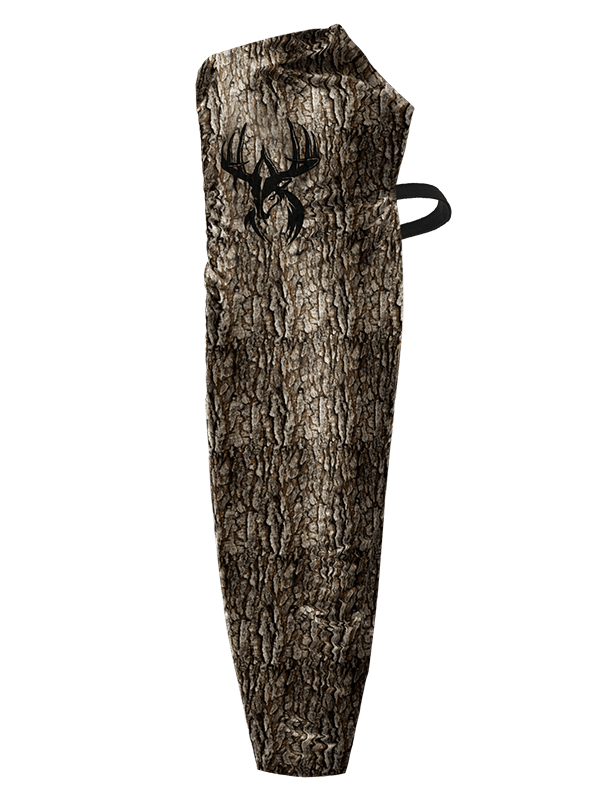 |
| 6. Moultrie 30 lb Hanging | Best small hanging station | 30 lb | Hanging | |
| 7. On Time 80 lb T-Post | Best narrow-site station | 80 lb; T-post mount | T-post gravity | |
| 8. 34-inch Hog-Panel Pen | Best hog exclusion of all — the setup, not a feeder | 34-inch panels; about 30 ft by 30 ft circle recommended | Fence setup (no feeder button) |
Read the table as a system, not as eight independent purchases. The pen at number 8 is listed last only because it is not a feeder; in practice it is the first thing a hog-plagued site needs, and it improves every feeder above it. A Boss Buck 350 without a pen is a good gravity feeder in moderate hog pressure. The same feeder inside a pen is the best hog-resistant station in this guide. A hanging feeder without a baffle is a squirrel feeder with a deer-feeder label. The same hanging feeder with its cable protected and its site kept clean is a genuinely useful small station. The rankings reward feeders that leave the fewest gaps for the buyer to close, and they penalise designs that hand hogs, raccoons, or squirrels an easy route to the feed.
How to Choose: Brief Buying Context
Three buying rules carry this whole roundup, and each one is stated here once so the product sections can stay focused on products. First, match the defence to the animal: hogs are a ground and fencing problem, raccoons are a climbing and reaching problem, and squirrels are a climbing and chewing problem that height alone does not solve. The site’s height guide establishes that hogs are best handled with 34-inch hog-proof wire panels rather than height, that raising a feeder to 7 or 8 feet backfires for hogs, that raccoons are reduced above 6 feet, and that squirrels need leg baffles, not height. Second, gravity feeders beat spin feeders in heavy hog pressure, because gravity ports keep feed in the feeder while spin plates broadcast it onto the ground where hogs eat it. Third, no feeder in this guide is called hog-proof in absolute terms unless a manufacturer states it, because hogs push, root, bump, and occasionally jump, and a buyer who plans for that reality will fence, guard, and anchor properly instead of assuming the purchase alone finished the job.
For the full methods — guard types, baffle fitting, fencing construction, and behaviour detail — read the varmint guard guide and how to keep raccoons and hogs off a deer feeder. Squirrel-specific tactics are in the squirrel guide, and bear country, which is a different problem again, is covered in the bear-resistant feeder guide. This article does not re-teach those methods. It ranks the feeders and setups, states what each one does against hogs, raccoons, and squirrels, states its honest weaknesses, and tells you which buyer it suits. Where a method matters to understanding a product — a pen for the Boss Buck 350, a baffle for a hanging feeder — it appears briefly inside that product’s section and nowhere else at length.
On sourcing and honesty: this site researches feeders and does not hands-on test them, and no testing claim appears in this article. Capacities, materials, and dimensions come from manufacturer descriptions, retailer listings for the same models, the site’s earlier gravity-feeder research, or the Texas A&M Natural Resources Institute fencing research cited in the pen section. Where a manufacturer does not publish a figure, the spec table says so. Where a product has no verified Amazon ASIN, it is mentioned without a button rather than given an invented one. No prices appear, because no dated price snapshot on file covers these models at publish time, and an invented price would mislead a buyer more than no price at all.
Ranked Hog-Resistant Deer Feeders and Setups
The ranking rewards one thing above all: the fewest open routes to the feed. A feeder that keeps deer fed, keeps hogs from the bulk of the feed, keeps raccoons from the moving parts, and gives squirrels little to chew or climb ranks high. A feeder that is excellent for deer but hands one animal an easy route ranks lower, however popular it is as a deer feeder alone. Capacity, mount type, and refill access break ties, because a varmint-resistant feeder that never gets refilled, or that cannot be filled safely, feeds nothing at all.
1. Boss Buck 350 Gravity — Best Overall Hog-Resistant Station
Strengths. The Boss Buck 350 Gravity is the best overall hog-resistant station in this guide because it combines the three properties that matter most against hogs, raccoons, and squirrels in one purchasable feeder: a large, enclosed hopper, gravity ports that keep feed out of a broadcast circle, and a leg and head design that accepts the add-on defences that close the remaining gaps. Its listed capacity is approximately 350 pounds of corn and approximately 300 pounds of large protein pellets, which makes it a genuine protein-site feeder rather than a corn-only feeder with a protein label. The hopper is thick-wall HDPE UV-protected plastic that Boss Buck describes as maintenance-free and as material that will not rot, rust, or leak, and the feeder uses 78-inch galvanised legs. The patented Free-Choice Protein and Gravity Head uses a 10-degree port angle with a 1-inch overhang on 4-inch inside-diameter feed ports that are 10 inches long, a design aimed at moisture resistance and at presenting feed to deer muzzles without simply pouring it onto the ground. For hog resistance, that port geometry matters: feed stays in the head until a deer takes it, instead of landing in a circle where hogs feed undisturbed, and the ports sit high on tripod legs rather than at hog snout height. For raccoon resistance, the enclosed hopper and head leave no open tray and no exposed spin plate to work at, which removes the two easiest raccoon targets found on many timed feeders. For squirrel resistance, the thick-wall plastic hopper is a harder chewing target than a thin-walled drum, and the tripod legs accept Shark Teeth strips and baffles that close the climbing route. The 350 also converts quickly and easily from protein to automatic timer feeding, according to Boss Buck, which means a buyer who starts with gravity feeding and later wants timed control does not need to replace the hopper and legs to get it — though a buyer who makes that conversion should also add a varmint guard around the new spin kit, because the conversion reintroduces the exposed moving parts that gravity feeding avoids.
Honest weaknesses. The 350 is not hog-proof on its own, and this guide does not call it that. Without a pen, hogs will still eat spilled feed under the ports, bump the tripod legs, and work the site every night. Without leg protection, raccoons will still climb the legs, and without a lid check, any lid that warps or fits loosely becomes a raccoon entry point from above. The 350 is also a heavy, tall feeder to own: a full hopper holds roughly seven 50-pound bags of corn, the 78-inch legs put the lid at a height that needs a step or a stable standing position for filling, and tripod stability depends on level ground and soil conditions. A tripod that is not staked and set on firm ground can shift under hog bumping, and a shifted tripod tilts the head and changes how ports flow. Pellet capacity is lower than corn capacity — about 300 pounds against about 350 — so pellet buyers should plan refills on the pellet figure, not the corn figure, or they will run dry early and blame the feeder for a planning error. Finally, Boss Buck sells gravity, automatic, and conversion configurations that look similar in photos, so the exact listing must be confirmed before ordering; the wrong configuration is a common and avoidable disappointment.
Best setup for this feeder. Put the 350 inside a 34-inch hog-panel pen, fit Shark Teeth strips to the legs — inside faces against hog rubbing and bumping, outside faces against raccoon climbing, two strips per leg where the manufacturer recommends them — and stake the tripod feet. That combination, not the feeder alone, is the number-one pick of this guide: the pen stops hogs reaching the feeder, the gravity head stops broadcast waste, and the leg strips stop the climbing route that remains. Check the lid fit monthly in the first season, and check port flow whenever the feed type changes, because a port that flowed corn well may need attention with pellets.
Pros
- Large capacity: about 350 lb corn, about 300 lb large pellets
- Gravity head keeps feed out of a hog-feeding broadcast circle
- Thick-wall HDPE UV-protected hopper; 78-inch galvanised legs
- Accepts Shark Teeth leg strips and converts to timed feeding
- Proven mid-size protein-site size — big enough to matter, small enough to fill
Cons
- Not hog-proof alone — needs a pen in heavy hog pressure
- Legs need added protection against raccoon climbing
- Tall, heavy when full; fill access and staking must be planned
- Pellet capacity is lower than corn capacity
- Listings vary by configuration — confirm gravity configuration before ordering
| Spec | Detail |
|---|---|
| Capacity | About 350 lb corn; about 300 lb large pellets |
| Legs | 78-inch galvanised legs |
| Hopper | Thick-wall HDPE UV-protected plastic |
| Gravity head | Patented Free-Choice Protein / Gravity Head; 10-inch ports, 4-inch inside diameter, 10-degree angle, 1-inch overhang |
| Model family | Boss Buck gravity family: 200 / 350 / 600 / 1200 lb only — no 250 lb or 500 lb Boss Buck feeder exists |
| Varmint defence | Gravity ports (no broadcast circle); Shark Teeth strips fit legs, control boxes, and lids |
| Weakness to plan for | Hogs at ground level without a pen; raccoons on unprotected legs |
Check Price on Amazon: Boss Buck 350 Gravity
2. Banks Feedbank 300 — Best Permanent Hog-Resistant Site
Strengths. The Banks Feedbank 300 is the best permanent-site hog-resistant feeder in this guide, and its advantage is structural: it mounts on a single post, so it has no tripod legs for hogs to bump and no leg ladder for raccoons to climb. A hog cannot tip a properly set post the way it can shift a tripod, and a raccoon cannot climb three legs the way it climbs a tripod frame. The feeder holds 300 pounds of corn or protein feed, uses four adjustable feeding ports, and lists port height at 42 inches, which Banks describes as an optimal height for deer feeding. That 42-inch port height is doing quiet varmint work: it puts feed comfortably within deer reach while keeping it above easy hog snout level, and the adjustable ports let the owner tune flow to the feed in use and to the number of deer visiting, which reduces the spillage that would otherwise feed hogs at ground level. Retailer listings describe the Feedbank design as raccoon-resistant, and while this guide treats retailer descriptions as descriptions rather than guarantees, the design logic supports them: an enclosed post-mounted hopper with adjustable ports and no legs presents far fewer attack points than an open or legged feeder. The single-post mount also gives deer access from all sides with no legs to interfere with antlers, and it keeps the ground footprint small, which matters on a site where the pen, the camera, and the shooting lane all compete for space. Gravity operation means no battery, motor, or timer to maintain and no spin plate for raccoons to work at, which removes the most common timed-feeder failure from the varmint equation entirely.
Honest weaknesses. The Feedbank 300’s greatest strength is also its greatest commitment: the site is fixed once the post is set. Moving a single-post feeder means pulling or cutting the post and setting a new one, so this feeder suits a location that has already proven productive over several seasons, not a trial site. The post itself is not included, and the post, concrete if used, and installation time are part of the real cost of the setup, not an afterthought. Retailer guidance describes mounting on an 8-foot 4-by-4 post set 3 feet into the ground for some configurations, while other listings describe a 7-foot post, so the exact post specification for the configuration being bought must be confirmed. A post that leans or loosens tilts the hopper and affects port level, and a leaning post also creates a climbing aid where a plumb post did not. The Feedbank 300 still needs a hog pen in heavy hog pressure, because hogs will eat spilled feed under the ports even if they cannot reach the ports themselves, and it still needs its ports checked when feed type changes, because a port adjusted for corn may not flow pellets the same way. Buyers who want to move a feeder between seasons, or who have not yet proven a site, should buy a tripod model from this guide instead and keep the Feedbank 300 for the site they already know works.
Best setup for this feeder. Set the post plumb and firm, confirm the port height after installation, and build the hog pen around the finished feeder rather than around an empty patch of ground, so the pen gate lines up with refill access. Keep the area under the ports clear of spilled feed where practical, and inspect the post base after heavy rain and after any hog activity, because a post that has been worked at ground level is a post that will lean next.
Pros
- Single post — no tripod legs for hogs to bump or raccoons to climb
- 300 lb capacity for a permanent, low-refill site
- Four adjustable ports at 42 inches — deer height, above hog snout level
- Retailer listings describe the design as raccoon-resistant
- Gravity operation — no motor, timer, or spin plate to attack
Cons
- Site is fixed once the post is set — not a trial-site feeder
- Post not included; post work and materials are extra cost and labour
- Post specification varies by listing — confirm before buying
- Still needs a hog pen in heavy pressure for spilled feed
- A leaning or loosening post tilts the whole feeder
| Spec | Detail |
|---|---|
| Capacity | 300 lb corn or protein feed |
| Mount | Single post (post not included) |
| Ports | Four adjustable ports at 42 inches |
| Operation | Gravity — no power, motor, or timer required |
| Varmint defence | No legs to climb or bump; enclosed hopper; adjustable ports limit spillage |
| Weakness to plan for | Fixed site; spilled feed at ground level without a pen |
Check Price on Amazon: Banks Feedbank 300
3. Boss Buck 200 Gravity — Best Mid-Size Movable Station
Strengths. The Boss Buck 200 Gravity is the same proven design as the number-one pick, scaled to a mid-size movable station, and it earns third place because it brings nearly all of the 350’s varmint advantages to a buyer who does not need 350 pounds of capacity. Its listed capacity is 200 pounds of corn and about 170 pounds of pellets, which is enough for a moderate-use site visited every week or two, and small enough that feed stays fresher between fills than it would in a hopper left for months. Like the 350, it is a tripod gravity feeder in the Boss Buck family, with an adjustable inner sleeve for flow control, a gravity head that keeps feed in ports rather than broadcasting it, and a hopper and leg design that accepts Shark Teeth strips. That adjustability matters for varmint resistance in a way that is easy to overlook: a port sleeve that can be tuned to the feed in use reduces the over-flow and spillage that feeds hogs at ground level, while a fixed, over-wide port pours feed whether deer are present or not. The 200’s tripod mount is its other advantage over the fixed Feedbank 300: a buyer who has not yet proven a site, who hunts leased land, or who moves a feeder between seasons can relocate the 200 without pulling a post, and can test two or three sites in a season before committing to a permanent installation. For a buyer whose main problem is raccoons rather than hogs, the 200’s gravity head and enclosed hopper remove the spin plate and open tray that raccoons exploit most, and its legs accept the same Shark Teeth and baffle protection as the 350.
Honest weaknesses. Everything that limits the 350 limits the 200, and capacity adds one more limit: on a high-use site, or a site visited only monthly, 200 pounds will run dry between visits, and a dry feeder trains deer away from the site while leaving the owner to discover the failure on camera weeks later. The tripod legs are the same climbing route and the same bumping target as the 350’s legs, so the 200 needs the same leg protection and the same staking, and it needs a hog pen just as urgently in heavy hog pressure. Pellet capacity, at about 170 pounds, is again lower than corn capacity, so pellet buyers must plan on the pellet figure. The 200 is also the wrong feeder for a buyer who wants a permanent, low-attention station: its advantages are mobility and moderate capacity, and a buyer who will not move it and who visits rarely would be better served by the Banks 300 or the Boss Buck 350. Finally, as with all Boss Buck models, the exact configuration must be confirmed at purchase, because gravity, automatic, and conversion listings look similar and carry different components.
Best setup for this feeder. Treat the 200 as a movable 350: Shark Teeth on the legs, a staked tripod, and a hog pen where hogs are present. Its particular strength is as a first feeder on a new site — prove the site with the 200, then either keep it there or replace it with a permanent Feedbank 300 once the site has earned a post.
Pros
- Same gravity-head varmint logic as the 350, at mid-size capacity
- 200 lb corn; about 170 lb pellets — fresher feed on moderate-use sites
- Adjustable inner sleeve tunes flow and limits spillage
- Tripod mount — movable between sites and seasons
- Accepts Shark Teeth leg strips
Cons
- Runs dry between visits on high-use or rarely visited sites
- Tripod legs need protection and staking, as with the 350
- Needs a hog pen in heavy hog pressure — not hog-proof alone
- Pellet capacity lower than corn capacity
- Wrong choice for a buyer who wants a permanent, fixed station
| Spec | Detail |
|---|---|
| Capacity | 200 lb corn; about 170 lb pellets |
| Mount | Tripod, movable |
| Flow control | Adjustable inner sleeve |
| Family | Boss Buck gravity family (200 / 350 / 600 / 1200 lb) |
| Varmint defence | Gravity ports; Shark Teeth-compatible legs |
| Weakness to plan for | Capacity on high-use sites; legs and ground spillage without a pen |
Check Price on Amazon: Boss Buck 200 Gravity
4. Moultrie 250 Gravity — Best Movable Station with a Later Spin-Kit Option
Strengths. The Moultrie 250 Gravity earns fourth place as the most flexible movable feeder in this guide. Its 250-pound hopper sits between the Boss Buck 200 and 350 on capacity, its tripod mount keeps the site movable, and its Quick-Lock mount allows a later change to a Moultrie spin kit on the same hopper. That last feature is a genuine varmint-planning advantage, not just a convenience: a buyer can start with gravity feeding in heavy hog pressure, when broadcast corn would be a liability, and only add timed feeding later, when the site, the pen, and the guard are all in place. The feeder’s 6-foot fill height is lower than some large tripod feeders, which makes refills safer and more practical, and its twist-lock lid detaches fully for filling, which matters for varmint resistance because a lid that is easy to close properly is a lid that actually gets closed properly. The gravity design uses a triple-funnel arrangement described by Moultrie to keep feed moving toward the openings as the level falls, rather than leaving pockets of stale feed in corners, and the manufacturer describes 360-degree feed coverage. For raccoon resistance, the enclosed hopper and gravity flow remove the spin plate from the equation in gravity configuration, and for hog resistance, the port-fed design avoids the broadcast circle that makes spin feeders so costly in hog country. For squirrel resistance, the tripod legs accept baffles and guards, and the Quick-Lock ecosystem includes the Moultrie Varmint Guard II, a large hexagonal metal cage that fits 30-gallon and 325 Series Quick-Lock hoppers and is described as protecting the feeder from varmints and hogs — a buyer who later converts to a spin kit should fit that guard at the same time as the kit, not as an afterthought.
Honest weaknesses. The 250 Gravity is a tripod feeder, so it carries the tripod’s usual varmint debts: legs that raccoons can climb, legs that hogs can bump, and stability that depends on soil and level ground. A full 250-pound load is heavy to transport to a remote site, and the 6-foot fill height, while lower than some competitors, still requires a safe pouring position rather than a ground-level fill. Capacity sits in the middle of this guide, which is a strength for flexibility but a weakness for a buyer who needs either the smallest portable feeder or the largest permanent one: high-use sites will still need frequent refills, and pellet versus corn flow may need different funnel settings, so adjustment is required at every feed changeover rather than being a fit-and-forget setting. The conversion flexibility also creates a trap: a buyer who converts to a spin kit without adding a varmint guard has just converted a hog-resistant gravity feeder into a hog-feeding broadcast feeder, and should expect hog visits to rise accordingly. Finally, no verified product photo for this exact model was available from the site’s media library, so its comparison-table row is left blank rather than filled with a substitute photo.
Best setup for this feeder. Start in gravity configuration inside a hog pen, with leg baffles fitted. Convert to a spin kit only after the pen and a Quick-Lock-compatible varmint guard are both in place, and re-check funnel settings at every feed change.
Pros
- 250 lb capacity in a movable tripod
- Quick-Lock mount allows a later spin-kit change on the same hopper
- Twist-lock lid detaches fully and closes easily
- Triple-funnel flow keeps feed moving as the level falls
- 6-foot fill height is practical for refills
Cons
- Tripod legs need baffles and staking against raccoons and hogs
- Full 250 lb load is heavy to carry to a remote site
- Funnel settings need adjustment at feed changeovers
- Converting to a spin kit without a guard creates a hog problem
- No verified figure is shown for this model — table row left blank, no substitute photo used
| Spec | Detail |
|---|---|
| Capacity | 250 lb |
| Mount | Tripod, movable |
| Fill height | 6 feet |
| Lid | Twist-lock, fully detachable |
| Compatibility | Quick-Lock — later Moultrie spin-kit change on the same hopper |
| Varmint defence | Gravity flow; Quick-Lock varmint-guard ecosystem available |
| Weakness to plan for | Tripod legs; unguarded spin conversion |
Check Price on Amazon: Moultrie 250 Gravity
5. Wildgame Treehugger 100 — Best Portable Trial Station off the Ground
Strengths. The Wildgame Treehugger 100 is the only tree-mounted feeder in this guide, and it earns its place because it solves a varmint problem that no tripod or post feeder can solve: it removes legs and posts from the site entirely. A tube feeder strapped to a tree trunk has nothing for a hog to bump, nothing for a hog to tip, and no tripod frame for a raccoon to climb in the usual way. Its listed capacity is up to 100 pounds, it is constructed from PVC, it straps to a tree trunk with integrated straps and a heavy-duty buckle, and it uses a weatherproof sliding cover. Retailer listings describe it as suitable for corn, attractants, protein, minerals, or a mix, with feed naturally replenishing in the tray as deer consume it. That portability is its real varmint advantage as well as its deer advantage: on a trial site, a remote spot reached on foot, or a narrow location where a tripod would not fit and a post cannot be set, the Treehugger lets a buyer test deer use and varmint pressure without committing to a post hole or a heavy tripod carry. If hogs or raccoons prove too heavy at that tree, the feeder moves to another tree in minutes, and the buyer has learned something valuable at low cost. Hung well above hog reach, with the tray kept clean and the tree chosen so that no nearby branch gives raccoons or squirrels a launch point, the Treehugger keeps the bulk of its feed out of hog reach in a way that a ground-level or low-port feeder never can.
Honest weaknesses. The Treehugger’s weaknesses are inseparable from its design, and a buyer should weigh them before choosing it as a primary feeder. Capacity is smaller than every tripod and post model in this guide, so it needs frequent refills and cannot serve as a sole high-volume station. Its feeding tray is more exposed than an enclosed port, which increases spillage and weather exposure, and spilled feed at the base of the tree feeds hogs even when the tube itself is out of their reach. Stability depends entirely on the tree and the strap: the site’s earlier research notes a reported strap failure on the portable Treehugger, so strap inspection before each season, after storms, and after any animal contact is essential, and a dead, leaning, or unsuitable-diameter tree is a failed installation waiting to happen. Raccoons and squirrels can still reach a tree-mounted feeder by climbing the tree itself or an adjacent branch, so tree choice matters as much as feeder choice — a feeder strapped to a tree with a low branch highway above it is not a varmint-resistant installation. Squirrels in particular can chew the PVC tube, so the Treehugger is a poor choice for a site where squirrel chewing is already the main loss. It is a trial and supplemental feeder, and buyers who treat it as a permanent primary station will be disappointed by its capacity and its maintenance demands.
Best setup for this feeder. Choose a live, sound tree of suitable diameter with no low branches giving access from above, inspect straps before every season, keep the tray and the ground beneath it clean, and plan refills on the 100-pound figure. Move it without hesitation if the tree proves to be a raccoon or squirrel highway.
Pros
- No legs or post — nothing for hogs to bump or tip
- Portable and lightweight; moves between trees in minutes
- Up to 100 lb capacity as listed
- Strap mounting needs no post hole or tripod footprint
- Suitable for multiple feed types as described in retailer listings
Cons
- Small capacity — frequent refills; not a sole high-volume station
- Tray more exposed than enclosed ports; spillage feeds hogs below
- Stability depends entirely on tree and strap; a reported strap failure is on record
- Raccoons and squirrels can still arrive via the tree or nearby branches
- PVC tube is a chewing target for squirrels
| Spec | Detail |
|---|---|
| Capacity | Up to 100 lb |
| Construction | PVC tube, as described in retailer listings |
| Mount | Tree strap with integrated straps and heavy-duty buckle |
| Cover | Weatherproof sliding cover |
| Feed types | Corn, attractants, protein, minerals, or a mix, as described in retailer listings |
| Varmint defence | Off-ground tube; no legs to bump |
| Weakness to plan for | Strap condition; branch access; tray spillage; squirrel chewing |
Check Price on Amazon: Wildgame Treehugger 100
6. Moultrie 30 lb Hanging — Best Small Hanging Station
Strengths. The Moultrie 30 lb Hanging feeder is the smallest feeder in this guide, and its varmint case is simple: feed held in a hanging container is out of hog reach, and a small hanging feeder can be placed exactly where deer already travel without the ground disturbance of a tripod or a post. For a buyer with a small parcel, a narrow clearing, or a site where a large feeder would be conspicuous or impractical, a 30-pound hanging feeder is a low-commitment way to establish a station, test deer use, and learn the local varmint pressure before investing in a large tripod or post feeder. Hanging feeders also suit sites where the ground is too soft, too steep, or too rocky for a stable tripod, because the support is overhead rather than underfoot. In the site’s hanging-feeder research, hanging models are presented as a distinct category with their own support and refill-access questions, and the Moultrie 30 lb Hanging belongs in that category as the entry-size option. Its small capacity is also a freshness advantage on a low-use site: feed turns over quickly, stays drier in a small enclosed container, and does not sit for months the way a large hopper can.
Honest weaknesses. Small capacity is the obvious limit — 30 pounds needs frequent refills, and on any site with regular deer visits it will run dry between trips unless the owner visits often. More importantly for this guide, hanging alone does not defeat raccoons or squirrels. A raccoon or squirrel that can climb the support, the cable, the rope, or the tree will reach a hanging feeder, and a hanging feeder with an unprotected cable route is simply a feeder with a climbing rope attached. The manufacturer does not publish further specifications for this model in the sources checked for this guide, so this review does not invent a material, a guard dimension, or a hanging-height figure for it; the buyer should confirm the exact hanging hardware, container material, and any included guard on the listing before ordering. A hanging feeder also needs a rated support: a branch, cable, or hoist that cannot safely carry a full 30-pound load plus the feeder’s own weight, plus the dynamic load of an animal pulling at it, is a safety and reliability failure, not a bargain. Finally, a small hanging feeder without a hog pen still leaves spilled feed on the ground for hogs, because deer drop feed and containers drip, so the pen question returns even for a feeder that hogs cannot reach directly.
Best setup for this feeder. Hang it from a rated support with the cable or rope route protected by a baffle or guard, keep it away from branches that give raccoons and squirrels a launch point, and accept that it is a supplemental or trial station, not a primary high-volume feeder. No verified product photo for this exact model was available in the site’s media library, so its comparison-table row is left blank rather than filled with a substitute photo.
Pros
- Feed held off the ground, out of direct hog reach
- Small, low-commitment station for narrow or small sites
- Suits ground too soft, steep, or rocky for a tripod
- Fast feed turnover keeps feed fresher on low-use sites
- Useful trial station before a large-feeder investment
Cons
- Only 30 lb — frequent refills required
- Hanging alone does not stop raccoons or squirrels on the support or cable
- Needs a rated support and a protected cable route
- Further specifications not published in sources checked — confirm on listing
- Spilled feed still reaches hogs at ground level without a pen
| Spec | Detail |
|---|---|
| Capacity | 30 lb |
| Type | Hanging feeder |
| Material / guard / hanging height | Not published in sources checked for this guide — confirm on the listing before ordering |
| Varmint defence | Off-ground placement; cable-route protection still required |
| Weakness to plan for | Capacity; climbing access via support; spillage |
Check Price on Amazon: Moultrie 30 lb Hanging
7. On Time 80 lb T-Post — Best Narrow-Site Station
Strengths. The On Time 80 lb T-Post feeder covers the site shape that every other feeder in this guide handles badly: a fence line, a narrow clearing, or a spot where a full post hole is impractical and a tripod footprint will not fit. Its 80-pound capacity sits between the small hanging feeder and the mid-size tripod feeders, which makes it a genuine supplemental station rather than a token one, and its T-post mount uses a standard, widely available support that many landowners already have on hand. A T-post mount also changes the varmint geometry in a useful way: a single narrow post presents a smaller bumping target than a tripod, and a post that is driven firmly and checked regularly is harder for a hog to shift than a tripod standing on soft ground. For a buyer who needs a second station on a fence line, a narrow-site feeder that does not block a lane, or a supplemental feeder that can be installed without digging a post hole or hauling a tripod, the On Time 80 is the most practical option in this guide. Its capacity is also well matched to a supplemental role: large enough to matter between visits, small enough that a narrow mount can carry it safely, which is the correct relationship between capacity and mount that the site’s earlier research emphasises.
Honest weaknesses. The T-post mount is also the feeder’s limit. A narrow mount cannot safely carry the same loaded weight as a wide tripod or a buried post, so the On Time 80 should be treated as a supplemental or narrow-site station rather than a primary high-volume station, and overloading it or hanging extra weight from it would be a mistake. The manufacturer does not publish further specifications for this model in the sources checked for this guide — no port design, material, or guard figure is stated here — so the buyer should confirm the exact configuration on the listing before ordering. Like every feeder in this guide, it needs a hog pen in heavy hog pressure, because hogs will eat spilled feed at the base of the post even if they cannot reach the feeder itself, and a single post can still be worked at ground level by persistent rooting. Raccoons can climb a T-post, so a baffle or guard on the post is part of the installation, not an optional extra, and the feeder’s narrow profile means there is less room to hide a guard gap than on a wide tripod. No verified product photo for this exact model was available in the site’s media library, so its comparison-table row is left blank rather than filled with a substitute photo.
Best setup for this feeder. Drive the T-post firmly, fit a post baffle, keep the base clear of spilled feed, and use the feeder as a supplemental fence-line station inside a hog pen where hogs are present, not as the property’s only feeder.
Pros
- 80 lb capacity — a genuine supplemental station
- T-post mount fits fence lines and narrow clearings
- No post hole or tripod footprint required
- Narrow post is a smaller hog-bumping target than a tripod
- Standard, widely available support
Cons
- Narrow mount cannot carry tripod-scale loads — supplemental only
- Further specifications not published in sources checked — confirm on listing
- Post can be climbed by raccoons without a baffle
- Rooting at the post base still needs checking
- No verified figure is shown for this model — table row left blank, no substitute photo used
| Spec | Detail |
|---|---|
| Capacity | 80 lb |
| Mount | T-post (or tree, as described in earlier site research) |
| Role | Supplemental or narrow-site station, not a primary high-volume station |
| Further specifications | Not published in sources checked — confirm on the listing before ordering |
| Varmint defence | Narrow single-post profile; post baffle required |
| Weakness to plan for | Mount load limit; post-base rooting; spillage |
Check Price on Amazon: On Time 80 lb T-Post
8. 34-Inch Hog-Panel Pen — Best Hog Exclusion of All (Setup, Not a Feeder)
Strengths. The 34-inch hog-panel pen is ranked last only because it is not a feeder, and in practice it is the single most effective hog measure in this guide. Texas A&M Natural Resources Institute research on exclusion fencing at feeding stations, published in December 2025, summarises studies in which 20-inch fences only partially excluded feral pigs, while 28- to 34-inch hog panels completely excluded them in the study conditions. The Institute recommends 34-inch hog panels to exclude feral pigs from feed, and a 30-foot by 30-foot circle as a reasonable pen size consistent with published studies, giving deer room inside and reducing crowding. Welded-wire utility panels are typically 16 feet long, with 50 inches as the standard height, so the 34-inch panel is a deliberate choice, not a default: tall enough to exclude hogs, low enough for deer to enter. A pen built to this specification improves every feeder ranked above it, because it removes hogs from the feeder entirely rather than asking the feeder to survive hog contact. It also protects the investment in feed itself, which is often larger over a season than the cost of the feeder: a pen that stops nightly hog feeding pays for itself in saved corn and protein, and it protects the feeder from the bumping, tipping, and rooting damage that shortens feeder life. Forum discussion among Texas hunters agrees with the research in practical terms: most users report that 34-inch panels work well and that hog visits drop sharply after a pen is built, with round pens preferred, T-posts roughly every 8 feet, and a removable gate panel for vehicle access recurring as practical advice.
Honest weaknesses. A pen is hog-resistant, not hog-proof in the absolute sense, and this guide says so plainly. The Texas A&M research itself notes that adult feral pigs have been recorded jumping much higher than 34 inches when motivated to escape from corral traps, so occasional breaches may occur, and forum threads report the same exceptions: an occasional athletic pig that jumps a panel, and hogs rooting under panels that are not seated tight to the ground. A pen also creates a second trade-off that must be planned, not discovered: deer fawns could not reach feed when fences were 33 inches tall in the research summarised, so a pen that excludes hogs can also exclude the youngest deer, and the Institute notes that cutting two-foot slits in the top of the panels can reduce the height by 6 inches and help fawn access. Pens do nothing against raccoons or squirrels, which walk or climb straight through a hog pen, so a pen owner who neglects guards and baffles has solved only one of three problems. Pens also need maintenance: ground-level gaps after rain, loosened T-posts, and a gate panel left open all defeat a pen faster than any hog does. Finally, a pen has no Amazon button in this guide, because hog panels are farm-store items bought locally by length and height, and inventing a panel ASIN would violate the verified-ASIN rule; buy panels by the 34-inch specification, not by a link.
Best setup for this pen. Build round, about 30 feet by 30 feet or larger, with T-posts every 8 feet or closer, one panel removable for vehicle access, panels seated tight to the ground, and the feeder offset rather than centred if some deer refuse to enter pens. Check ground gaps and post tightness after rain and after hog activity, and plan fawn access explicitly if fawns matter to your goals.
Pros
- Strongest hog evidence in this guide — 28–34-inch panels completely excluded pigs in study conditions
- Recommended specification: 34-inch panels, about 30 ft by 30 ft circle
- Protects every feeder in this guide, not just one model
- Saves feed over a season and protects the feeder from bumping damage
- Farm-store panels — no feeder purchase required to start
Cons
- Not absolute — occasional athletic pigs may breach; rooting under loose panels
- Fawns may be excluded at 33 inches and above — plan access slits if needed
- Does nothing against raccoons or squirrels
- Needs ongoing gap and post maintenance
- No Amazon button — panels are bought locally by specification
| Spec | Detail |
|---|---|
| Panel height | 34 inches recommended (Texas A&M Natural Resources Institute, December 2025) |
| Pen size | About 30 ft by 30 ft circle recommended |
| Panel length | Welded-wire utility panels typically 16 feet long |
| Study result | 20-inch fences partial exclusion; 28–34-inch panels complete exclusion in study conditions |
| Known limits | Occasional breaches by motivated pigs; fawns unable to reach feed at 33 inches |
| Purchase | Farm-store panels by specification — no verified ASIN, no button |
No Check Price button for this setup: hog panels are farm-store items bought locally by the 34-inch specification. Do not buy a panel by an unverified online listing.
Useful Add-On: Boss Buck Shark Teeth Leg Strips
Shark Teeth strips are not a ranked feeder, but they are the single add-on most relevant to this roundup, so they get a short section of their own. Boss Buck Shark Teeth are 36-inch galvanised steel strips, 1.5 inches wide, sold three to a set with three self-tapping screws per strip. Boss Buck’s guidance is to line the inside of feeder legs against hogs rubbing and bumping, and the outside of legs against raccoons climbing, applying two strips per leg for best results and cornering the strips so raccoons cannot bypass them. Strips can also be broken into 6-inch sections for control boxes and feeder heads, and fitted to lids against roosting. They work on the principle Boss Buck states plainly: if an animal cannot touch, climb, bump, or lick the feeder comfortably, it cannot easily tear it up, knock it over, or waste the feed. They do not make a feeder hog-proof on their own, and they do not replace a pen, but for a tripod feeder inside a pen, they close the climbing route that the pen leaves open. Fit them with care — they are sharp by design — and check them after storms and animal contact, because a strip that has slipped or loosened leaves exactly the gap it was fitted to close.
Check Price on Amazon: Boss Buck Shark Teeth
What Hog-Resistant Feeding Really Costs to Own
The feeder price is only the first cost of a hog-resistant setup, and buyers who budget for the feeder alone will be surprised by the rest. The honest ownership budget has six lines: the feeder itself; the pen, where hogs are present, including panels, T-posts, and fasteners; leg protection such as Shark Teeth strips or baffles; the post, where a post-mounted feeder is chosen, including the post and any concrete; feed, which is the largest recurring cost and the cost that varmint loss inflates most; and maintenance time, including lid checks, port checks, strap checks, post checks, and pen-gap checks. No prices are stated for any of these lines in this guide, because no dated price snapshot on file covers them at publish time, and a price invented for this article would be wrong within weeks. Check current listings and local farm-store prices at purchase time, and budget all six lines before choosing between a cheaper feeder with a pen and a dearer feeder without one.
That comparison is where most buyers make their real decision, even if they do not frame it that way. A mid-size gravity feeder plus a pen usually costs less over a season than a large feeder without a pen, because the pen stops the nightly feed loss that would otherwise dwarf the feeder’s price difference. Conversely, a permanent post feeder without a pen can be the dearer option in disguise, because the post installation is sunk cost in a site where hogs still eat the spillage. Feed loss is the hidden line that decides the economics: a feeder emptied by hogs, raccoons, or squirrels does not merely waste the feed in the hopper, it wastes the trips, the time, and the deer-patterning value of a site that deer learn to visit and then find empty. A setup that keeps feed for deer is therefore not a luxury version of a feeder; it is the version that delivers the feed the buyer already paid for.
Refill labour belongs in the same calculation. A 350-pound feeder on a vehicle-accessible site costs little in refill time. The same feeder on a site reached only on foot costs a great deal, and a 30-pound hanging feeder on a site visited weekly costs more in trips than its small price suggests. Match capacity to visit frequency before matching it to deer numbers: a feeder that holds more than the owner can refill, or that runs dry between visits, fails just as surely as a feeder that hogs empty. Finally, budget replacement parts from the start — lids, straps, port sleeves, and leg strips wear out, and a feeder whose owner cannot replace a worn part promptly becomes a feeder with a gap. The cheapest feeder to own over five seasons is usually the one whose parts are available, whose lid fits after a year of sun, and whose pen still stands after a wet winter, not the one with the lowest first price.
| Cost item | What to budget | Notes |
|---|---|---|
| Feeder | Check current listing at purchase time | Confirm exact configuration — gravity, automatic, and conversion listings differ |
| Hog pen | Panels, T-posts, fasteners — local farm-store prices | 34-inch panels; about 30 ft by 30 ft circle recommended |
| Leg protection | Shark Teeth strips or baffles | Two strips per leg where the manufacturer recommends them; check after storms |
| Post (Banks 300) | Post and concrete if used, plus installation time | Post not included; confirm specification for the exact configuration |
| Feed | Largest recurring cost | Varmint loss inflates this line more than any other — the pen is feed insurance |
| Maintenance time | Lid, port, strap, post, and pen-gap checks | A worn part replaced promptly costs less than a gap exploited nightly |
Best Hog-Proof Deer Feeder FAQs
What is the best hog-proof deer feeder?
There is no feeder that is hog-proof in absolute terms on its own. The best hog-resistant setup in this guide is a Boss Buck 350 Gravity feeder inside a 34-inch hog-panel pen, with Shark Teeth strips on the legs. The pen excludes hogs, the gravity head avoids broadcast waste, and the leg strips close the climbing route. Buy the system, not just the feeder.
Will a taller deer feeder keep hogs away?
No. The site’s height guide establishes that raising a feeder to 7 or 8 feet backfires for hogs, because spilled and broadcast feed still lands on the ground where hogs eat it, and a very high feeder is harder to fill and service. Hogs are best handled with 34-inch hog-proof wire panels, not with height.
What height hog panel keeps hogs out of a deer feeder?
Texas A&M Natural Resources Institute research recommends 34-inch hog panels. In the studies summarised there, 20-inch fences only partially excluded feral pigs, while 28- to 34-inch panels completely excluded them in study conditions. Occasional breaches by motivated pigs are still possible, so a pen is hog-resistant, not absolute.
How big should a hog pen around a deer feeder be?
About 30 feet by 30 feet in a circle is the size recommended in the Texas A&M research summarised in this guide, giving deer room inside and reducing crowding. Bigger is better where land and panels allow, provided there are enough posts to keep the pen rigid. Build round rather than square, because hogs dig and push at corners.
Do varmint guards stop raccoons?
A correctly fitted metal guard around the motor and spin plate stops raccoons reaching the moving parts, and leg protection such as Shark Teeth strips or baffles stops the climbing route. No guard stops a raccoon that can arrive from an overhanging branch, a fence, or anything leaning against the feeder, so keep the feeder clear of launch points and check guard fit for your exact hopper and kit.
How do I keep squirrels out of a deer feeder?
Squirrels are not beaten by height, because they climb the tree, post, cable, or leg holding the feeder. Use leg baffles, smooth metal guards, and protected cable routes, keep the feeder away from branches that give squirrels a launch point, and choose a thick-wall hopper over thin plastic where chewing is already a problem. Full squirrel tactics are in the site’s squirrel guide.
Are gravity feeders better than spin feeders for hogs?
Yes, in heavy hog pressure. Gravity feeders keep feed in ports, while spin feeders broadcast corn in a circle that hogs eat whether deer are present or not. A spin feeder in hog country needs a pen even more urgently than a gravity feeder, and its owner should expect hogs at the fence line at every feed time.
What are Boss Buck Shark Teeth and do they work?
Shark Teeth are 36-inch galvanised steel strips, 1.5 inches wide, sold three to a set, designed to be screwed to feeder legs, control boxes, and lids. Boss Buck recommends lining the inside of legs against hog rubbing and bumping, and the outside against raccoon climbing, with two strips per leg. They deter by making contact painful and unrewarding; they do not replace a hog pen.
Can a hanging deer feeder keep hogs away?
A hanging feeder keeps the bulk of its feed out of direct hog reach, but it does not solve the hog problem alone. Deer drop feed, containers drip, and hogs eat spilled feed at ground level. Hanging feeders also need protected cable routes, because raccoons and squirrels climb the support. Treat a hanging feeder as a supplemental station inside a pen where hogs are present.
Do hog panels keep fawns out too?
They can. Research summarised by Texas A&M found deer fawns could not reach feed when fences were 33 inches tall. Cutting two-foot slits in the top of the panels can reduce the height by 6 inches and help fawn access. If fawns matter to your management goals, plan that trade-off before building the pen.
Is a bear-resistant feeder the same as a hog-proof feeder?
No. Bears are a different problem from hogs, raccoons, and squirrels, and measures that stop hogs will not necessarily stop a determined bear. Bear-country feeder decisions are covered separately in the site’s bear-resistant feeder guide, and a buyer in bear country should read that guide before choosing a feeder for hogs alone.
Are deer feeders legal where I hunt?
Feeding and baiting rules vary by state and sometimes by county, and they change. Check your state’s current regulations before buying or installing any feeder, and check the site’s state legality guides for Texas, Georgia, Alabama, Mississippi, and Ontario as a starting point. A feeder that is legal in one state may be restricted or banned in another.
Verdict: Which Hog-Resistant Feeder Should You Buy?
Buy the Boss Buck 350 Gravity inside a 34-inch hog-panel pen, with Shark Teeth on the legs. That combination is the number-one pick of this guide because it is the only ranked setup that addresses hogs, raccoons, and squirrels together rather than excelling against one animal and failing against the others.
Banks Feedbank 300 — for the proven permanent site where a post can be set once and left for seasons.
Boss Buck 200 Gravity — for the movable mid-size site, or as a first feeder to prove a new site.
Moultrie 250 Gravity — for the buyer who wants gravity feeding now and a spin-kit option later on the same hopper.
Wildgame Treehugger 100 — for a portable trial site or a narrow spot where no tripod or post fits.
Moultrie 30 lb Hanging — for a small supplemental or trial station on a site visited often.
On Time 80 lb T-Post — for a fence-line or narrow-site supplemental station.
34-inch hog-panel pen — for every hog-plagued site, regardless of which feeder sits inside it; build the pen first if hogs are already winning.
Legality reminder: feeding and baiting rules vary by state and county and they change, so check your state’s current regulations before installing any feeder in this guide. Related reading on this site: the best deer feeders roundup, the gravity feeder guide, the hanging feeder guide, the tripod feeder guide, and the placement guide. For methods in full, read the varmint guard guide and how to keep raccoons and hogs off a deer feeder rather than expecting this roundup to re-teach them.
Products mentioned in this guide
Boss Buck 350 lb Gravity Protein Feeder
Check Price on Amazon →Confirm price and availability on AmazonBanks Outdoors Feedbank 300 Feeder
Check Price on Amazon →Confirm price and availability on AmazonBoss Buck 200 lb All In Gravity Feeder
Check Price on Amazon →Confirm price and availability on Amazon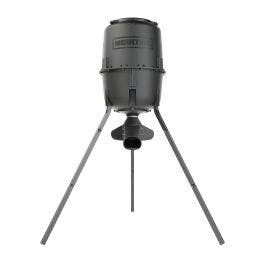
Moultrie 250 lb Gravity Deer Feeder
Check Price on Amazon →Confirm price and availability on AmazonWildgame Innovations Treehugger 100 lb Feeder
Check Price on Amazon →Confirm price and availability on Amazon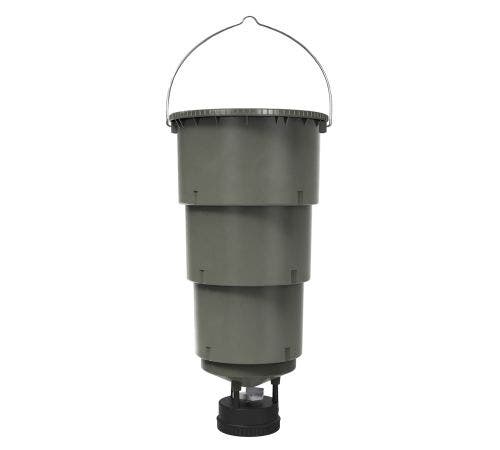
Moultrie 30 lb All-in-One Hanging Feeder
Check Price on Amazon →Confirm price and availability on AmazonOn Time 80 lb T-Post Feeder
Check Price on Amazon →Confirm price and availability on AmazonBoss Buck Shark Teeth Varmint Guard
Check Price on Amazon →Confirm price and availability on AmazonAs an Amazon Associate, we earn from qualifying purchases.