

Hog Trap Guide: Types, Gates, Triggers & Plans (2026)
Note: This guide contains no affiliate links. It links to university extension publications, state wildlife agency rules, and manufacturer pages so you can check the original sources yourself. If a future version adds product links, this note will be updated to say so plainly.
Match the trap to the group in 30 seconds
2026 landowner’s guide • 5 trap types • built from university extension sources
Count the group on camera first — that number decides the trap. Then bait patiently before you ever set it.
GROUP SIZE ▸ SITE ▸ TRAP TYPE
Large corral trap — the extension default for whole groups.
Corral traps →Box trap — portable and quick, but it won’t solve a sounder.
Box traps →Suspended or drop system — the enclosure drops on your command.
Drop traps →Net trap — hogs keep entering after the first ones are caught.
Net traps →Snare, only as a last resort — check your state rules first.
Snares →Contents
- The short answer
- Start here: which hog trap fits your problem?
- Trap types at a glance
- Four steps to choosing a trap
- How this guide was built
- Corral traps: the whole-sounder workhorse
- Box traps: small, portable, limited
- Suspended and drop traps: the trap comes from above
- Net traps: continuous catch without a gate
- Snares: cheap, single-catch, and heavily restricted
- Gate explainer: saloon, guillotine, rooter, and remote gates
- Trigger explainer: trip-wire, rooter, and remote triggers
- Whole-sounder vs. single-catch strategy
- Conditioning and baiting basics
- DIY plans vs. bought systems, compared honestly
- What a hog trap really costs
- How to choose
- Safety, handling, and what happens after the catch
- Legality: check your own state first
- Video: see trapping taught by extension
- Resources hub
- Frequently asked questions
- Final verdict
The short answer
A hog trap is an enclosure, net, or snare set used to capture feral hogs alive so a landowner can remove them from a property. If your goal is to reduce damage across a farm or ranch rather than catch one animal, the evidence from university extension points the same way every time: build or buy a large corral trap, bait it patiently until the whole sounder is comfortable walking in and out, and only then set it to catch. Small box traps still have a place for a lone boar or a tight spot, and suspended or net systems can catch an entire group at once, but every one of those options only works when it is matched to the size of the group you are actually dealing with. Trapping is a process that takes days to weeks, not an evening project, and the cheapest trap is the one that catches the whole group the first time instead of educating the survivors.
The rest of this guide walks through each trap type, each gate and trigger style, the baiting routine that makes or breaks a catch, honest DIY-versus-bought comparisons, and the legal checks you must run in your own state before you set anything. Nothing here is a product roundup: where a bought system is named, it is named because its manufacturer or a university source documents how it works, not because it earned a ranking.
Companion guides: gates and triggers, in depth
Companion guide
Hog Trap Gates
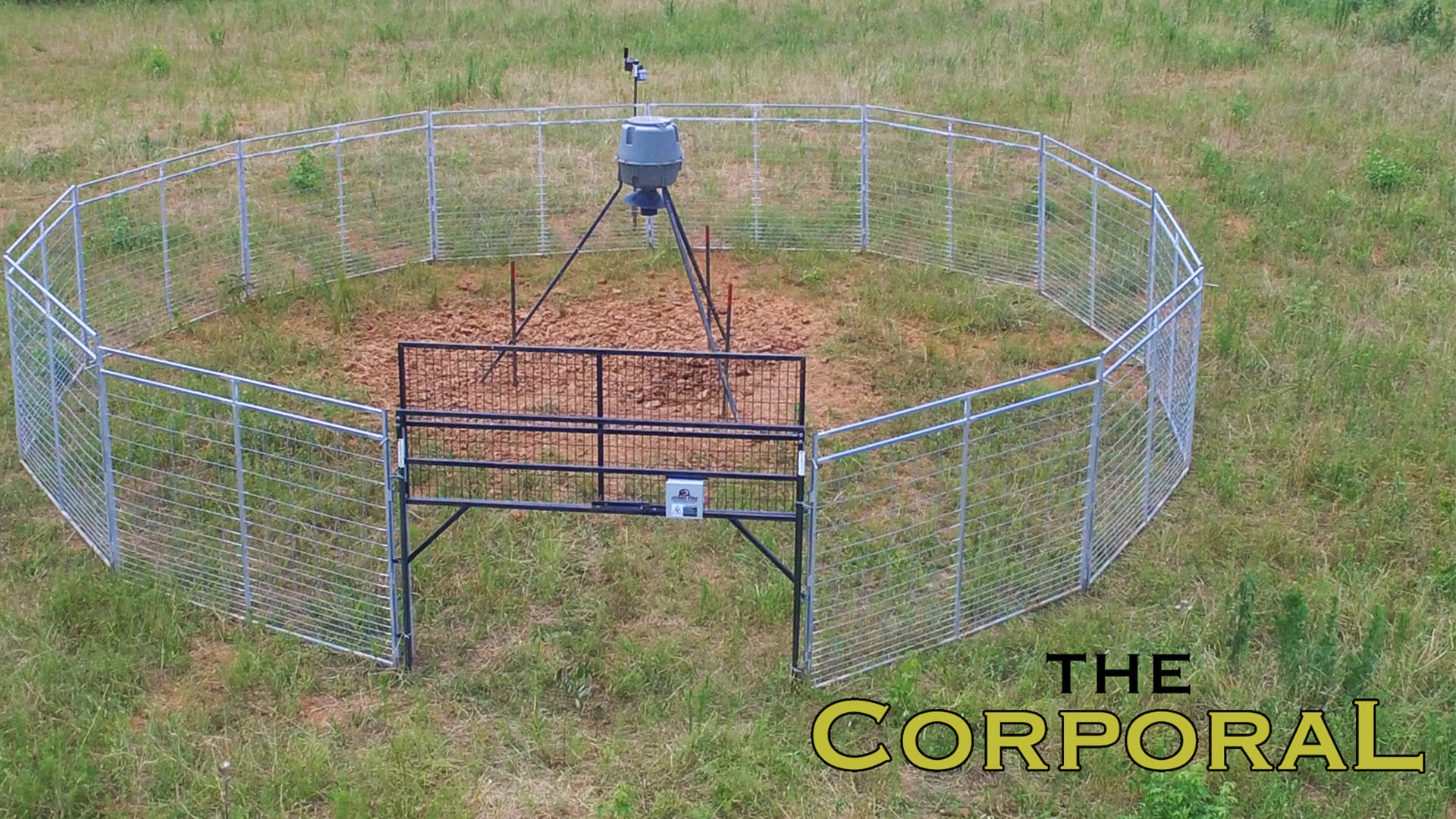
The gate is the part of a hog trap that most often decides whether a catch succeeds or fails — saloon, guillotine, rooter, and remote gates compared.
Caution: Gates are covered in depth in the companion guide, not ranked here.
Companion guide
Hog Trap Triggers
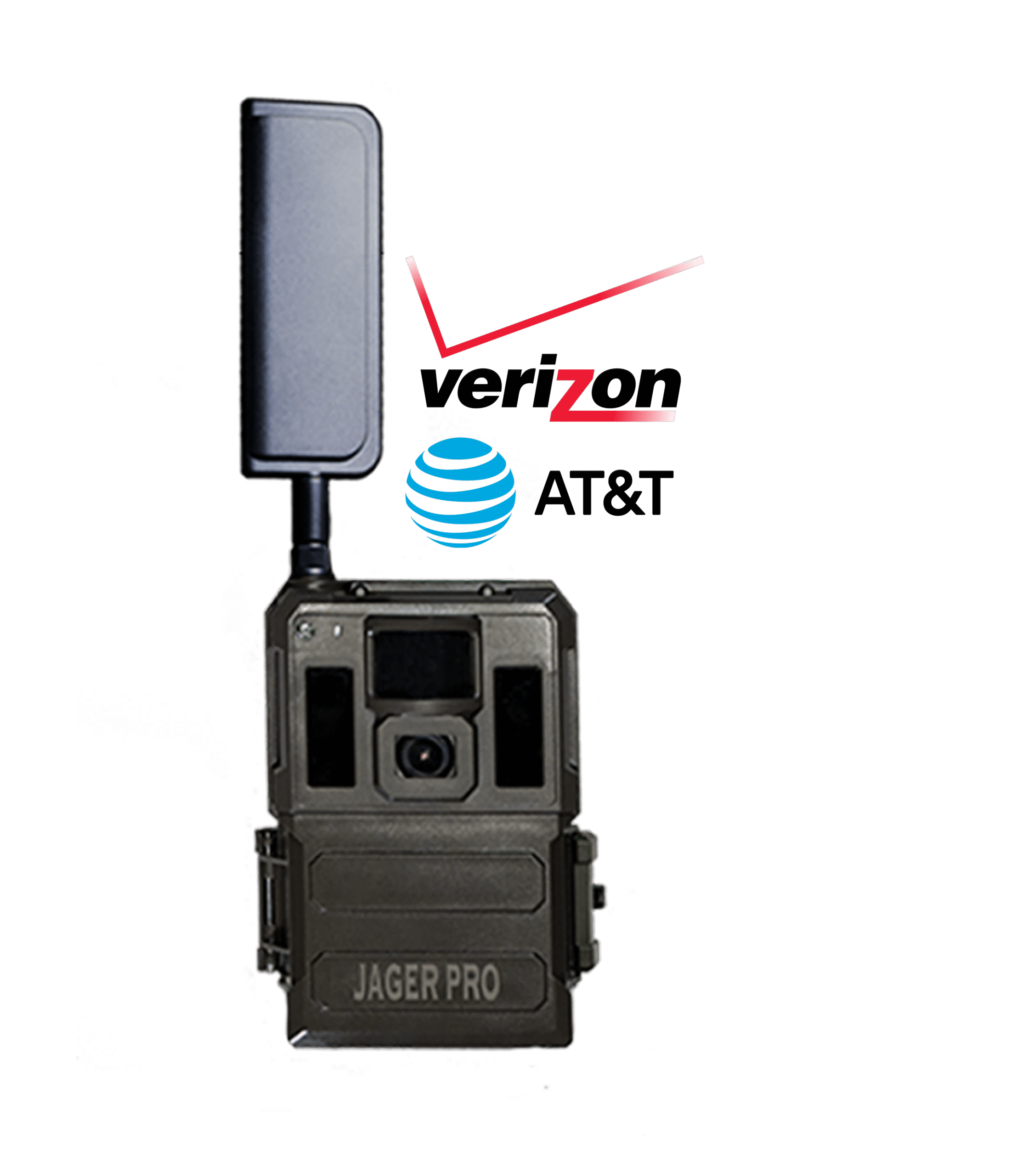
A trigger is the mechanism that tells the gate to close — trip-wire, rooter, and remote triggers, and where false-trigger risk sits.
Caution: Triggers are covered in depth in the companion guide, not ranked here.
Jump to a trap type in this guide: Corral traps | Box traps | Suspended and drop traps | Net traps | Snares — plus the Gate explainer and Trigger explainer.
Start here: which hog trap fits your problem?
Most people arrive at this question after hogs have already torn up a pasture, a food plot, or a yard. The fastest way to a sensible choice is to match the trap to the group, the ground, and the amount of attention you can give it.
- Start with a large corral trap if you are dealing with a sounder — a family group — on open ground you can drive to, and you can visit the site regularly for baiting and camera checks. This is the default recommendation from both Mississippi State University Extension and Texas A&M AgriLife Extension, and it is the most forgiving option when the group is larger than you think.
- Start with a box trap if you have one or two animals, a small or awkward site such as a yard or a narrow lot, or you need something you can move in a truck bed and set the same day. Accept from the outset that a box trap will not solve a whole-sounder problem.
- Start with a suspended or drop system if you have a large, repeat group, a budget for a bought system and its electronics, and reliable cell service at the trap site. These systems drop an enclosure from above on your command, so they can catch a group that has learned to avoid walking through a gate.
- Start with a net trap if you need whole-sounder capture without gates, triggers, or cell service, and you are willing to pay a premium for a portable, one-person system. Pigs root under the net to reach bait and keep entering after the first animals are caught.
- Consider snares only last, and only where legal, for one or two trap-shy animals that have already learned to avoid enclosures. Snares catch one animal at a time, are not species-specific on their own, and are restricted or discouraged in several states and in bear country.
If you take one sentence from this section, take this one: count the group before you choose the trap. Trail-camera photos at a bait site tell you how many animals you are dealing with, and that number decides the trap size. A trap built for three hogs will not hold fifteen, and a trap set too early will teach the hogs you miss to avoid traps altogether.
Trap types at a glance
| Trap type | Best for | Typical catch | Portability | Main weakness |
|---|---|---|---|---|
| Corral trap | Whole sounders on farms and ranches | An entire group at once, when baited patiently | Low once built; panels and posts stay on site | Slow to condition; hogs may fear the enclosure |
| Box trap | One or two hogs; small or residential sites | Usually 1–3 hogs at a time | High; many are trailer- or truck-portable | Too small for a sounder; educates survivors |
| Suspended / drop trap | Large, gate-shy groups; ranches and cooperatives | Whole group in one drop, when timed well | Moderate; panels break down for transport | Needs cell service, cameras, and monitoring |
| Net trap | Whole sounders without gates or cell service | Continuous catch as pigs root under the net | High; packs down for one-person setup | Premium price; still needs conditioning |
| Snare | Trap-shy singles as a follow-up tool | One hog at a time | Very high; a coil of cable and an anchor | Not species-specific; legal restrictions apply |
Read that table as a starting filter, not a verdict. Two traps that look similar on paper behave very differently once hogs, weather, and a real property enter the picture, and the sections below explain why for each type.
Four steps to choosing a trap
- Step 1 — Confirm the problem is hogs, and count them. Look for rooting, tracks, wallows, and rubs, then put out bait and a trail camera before you build anything. If the camera shows a sounder of a dozen animals, a box trap is already the wrong tool.
- Step 2 — Check your state’s rules before you spend a dollar. Licensing, trap tagging, check intervals, transport, and snare rules all vary by state, and some methods that are routine in one state are restricted in another. The legality section below gives one fully attributed example and tells you where to check your own rules.
- Step 3 — Match the trap to the group and the site. A large group on open ground points to a corral, suspended, or net system. A lone animal in a tight spot points to a box trap. Poor cell service rules out a remote-gated system unless you are willing to move the site.
- Step 4 — Budget for baiting time, not just hardware. Prebaiting takes a week or two in many cases, and sometimes longer for trap-shy animals. If you cannot commit to daily bait checks and camera review during conditioning, a simpler trap you will actually tend beats a sophisticated one you will not.
How this guide was built
This guide aggregates university extension publications, peer-reviewed trapping research, manufacturer documentation, and landowner-facing extension articles. The primary sources are Mississippi State University Extension’s Wild Pig Info pages and Texas A&M AgriLife Extension’s Coping with Feral Hogs pages, which are the two most complete public trapping references in the United States. Where a study is cited — for example, the comparison of corral traps, drop nets, and suspended traps — the numbers come from that study, not from this site.
Three things this guide deliberately does not do. First, it does not claim any testing: no trap was bought, built, or field-tested for this article, and no sentence here should be read as “we tried it.” Second, it does not invent prices, dimensions, or specifications. Where a dimension or a price appears, it is tied to a named source in the source list, and where no source was found, the number is simply left out. Third, it does not present one state’s law as if it applied everywhere. The single state example in the legality section is labeled as an example, and every other legal statement is a direction to check with your own state wildlife agency.
A note on terminology, because extension sources use several names for the same animal: “feral hog,” “wild hog,” and “wild pig” all refer to the same free-ranging, non-native pigs in this guide, and a “sounder” is a family group, usually sows with their young, sometimes with a boar nearby.
Corral traps: the whole-sounder workhorse
A corral trap is a large pen built on site from livestock panels and steel T-posts, with a gate at one end and bait at the other. Texas A&M AgriLife Extension describes the standard build as cattle panels supported by T-posts spaced in a circular pattern about every 4 feet, with no corners anywhere in the trap, because corners give trapped hogs a point to concentrate on and can lead to escape. Mississippi State University Extension reports that most experts regard corral traps 15 to 20 feet in diameter as the most effective size for wild hog removal, while Texas A&M’s corral-trap publication describes a teardrop-shaped trap with a minimum size of about 20 by 30 feet, larger when the group is large. The difference between those figures is not a contradiction: the right size depends on the group, and the consistent advice is that bigger is better, up to the point where the trap still fits the site and can be built and tended properly.
The teardrop shape deserves a specific mention because it solves a practical problem. Texas A&M notes that a teardrop shape is recommended when captured hogs will be loaded out to a buying station, because the narrow end funnels animals toward a trailer, while other shapes work fine when hogs will be dispatched on site. Square or rectangular traps need their corners covered with a piece of panel or mesh fencing, because trapped hogs pile into the farthest corner and can climb out over one another if a corner is left open. That single construction detail — covering the corners — is the difference between a trap that holds and a trap that teaches hogs how to escape.
Corral traps are typically built from 20-foot by 5-foot livestock panels with 4-by-4-inch square mesh and steel T-posts, according to Texas A&M’s corral-trap publication, which notes that this mesh size prevents smaller pigs from escaping through the panels. The panels are tied to the posts and secured flush to the ground so hogs cannot root underneath them. Anything a hog can get its snout under, through, or between is an escape route, as Texas A&M’s hog-trap-design publication puts it, and that principle should govern every joint, gap, and ground contact in the build.
The strengths of a corral trap are straightforward. It can capture an entire sounder at once, which is the only catch that actually reduces damage for long, because a sounder left half-caught simply regroups and breeds back. Its open top lets a deer that wanders in escape, which Texas A&M lists as an advantage of corral traps. It can be placed where hogs already travel and left in place for years: Texas A&M’s trapping guidance notes that a corral trap in a good baiting location can be used for years, which spreads its build cost over many catches.
The weaknesses are just as real. Materials and construction take time and money, and a finished corral trap is not easily disassembled or moved as a unit. Prebaiting is expensive and time-consuming, because conditioning a whole group takes corn, fuel, and daily visits. And corral traps are visually intrusive at ground level: panels, fencing, and a gate are exactly the kind of enclosure a wary hog notices, which is why some animals take days or weeks to enter confidently, and why the conditioning section of this guide matters more than the construction section.
✅ Pros
- Can capture an entire sounder in one catch, the outcome that actually cuts damage.
- Open-top design lets non-target deer escape.
- Built from off-the-shelf panels and posts; plans are public and free from extension.
- Reusable for years at a good site, spreading the build effort over many catches.
❌ Cons
- Slow to condition: hogs may take one to two weeks, sometimes longer, to enter freely.
- Not portable once built; moving it means rebuilding it.
- Ground-level panels and gates can spook trap-shy animals before they ever enter.
- Needs regular tending; the longer hogs sit in a trap, the more time they have to find a way out.
Box traps: small, portable, limited
A box trap is a rigid cage, commonly about 4 by 8 feet and 3 to 4 feet tall, built from livestock panels with a steel pipe or angle-iron frame, according to Texas A&M’s box-trap publication. A top is recommended to keep hogs from crowding into corners and climbing out, and a fully enclosed trap with a top and a floor can even let a trapper transport a live hog without removing it from the trap. Box traps without floors need T-posts to anchor them, which adds material and can itself deter a hog from entering.
The honest role of a box trap is narrow. Texas A&M’s feral-hog fact-sheet summary puts it plainly: large corral traps have been shown to be about four times more effective than traditional mechanically triggered box traps, which capture only 1 to 3 feral hogs at a time. That figure should settle most buying decisions. A box trap is the right tool when the problem is genuinely small — a lone boar raiding a yard, a couple of animals in a residential area, a site where a corral trap physically cannot fit — and the wrong tool when a sounder is involved. Catching two hogs out of twelve does not solve a damage problem; it leaves ten hogs that have now watched a trap work, and some of them will be harder to catch next time.
Box traps do have real advantages within that narrow role. They are portable, they can be bought ready to use, they can be set the same day they arrive, and they work in places where a landowner cannot commit to a multi-week conditioning program. For a homeowner or a small-acreage owner with a single animal, those advantages outweigh the small catch size. The mistake is scaling a box trap up in your head: buying two or three box traps is not the same as building one corral trap, because each box trap still catches a few animals at a time and each one still needs baiting, checking, and emptying.
✅ Pros
- Portable and quick to deploy, including on small or residential sites.
- Ready-to-use models exist; no construction project required.
- Enclosed design can hold a single animal securely for transport.
❌ Cons
- Catches only 1 to 3 hogs at a time in typical use.
- About four times less effective than large corral traps for group removal, per the extension summary cited above.
- Partial catches can educate the rest of the sounder.
- Anchor posts and floors add cost and can deter entry.
Suspended and drop traps: the trap comes from above
Suspended and drop traps turn the corral-trap idea upside down — literally. Instead of asking hogs to walk through a gate into an enclosure, these systems hold a cage, pen, or net above the ground and drop it around the animals on command or on a trigger. The best-known bought example is the BoarBuster system, a circular steel enclosure suspended above the ground with bait at its center, operated remotely through a camera unit and a phone app: the operator watches a live feed and releases the trap when the number of pigs inside has peaked. The design exploits a behavioral trait of feral pigs — they rarely look up, having no natural predators that attack from above — so pigs enter from any direction without passing through a gate, which speeds up conditioning.
Research supports the idea that overhead systems change hog behavior. A peer-reviewed study comparing corral traps, drop nets, and suspended traps found that pigs regularly walked under drop nets and suspended traps within the first 24 hours after setup, while corral traps still produced hesitation even after the same prebaiting period, because the overhead systems have no confined entry point, no threshold to cross, and no ground-level paneling for hogs to notice. In that study’s second experiment, suspended traps averaged 8.2 pigs per trapping event across 30 events, with the largest single catch at 30 pigs, while the drop-net experiment averaged 9.6 pigs per event with a largest catch of 27, against 3.9 pigs per event for corral traps. Those are study results on specific sites, not promises for any given property, but they explain why land managers with gate-shy groups look upward.
The trade-offs are cost, complexity, and dependence on electronics. A suspended system needs a camera, a trigger unit, power, and — for remote operation — cell service at the trap site. Setup and monitoring take skill: the operator must judge from a camera feed when the group is fully inside, and a mistimed drop catches part of the group and educates the rest. These systems are most commonly used by state programs, large ranches, and cooperatives that can absorb the upfront cost and the monitoring workload. For an individual landowner with one small group and a tight budget, a suspended system is usually more machine than the problem requires.
✅ Pros
- No gate to walk through, so gate-shy hogs condition faster in studies.
- Can capture a whole group in one drop when timed correctly.
- Remote camera lets the operator choose the moment instead of trusting a trip mechanism.
❌ Cons
- Highest cost and complexity of the enclosure options; electronics, cameras, and service all add up.
- Needs reliable cell service and active monitoring at the moment of the drop.
- A mistimed drop produces a partial catch and trap-shy survivors.
Net traps: continuous catch without a gate
Net traps are the newest mainstream category, and they solve a different problem from suspended traps: instead of dropping an enclosure at one moment, they let pigs keep entering after the first animals are caught. The Pig Brig system is the clearest example. A 20-foot-diameter, double-walled net is hung on T-posts with its edges raised during conditioning, so the sounder learns the bait site. When the trap is set, the net is dropped to the ground and pigs root underneath it to reach the bait; because there is no gate to close, more pigs can continue entering after the first animals are caught, and internal anchor stakes resist root-outs by counteracting lift at the bottom edge. The manufacturer states plainly that the system needs no gate, no trigger, and no cell service, and that one person can set it up.
The appeal is obvious for properties where cell service is poor, where the operator cannot watch a camera feed at night, or where the group arrives in waves rather than all at once. The limitation is equally obvious: a net trap is a bought, premium system, not a hardware-store build, and it still requires the same conditioning discipline as any other trap. Hogs must learn the site, learn to root under the net, and arrive in numbers before the set matters. A net trap does not remove the baiting week; it removes the gate and the trigger from the equation, which is a meaningful simplification but not a shortcut past conditioning.
Net traps also share one caution with every enclosure: they must be checked and emptied promptly, and the operator still needs a lawful plan for the captured animals before the first catch. A system that catches continuously is only an advantage if the operator can keep up with what it catches.
✅ Pros
- Continuous catch: late arrivals can still enter after the first pigs are caught.
- No gate, trigger, or cell service required, so it works where remote systems cannot.
- Portable and designed for one-person setup and moves between sites.
❌ Cons
- Premium bought-system price; not a DIY build from panels.
- Still needs full conditioning — pigs must learn to root under the net.
- Operator must be ready to handle a potentially large, continuous catch.
Snares: cheap, single-catch, and heavily restricted
A snare is a loop of wire set across a game trail or fence crossing and anchored so that a hog walking through the loop is held. Texas A&M’s snaring page describes snares as a low-cost, low-maintenance tool and, importantly, as a follow-up technique for removing final pigs that were too trap-shy to be caught or shot — not as a first-line tool for a whole group. That framing is the right one. A snare removes one pig at a time, and it does so at a trail the operator has chosen, which means success depends entirely on reading hog movement correctly.
The central problem with snares is that a loop of wire on its own is not species-specific. Texas A&M states this directly: a snare can catch any number of native or domestic animals, and the page recommends stops, strategic placement, and regular checking to make snares as pig-specific as possible, while warning that snares are not a good fit where livestock or pets cannot be kept out of the area, or where endangered or protected species susceptible to snares are present. Louisiana’s wildlife department has gone further in bear country, strongly recommending against hog and coyote snares in parishes where bears have been caught in them, and advising cage or corral traps with a top opening instead. The pattern across sources is consistent: snares are a specialist tool with a non-target cost that must be weighed every time, not a cheap substitute for a trap.
Legality varies sharply. Some states allow snaring of feral hogs on private land with conditions; others restrict snares by license, season, or area, and some prohibit them for certain animals altogether. Because the rules differ so much, this guide gives no state-by-state snare list — any list compiled here would be out of date the moment a regulation changed. Check your own state wildlife agency before considering a snare, and treat any snare advice that does not mention your state’s rules as incomplete.
✅ Pros
- Very low cost and very portable.
- Useful as a follow-up for one or two trap-shy animals after enclosure trapping.
- Low maintenance compared with a baited enclosure.
❌ Cons
- One animal at a time; useless as a whole-sounder strategy.
- Not species-specific without careful stops, placement, and frequent checking.
- Restricted, licensed, or discouraged in many states and in bear country.
- Non-target captures, including pets, livestock, and protected species, are a real risk.
Gate explainer: saloon, guillotine, rooter, and remote gates
The gate is the part of a hog trap that most often decides whether a catch succeeds or fails, and Mississippi State University Extension treats gate choice as a budget, location, and time decision rather than a search for one best design. This section summarizes the main gate families so you can choose intelligently; it is a summary of concepts, not a product guide, and it does not recommend any specific bought gate.
Saloon gates are spring-loaded single or double doors that swing inward. A hog pushes its way in, the spring snaps the door shut behind it, and the door’s one-way action keeps captured animals inside while still letting additional hogs push in afterward. Mississippi State describes saloon and rooter doors together as multi-catch doors, designed to allow additional animals to enter after the trap has sprung — but adds an important caution from southeastern U.S. research: additional captures through multi-catch doors after the door closes are a rare event, and one Auburn study found entry rates after closure of just 16.4 percent for root doors, 0.9 percent for saloon doors, and 1.9 percent for trainer doors. In other words, buy a multi-catch gate for its sturdy one-way action, not for a promise that latecomers will keep piling in.
Guillotine or drop gates are single-catch doors: a panel held overhead slides or drops shut when a trigger fires, and once it has closed, no more animals can enter until the trap is manually reset. Mississippi State notes that these doors are relatively inexpensive and can be built from ordinary lumber and plywood, and that with proper prebaiting and camera evidence they can be just as effective as other door types. The catch is entirely in that qualifier — proper prebaiting. A guillotine gate punishes impatience more than any other design, because a trigger fired while half the sounder is still outside produces exactly half a catch.
Rooter gates (also called root doors or lifter gates) are top-hinged panels that a hog lifts with its nose to root its way in, then fall shut behind it by gravity. They exploit the same rooting behavior that makes hogs such destructive foragers, and like saloon gates they are classed as multi-catch doors. Texas A&M lists rooter gates alongside saloon and guillotine gates as the typical headgates for corral traps, and notes that rooter gates and funnels can be continuous — new pigs can still enter after the gate closes on the first pigs — but only with adequate prebaiting that teaches pigs to use the gate comfortably.
Remote gates are the high-technology end of the range. Mississippi State calls the remote-controlled gate “the Cadillac of trap doors”: a camera much like a game camera records pictures or video of hogs inside and around the trap, sends real-time images to the user’s phone or email, and the gate is triggered shut with a single text code when the operator decides the moment is right. The advantages are real — the operator chooses the moment, travel and fuel costs fall, and whole-sounder catches become more likely. The drawbacks are equally real: the camera’s SIM card typically needs monthly renewal, the site needs cell signal, and the gate itself is expensive, although Mississippi State notes that neighbors can share one gate and move it between properties to spread the cost.
Funnel entrances deserve a mention because they are not gates at all in the mechanical sense: overlapping panels form a narrowing passage that hogs push through to enter but cannot easily reverse out of. Texas A&M lists funnels among typical corral-trap headgates and classes them with rooter gates as potentially continuous. Funnels are simple and have no moving parts to fail, but they depend entirely on hogs being comfortable pushing through a narrowing gap, which again comes back to conditioning.
The practical rule that emerges from all five families is simple: the gate matters less than the baiting that precedes it. A cheap guillotine gate on a fully conditioned sounder will outperform an expensive remote gate fired at a half-conditioned group, because the gate only closes on the animals that are already inside.
Trigger explainer: trip-wire, rooter, and remote triggers
A trigger is the mechanism that tells the gate to close, and Texas A&M splits triggers into two broad families: non-specific triggers, which any animal can set off, and pig-specific triggers, which rely on behaviors commonly observed in pigs. Understanding that split is more useful than memorizing trigger brand names, because it tells you where your false-trigger and non-target risk sits.
Trip-wires are the classic non-specific trigger: a wire or cable run across the trap, connected to a pin holding the gate open, so that an animal walking into the wire pulls the pin and drops the gate. They are simple, cheap, and proven — and they fire on whatever walks into them, including a small pig that arrives before the adults, a deer, or a raccoon. Texas A&M’s baiting guidance warns specifically against scattering bait directly along the trip wire, because hogs feeding along the wire can trigger the gate before the rest of the group has entered and before the last animals reach the bait. The placement rule that follows from that warning is to set the trigger near the back of the trap, baited so that the last animal to enter reaches it, and adjusted so that only larger animals can activate it.
Rooter triggers are pig-specific triggers built around rooting behavior. The best documented is the root stick or rooter stick: a stick or pipe set in the ground near the bait that hogs must root and dislodge to fire the gate. Texas A&M also describes a tire trigger, in which corn is placed inside a tire that hogs must tip and move to shake the corn out, tripping the gate in the process. Texas A&M’s trapping guidance favors tires over tripwires for an elegant reason: it takes larger pigs to tip a tire enough to trip it, and larger pigs are usually the last to enter a trap, so a tire trigger gives the whole group more time to get inside before the gate fires. The tire should be placed in the bait area when baiting begins, so hogs learn it as part of the feeding site rather than meeting it as a new object on the night the trap is set.
Pressure plates and trough triggers are non-specific triggers that fire when weight presses a plate or moves a trough mechanism. They share the trip-wire’s weakness — anything heavy enough can set them off — and the same mitigation applies: place them at the back of the trap, adjust them for larger animals, and bait so that the trigger is the last thing the group reaches.
Remote and cellular triggers replace a mechanical trigger with a human decision. A cellular camera watches the trap, sends images to the operator’s phone, and the operator sends a code or taps an app to close the gate. This is the trigger family with the highest whole-sounder potential, because the operator can wait until the camera shows the full group inside, and it is also the family with the highest dependence on infrastructure: cell signal at the site, a powered camera, a current SIM plan, and an operator awake and watching when the hogs arrive. Landowner reports consistently stress testing the cell signal at the exact trap location before committing, because signal a hundred yards away is not signal at the trap.
One trigger principle covers all four families: the trigger should be the last thing the group encounters, not the first. Bait in a trail from the gate to the back of the trap, keep bait off the trip-wire line itself, and let camera evidence — not impatience — decide when the trigger is armed.
Whole-sounder vs. single-catch strategy
The single most important strategic choice in hog trapping is whether you are trying to catch a whole group or just some hogs, because the two goals demand opposite behavior from the trapper. Mississippi State University Extension frames trapping as a process, not an event, and its five-step process exists precisely to serve the whole-sounder goal: establish bait sites, identify the groups using them, build the trap, condition the pigs to enter and leave freely, and only then set the trap to catch.
The arithmetic behind the whole-sounder goal is unforgiving. Mississippi State cites population studies showing that hunting removes about 25 percent of a population on average, while keeping numbers stable requires removing at least 50 percent, and as much as 70 percent where food is plentiful, as in the Mississippi Delta. A trapping program that catches half of each group and educates the other half is running in place: the survivors breed back, and the educated animals — especially older pigs and pigs previously trapped and released — become the hardest animals on the property to catch. Mississippi State’s baiting page warns that trap-shyness is especially true for older pigs and previously trapped pigs, and that if a trap is set too soon, the members of the sounder that are not caught become educated and can be more difficult, if not impossible, to capture later.
Single-catch strategy has a legitimate place, but it is a narrower one. If the problem is one boar, a single-catch box trap or a guillotine-gated corral is the right tool and there is no sounder to educate. If the problem is a sounder and you use a single-catch tool anyway, you are accepting a partial catch as the price of speed or simplicity, and you should plan for follow-up: a second trap, a different gate, or snares for the trap-shy remainder, as Texas A&M suggests for final animals. The worst version of single-catch strategy is accidental — a guillotine gate fired early, a trip-wire tripped by a juvenile, a remote gate dropped while half the group is still outside — because it spends the group’s trust for a fraction of the catch.
There is also a counterweight to perfectionism that experienced trappers mention: waiting forever for every last animal can cost real catches. Landowner accounts describe nights when most of a sounder entered nightly while the trapper waited for all of them, until the group moved on and never returned. The practical balance is camera-based: set the trap when camera evidence shows the whole group, or the clear majority of it, entering and feeding confidently night after night, and accept that a small number of stragglers may need a follow-up method. “Whole sounder” is the goal; “majority of the sounder, caught before the group moves on” is the judgment call that keeps a program moving.
Conditioning and baiting basics
Conditioning — also called prebaiting — is the unglamorous work that decides most trapping outcomes, and extension sources describe it in strikingly similar terms. The routine below follows Mississippi State’s five-step process and Texas A&M’s placing-and-baiting guidance, and it is the closest thing this guide has to a universal recipe.
Step 1: Scout and establish bait sites before building anything. Mississippi State’s process starts with bait sites using whole-kernel shelled corn every 100 to 200 acres across the property, checked daily in the late morning to mid-afternoon, each monitored with a game camera. The point of this stage is information, not capture: which sites do hogs visit, how many groups use each site, and how many animals are in each group. Texas A&M adds that trap sites should be chosen where hog sign is fresh, near cover and water, and accessible by vehicle and trailer if animals will be loaded out. It also warns that if damage is in an open pasture or crop field, the trap site should be backtracked toward the hogs’ daytime cover rather than placed on the damage itself, and that a site upwind of daytime cover lets scent carry toward the animals.
Step 2: Narrow to the active sites and keep baiting. Once hogs have found one or more sites, Mississippi State advises removing corn from sites pigs have not visited and continuing to bait and monitor the active sites for several days until the number of groups and the size of each group are known. This is the stage where trap size is decided: the group on camera determines the corral diameter, and a site with two groups may need two traps or a larger one.
Step 3: Build the trap and condition entry with the gate tied open. With the site chosen, build the trap around the baited area and tie the gate open so pigs can come and go freely. Mississippi State is explicit: do not place corn outside the enclosure during conditioning; require pigs to go inside to get it. Texas A&M’s version of the same stage starts bait near the opening and inside the trap, then moves bait progressively deeper as hogs begin to enter routinely, continuing for a few more days after the whole group is comfortable entering. The funnel matters here: Texas A&M’s timing guidance recommends keeping an opening at least 10 feet wide where the gate will be, because wider openings shorten the time pigs need to learn they can safely enter and feed at the back of the trap.
Step 4: Wait for the whole group, not just the bold ones. Mississippi State’s baiting page states that usually 1 to 2 weeks of prebaiting is necessary before the entire sounder will enter a trap, and that two weeks may pass with some pigs still outside, particularly older or previously trapped animals. The remedy for a stubborn holdout is to make the trap less intimidating: remove the door and create a larger opening, or build larger, until the reluctant animals enter and leave regularly. Patience at this stage is not wasted time; it is the purchase price of a whole-sounder catch.
Step 5: Set only when camera evidence says the group is ready. When the entire group is readily entering and leaving the trap, and feeding deep inside it, the trap can be set to catch — ideally late in the evening, with the operator planning to be at the trap early the next morning to deal with the catch. Texas A&M’s baiting guidance adds the trigger-placement rule from the trigger section: bait all the way back to the trigger, but do not scatter bait along the trip wire itself, or hogs may fire the gate before the group is fully inside.
On bait choice, shelled corn is the default in nearly every extension source, because it is cheap, available, and hogs learn it quickly. Texas A&M notes that fermented or soured corn and old grease appeal strongly to hogs’ sense of smell and may work better when plain shelled corn is not productive, and that trapping success may be limited when acorns are abundant, because natural food competes with bait. The practical lesson is to match bait to conditions rather than to habit: if corn is not drawing hogs during a heavy mast year, a smellier bait is worth trying before a different trap is worth buying.
Two common baiting mistakes deserve emphasis because extension sources return to them repeatedly. The first is baiting outside the trap during conditioning, which teaches hogs they can eat without entering and removes all incentive to cross the threshold. The second is setting the trap on a calendar rather than on camera evidence — “it has been a week, so tonight is the night” — when the camera still shows half the group feeding outside. Both mistakes cost the same thing: the group’s trust, which is much harder to rebuild than it was to earn.
DIY plans vs. bought systems, compared honestly
The DIY route for a corral or box trap is genuinely accessible: the plans are public, the materials are hardware-store stock, and the skills required are fence-building skills, not engineering. Texas A&M publishes corral-trap and box-trap designs, Mississippi State publishes gate and baiting guidance, and the core materials — livestock panels, T-posts, wire, and lumber for a drop gate — are the same materials used for ordinary farm fencing. For a landowner who already owns a post driver, wire tools, and a trailer, a DIY corral trap is the lowest-cost path to a whole-sounder tool, and it has the advantage of being repairable with whatever is in the barn when a hog damages a panel.
What DIY costs is time and judgment. Building a round, corner-free corral with panels flush to the ground, a gate that swings true, and a trigger adjusted for large animals is a full day’s work or more, and the quality of the build shows up directly in escapes: every gap a snout can exploit, every panel that is not tied top, middle, and bottom, every corner left uncovered is a future exit. DIY also puts the design decisions on the builder — gate family, trigger family, trap size, and shape — and a builder who has never trapped before is making those decisions from reading alone. That is a workable position, but it is not the same as buying a system whose decisions have been made by a manufacturer.
Bought systems split into two very different categories, and confusing them leads to bad purchases. The first category is bought corral and box traps: prefabricated panels, gates, and triggers that assemble into a conventional trap. These save build time and usually arrive with a gate and trigger already fitted, but they still require the same site selection, baiting, and conditioning as a DIY trap, and they still need the same legal checks. The second category is bought integrated systems — suspended traps with cameras and remote triggers, and net traps with no gate at all — which change how the trap works, not just who built it. Those systems cost substantially more, and their value lies in solving a specific problem: gate-shy groups, poor access, or a need for remote operation.
The honest comparison, then, is not DIY versus bought in general. It is: a DIY corral trap is the best value for a landowner with time, tools, and a standard sounder problem; a prefabricated corral or box trap is the best value for a landowner who wants to skip construction but keep a conventional trapping method; and an integrated suspended or net system is the best value only when a conventional trap has already failed, when cell-service-independent continuous catch is required, or when the scale of the problem justifies the price. Buying the most expensive system first, before trying the method extension recommends, is spending money to skip the learning that makes any system work.
What a hog trap really costs
Trap costs are hard to pin down because the largest costs are not the trap itself. This section therefore gives cost structure and the one price verified when this guide was written, rather than a price list that would be wrong by county and by month.
| Cost item | What to expect | Notes |
|---|---|---|
| DIY corral materials | Panels, T-posts, wire, gate lumber or steel | Prices vary by supplier and region; get a quote before building. A larger trap needs more panels, so group size drives this cost directly. |
| DIY box trap materials | Panels, frame steel, gate hardware, top and floor if fitted | Less material than a corral, but anchor posts add cost where no floor is fitted. |
| Prefabricated corral or box trap | Bought unit plus delivery | Saves build time; still needs bait, a camera, and tending. |
| Remote gate and camera system | Gate unit, cellular camera, monthly SIM renewal | Mississippi State notes the SIM card typically needs monthly renewal; signal at the site must be tested before purchase. |
| Suspended trap system | Full system, camera, and monitoring | Highest upfront cost among enclosure systems; used most by programs, ranches, and cooperatives. |
| Net trap system | Net, anchors, mounts, and straps | One verified price below; no ongoing cell plan required by design. |
| Bait and fuel | Corn for 1–2+ weeks of conditioning, plus daily site visits | Recurring and easy to underestimate; conditioning is the longest cost tail on any trap. |
| Trail camera | Camera and batteries or solar power | Not optional for whole-sounder work: camera evidence decides when the trap is set. |
The one price verified on a live manufacturer page when this guide was written is the Pig Brig Pro Trap System at $3,089.00, checked October 2026 on the manufacturer’s own product page, with taxes and shipping calculated at checkout and T-posts supplied by the customer. That figure is included as a dated snapshot, not as a current price promise: check the manufacturer’s page before budgeting, because prices and bundles change. No other trap price is stated in this guide, because no other price was verified on a live page when this guide was written, and a guessed price would be worse than no price. For DIY builds, the useful budgeting step is a materials quote from your own farm supplier for the panel count your group size requires, plus a realistic allowance for two weeks of corn and fuel.
The cheapest trap overall is usually the one that works the first time. A low-cost box trap that catches two hogs and educates ten has not saved money against a corral trap that catches all twelve, because the second program — re-baiting, re-conditioning, and possibly a different method for the educated remainder — costs more than the first build did. Cost per hog removed, not cost per trap, is the number that matters, and it is the number that favors large traps and patient baiting.
How to choose
Choose by group size first
Group size is the decision that makes all the others easier. A camera count of one or two animals points to a box trap or a small corral. A count of five or more points to a large corral, suspended, or net system, because a small trap cannot hold a group that size and a partial catch will educate the rest. If you genuinely do not know the group size, that is not a reason to guess — it is a reason to bait and camera the site for a week before choosing, because the count you get will be more valuable than any trap review.
Choose by site and access
A trap you cannot reach regularly is a trap you should not set. Corral traps need vehicle access for panels, posts, bait, and load-out. Remote-gated systems need cell service at the exact trap location, tested with the actual camera before purchase. Net traps need ground where anchors and T-posts hold and where the net can be moved between sites. A site in dense cover near water, with fresh sign and vehicle access, will serve any trap type better than a convenient site with no hog traffic, and Texas A&M’s guidance to backtrack from damage to daytime cover is worth following even when it means a longer walk.
Choose by how much attention you can give
Remote gates reward attention at a distance: they need someone watching a phone when hogs arrive. Mechanical gates reward attention on site: they need baiting discipline and a correctly adjusted trigger. Net traps reward the least attention during the catch itself, but still need conditioning visits and prompt emptying. Be honest about which kind of attention you will actually give, because the trap that matches your routine is the trap that will be set correctly on the night it matters.
Choose by what happens after the catch
Decide the fate of captured hogs before the first catch, as Texas A&M’s timing guidance stresses. If hogs will be dispatched on site, trap shape and location are flexible. If hogs will be loaded to a buying station or slaughter facility, the trap should be teardrop-shaped for load-out, accessible to a trailer, and compliant with your state’s transport rules — and in many states, live transport is restricted or requires a permit, which may settle the question entirely. A trap with no lawful, practical after-catch plan is not a plan; it is a problem with a timer on it.
Safety, handling, and what happens after the catch
Wild pigs are strong, fast, and potentially dangerous when cornered, and they can carry diseases transmissible to humans and other animals. Mississippi State’s handling guidance is simple and worth repeating exactly: wear latex or vinyl gloves, do not touch your eyes, nose, mouth, or open wounds, and if pigs will be eaten, clean them properly and cook them well. Approach a trap with trapped hogs cautiously, never reach into an enclosure with hogs inside, and keep children, pets, and livestock away from a set trap.
Heat is a second safety issue that is easy to overlook. Trapping research from south Texas describes traps placed in shaded areas to prevent trapped animals from overheating, a common problem in Texas summers, with traps checked at least once daily just after sunrise and re-baited each morning. Shade, water where appropriate, and prompt checking are not kindness extras; they are part of operating a trap responsibly, and in some states they are part of the legal check-interval rules as well.
Non-target animals deserve the same planning as hogs. Open-top corral traps let deer escape, top openings of a specified size let bears escape in states that require them, and snares need stops, placement, and frequent checks to reduce non-target captures. If a non-target animal is caught, release it immediately upon detection — that instruction appears verbatim in Mississippi’s rule and reflects the standard across extension sources. A trapping program that regularly catches the wrong animals is a program whose site, bait, or method needs changing, not a program to run harder.
Finally, never release a captured feral hog somewhere else. Relocation spreads hogs to new ground, spreads disease, and is prohibited in many states. The lawful options in most states are dispatch on site or transport under permit to slaughter or a terminal facility, and your state’s rule — not this guide — decides which applies to you.
Legality: check your own state first
Hog trapping law is state law, and it varies on licensing, trap tagging, check intervals, trap design, snare use, transport, and relocation. No national summary in a guide like this one can substitute for your own state wildlife agency’s current rules, and any guide that prints a state-by-state table without a date and a source should be treated as suspect. Before you buy, build, or set anything, check three things with your state wildlife agency: whether you need a license or permit for the method you plan to use, what the trap-check and tagging requirements are, and what you may lawfully do with captured hogs, including transport.
One attributed example — Mississippi only. Mississippi’s nuisance-animal rule, as published in the Mississippi Administrative Code, illustrates how specific these rules get, and it applies in Mississippi only. Under that rule, a person trapping wild hogs must hold a valid Lifetime, All Game, Sportsman, or Trapping License unless otherwise exempt; any live cage-type trap must be tagged or labeled in plain view with the owner’s or user’s name, address, phone number, and/or trapper license ID; all live cage-type traps must be checked every 36 hours, with non-target animals released immediately upon detection; approved traps include those with a trap door, slide gate, or similar mechanism, plus suspended net and suspended cage traps, and those traps must have at least 50 percent of the roof open so non-target deer, turkey, or bear can escape; and live hogs may not be transported on public roads or relocated within the state, except for release alive for slaughter into an enclosure on the property of origin no larger than 500 square feet. Within a Mississippi Department of Wildlife, Fisheries, and Parks-defined chronic wasting disease management zone, trapping wild hogs with the aid of feed or food products requires an Animal Control Permit from the department. That paragraph is Mississippi’s rule, reported from the published code — it is not a summary of hog law generally, and nothing in it should be assumed to apply in Texas, Louisiana, Alabama, or any other state.
Two related cautions follow from the state-by-state variation. First, rules for public land are often stricter than rules for private land: Mississippi, for example, prohibits trapping, including snaring, of hogs on its wildlife management areas. Second, disease zones, bear country, and protected-species areas can add restrictions on top of the general rules, as the Louisiana snare guidance in bear country shows. The safe routine is the same everywhere: find your state agency’s current hog or nuisance-animal page, read it before the season you plan to trap in, and re-check it if anything about your property — a new disease zone, a bear sighting, a move across a county line — has changed.
Video: see trapping taught by extension
Reading about gates and triggers helps, but watching extension staff teach trapping helps more. The video below is from Texas A&M AgriLife’s feral hog workshop coverage, and its ID was verified through YouTube’s oEmbed service when this guide was written. Texas A&M AgriLife Extension also published a five-part Wild Pig Management Video Series covering corral trapping, box trapping, and snaring, available as a playlist on YouTube; it is linked below rather than embedded, because individual video IDs from that series were not verified when this guide was written and unverified embeds are not included in this guide.
2015 Feral Hog Workshop, Brazos County — Texas A&M AgriLife
Workshop coverage of feral hog management techniques, including corral trapping, from AgriLife Today.
Texas A&M AgriLife Extension Wild Pig Management Video Series (playlist) — includes How to Corral Wild Pigs, Corral Trapping Wild Pigs: A Success Story, How to Box Trap Wild Pigs, and How to Snare Wild Pigs.
Resources hub
Hog trapping sits next to feeder management on most properties: the same animals that tear up a pasture will raid a feeder, and the same trail camera that counts a sounder can watch a feeder. These pages from Best Deer Feeders are already live and cover the feeder side of that shared problem.
- Best Deer Feeders — the site’s main feeder guide and comparison.
- Best Gravity Deer Feeders — gravity feeders, the pattern this site’s guides follow.
- Best Tripod Deer Feeders — elevated feeders that are harder for hogs to reach.
- Best Deer Feeder Timer — timed feeding that limits how long feed sits out for hogs.
- Best Protein Deer Feeders — protein feeders and the feed hogs compete for.
- Keep Raccoons, Hogs, and Pigs Off Your Deer Feeder — exclusion and deterrent options for feeders.
- Deer Feeder Solar Panel — keeping feeder electronics and cameras powered at remote sites.
- Best Deer Feeder With Camera App Control — camera-equipped feeders for monitoring visits.
Authority sources to bookmark, all linked in the text above and in the source list: Mississippi State University Extension’s Wild Pig Info pages (Baiting and Trap Doors), Texas A&M AgriLife Extension’s Coping with Feral Hogs pages (Trapping and Snaring), and your own state wildlife agency’s current hog and nuisance-animal rules.
Frequently asked questions
What is the best hog trap for a whole sounder?
A large corral trap, a suspended or drop system, or a net trap — all three are designed to catch a group at once. The deciding factors are group size, site access, cell service, and budget, and in every case the trap must be baited until the whole group enters confidently before it is set. A box trap is not a whole-sounder tool.
How long does it take to condition hogs to a trap?
Usually one to two weeks of prebaiting before the entire sounder will enter a trap, according to Mississippi State University Extension, and sometimes longer for older or previously trapped animals. Camera evidence, not a calendar, should decide when the trap is set.
What bait works best for hog trapping?
Whole-kernel shelled corn is the default in nearly every extension source. Fermented or soured corn and old grease appeal more strongly to hogs’ sense of smell and may work better when plain corn is not productive, and trapping can be harder when acorns are abundant because natural food competes with bait.
Can a box trap catch a whole sounder?
No, not in normal use. Box traps typically capture one to three hogs at a time, and extension summaries put large corral traps at about four times more effective than mechanically triggered box traps for group removal. A box trap is for one or two animals or a small site.
What is the difference between a saloon gate and a guillotine gate?
A saloon gate is a spring-loaded, one-way door that hogs push through and that shuts behind them, classed as a multi-catch design. A guillotine or drop gate is a single-catch door that drops shut when a trigger fires and admits no more animals until it is manually reset. Research shows additional captures through multi-catch doors after closure are rare, so neither design substitutes for catching the group before the gate closes.
Do I need cell service for a hog trap?
Only for remote-gated and suspended systems that rely on a cellular camera and a phone command to close the gate or drop the enclosure. Mechanical gates with trip-wire, rooter, or tire triggers need no cell service, and net traps are designed to need none either. Test signal at the exact trap site before buying any cellular system.
Are snares legal for hogs?
It depends on the state, the land, and the license held, and snares are restricted or discouraged in some states and in bear country. Texas A&M notes snares are not species-specific on their own and recommends stops, strategic placement, and regular checking. Check your own state wildlife agency before considering a snare.
Should I build a hog trap or buy one?
Build a corral trap if you have time, tools, and a standard sounder problem — it is the lowest-cost path and the plans are free from extension. Buy a prefabricated trap to skip construction, and buy an integrated suspended or net system only when a conventional trap has failed, when you need remote or cell-free operation, or when the scale of the problem justifies the price.
How often must a hog trap be checked?
Check intervals are set by state rule and vary, so there is no national answer. As one attributed example, Mississippi requires live cage-type traps to be checked every 36 hours. Check your own state’s rule, and as a practical matter check promptly after any catch regardless of the legal minimum, especially in heat.
Can I move a trapped hog to another property?
In most states, no — relocation spreads hogs and disease and is prohibited or permit-only. Mississippi, for example, prohibits transporting live hogs on public roads or relocating them within the state, except for release alive for slaughter into a small enclosure on the property of origin. Check your state’s transport rule before the first catch.
Why did hogs stop entering my trap after the first catch?
Because the first catch educated them. Hogs that were outside when a gate fired, or that escaped, learn to associate the trap with danger, and older or previously trapped animals are the most trap-shy. The remedy is patience: re-bait, re-condition with the gate tied open, consider a larger opening or a different gate or trap type, and do not set again until camera evidence shows confident entry.
Do hog traps catch deer or other animals by mistake?
They can, which is why trap design and placement matter. Open-top corral traps let deer escape, top openings of a specified size let bears escape where required, and snares need stops and placement to reduce non-target captures. Any non-target animal caught should be released immediately upon detection.
Final verdict
Start with the group, not the gadget. If you have a sounder, your default is a large corral trap, baited patiently and set only when camera evidence shows the whole group feeding inside. If you have one or two animals, a box trap is honest, portable, and enough. If a conventional trap has already failed on a gate-shy group, a suspended system or a net trap is the next step — the first when you have cell service and want to choose the moment, the second when you want continuous catch without gates or a cell plan. Snares sit at the end of that ladder, for trap-shy singles, where your state’s rules allow them and where non-target risk can genuinely be controlled.
Whatever you choose, check your state’s rules before you build, decide what happens to captured hogs before the first catch, and give conditioning the week or two it actually takes. Trapping rewards the patient operator and punishes the hurried one, and the most expensive trap in this guide is still cheaper than a second trapping program made necessary by a first catch that educated the sounder.
Last updated: October 25, 2026.


