
Best Heated Hunting Jackets & Vests (2026)
Disclosure: This post contains affiliate links. As an Amazon Associate, we earn from qualifying purchases at no extra cost to you. Prices change often, so use the buttons to see today’s price on Amazon.
Your 30-second buying route
2026 stand-hunter buyer’s guide • 7 vests & jackets • specs checked Oct 25, 2026
Start with where you sit, jump to the matching review for owner reports and battery math, then confirm today’s price.
Buying on Amazon? Prime members get fast, free delivery on eligible items, and new members may qualify for a free trial. See Prime options →
WHERE YOU SIT ▸ WHAT YOU OWN ▸ BEST FIT
ORORO Softshell Vest — battery included, lower-back heat, 3 / 5 / 8 hr brand-listed.
Dr. Prepare Heated Vest — lowest name-brand price, about 2.7K reviews; battery not included.
ScentLok BE:1 Reactor — scent-control fabric and a quiet shell; only one Amazon review so far.
A heated jacket is a fair one-garment option — ORORO Classic, 3 / 6 / 10 hr brand-listed.
On this page:
- The short answer
- At-a-glance comparison
- Vest vs jacket vs heated base layer
- Battery-hours table: what each brand actually lists
- The vests and jackets, reviewed
- Owner experiences from the IceShanty forum
- Noise and scent: the two stand killers
- The layering system for a 3–6 hour stand sit
- Videos worth watching first
- What a heated vest really costs
- How to choose
- Resources hub
- Frequently asked questions
- Final verdict
The short answer
For sitting in a deer stand, a heated vest worn under your hunting jacket gives the most warmth per battery hour. Expect about 3 hours on high and 8–10 on low; carry a spare battery for all-day sits.
That sentence is general guidance, not a promise about any single garment in this guide. Real runtimes vary by brand, battery size, temperature, and how many heating zones you run at once — which is exactly why the battery table below sticks to figures each brand publishes for its own product, and marks the products where no such figure could be confirmed. If you only remember one buying rule from this page, make it this one: buy the battery plan first and the garment second. A vest with a dead battery at hour four of a six-hour sit is just a vest, and a cheap vest with a spare power bank in your pack will outlast an expensive vest running on a single small battery.
The stand hunter’s problem is different from the walker’s problem. When you walk, your body makes heat. When you sit motionless in a tree stand or a ground blind for three to six hours, your body makes almost none, and the cold works its way in from the seat, the wind, and the long stillness. That is why this guide is written for the sitter, not the hiker. A heated vest wins for the sitter because it warms the core — chest, back, and waist — without adding bulk to the arms. Your arms stay free to draw a bow, shoulder a rifle, or hold binoculars, and the vest slides under the jacket you already own and trust. A heated jacket can be the right call if you need one garment that does everything, especially if you hunt from a blind where arm bulk matters less, but for most stand hunters the vest-under-jacket combination is cheaper, more flexible, and easier to repair or replace one piece at a time.
Our three picks at a glance
Best premium — ORORO Men’s Heated Softshell Vest. The strongest all-around package here: a softshell vest with lower-back heat, a dedicated battery system, and the highest rating of the mainstream vests in this guide. It costs the most, and that cost buys a coherent system rather than a vest plus a guessing game about which power bank fits. Check Price on Amazon →
Best budget — Dr. Prepare Heated Vest. The most-reviewed vest in this guide by a wide margin, at the lowest price of the name-brand options — with one catch that changes the real cost: the battery is not included, so you need a power bank of your own. If you already own a good 10,000mAh bank, this is hard to beat. Check Price on Amazon →
Best hunting-specific — ScentLok BE:1 Reactor Heated Vest. The only vest here built from the ground up for hunters, with scent-control fabric, an ultra-quiet shell, and insulation that works even with the heat off. It is ranked lower than its design deserves for one honest reason: on Amazon it carries a 5.0 rating from a single review, which is not enough evidence to rank it above vests with hundreds or thousands of reviews. Buy it for the hunting design, not for the star count. Check Price on Amazon →
If you want the one-line version: start with the ORORO if you want a finished system, start with the Dr. Prepare if you already own power banks and want the lowest entry cost, and look hard at the ScentLok if scent and silence matter more to you than saving money. The rest of this guide explains why, with the numbers to back each call up.
Fast picks: all seven vests and jackets
Best premium
ORORO Men’s Heated Softshell Vest

Strongest all-around package: softshell vest, lower-back heat, dedicated battery system.
Caution: Costs the most.
Best budget
Dr. Prepare Heated Vest

Most-reviewed vest here, at the lowest price of the name-brand options.
Caution: Battery is not included — you need a power bank of your own.
Cheapest
HSOSK USB Heated Vest

11 heating pads; 3 levels; USB-powered.
Caution: Power bank not included.
Best mid-price
6-zone heated vest, 3 levels
6 zones; 3 levels.
Caution: Split battery hours not confirmed from a brand spec page.
Best hunting-specific
ScentLok BE:1 Reactor Heated Vest

Scent-control fabric, ultra-quiet shell, insulation that works even with the heat off.
Caution: 5.0 stars from a single review — not enough evidence to rank it higher.
One-garment option
ORORO heated jacket (Classic)

4 zones; 7.4V battery; 3 / 6 / 10 hrs (high / medium / low, brand-listed).
Sold through the maker: check the manufacturer page.
See the ORORO Classic Heated Jacket on ORORO’s site → Read review →
Hunting-brand jacket option
TideWe heated jacket and vest
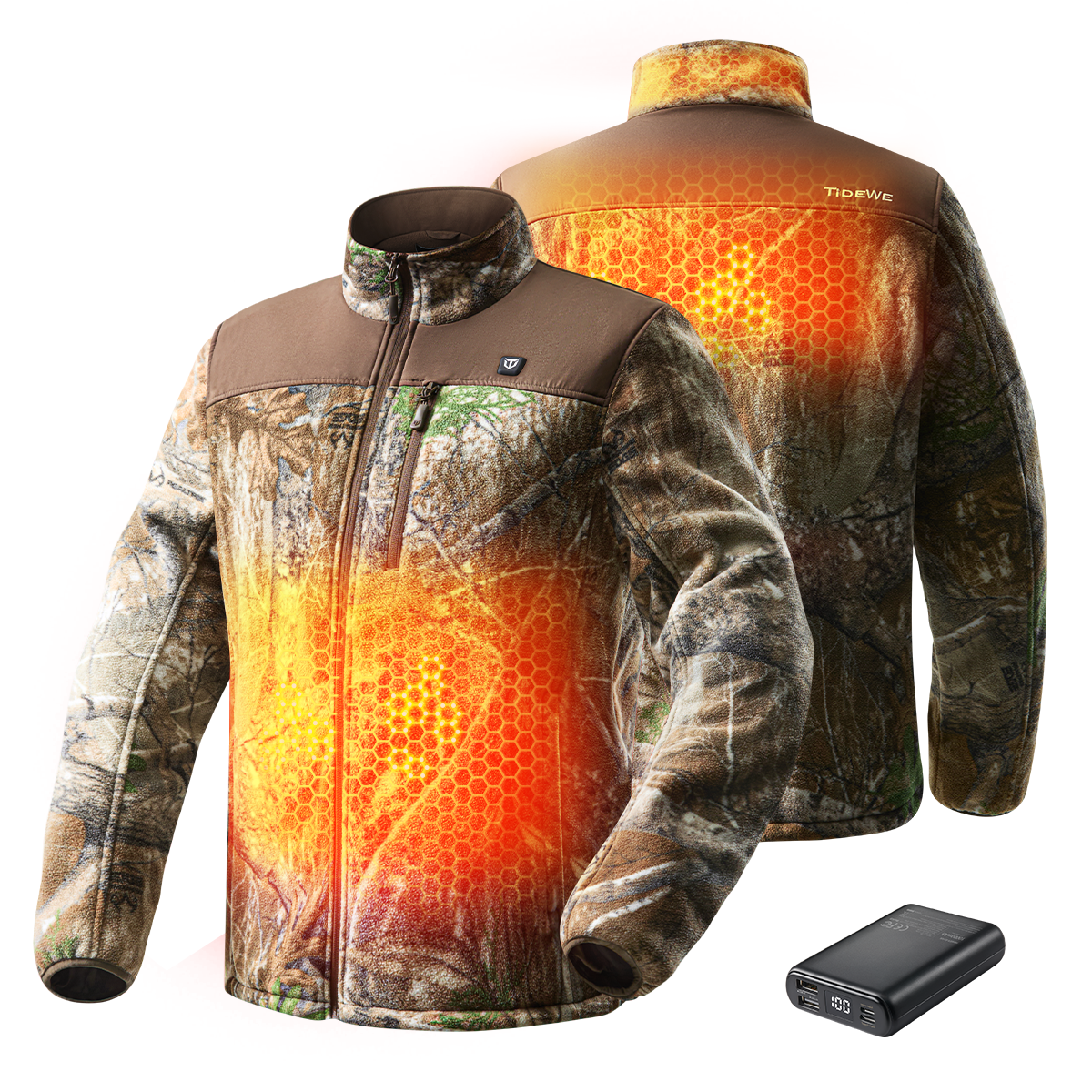
10,000mAh bank; 3 / 5.5 / 10 hrs (high / medium / low).
Sold through the maker.
See TideWe’s heated hunting jacket on TideWe’s site → Read review →
At-a-glance comparison
Prices change often; the buttons show today’s price on Amazon. Ratings and review counts are from the same sheet. Click through for today’s price, and recheck that the listing still offers a buy box before you publish or purchase; Amazon blocks agent access to its listing pages, so listing status must be rechecked on publish day.
| Photo | Product | Best for | Key spec | Type | Owner signal | Price |
|---|---|---|---|---|---|---|
|
|
ORORO Men’s Heated Softshell Vest | Best premium | 4 zones; 7.4V battery included; 3 / 5 / 8 hrs (high / medium / low, brand-listed) | Vest | Read current reviews on Amazon | Check Price → |
|
|
Dr. Prepare Heated Vest | Best budget | 6 zones; USB-powered; battery NOT included; 3–4 / 5–6 / 7–8 hrs on a 10,000mAh bank (brand-listed) | Vest | Read current reviews on Amazon | Check Price → |
|
|
HSOSK USB Heated Vest | Cheapest | 11 heating pads; 3 levels; USB-powered; power bank not included | Vest | Read current reviews on Amazon | Check Price → |
| 6-zone heated vest, 3 levels | Best mid-price | 6 zones; 3 levels; split battery hours not confirmed from a brand spec page | Vest | Read current reviews on Amazon | Check Price → | |
|
|
ScentLok BE:1 Reactor Heated Vest | Hunting-specific | Carbon Alloy scent control; 133g PrimaLoft Silver; battery NOT included; consumption 2,100 / 1,572 / 1,050 mAh per hour (brand-listed) | Vest | 5.0 stars from 1 review — too few to rank high | Check price — Check Price → |
|
|
ORORO heated jacket (Classic) | One-garment option | 4 zones; 7.4V battery; 3 / 6 / 10 hrs (high / medium / low, brand-listed) | Jacket | See manufacturer page | See the ORORO Classic Heated Jacket on ORORO’s site → |
|
TideWe heated jacket / vest | Hunting-brand jacket option | 10,000mAh bank; 3 / 5.5 / 10 hrs (high / medium / low, brand blog and retailer listings) | Jacket / vest | See manufacturer page | See TideWe’s heated hunting jacket on TideWe’s site → |
Read the table the way a stand hunter should: the “Owner signal” column matters as much as the price column. A 4.1-star average across roughly 2,700 reviews tells you far more about what to expect than a perfect 5.0 from a single reviewer, and a 3.8-star average across roughly 1,500 reviews is a warning worth taking seriously even at the lowest price in the guide. The cheapest vest that you stop wearing in December is the most expensive vest you own.
Vest vs jacket vs heated base layer
The three heated-garment shapes solve three different problems, and picking the wrong shape is the most common heated-clothing mistake — more common than picking the wrong brand. Start with your hunt, not the product page.
A heated vest is the stand hunter’s default
A vest warms your core and leaves your arms bare. That matters twice over in a stand. First, drawing a bow or mounting a rifle is an arm movement, and a thick heated sleeve changes that movement just when you can least afford a change. Second, a vest layers: it goes over a base layer and under your existing hunting jacket, so you keep the jacket whose fit, pockets, camo, and noise level you already know. If the battery dies, you still have a normal insulated vest under a normal jacket. If you buy a heated jacket and its battery dies, you still have a jacket — but you paid jacket money for a vest’s worth of heat, and you cannot swap the heated layer onto a different outer shell when the weather changes. For a hunter who already owns a good outer layer, the vest is the smarter money.
A heated jacket earns its place in a blind — and as a single purchase
A heated jacket makes sense in two situations. The first is the ground blind, where you are enclosed, wind is less of a factor, and arm bulk interferes less with the shot. The second is the hunter buying their first serious cold-weather garment and wanting one purchase to cover everything: heat plus sleeves plus pockets plus a hood. Heated jackets also put heat where vests cannot — the arms and the hand pockets — which matters if your hands go numb first. The trade-off is real, though: a heated jacket is harder to layer cleanly, it commits you to one shell for the whole season, and when the heating system eventually wears out, the whole jacket goes with it. Think of the jacket as a system and the vest as a component. Systems are convenient; components are flexible.
A heated base layer is the specialist tool
A heated base layer — a heated shirt or heated pants worn next to the skin — puts the heating elements closest to your body, which is exactly why one IceShanty forum poster preferred a heated hoodie over a heated vest: heat against the skin feels stronger than heat through a mid-layer. The catch is that base layers are usually thinner, carry smaller batteries, and are harder to take on and off in the field. Heated hunting pants deserve a special note for stand hunters because the legs are the first thing to go numb on a long sit: your legs are still, they press against a cold seat or stand platform, and blood flow to them drops. A heated vest warms your core, which helps your extremities indirectly, but it does not directly warm your thighs. If your legs quit before your core does, look at heated pants or a heated seat cushion before you buy a second vest. Fieldsheer, for example, sells a merino heated baselayer pant with multi-zone heating and a small 2,250mAh battery — a specialist product with a specialist price, and a reminder that “heated base layer for hunting” is a real category, not a marketing phrase. For most hunters, the right order is: heated vest first, heated pants second, heated base-layer top third — because the vest solves the biggest problem for the least money.
One more shape deserves a mention because forum hunters keep bringing it up: the heated hoodie. A hoodie sits closer to the skin than a vest worn over a shirt, and its hood adds neck and head warmth that a vest cannot. If you hunt mostly from an enclosed blind, or you run cold around the neck and head, a heated hoodie under your jacket is a legitimate alternative to a vest. If you hunt from an open stand in wind, the vest’s wind-resistant shell and lower-back coverage usually win. There is no universal answer here, only the honest one: match the garment to the place you actually sit.
Decide in four steps
- Where do you sit? Open stand or exposed tree stand → heated vest under your jacket (ORORO softshell or Dr. Prepare). Enclosed blind → a heated jacket is a fair alternative (ORORO Classic jacket or TideWe jacket).
- How long is the sit? Under three hours → any vest here on a full battery will cover you. Three to six hours → plan on medium or low for most of the sit, and carry a spare battery or a larger power bank. All day → two batteries, or a 20,000mAh bank for USB vests, is not optional.
- What do you already own? A good hunting jacket you trust → buy a vest, not a second jacket. Good USB power banks → the Dr. Prepare or HSOSK vest makes sense. No power banks at all → buy a vest with a battery included, like the ORORO, so you are not guessing about compatibility on the first cold morning.
- What ends your hunts early — cold core, cold legs, or noise? Cold core → heated vest. Cold legs → add heated pants or a heated seat pad before upgrading the vest. Noise and scent worries → ScentLok BE:1 Reactor, and read the noise section before you buy anything with a shiny nylon shell.
Battery-hours table: what each brand actually lists
This table follows one rule without exception: a per-product runtime figure appears here only if it comes from that brand’s own published spec page. Where a brand publishes consumption instead of hours, the table says so and shows the arithmetic separately. Where no brand spec page could be found, the table says so too, and the figure is dropped rather than guessed. Cold weather shortens lithium battery runtime in the real world, so treat every figure below as a brand-listed ceiling for mild conditions, not a guarantee for a January morning.
| Product | Battery in the box | High | Medium | Low | Source |
|---|---|---|---|---|---|
| ORORO Men’s Heated Softshell Vest | 7.4V Mini 5K, 4,800mAh | 3 hrs | 5 hrs | 8 hrs | ORORO men’s softshell vest page |
| Dr. Prepare Heated Vest | No — needs a USB bank (2–2.4A output) | 3–4 hrs | 5–6 hrs | 7–8 hrs | Dr. Prepare product page, on a 10,000mAh bank |
| HSOSK USB Heated Vest | No — power bank not included | Not confirmed | Not confirmed | Not confirmed | No brand spec page found; split figures dropped |
| 6-zone heated vest, 3 levels | Not confirmed | Not confirmed | Not confirmed | Not confirmed | No brand spec page found; split figures dropped |
| ScentLok BE:1 Reactor Heated Vest | No — needs a 5V/2A bank | ≈ 4.8 hrs* | ≈ 6.4 hrs* | ≈ 9.5 hrs* | ScentLok brand page (consumption, see note) |
| ORORO Classic Heated Jacket | 7.4V Mini 5K, 4,800mAh | 3 hrs | 6 hrs | 10 hrs | ORORO men’s classic jacket page |
| TideWe heated vest | 10,000mAh bank | 3 hrs | 5.5 hrs | 10 hrs | TideWe blog and retailer listings |
* ScentLok does not publish hours for this vest. It publishes consumption per hour — high 2,100 mAh, medium 1,572 mAh, low 1,050 mAh — on its own product and power-bank pages. The hours above are simple division of a 10,000mAh bank by those consumption figures, shown as an illustration only. Real usable capacity from a power bank is lower than its rated capacity, and cold weather reduces it further, so treat these as best-case ceilings, not brand claims.
Two patterns in this table should change how you shop. First, the gap between high and low is enormous — roughly three-to-one on every vest that publishes split figures. Running on high for the whole sit is the fastest way to a dead battery, and it is almost never necessary once you are settled: high is for the first ten or fifteen minutes, when you are cold from the walk in, and low or medium is for the hours after, when the vest only has to maintain warmth, not create it. Second, the USB-powered vests (Dr. Prepare, HSOSK, ScentLok) make the battery your decision, not the brand’s. A 10,000mAh bank is the floor for a morning sit; a 20,000mAh bank, or a second 10,000mAh bank in your pack, is what turns a vest into an all-day tool. The proprietary-battery vests (ORORO) remove that decision — the battery fits, the charger fits, the runtime is known — but a spare ORORO battery costs real money and only fits ORORO garments. Neither approach is wrong. The wrong move is buying a USB vest, discovering on the first hunt that your old phone bank only outputs 1A, and sitting cold because the vest cannot draw enough current.
A final caution on cold itself: lithium batteries lose usable capacity as temperatures fall, and a battery left in a cold pack all night will start the morning weaker than the same battery kept in a warm pocket. Keep the battery inside your jacket, against your body, and keep the spare in an inside pocket too. It costs nothing and it is worth more than any feature on the product page.
The vests and jackets, reviewed
Each review below follows the same pattern: what the garment is, where it shines, where it falls short, what owners and forum posters actually say, and the specs that could be confirmed from a brand or retailer page. Nothing here is presented as hands-on findings. Where the evidence is thin, the review says so — that thinness is itself information, and it is why the ScentLok sits below vests with far less hunting pedigree.
1. ORORO Men’s Heated Softshell Vest — Best premium
The ORORO softshell vest is the premium pick because it is a complete system, not a vest with homework attached. ORORO’s own softshell page lists four heating zones — left and right hand pockets, mid-back, and lower back — on three settings, powered by the 7.4V Mini 5K battery, with brand-listed runtimes of 3 hours on high, 5 hours on medium, and 8 hours on low. The lower-back zone matters more than it sounds: on a stand sit, your lower back presses against the seat or the tree, and it is the first area to go cold and the last to warm back up. A vest that heats the lower back directly is solving the sitter’s problem, not the walker’s problem. The softshell fabric is stretchy, water- and wind-resistant, and light — ORORO lists the vest at 19.3 ounces in size large — which makes it an easy layer under a hunting jacket without the crinkle of a puffer shell. A drawcord hem, a stand-up collar with tricot lining, hand pockets, a zippered chest pocket, and a dedicated battery pocket round out a design that reads like it was drawn for someone who actually wears a pack and a harness.
The honest weaknesses are price and battery lock-in. At its usual price, this costs several times as much as the Dr. Prepare vest, and the Mini 5K battery is proprietary: a spare costs ORORO money and only works with ORORO garments. The softshell runtime is also shorter on low than ORORO’s classic vest line (8 hours versus 10), which is worth knowing if you are comparing ORORO models against each other — the softshell trades a little runtime for stretch and weather resistance. And one practical warning from retailer commentary on ORORO softshell vests generally: some listings sell the vest as apparel only, without the battery, so confirm the exact listing includes the battery set before you buy. Check the listing’s included-items list before you buy.
✅ Pros
- Lower-back heating zone, aimed at the sitter’s coldest spot
- Battery included, with brand-listed 3 / 5 / 8 hour runtimes
- Stretch softshell layers quietly under a hunting jacket
- Highest owner rating of the mainstream vests in this guide
❌ Cons
- The most expensive vest here
- Proprietary battery; spares only fit ORORO garments
- Shorter low-setting runtime than ORORO’s classic vest line
- Some ORORO listings are apparel-only — check before buying
🧑🌾 From the field: IceShanty forum posters report that ORORO vests are well liked in the family — one poster wrote that his wife loves her ORORO vest and that a second battery was needed because she wears it all day. That matches the arithmetic in this guide: a single battery covers a morning, and all-day wear needs a second one. Separately, Field & Stream’s heated-vest roundup named an ORORO lightweight vest its best overall, praising its pocket count, battery life, and durable zippers, while noting the back pockets run a little small — a useful detail for a hunter who carries calls, a rangefinder, or a phone in a back pocket. Treat both reports for what they are: other people’s experiences, not guarantees about the exact softshell model linked here.
| Spec | Detail |
|---|---|
| Heating zones | 4 — left and right hand pockets, mid-back, lower back (ORORO softshell page) |
| Battery | 7.4V Mini 5K, 4,800mAh / 35.4Wh, included; about 4 hours to recharge |
| Runtime (brand-listed) | 3 hrs high, 5 hrs medium, 8 hrs low |
| Weight | 19.3 oz in size large (ORORO softshell page) |
| Price and reviews | See today’s price and current reviews on Amazon |
2. Dr. Prepare Heated Vest — Best budget
The Dr. Prepare vest is the value argument in its purest form: six carbon-fiber heating zones across the neck, back, abdomen, and waist, three temperature levels (131°F high, 122°F medium, 113°F low on the brand’s page), and a price that usually undercuts every other vest here except the HSOSK. Its review base is the largest in this guide by an order of magnitude — roughly 2,700 reviews at 4.1 stars — which means its rating is the hardest to dismiss as noise. The design is practical for hunters in a specific way: four side zippers let you adjust the waist across a wide range (the brand lists waist settings from 40.2 inches to 52 inches), so the vest can be cinched snug over a base layer or loosened over a mid-layer, and a snug fit is not cosmetic with heated clothing — heating elements pressed against the body transfer heat far better than elements hanging loose under a jacket.
The catch is the battery, and it is a big one. The Dr. Prepare vest is USB-powered and the power bank is not included. The brand’s runtime figures — 3–4 hours on high, 5–6 on medium, 7–8 on low — assume a 10,000mAh bank with 2A or 2.4A output. If you already own a bank like that, the real cost is just the vest itself. If you do not, add the bank to the price before you compare it with the ORORO, and the gap narrows fast. The vest also carries a 150-minute auto-off feature on medium in the brand’s manual summary, which is a safety feature that can also surprise a hunter mid-sit — know how to restart it before you climb, not after. And the 4.1-star average, while credible, is the second-lowest in this guide: at this price, some buyers will get a vest that fits their layering system perfectly, and some will get a vest whose one-size-adjustable approach never quite fits theirs.
✅ Pros
- Lowest name-brand price here, with the largest review base (about 2.7K)
- 6 heating zones covering neck, back, abdomen, and waist
- Side zippers adjust the waist for a snug, heat-transferring fit
- Any standard USB power bank works — no proprietary battery
❌ Cons
- Battery NOT included — add a 10,000mAh bank to the real cost
- 150-minute auto-off on medium can interrupt a long sit
- 4.1-star average trails the premium and mid-price vests
- Adjustable sizing helps, but it is not a tailored fit
🧑🌾 From the field: The sheer size of this vest’s review base is the field report: thousands of buyers, a mid-pack average, and a design that keeps selling at a budget price. That pattern usually means a product that works well for buyers whose expectations match its price and its battery situation, and disappoints buyers who expected a finished system at a component price. If you buy it, buy it with a bank you already trust, and try the fit over your actual hunting layers — not over a T-shirt — before the season opens.
| Spec | Detail |
|---|---|
| Heating zones | 6 — neck, back, abdomen, waist (Dr. Prepare page) |
| Temperature levels | High 131°F, medium 122°F, low 113°F |
| Battery | Not included; USB bank, 2A or 2.4A output; runtimes quoted on 10,000mAh |
| Runtime (brand-listed) | 3–4 hrs high, 5–6 hrs medium, 7–8 hrs low |
| Price and reviews | See today’s price and current reviews on Amazon |
3. HSOSK USB Heated Vest — Cheapest
The HSOSK vest is usually the cheapest garment in this guide, and it makes the boldest zone claim: 11 carbon-fiber heating pads across five core body areas, with three heating levels spanning roughly 25°C to 45°C. It is USB-powered at 5V, works with a portable power supply, and the listing notes that the power supply is not included. The fabric is fleece — soft, light, and quick-drying — and the vest is machine washable in a laundry bag. On paper, that is a lot of coverage for the lowest price here.
The honest problem is the evidence. HSOSK carries the lowest owner rating in this guide, and no brand spec page could be found to confirm split high / medium / low runtimes, so this guide publishes none for it. The listing text mentions a 10,000mAh supply keeping the vest heating for 8 hours, but without a level attached to that figure it cannot be placed in the battery table, and it should not be quoted as if it were a high-setting or low-setting claim. A fleece vest also layers differently from a softshell: it is comfortable and quiet, but it is not wind-resistant on its own, so in an open stand it needs a windproof shell over it to hold the heat in. Buy the HSOSK if the budget is the deciding factor and you already own a good power bank and a good outer shell. Do not buy it expecting premium-vest evidence at a third of the premium price — the review average is telling you, politely, that some buyers did exactly that and were disappointed.
✅ Pros
- Usually the lowest price in this guide
- 11 heating pads — the widest zone claim here
- Soft fleece is quiet and comfortable as a mid-layer
- Standard USB power — works with banks you already own
❌ Cons
- Lowest owner rating here
- Power bank NOT included
- No brand-confirmed split battery hours — figures dropped, not guessed
- Fleece alone is not windproof; needs a shell in an open stand
🧑🌾 From the field: With roughly 1,500 reviews behind a 3.8-star average, the pattern to expect is split: buyers who wanted cheap core warmth under a jacket they already own tend to be satisfied, and buyers who wanted a standalone cold-weather garment tend not to be. That is not a contradiction — it is the product’s real job description, and the price makes sense only when you read it that way.
| Spec | Detail |
|---|---|
| Heating zones | 11 pads across 5 core areas (listing description) |
| Temperature levels | 3 levels, about 25–45°C (listing description) |
| Battery | Not included; 5V USB, 2.1A supply |
| Runtime | Not confirmed in split form — see battery table note |
| Price and reviews | See today’s price and current reviews on Amazon |
4. 6-zone heated vest, 3 levels — Best mid-price
This vest sits in the middle of the price range with one of the stronger owner ratings in the guide, and the least verifiable identity. The research notes describes it as a 6-zone vest with 3 heating levels, and that description is all this guide can confidently attach to it: no brand spec page for this exact listing could be found during research, so no split battery hours, no battery-included status, and no fabric claim are published for it here. That is not a criticism of the vest. It is a warning about the listing: generic heated vests change suppliers, zone counts, and battery arrangements without changing their listing details, and a buyer who cannot find the brand behind the listing cannot check what they are actually buying.
What the numbers do say is encouraging as far as they go. A 4.4-star average across 415 reviews is a respectable signal — large enough not to be a handful of friends, small enough that one bad production batch could move it. The mid-price position is also the sweet spot for a hunter who wants better evidence than the cheapest vest offers without paying the ORORO premium. The buying advice for this vest is therefore procedural, not emotional: before you buy, open the listing and confirm, in writing on that page, whether a battery is included, what its capacity is, and what runtime the seller claims per level — and if the listing does not say, treat that silence as the answer and buy a vest whose brand page does say. A mid-price vest with a confirmed battery plan beats one with a mystery battery plan every time.
✅ Pros
- Mid-price, with strong owner ratings
- 6 zones and 3 levels match the mainstream vest formula
- 415 reviews — enough to take seriously, not enough to trust blindly
❌ Cons
- No brand spec page found — battery status and runtimes unverified
- Generic listing identity makes future support harder to check
- Verify the listing’s included items before buying
🧑🌾 From the field: There is no forum thread or owner report this guide could tie to this exact listing, and inventing one would be worse than saying so. The review average is the field report here — positive, but thin enough that the listing itself, checked on the day you buy, matters more than any summary of it.
| Spec | Detail |
|---|---|
| Heating zones | 6 (resource-sheet description) |
| Temperature levels | 3 (resource-sheet description) |
| Battery | Not confirmed — check the listing before buying |
| Runtime | Not confirmed — figures dropped, not guessed |
| Price and reviews | See today’s price and current reviews on Amazon |
5. ScentLok BE:1 Reactor Heated Vest — Best hunting-specific
The ScentLok BE:1 Reactor is the only vest in this guide designed for hunters first and everyone else second, and on design alone it would top the list. ScentLok’s own product page describes 133g of PrimaLoft Silver insulation — warmth that works with the heat switched off — plus Carbon Alloy technology for odor adsorption, an ultra-quiet premium micro tricot fabric, a three-pocket design, and three heat levels on a one-button control, powered by any 5V/2A battery or power bank that you supply yourself. The heating elements sit in the core areas, and ScentLok pairs the vest with its own 20,000mAh power bank for extended sits. For a bowhunter in particular, that combination — quiet fabric, no noisy shell, scent control built into the layer closest to the body, and insulation that does not quit when the battery does — is exactly the right set of priorities.
So why is it fifth? Because of the review count, and this guide refuses to hide that. On Amazon the sheet records 5.0 stars from a single review. One reviewer cannot confirm a vest, no matter how good the design reads. Retailer listings elsewhere show a slightly larger pool for this model family, but the Amazon signal that most buyers will see is one person. The price is also listed as “Check price” in the sheet rather than a number, which means the buyer must confirm it at purchase, and the battery is not included, so the real cost includes a power bank — ScentLok’s own 20,000mAh bank if you want the pairing the brand recommends. None of that makes the vest bad. All of it makes it a vest to buy with open eyes: you are paying for hunting design and accepting thinner buyer evidence in return.
✅ Pros
- Only hunting-first design here: scent control plus ultra-quiet fabric
- 133g PrimaLoft Silver insulates even with the heat off
- Works with any 5V/2A bank; ScentLok recommends its 20,000mAh bank
- Brand-published consumption figures let you do honest battery math
❌ Cons
- 5.0 stars from just 1 Amazon review — too few to rank high
- Battery NOT included; add a bank to the price
- Price not fixed in the sheet — confirm at purchase
- No brand-published runtime hours, only consumption per hour
🧑🌾 From the field: The strongest independent signal for this vest family comes from a hunting-gear roundup that summarized a small retailer review pool (14 ratings, mostly five-star) and noted that reviewers praised battery life and easy layering, with the main complaint being that no battery is included. That matches ScentLok’s own page exactly — and the complaint is the point. If you buy the ScentLok, buy the battery in the same order, or you will own a very nice insulated vest that does not heat on opening morning.
| Spec | Detail |
|---|---|
| Insulation | 133g PrimaLoft Silver (ScentLok page) |
| Scent / noise | Carbon Alloy odor adsorption; ultra-quiet micro tricot fabric |
| Battery | Not included; any 5V/2A bank; ScentLok recommends 20,000mAh |
| Consumption (brand-listed) | High 2,100 mAh/hr; medium 1,572 mAh/hr; low 1,050 mAh/hr |
| Price and reviews | See today’s price and current reviews on Amazon |
6. ORORO heated jacket — the one-garment option (no Amazon link)
ORORO’s Classic heated jacket is included here as the jacket alternative to the ORORO vest, and it is included without an Amazon buy link for a reason the reader deserves to know: the ORORO jacket Amazon listing could not be verified against ORORO’s own product page or a confirmed Amazon product page during research. One third-party roundup video lists an ORORO men’s classic jacket Amazon listing, but a video description is not verification, and this guide will not attach a buy link to an unverified identifier — a wrong Amazon listing sends the reader to the wrong garment, which is worse than no link at all. The manufacturer page is linked below instead, and the buyer can reach the correct listing from there.
On the merits, the jacket is a coherent alternative. ORORO’s men’s classic jacket page lists four heating zones — left and right hand pockets, mid-back, and collar — on three settings, powered by the same 7.4V Mini 5K battery as the vests, with brand-listed runtimes of 3 hours on high, 6 hours on medium, and 10 hours on low. That is the longest low-setting runtime of any ORORO garment in this guide, and it comes with a detachable hood, FELLEX insulation, and a water-resistant shell. For a blind hunter who wants one garment, or a hunter who does not already own a trusted outer layer, that package is genuinely attractive. For a stand hunter who already owns a good jacket, it is still the wrong shape — sleeves full of heating elements and insulation are harder to layer, and you cannot move the heat to a different shell when the weather changes. The jacket’s 3 / 6 / 10 figures also illustrate a point worth repeating: the classic jacket’s battery is the same 4,800mAh unit as the vests, yet its low runtime is longer than the softshell vest’s 8 hours, because zone count, insulation, and heat distribution differ between garments. Never compare runtimes across garments as if the battery were the only variable.
✅ Pros
- Longest ORORO low runtime here (10 hrs, brand-listed)
- Heated collar plus hand-pocket zones for neck and hands
- Same Mini 5K battery system as ORORO vests
- Detachable hood and FELLEX insulation for standalone use
❌ Cons
- Sold through the maker, not Amazon
- Heated sleeves add bulk that can interfere with the shot
- Heat cannot be moved to a different outer shell
- Price must be confirmed on the manufacturer page
🧑🌾 From the field: IceShanty forum posters writing about heated jackets in general — not this ORORO model specifically — describe the same trade-off this guide makes: a heated jacket works well as an everyday cold-weather garment, and a heavier parka over it handles the worst days. One IceShanty poster who owns a Milwaukee heated jacket wrote that he seldom uses the heat function but that it works well and activates quickly when he does. That is the jacket owner’s reality in a sentence: the heat is a bonus on a good jacket, not the whole reason for owning it.
| Spec | Detail |
|---|---|
| Heating zones | 4 — left and right hand pockets, mid-back, collar (ORORO jacket page) |
| Battery | 7.4V Mini 5K, 4,800mAh |
| Runtime (brand-listed) | 3 hrs high, 6 hrs medium, 10 hrs low |
| Buy link | Manufacturer page below |
See the ORORO Classic Heated Jacket on ORORO’s site →
7. TideWe heated jacket and vest — the hunting-brand option (no Amazon link)
TideWe is a hunting brand first, and its heated garments read that way: camo options, hunting-specific pockets, and marketing aimed squarely at stand and blind hunters. TideWe’s own blog lists its heated vest at 10 hours on low (113°F), 5.5 hours on medium (122°F), and 3 hours on high (131°F), powered by a 10,000mAh bank with two USB ports, and retailer listings for the TideWe heated jacket repeat the same 10 / 5.5 / 3 pattern. TideWe’s jacket listings also describe a zippered back pocket with a heated seat cushion that unfolds for sitting — a feature aimed directly at the stand hunter whose seat goes cold first — and a light that switches off after a few seconds so the garment does not glow in the stand. Those are thoughtful, hunting-specific details, and they are why TideWe earns a section here despite the link problem below.
The link problem is real and this guide does not paper over it. Research turned up conflicting TideWe jacket Amazon listing — one source lists one identifier, another listing URL carries a different one — and conflicting identifiers mean no verified identifier. So, as with the ORORO jacket, there is no Amazon buy link for TideWe in this guide. Use TideWe’s own site, linked below, to reach the current jacket and vest pages. The other caution is noise: Field & Stream’s heated-vest roundup flagged a TideWe vest as noisy for hunting while praising its thin, layer-friendly build, while TideWe markets other models (notably its fleece ThermCore line) as silent. Fabric noise varies by model, not by brand, so the rule for TideWe is the rule for every heated garment here: rub the shell against itself, raise and lower your arms, and draw — or mime drawing — before the season, not on opening morning.
✅ Pros
- Hunting-first design: camo, heated seat pocket on the jacket, light that switches off
- 10 / 5.5 / 3 hour pattern from TideWe’s own blog and retailer listings
- 10,000mAh bank with two USB ports doubles as a phone charger
- Overheat cutoff above 131°F on vest listings
❌ Cons
- No Amazon link — conflicting jacket Amazon listing, none verified
- Noise varies by model; one TideWe vest was flagged as noisy by a major roundup
- Sizing reports on TideWe vests vary — check the size chart against your layers
- Fleece models need a windproof shell in an open stand
🧑🌾 From the field: Retailer-review summaries for TideWe vests describe warmth on high, a comfortable fit under hunting jackets, and a battery that lasts only a few hours on high — which lines up with the brand’s own 3-hour high figure — alongside complaints about battery placement and occasional battery failure after months of use. The practical lesson is the same as everywhere else in this guide: the battery is a consumable part of the system, and a spare in the pack is cheaper than a ruined sit.
| Spec | Detail |
|---|---|
| Heating zones | 4 on vest listings — collar, mid-back, under the two pockets |
| Battery | 10,000mAh bank (vest and jacket listings) |
| Runtime (brand blog / retailer) | 3 hrs high, 5.5 hrs medium, 10 hrs low |
| Buy link | TideWe’s site below |
See TideWe’s heated hunting jacket on TideWe’s site →
Owner experiences from the IceShanty forum
The following reports are paraphrases of forum posts from IceShanty, a fishing and hunting forum, shared here as forum posts — not as verified product findings, and not as claims about any specific model in this guide. Post dates for these specific comments could not be confirmed from the retrievable thread pages, so no dates are attached to them. Read them for the pattern they show, which is consistent across heated-clothing discussions: battery size decides the experience more than the garment does.
One Milwaukee heated jacket owner writes that he uses the jacket for late-season archery, and that with a larger battery it runs about 6 hours on high, or all day on low. That single report captures the whole battery strategy of this guide in one sentence: a bigger battery turns a short high-heat garment into an all-day low-heat garment, and the low setting is where long sits actually live. Another Milwaukee owner, writing about the Milwaukee vest rather than the jacket, says the vest battery does not last long enough, and that he prefers the heated hoodie because it sits closer to the skin. That is the fit lesson from the other direction: heat pressed against the body feels stronger than heat floating under a loose layer, which is why this guide keeps repeating the snug-fit rule for vests.
Other IceShanty posters add context worth hearing. One poster who bought a heated vest from Cabela’s wrote that he had worn it in his deer stand and was glad to have it, noting that staying warm while deer hunting is tougher than on the ice because he cannot move around as much — lack of activity makes him cold much quicker. Another poster, writing about a Milwaukee M12 heated jacket, warned simply to make sure you have plenty of batteries. And one poster reported that his wife loves her ORORO vest and needs a second battery because she wears it all day. Different brands, different garments, same conclusion, four times over: buy the spare battery before you need it.
IceShanty heated jacket discussion (forum thread) → Note for the publisher: re-confirm this thread link before publish, and confirm the exact thread holding the late-season archery and heated-hoodie posts — the print version of the heated-vest thread surfaced in search without a stable URL.
Noise and scent: the two stand killers
A heated vest can keep you warm and still ruin your hunt twice over: once with noise, once with scent. Warmth is the easy part of this purchase. Silence and scent control are the hard parts, and they are where cheap heated clothing most often fails a hunter who bought it for general outdoor use and then took it to a stand.
Fabric rustle and the zipper problem
Deer hear the sounds you stop noticing. A nylon puffer shell that swishes when you raise your arms is a problem at twenty yards, and a zipper that clicks or catches when you reach for a call is a problem at any distance. The quietest heated garments in this guide, by their makers’ own descriptions, are the ones built for hunting: ScentLok’s micro tricot fabric is described on ScentLok’s own page as ultra-quiet, and TideWe markets its fleece heated models as silent. The loudest risk is the opposite end of the market: shiny, stiff nylon shells made for commuting or skiing, where nobody cares about a swish. Field & Stream’s heated-vest roundup flagged exactly this split, praising an ORORO vest’s quiet fabric and magnetic pocket closures for stand hunting while flagging a TideWe vest as noisy — a reminder that noise is a property of the specific model and fabric, not of the brand name on the label.
There are three practical checks that cost nothing. First, rub the shell fabric against itself and listen — if it crackles in your living room, it will crackle in a silent woodlot. Second, work every zipper slowly and quickly, with gloves on, and listen for clicks and catches; a zipper cover or a magnetic closure, like the ones Field & Stream praised on the ORORO vest, is worth more in a stand than an extra pocket. Third, check the light. Several TideWe listings note that the indicator light switches off after a few seconds, and ORORO’s hunting vest hides its power button inside a chest pocket — both are answers to the same problem, which is that a glowing button on your chest at first light is a moving light in a place where deer notice movement. If your vest’s light stays on, cover it with a small piece of tape before the sit. It is a two-second fix that hunters keep rediscovering the hard way.
Scent: what heated clothing can and cannot do
Scent control is where honesty matters most. ScentLok’s Carbon Alloy technology is designed to adsorb odor, and that is a genuine advantage for a layer worn close to the body for hours — but no garment makes a hunter scent-free, and no heated vest replaces wind awareness, stand placement, or washing your hunting clothes in scent-free detergent and storing them away from household smells. A heated vest can actually make scent worse in one specific way: a warm body sweats more, and sweat is scent. The hunters who get the most from scent-control clothing are the ones who manage the whole system — cool walk in, layer up at the stand rather than before the walk, and let the vest maintain warmth rather than forcing it on high and sweating through a base layer. Heated clothing helps here precisely because it lets you walk in cooler and dress warmer at the stand: carry the vest unzipped or switched off for the walk, put it on and switch it on once you are settled, and you arrive drier than the hunter who hiked in wearing everything.
One more scent note for the buyer comparing vests: fleece and micro tricot hold less noise but can hold more odor over a season than a smooth shell, because their texture traps skin oils and sweat. Wash heated garments on the schedule their care label allows, with the battery removed, and dry them fully before storage. A vest that smells like last November is a vest that works against you no matter how warm it runs.
The layering system for a 3–6 hour stand sit
A heated vest is not a layering system. It is one layer inside a system, and the system is what keeps you out for six hours. The classic three-layer structure — base, mid, outer — still applies, and the heated vest simply takes the mid-layer slot with a power source attached. What changes for the sitter, versus the walker, is the order of operations: dress for the sit, not for the walk.
The walk in: dress cold, on purpose
Walk to your stand in your base layer and, at most, a light mid-layer. Carry your heated vest, your outer jacket, your hat, and your gloves in your pack or over your arm. You will feel cold for the first five minutes. That is the point. Walking generates heat, and a hunter who walks in fully dressed arrives sweaty — and sweat, once you stop moving, turns cold against your skin faster than any wind. The layering guides from hunting brands all make the same point in different words: dress for the conditions you will face in the stand, not the conditions you feel during the walk in. A merino wool base layer is the usual recommendation for the sitter because merino keeps insulating value when damp, wicks moisture, and resists odor over repeated wear — and a synthetic base layer is the better call if your walk is long, steep, or warm enough that you will sweat hard either way, because synthetics dry faster.
At the stand: build the system in order
Once you are settled and your breathing has slowed, build outward. Base layer against the skin, snug but not tight. Heated vest over the base layer, zipped snug so the heating elements sit close to your body — this is the fit rule from the IceShanty hoodie report, applied to a vest. Hunting jacket over the vest, with room for the vest and its battery without compressing the insulation. Hat, neck gaiter, and gloves last, because your head and hands lose heat fast once you stop moving and your body starts protecting the core. Switch the vest on at medium for ten or fifteen minutes to take the chill off, then drop to low for the long sit. If the temperature falls or the wind picks up, go back to medium — do not wait until you are shivering, because rewarming a cold body takes far more battery than maintaining a warm one.
The legs, the seat, and the feet
Three parts of the system fail before the core does, and a vest cannot fix any of them. Legs: still legs on a cold stand platform lose heat steadily, which is why heated pants or a heated seat cushion earn their place after the vest, not before it — and why a simple closed-cell foam seat pad, which costs almost nothing, is the best value insulation in all of hunting. Feet: boots that fit tightly with thick socks cut circulation, and cold feet end more sits than cold chests; loose boots, a liner sock plus a wool sock, and a toe warmer beat a thicker single sock every time. Hands: mittens beat gloves for warmth, and a hand muff with a warmer inside beats both for a bowhunter who needs bare fingers for seconds at a time. None of these items are heated garments, and all of them matter more than the difference between two heated vests. Buy the vest, then spend the next dollars on the seat, the feet, and the hands.
A sample system for a freezing morning
For a morning that starts below freezing and a sit planned for four hours: merino base layer top and bottom; heated vest (ORORO softshell or Dr. Prepare, depending on your battery situation) over the base layer; your trusted windproof hunting jacket over the vest; insulated bibs or pants with a foam seat pad; loose boots with liner and wool socks; a warm hat plus a neck gaiter; mittens or a hand muff for the wait, gloves for the shot. Spare battery in an inside pocket. Phone on low power, because a dead phone is a lost safety net. That system has no single point of failure: if the vest battery dies at hour three, you are still wearing insulation, a windproof shell, and a warm hat, and you can finish the sit cold but safe — which is the real standard a layering system has to meet.
Videos worth watching first
Video IDs below were found by title search and confirmed through YouTube’s oEmbed endpoint (each returned HTTP 200 with a matching title) on October 25, 2026. They have not been watched through in full — watch each one before publish and drop any that does not match its title or shows a different product than described.
ORORO Men’s Heated Vest — Lightweight 4-Zone USB-C Puffer Review
A hands-on look at an ORORO vest’s zones, controls, and battery, from Product Demo Lab. Useful for seeing how the one-button control and pocket heat actually behave before you buy.
ORORO Heated Vest — Does It Work? — Review
An independent-style review from Full Moon Adventure Club, useful for a second opinion on whether the vest’s warmth matches its claims in cold conditions.
Top 10 Best Battery Heated Jackets in 2026
A roundup covering ORORO, TideWe, Milwaukee, and others in one video — the fastest way to compare jacket shapes and battery approaches side by side, with the caveat that roundup videos compress a lot of products into a few minutes each.
What a heated vest really costs
The sticker price is the smallest part of the decision for three of the five Amazon vests here, because the battery is not in the box. This table separates the garment from the system so the comparison is honest.
| Cost item | What owners report / what the listing says | Notes |
|---|---|---|
| ORORO softshell vest | Highest price, battery included | System cost is close to the sticker price; a spare Mini 5K battery is extra |
| Dr. Prepare vest | Low price, battery NOT included | Add a 10,000mAh bank (2–2.4A) if you do not own one; free if you do |
| HSOSK vest | Lowest price, power bank NOT included | Same bank math as Dr. Prepare; cheapest only if the bank is already yours |
| 6-zone vest | Mid price, battery status unconfirmed | Confirm included items on the listing before comparing prices |
| ScentLok BE:1 Reactor vest | Check price, battery NOT included | ScentLok recommends its 20,000mAh bank; budget for it in the same order |
| Spare battery / second bank | The difference between a morning sit and an all-day sit | Forum posters repeat this more than any other advice in this guide |
| Replacement cycle | Batteries wear out; garments outlast them | USB vests win here — any compatible bank replaces a dead one |
The takeaway is simple and it cuts against the way most people shop. If you own good USB power banks, the Dr. Prepare vest’s true cost is just the vest, and it is the best value in this guide by a wide margin. If you own no power banks, the ORORO’s price is much closer to its true cost than the Dr. Prepare’s is to its own, because the ORORO price includes the battery, the charger cable, and a runtime the brand will stand behind. The HSOSK only wins if the bank is already in your drawer and the outer shell is already in your closet. And the ScentLok only wins if scent and silence are worth paying jacket money for a vest plus a bank. None of these are tricks. They are just the arithmetic that the product pages leave out, and doing it before you buy is worth more than any single feature comparison.
How to choose
Match the battery to the sit, not to the marketing
Ignore the biggest number on the product page — the low-setting runtime — and plan from the medium-setting figure instead, because that is where most of a real sit happens. A vest that lists 10 hours on low and 3 hours on high will spend most of a freezing morning on medium, and the medium figure is the honest planning number. Then double it in your head for safety: one battery for the morning, one for the afternoon, or one 20,000mAh bank where a 10,000mAh bank would do. Cold, wind, and age all eat runtime, and the spare battery weighs less than the regret of climbing down early.
Fit is a heating feature, not a comfort feature
A heated vest that hangs loose heats the air between the vest and your body. A vest that sits snug heats you. Try the vest over your actual base layer and under your actual jacket, with your harness on if you wear one in a stand, and raise your arms as if drawing or shouldering. If the vest rides up, gaps at the waist, or pulls across the shoulders, it will not heat evenly no matter what the zone count says. Adjustable side zippers (Dr. Prepare), drawcord hems (ORORO softshell), and size charts measured over layers — not over a T-shirt — are the details that decide this. When in doubt between sizes, the hunting answer is usually the size that fits snug over your base layer and still zips under your jacket, not the size that feels roomy in the store.
Check the care label before the season, not after the first wash
Heated garments are washable, but they are not wash-and-forget. The pattern across manufacturer manuals is consistent: remove and disconnect the battery, place the vest in a laundry bag, machine wash cold on a gentle cycle, and hang dry — never tumble dry, bleach, iron, or dry clean, and never reconnect the battery until the garment is completely dry. ORORO’s pages describe heating elements built to endure 50-plus wash cycles, and TideWe’s listings make the same 50-wash claim, but those counts assume the care instructions were followed. Scent-control fabrics add a second rule: wash hunting layers separately, in scent-free detergent, and store them away from household odors. A vest washed with scented detergent and stored in a garage full of gasoline fumes has lost its scent advantage before the season starts.
Buy the return policy, not just the vest
Heated clothing fails in ways that only show up in the field: a zone that stops heating after three washes, a battery that holds half its charge after a season, a zipper that catches with gloves on. Buy from a seller with a return window that covers at least one real hunt, keep the packaging until you have worn the vest on a cold morning, and run the vest through a full battery cycle at home before the season — high for a while, medium for a while, low for a while — so a dead zone shows up in your living room instead of your stand. This is also the strongest argument for the name-brand vests in this guide: ORORO, Dr. Prepare, and ScentLok all have reachable support and published manuals, while a generic listing with no brand page leaves you arguing with a marketplace seller when something fails in January.
Resources hub
Heated clothing is one piece of a cold-weather hunting system. These guides from BestDeerFeeders.com cover the rest of it — where to put the stand, how far it should sit from the feeder, what to feed through winter, and the feeder and battery gear that shares your pack space. All links below were confirmed live on bestdeerfeeders.com via its sitemap on October 25, 2026.
- Best Deer Feeders 2026: 16 Top-Rated Models Compared — the main roundup, for the feeder your stand watches
- Best Tripod Deer Feeders — tripod options for open-ground setups
- Deer Feeder Reviews (pillar) — type comparisons and cost tables across feeder styles
- Where to Place a Deer Feeder for Best Results — placement that keeps your stand downwind
- How Far Should a Deer Feeder Be from a Deer Stand? — distance, wind, and shot planning
- Best Time of Day to Run a Deer Feeder — timing your sit around feeder activity
- Deer Feeding Times Chart — building an honest activity chart for your property
- What to Feed Deer in Winter — winter nutrition when the sit gets coldest
- Best Protein Deer Feeders — protein options for the late season
- Best Gravity Deer Feeders — no-battery feeders for remote spots
- Best Deer Feeder Batteries (6V / 12V) — battery thinking for the whole setup, feeder included
- Must-Haves for Deer Hunting — the wider kit checklist for the season
- Best Automatic Deer Feeders — timed feeders for consistent patterns
- Best Corn Feeders for Deer — corn-feeder options and trade-offs
Manufacturer pages referenced in this guide: ORORO Men’s Heated Softshell Vest, Dr. Prepare Heated Vest, ScentLok BE:1 Reactor Heated Vest, and TideWe Heated Hunting Jacket. For hunting regulations — including any rules about electronic devices, baiting, or blaze-orange requirements in your state — check your own state wildlife agency’s current regulations before the season. This guide states no state law, because state rules change and vary too much to summarize safely here.
Frequently asked questions
How long do heated vest batteries last in cold?
Brand-listed figures in this guide range from 3 hours on high to 8–10 hours on low, depending on the vest and battery. Cold weather shortens lithium battery runtime, so plan from the medium-setting figure, keep the battery in an inside pocket against your body, and carry a spare for sits over three hours. A battery that lists 10 hours on low in mild conditions will not deliver 10 hours on high in freezing wind.
Vest or jacket for stand hunting?
A vest, for most stand hunters. A heated vest worn under your hunting jacket warms your core, leaves your arms free for the shot, and lets you keep the outer jacket you already trust. A heated jacket is the better call in an enclosed blind, or if you are buying your first serious cold-weather garment and want one purchase to cover heat, sleeves, and pockets together.
Are heated jackets noisy?
Some are, and it depends on the fabric of the specific model, not the brand. Smooth nylon shells can swish when you move, while fleece and micro tricot fabrics are much quieter — ScentLok describes its Reactor vest fabric as ultra-quiet, and TideWe markets fleece models as silent. Before the season, rub the shell against itself, work the zippers with gloves on, and check whether the indicator light stays lit. A noisy shell or a glowing button can end a hunt as surely as cold can.
Can you wash a heated vest?
Yes, if you follow the care label. The consistent pattern across manufacturer manuals is: remove and disconnect the battery, put the vest in a laundry bag, machine wash cold on a gentle cycle, and hang dry. Do not tumble dry, bleach, iron, or dry clean, and do not reconnect the battery until the vest is completely dry. ORORO and TideWe both describe heating elements built to endure 50-plus wash cycles when cared for this way.
Do I need a spare battery for a 6-hour sit?
Yes, in practice. No single standard battery in this guide is listed to run on high for six hours, and a six-hour sit in freezing weather will not stay on low the whole time. Carry a spare battery for proprietary-battery vests, or a second 10,000mAh bank — or one 20,000mAh bank — for USB vests. Forum hunters repeat this advice more than any other in this guide, and they repeat it because they learned it the cold way.
Are heated hunting pants worth it?
They are worth it if your legs quit before your core does. On a long sit, still legs pressed against a cold seat lose heat steadily, and a heated vest warms your core without directly warming your thighs. Heated pants are a specialist purchase with a specialist price — Fieldsheer’s merino heated baselayer pants, for example, carry a small 2,250mAh battery — so buy the vest first, and add heated pants or a heated seat cushion second if cold legs are what actually ends your sits.
Will a heated vest make me scent-free?
No. Scent-control fabrics like ScentLok’s Carbon Alloy can reduce odor, but no garment makes a hunter scent-free. Wind direction, stand placement, and clean storage matter more than any fabric. Heated clothing helps indirectly: it lets you walk in cooler and layer up at the stand, so you arrive drier — and drier means less sweat scent — than a hunter who hiked in wearing everything.
What should I wear deer hunting in cold weather?
A three-layer system built for sitting, not walking: a merino wool or synthetic base layer against the skin, a heated vest as the mid-layer, and a windproof hunting jacket over it, plus insulated pants, a warm hat and neck gaiter, and loose boots with liner and wool socks. Walk in light so you do not sweat, then add the vest and jacket at the stand. The heated vest is the mid-layer that makes the whole system work for hours instead of one.
Do heated vests work under a regular hunting jacket?
Yes — that is their best use. A vest is designed to layer: base layer, heated vest snug over it, hunting jacket over the vest. The jacket traps the vest’s heat and blocks the wind, which is why a vest under a jacket usually outperforms the same vest worn alone. Just confirm the combination fits before the season, with your harness on if you wear one, and that the battery pocket is reachable without taking the jacket off.
Why does my heated vest die faster than advertised?
Usually one of four reasons: you ran it on high longer than planned, the battery started cold, the power bank’s output is below what the vest needs (USB vests generally want 2A or 2.4A), or the battery is old and has lost capacity. Brand runtimes are ceilings measured in mild conditions with all zones on the stated setting. Cold, wind, extra layers pressing on the vest, and charging a phone from the same bank all shorten the real number.
What size heated vest should I buy for layering?
The size that fits snug over your base layer and still zips under your hunting jacket — not the size that feels roomy over a T-shirt in the store. Heating elements need to sit close to your body to transfer heat well. Check the brand’s size chart against your measurements taken over your base layer, and use adjustable features — side zippers, drawcord hems — to fine-tune the fit. If you are between sizes and will always layer, the snugger option usually heats better.
Are heated vests safe?
Heated vests from established brands include safety features such as overheat cutoffs — TideWe’s listings, for example, describe shutoff above 131°F — and auto-off timers, and their batteries carry certifications such as UL, CE, or FCC. Use only the battery type the maker specifies, never wear a damaged battery or a vest with a damaged heating element, and never sleep in a heated garment or leave one charging unattended. If a vest smells hot, feels unevenly hot in one spot, or the battery swells, stop using it and contact the maker.
Final verdict
For sitting in a deer stand, a heated vest worn under your hunting jacket gives the most warmth per battery hour. Expect about 3 hours on high and 8–10 on low as general guidance; carry a spare battery for all-day sits — and plan your purchase around the battery table in this guide, not around that sentence.
Buy the ORORO Men’s Heated Softshell Vest if you want the finished system: battery included, lower-back heat, and the strongest rating among the mainstream vests here. Check Price on Amazon →
Buy the Dr. Prepare Heated Vest if you already own USB power banks and want the lowest true cost with the largest body of buyer evidence behind it. Check Price on Amazon →
Buy the ScentLok BE:1 Reactor Heated Vest if scent control and silence outrank saving money, and you accept that its buyer evidence is thin — and buy its battery in the same order. Check Price on Amazon →
The HSOSK vest is the budget fallback only if the bank and the shell are already yours. The 6-zone mid-price vest is worth a look only after you confirm its battery situation on the listing itself. The ORORO and TideWe jackets are the right shape for blind hunters and first-garment buyers — reach them through their makers’ pages, since no Amazon identifier for either jacket could be verified for this guide.
Whatever you buy, check your state’s current hunting regulations before the season, walk in light, layer up at the stand, and put the spare battery in an inside pocket before you climb. The vest keeps you warm. The system keeps you hunting.
Last updated: October 25, 2026. Prices change often; check the current price on Amazon.
Products mentioned in this guide
See this product on Amazon
Check Price on Amazon →Confirm price and availability on AmazonSee this product on Amazon
Check Price on Amazon →Confirm price and availability on AmazonSee this product on Amazon
Check Price on Amazon →Confirm price and availability on AmazonSee this product on Amazon
Check Price on Amazon →Confirm price and availability on AmazonSee this product on Amazon
Check Price on Amazon →Confirm price and availability on AmazonAs an Amazon Associate, we earn from qualifying purchases.


