
American Hunter vs GameWinner Game Feeder Controls: Timers, Motors and Photocell vs Clock Compared
Disclosure: This post contains affiliate links. As an Amazon Associate, we earn from qualifying purchases at no extra cost to you.
Your 30-second control route
2026 feeder-control comparison • American Hunter vs GameWinner • built from the manuals
Decide how much programming you want, then open the matching control’s section — every spec is checked against its own manual.
Buying on Amazon? Prime members get fast, free delivery on eligible items, and new members may qualify for a free trial. See Prime options →
SCHEDULE ▸ POWER ▸ BEST FIT
American Hunter XDE digital timer — 16 programs, 0–60 s, day-of-week choice.
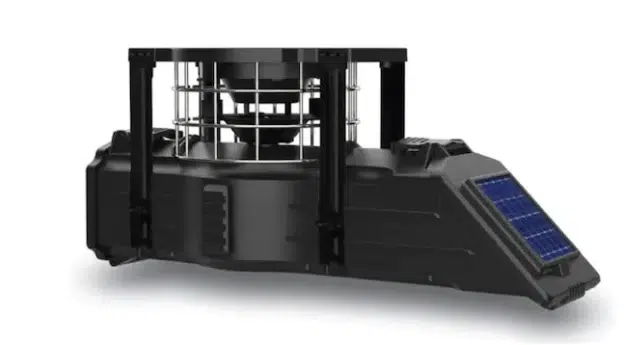
American Hunter SunSlinger — same timer logic with an integrated solar panel.
GameWinner digital (VTX-D) — 6 feeds, 1–30 s, three spin speeds.
American Hunter E-Kit photocell — fires at dawn and dusk; you set only the duration.
Contents
- The short answer
- Fast picks: who should buy which control
- Side-by-side comparison table
- Decision flowchart
- How we picked (and what we did not do)
- American Hunter XDE digital timer
- American Hunter SunSlinger digital timer
- American Hunter heavy-duty spin kit (FM-K6/12)
- American Hunter E-Kit photocell control
- American Hunter RD-PRO / R-PRO analog control
- GameWinner digital timer (VTX-D family)
- Universal replacement timers worth knowing
- Programming walkthrough: clock timers vs photocell
- Motors and spinner plates
- Voltage, batteries and solar
- Kit compatibility matrix
- What each control really costs to run
- How to choose
- Troubleshooting from the manuals
- Video help
- Resources hub
- FAQ
- Final verdict
The short answer
If you want the most programmable clock-driven control in this comparison, buy into the American Hunter digital family: the XDE and SunSlinger timers offer up to 16 feed programs per day, durations up to 60 seconds, day-of-the-week selection, and two preconfigured quick-setup programs. If you want a simpler, budget-first control for an Academy-bought feeder, the GameWinner digital timer covers the essentials — up to 6 feeds per day, 1 to 30 seconds each, and three spin speeds — but it has no day-of-week selection, no 60-second duration, and no photocell option in the documentation we could verify. If you do not want to program anything at all, American Hunter’s E-Kit photocell control is the only set-and-forget option here: it fires at dawn and dusk and asks you only to set how long it spins.
The table below is the whole comparison at a glance. The rest of this guide walks through each control unit the way its own manual describes it, so you can check any claim against the source before you spend money.
Fast picks: who should buy which control

American Hunter XDE digital timer
16 programs, 0 to 60 seconds, day-of-the-week choice — for managers who vary the schedule by day.
Caution: Battery not included (6V or 12V).
American Hunter SunSlinger digital timer
Same 16-program, 1 to 60 second timer logic with an integrated solar panel keeping a 6-volt battery charged.
Caution: Panel must see direct sunlight — a centered barrel hole can shade it; battery and Remote Activator not included.
GameWinner digital timer (VTX-D family)
6 feeds per day, 1 to 30 seconds, Hi/Med/Low spin speed, battery-charge indicator — best for a first timed feeder.
Caution: Documentation gap: essentially one instruction sheet verified — “not verified” means a gap, not a missing feature.
No buy link published in this guide — sold through Academy Sports.

American Hunter E-Kit photocell control
Dawn and dusk only, 1 to 30 second duration dial — best if you hate menus and your feeder sits in open light.
Caution: Needs open light — under dense canopy it may fire late, early, or not at all.

American Hunter FM-K6/12 heavy-duty spin kit
1 to 8 feeds per day, 1 to 30 seconds, three spread speeds, runs on 6 or 12 volts.
Caution: Match the voltage to your existing setup (6V or 12V rechargeable battery required).

American Hunter RD-PRO / R-PRO analog control
Dial-style feeder for buyers who distrust LCD screens, with a separate AA battery for the clock.
Caution: Thinly documented — no full RD-PRO manual verified, so its section is deliberately shorter.
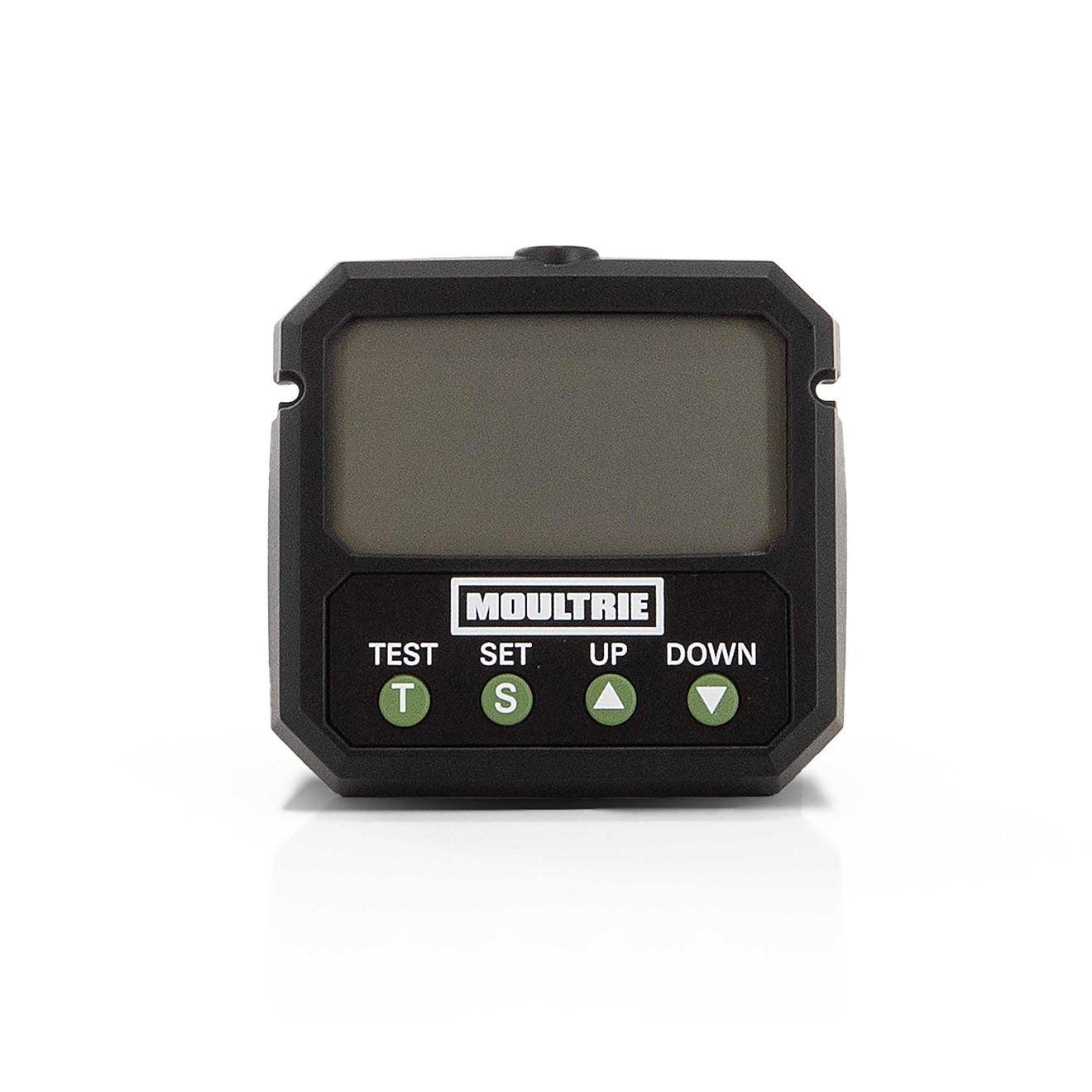
Moultrie Timer III
 Timer III sold out at Amazon itself? The Moultrie Timer II is in stock
Revives a dead 6V control box rather than replacing a whole feeder — up to 6 feeds per day, 1 to 20 seconds.
Caution: 20-second ceiling — it will not match a 30- or 60-second spin.
Wildgame Trophy Hunter Timer
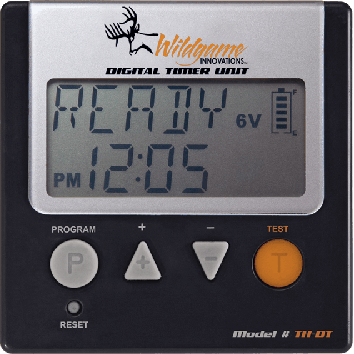
Revives a 6V/12V control box — up to 6 feeds, 0 to 30 seconds, Low/Medium/High motor speed.
Caution: Confirm connector and housing fit — “same menu” is not the same as “same plug.”
Side-by-side comparison table
| Photo | Control unit | Best for | Feed programs per day | Duration per feed | Spin-speed control | Power | Buy / learn more |
|---|---|---|---|---|---|---|---|
|
|
American Hunter XDE digital timer (AH-XDE-KIT) | Maximum scheduling flexibility | Up to 16, plus 2 preconfigured quick setups | 0 to 60 seconds | Not stated as a separate speed setting in the XDE manual text we reviewed | 6V or 12V battery (not included) | Check Price on Amazon → |
|
American Hunter SunSlinger digital timer (AH-SSLNG-KIT) | Solar-kept remote feeders | Up to 16, plus 2 preconfigured Q-Sets | 1 to 60 seconds | Not stated as a separate speed setting in the SunSlinger manual text we reviewed | 6V battery, continuously charged by integrated solar panel | See it at DNW Outdoors → |
|
|
American Hunter FM-K6/12 heavy-duty spin kit | Retrofitting most containers | 1 to 8, with day-of-week selection | 1 to 30 seconds | 3 spread speeds (3,000 / 3,300 / 3,800 RPM) | 6V or 12V rechargeable battery | See it at DEGuns → |
|
|
American Hunter E-Kit photocell (model 305819) | Set-and-forget dawn/dusk feeding | 2 (dawn and dusk, light-triggered) | 1 to 30 seconds | No speed setting; duration dial only | 6V spring-top SLA battery, DE-30045 recommended (not included) | See it at KY Gun Co → |
|
|
American Hunter RD-PRO / R-PRO analog | Dial simplicity, no LCD menus | Analog dial operation (see caveat below) | Set by dial (exact range not verified — see caveat) | Not verified | 6V 5Ah spring-top battery recommended; separate AA battery for the clock | See it at Texas Fowlers → |
| GameWinner digital timer (VTX-D / model 160643) | Simple, budget-first timed feeding | Up to 6 | 1 to 30 seconds | Hi / Med / Low RPM | 6V or 12V battery, matched to the motor | Academy Sports listing | |
|
Moultrie Timer III (universal replacement) | Reviving a dead 6V control box | Up to 6 | 1 to 20 seconds | Not a headline feature of this timer | 6V systems | Check Price on Amazon → |
|
Wildgame Trophy Hunter Timer (universal replacement) | Reviving a 6V/12V control box | Up to 6 (FEED 1–6) | 0 to 30 seconds (1 to 30 in the kit manual) | Low / Medium / High motor speed | 6V or 12V | Check Price on Amazon → |
One honest note before you compare rows: the two brands are not equally documented. American Hunter publishes distinct manuals for the XDE, SunSlinger, E-Kit, and spin-kit lines, and its support FAQ answers battery and clock questions for the RD-PRO family. GameWinner’s documentation that we could verify is essentially one digital-timer instruction sheet plus a feeder assembly manual. Where this guide says “not verified” for GameWinner, that is a documentation gap, not a claim that the feature does not exist. We would rather leave a cell blank than fill it with a guess.
Decision flowchart
- Step 1 — Do you want to program nothing? If yes, go straight to the American Hunter E-Kit photocell control. It feeds at dawn and dusk; you only set the spin duration. Skip to the E-Kit section.
- Step 2 — Do you need different schedules on different days? If yes, only the American Hunter digital timers (XDE, SunSlinger, FM-K6/12) document day-of-the-week selection. The GameWinner timer sheet we verified does not.
- Step 3 — Is your feeder far from home with no power visits? If yes, the SunSlinger’s integrated solar panel is the strongest fit in this comparison; otherwise a 6-volt battery plus an add-on solar charger (GameWinner’s 6-volt panel charger, or American Hunter’s panel for XD-Pro/XDE-Pro/Econ feeders) does the same job on the other units.
- Step 4 — Is the feeder already bought and the timer dead? If yes, do not buy a new feeder. Match the voltage first (GameWinner motors are 6-volt; American Hunter kits accept 6 or 12 volts), then fit a universal timer such as the Moultrie Timer III (6-volt) or the Wildgame Trophy Hunter Timer (6/12-volt).
How we picked (and what we did not do)
This is a control-unit comparison, not a feeder beauty contest. We ranked the controls on the things that actually change how a feeder behaves in the field: how many feed times you can set, how long each spin lasts, whether you can pick days of the week, whether spin speed is adjustable, what voltage and battery the unit expects, whether it runs on a clock or a photocell, and which feeder families each kit physically fits. Hopper size, leg style, and paint finish matter when you buy a whole feeder, but they do not change what the control unit does, so they stay in the background here.
Sources, in order of trust: the manufacturer’s own manual or instruction sheet first, then a retailer specification page (Tractor Supply, Academy, KY Gun Co), then a manual aggregator’s transcription of that same manual where the original PDF was not directly reachable. Three weaknesses in competing coverage we fixed: first, most roundups quote “up to 6 feed times” for every American Hunter timer, which conflates the XD-Pro complete feeder’s timer with the XDE kit’s 16-program timer — this guide separates them. Second, most roundups never say that GameWinner’s timer is a Wildgame Innovations lineage unit (the VTX-D sheet’s customer-service contact is WGI Innovations, and its programming menus match the Wildgame Trophy Hunter timer almost step for step). Third, almost nobody states the voltage trap plainly: a GameWinner replacement timer will happily run on 12 volts, but GameWinner motors are 6-volt, so matching the battery to the motor matters more than matching it to the timer.
What we did not do: we did not test any feeder, we did not invent throw distances or pounds-per-second figures, and we did not quote owner reviews we could not attribute. Where a retailer review page mixed in reviews for unrelated products (we saw this on one Tractor Supply page), we used only its rating snapshot and said so. Prices appear only where we fetched a live retailer page when this guide was written and dated the check; everywhere else we omit prices entirely rather than repeat a stale figure.
1. American Hunter XDE digital timer — Best for maximum scheduling flexibility
The XDE kit (part AH-XDE-KIT) is American Hunter’s flagship clock-driven control: a steel control box, an industrial-grade motor, a metal spin plate, and a digital timer, sold as a kit you bolt to a twist-lock or flat-mount hopper. Its headline numbers are the strongest in this comparison. The manual describes up to 16 custom time settings with run times from 0 to 60 seconds, two preconfigured settings for quick setup, and optional day-of-the-week settings for each feed time. In practical terms, that means a dawn feed every day, a midday feed on weekends only, and a long evening spin during the rut are all programmable on one unit — something no other control in this guide documents.
Programming follows a PROG / ENTER / arrow-button sequence: press PROG to enter the programming menu, set the current time with the arrows and confirm with ENTER, step to a feed slot such as SET 1, set its start time and duration, toggle the days it fires on, and save by pressing ENTER or PROG again. A TEST button fires the motor briefly so you can verify the spin before you walk away. The timer also carries reverse polarity protection, so a backwards battery connection should not destroy the unit — a small detail that matters when you are wiring in fading light. The manual’s own troubleshooting section is candid about the weak points: poor battery contact (it suggests a foam spacer behind the battery), residue buildup on the spin plate causing jams, and an unlevel mount causing the slinger to waste feed. Those are maintenance realities, not defects, but budget for them.
✅ Pros
- 16 programs plus 2 quick setups — the deepest schedule in this comparison
- 0 to 60 second durations, the longest maximum spin here
- Day-of-the-week selection per feed time
- Reverse polarity protection; twist-lock or flat-mount fit
- Industrial-grade, jam-resistant motor with metal spin plate
❌ Cons
- Battery not included, and the kit accepts 6V or 12V — you must choose and match it
- No separate spin-speed (RPM) setting documented in the XDE manual text we reviewed
- More menu steps than the GameWinner timer; easier to mis-program if you rush
- An unlevel mount wastes feed through the slinger, per the manual’s own troubleshooting
🧑🌾 From the field: We found no clean, attributable set of owner quotes for the XDE kit alone — retailer pages for American Hunter kits mix kit, feeder, and accessory reviews — so we will not invent any. What the record does support: the XDE kit’s manual itself anticipates the two complaints owners most often raise about feeder timers generally, battery contact and spin-plate fouling, and gives a fix for each. Treat the first setup as a bench job: program it at home, test-spin it empty, and only then hang it.
| Spec | Detail |
|---|---|
| Model / part | AH-XDE-KIT (XDE Feeder Kit) |
| Feed programs | Up to 16 custom settings, plus 2 preconfigured settings |
| Duration per feed | 0 to 60 seconds |
| Day-of-week selection | Yes, per feed time |
| Motor / plate | Industrial-grade motor, metal spin plate, jam-resistant |
| Mounting | Twist-lock or flat-mount hoppers; rail-mount system for accessories |
| Power | 6V or 12V battery (not included) |
| Protection | Reverse polarity protection |
| Warranty (manual text) | 1-year limited warranty |
Verdict: Buy the XDE control if your schedule is genuinely complicated — different days, many feeds, long spins. If you only need dawn and dusk, it is more timer than you need, and the E-Kit or GameWinner will serve you with fewer button presses. Check Price on Amazon → (this link is for the American Hunter 30-gallon XDE-Pro complete feeder, the closest verified XDE-family listing we could use; confirm the exact kit in the listing before ordering).
2. American Hunter SunSlinger digital timer — Best for solar-kept remote feeders
The SunSlinger (AH-SSLNG-KIT) pairs American Hunter’s 16-program digital timer with an integrated solar panel that continuously charges its 6-volt battery. The programming story is essentially the XDE story with a different skin: up to 16 custom feeding times per day, durations from 1 to 60 seconds, two preconfigured Q-Set settings, day-of-week handling, and a test function. The manual adds three details worth knowing. First, cancelling a program means navigating to its day adjustment and selecting OFF, which sits just before the Sunday setting — easy to miss if you skim. Second, the test is started by pressing and holding the right arrow, with a 5-second delay, and cancelled with the left arrow during the countdown. Third, if the feeder clogs, the motor stops and tries to dislodge the blockage three times; if that fails the display shows FFF, cleared with the left arrow. That jam-retry behavior is the most explicit clog handling documented for any control in this guide.
The solar angle has a practical catch the manual itself flags: the panel must see direct sunlight, and if the feeder hole is perfectly centered on a barrel the panel can end up shaded, so offsetting the kit slightly may be necessary. A second catch is electrical housekeeping: if you ever switch the timer off to reboot the clock, wait at least 20 seconds before switching it back on, or the clock can fail. And like the XDE, the SunSlinger carries a built-in metal varmint guard, with an optional shocking circuit available separately. Only one current SunSlinger listing (AH-SSLNG-KIT) was confirmed in our earlier brand research, and its manual states the battery and the Remote Activator are not included — check the listing’s “what’s in the box” before you assume otherwise.
✅ Pros
- Same 16-program, 1 to 60 second timer logic as the XDE
- Integrated solar panel keeps the 6V battery charged — best fit for remote sites
- Explicit jam-retry (3 attempts) plus FFF clog display
- Built-in metal varmint guard; twist-lock or flat-mount fit
❌ Cons
- Panel shading is a real installation trap on centered barrel holes
- 20-second wait rule on clock reboot — ignore it and the clock can fail
- Battery and Remote Activator not included, per the kit manual
- No separate spin-speed setting documented in the manual text we reviewed
🧑🌾 From the field: The most useful owner-adjacent evidence here is the manual’s own mounting note about panel shading, which reads like a lesson learned from field complaints: a solar feeder that never sees sun is just a heavy battery feeder. When you mount a SunSlinger, check the panel’s sun exposure at midday before you fill the hopper, not after.
| Spec | Detail |
|---|---|
| Model / part | AH-SSLNG-KIT (SunSlinger Digital) |
| Feed programs | Up to 16 custom times per day, plus 2 Q-Sets |
| Duration per feed | 1 to 60 seconds |
| Power | 6V battery, continuously charged by integrated solar panel |
| Mounting | Twist-lock or flat-mount hoppers |
| Plate / guard | Metal spin plate; built-in metal varmint guard |
| Jam handling | Motor retries 3 times, then FFF display |
| Weight / size (manual listing) | 3.3 lb; 7.1 in. x 5.9 in. x 15.6 in. |
Verdict: Buy the SunSlinger control if your feeder lives far from the truck and you want the battery tended by the sun. If your site is shaded or you visit weekly anyway, the standard XDE gives you the same timer without the panel-placement puzzle.
3. American Hunter heavy-duty spin kit (FM-K6/12) — Best heavy-duty retrofit
The FM-K6/12 is the workhorse retrofit in the American Hunter line: a heavy-duty metal housing, a high-torque industrial motor, and a “No Blow” slinger designed to resist wind and grain trickle, made to fit most feed containers. Its timer sits between the XDE and the GameWinner on programming depth: 1 to 8 feeds per day with day-of-the-week selection, durations from 1 to 30 seconds, and — uniquely in the American Hunter digital line — three named spread speeds of 3,000, 3,300, and 3,800 RPM. That RPM spread is the honest way to talk about throw distance without inventing feet: higher RPM throws wider, lower RPM keeps the pattern tighter, and the manual-adjacent retailer description ties each speed to a use (concentrated lane, general use, wide broadcast).
The dual-voltage design is the other headline: the kit requires a 6-volt or 12-volt rechargeable battery, so it can follow whichever battery standard your existing setup already uses. A related retailer listing for the American Hunter 20558 spin kit describes the same 1-to-8-program, 1-to-30-second, three-speed architecture, which corroborates the FM-K6/12 description rather than contradicting it. On the retail record, Tractor Supply’s listing for this kit showed a 4.7-star snapshot across 286 reviews with 95% of reviewers recommending it, and a price of $129.99 (checked October 2026). We cite the snapshot only: the individual review texts on that page included reviews plainly written for other products, so quoting them would mislead.
✅ Pros
- Three real, named spread speeds (3,000 / 3,300 / 3,800 RPM)
- Dual voltage: 6V or 12V rechargeable battery
- Day-of-the-week selection, 1 to 8 feeds per day
- Heavy-duty metal housing and No Blow slinger for wind resistance
- Fits most feed containers — a true retrofit
❌ Cons
- 30-second maximum duration — half the XDE/SunSlinger ceiling
- 8 programs, not 16
- No photocell mode; clock only
- Price sits above bare-bones timers (see the dated check above)
🧑🌾 From the field: The rating snapshot is genuinely strong for a feeder timer (4.7 stars, 286 reviews, 95% recommend, per Tractor Supply), but the polluted review text on that page is itself a lesson: when you research feeder controls, trust the manual’s spec table over a five-star paragraph that might belong to a hunting blind. The No Blow slinger claim is the feature to verify in your own yard — on a windy ridge, a slinger that resists trickle saves more corn than any timer feature.
| Spec | Detail |
|---|---|
| Model | American Hunter Heavy-Duty Spin FM-K6/12 Digital Feeder Kit |
| Feed programs | 1 to 8 per day, with day-of-week selection |
| Duration per feed | 1 to 30 seconds |
| Spread speeds | 3 speeds: 3,000 / 3,300 / 3,800 RPM |
| Motor / slinger | High-torque industrial motor; heavy-duty No Blow slinger |
| Housing | Heavy-duty metal housing |
| Power | 6V or 12V rechargeable battery |
| Retailer snapshot | Tractor Supply: 4.7 stars, 286 reviews, 95% recommend; $129.99 (checked October 2026) |
Verdict: Buy the FM-K6/12 if you are retrofitting a barrel or bucket and you care about spread pattern as much as schedule. It is the most balanced American Hunter control: not the deepest timer, but the only one here that pairs day selection with named RPM speeds.
4. American Hunter E-Kit photocell control — Best for set-and-forget feeding
The E-Kit (model 305819) is the philosophical opposite of the XDE. There is no clock to set, no menu to learn, and no day-of-week table. A photocell watches the light and fires the feeder twice a day, at dawn and at dusk. The only decision you make is the spin duration, adjustable from 1 to 30 seconds: longer spin, more feed. Everything else — the high-torque motor, the powder-coated metal downspout, the galvanized mounting bracket and slinger — exists to make those two daily spins reliable.
That simplicity has two honest costs. First, you give up all scheduling control: no midday feed, no weekend-only program, no long rut-evening spin unless it happens to coincide with dusk. Second, the photocell is only as good as its light. The manual is explicit: keep the sensor clean and unobstructed, put the feeder where it gets adequate ambient light, and do not rely on photocell activation in constant shade. A feeder tucked under a dense canopy may fire late, early, or not at all, and the manual’s troubleshooting table lists exactly those symptoms (not activating at dusk/dawn, running continuously or erratically) with sensor cleaning and relocation as the fixes. Power is specific, too: a 6-volt spring-top sealed lead-acid battery, with the DE-30045 recommended, not included. Do not substitute a random 6-volt pack and expect the same fit.
✅ Pros
- Zero programming — dawn and dusk, automatically
- 1 to 30 second duration dial: one control, one decision
- High-torque motor with powder-coated metal downspout
- Galvanized bracket and slinger; mounts to buckets or barrels
❌ Cons
- Only two feeds per day, fixed to light — no clock schedule at all
- Shade, dirt, or debris on the sensor breaks the whole premise
- No spin-speed control, no day selection, no test menu documented
- Needs the specific 6V spring-top SLA battery form factor
🧑🌾 From the field: Photocell feeders earn their keep on properties where the owner visits monthly, not weekly: the schedule tracks the seasons automatically as dawn and dusk drift, which no clock program does unless you reprogram it. They lose on wooded plots where the canopy fools the sensor. If your feeder site is open sky, this is the lowest-maintenance control in the guide; if it is deep timber, buy a clock.
| Spec | Detail |
|---|---|
| Model | American Hunter E-Kit Photocell Feeder Kit (305819) |
| Operation | Photocell: automatic at dawn and dusk, twice daily |
| Duration per feed | Adjustable, 1 to 30 seconds |
| Motor / hardware | High-torque motor; powder-coated metal downspout; galvanized bracket and slinger |
| Power | 6V spring-top SLA battery, DE-30045 recommended (not included) |
| Mounting | Buckets, barrels, and similar containers |
Verdict: Buy the E-Kit if you want feeding to happen without you. It is the only control here that follows the sun instead of a clock, and for open-field feeders that is a genuine advantage — but it is a one-trick control, and shade is its enemy.
5. American Hunter RD-PRO / R-PRO analog control — Best analog fallback
The RD-PRO and R-PRO are American Hunter’s analog feeders, and we cover them here with a clear caveat: we could not verify a full RD-PRO manual with the same completeness as the XDE or E-Kit manuals, so this section is deliberately shorter than the others. What American Hunter’s own support FAQ does establish is useful and specific. The analog timer runs on its own AA battery in a compartment at the back of the unit — if the analog timer is not turning, the FAQ’s first check is that AA battery, fully inserted. The feeder battery is a different matter: the FAQ recommends a 6-volt 5-amp-hour spring-top battery of a high-quality brand, and explicitly says not to use an “F” tab battery in an RD-PRO or analog feeder. For R and RD kits, the battery slides in from the side, spring side first, and locks with a metal retaining bracket. The FAQ also notes a varmint-buster accessory connects via wiring on the back of compatible kits.
Why include a thinly documented analog unit at all? Because it answers a real buyer question: what if you do not trust LCD screens, cold-weather display lag, or menu programming? An analog dial has no display to go sluggish in a freeze — a failure mode the GameWinner timer sheet itself admits for LCDs — and no clock menu to lose when the battery disconnects. The trade is precision: you give up exact minute-level programming, day selection, and the 16-program depth of the digital line. For a feeder that only needs a couple of daily spins, that trade is often worth it.
✅ Pros
- No LCD to go sluggish in cold weather; no menus to learn
- Separate AA clock battery — timer and feeder power are decoupled
- Documented battery guidance (6V 5Ah spring-top; no F-tab)
- Varmint-buster wiring on compatible kits
❌ Cons
- Exact feed-count and duration ranges not verified from a full manual — we will not state them
- No day-of-week programming documented
- Less precise than any digital timer here
- Documentation is thinner than the digital line — confirm specs on the unit’s own paperwork before buying
🧑🌾 From the field: Analog feeder owners tend to be either delighted (nothing to program, nothing to forget) or frustrated (the dial drifted and nobody noticed for a month). The FAQ’s battery guidance is the practical takeaway: use the specified spring-top battery, seat the AA clock battery fully, and check the dial position on every fill visit.
| Spec | Detail |
|---|---|
| Family | American Hunter RD-PRO / R-PRO analog feeder kits |
| Control type | Analog dial timer (clock battery: AA, rear compartment) |
| Feeder battery | 6V 5Ah spring-top battery recommended; F-tab battery not recommended |
| Battery fitting | Slides in from the side, spring side first, locked by metal retaining bracket |
| Feed count / duration | Not verified — see caveat above |
| Accessories | Varmint buster via rear wiring on compatible kits |
Verdict: Buy analog if simplicity and cold-weather readability beat precision for you. Do not buy it expecting digital features — and verify the exact program range on the box, because we could not verify it from a full manual.
6. GameWinner digital timer (VTX-D family) — Best simple, budget-first timed control
GameWinner is Academy Sports’ house brand for feeders, and its digital timer is the control that ships on the timed GameWinner feeder family sold there — the molded 200 lb feeder, the 300 lb silo, the 650 lb Big A, the Low-Boy 450, and the rest of the Academy GameWinner range. The instruction sheet we verified is Academy’s own digital-timer document for model 160643 (HU2164001-GW), and a fuller GameWinner feeder manual (FSGWSF1017, 2019 revision) describes the same third-generation VTX-D timer: a larger LCD, a real-time battery-charge indicator, and silicone buttons. The customer-service contact printed in that manual is WGI Innovations — Wildgame Innovations — which explains why the programming menus below will look familiar to anyone who has used a Wildgame timer. GameWinner’s control is, in lineage if not in branding, a Wildgame timer.
The spec sheet is short and honest: program up to 6 feeds per day, durations from 1 to 30 seconds per feed, adjustable spinning speed (Hi/Med/Low RPM), and a battery-charge indicator. Programming runs through READY / CLOCK / FEED / TEST / RESET modes with up/down arrows and an OK button: from READY, step to CLOCK and set the time; step to FEED, pick a feed number, set its time, set its duration (1 to 30 seconds), set its RPM (Hi/Med/Low), and repeat; set any unused feed to OFF. Test mode runs after a 10-second delay and spins for the first feed’s duration — and the sheet warns in capitals to test only when the feeder is empty, because a loaded test discharges feed at high velocity. Reset restores factory defaults from RESET mode. Two warnings deserve emphasis. First, the timer auto-stops and shows Jam or Short on the display if it detects a jam or short circuit; you disconnect power, clear the obstruction or fault, and reconnect. Second, every battery disconnect wipes the clock — you must reset the time on reconnecting — and bad weather can make the LCD sluggish (the sheet says functionality is unaffected, but readability is).
Voltage is where GameWinner buyers most often go wrong, so here it is plainly. The timer itself fits 6-volt or 12-volt batteries: use a 6V battery with a 6V motor and a 12V battery with a 12V motor. But the feeder manual states in capitals that GameWinner motors are 6-volt. And GameWinner’s own replacement timer (FSGWSF1004) is documented as working with either 6-volt or 12-volt motors. Put together: on a stock GameWinner feeder, the answer is a 6-volt battery, full stop. The 12-volt capability of the timer only matters if you transplant it onto a 12-volt motor from another brand. GameWinner also sells a 6-volt solar panel charger (part 155060) for its feeders, so solar keeping is available — just as a bolt-on accessory rather than integrated like the SunSlinger.
✅ Pros
- Simple menu: READY / CLOCK / FEED / TEST / RESET, with OFF for unused feeds
- Hi / Med / Low spin speed — the only budget control here with a speed setting
- Real-time battery-charge indicator on the display
- Jam / Short auto-stop protects the unit from short circuits
- Timer accepts 6V or 12V, so it can be transplanted to other motors
- Backed by Academy’s GameWinner feeder range and a 6V solar charger accessory
❌ Cons
- Only 6 feeds per day and 30 seconds maximum — well short of the XDE’s 16 programs and 60 seconds
- No day-of-week selection in the timer sheet we verified
- No preconfigured quick-setup programs documented
- No photocell mode in GameWinner documentation we could verify
- Clock resets on every battery disconnect — reprogram the time after any battery swap
- LCD can go sluggish in bad weather
- Documentation is thin: one timer sheet plus a feeder manual, versus American Hunter’s per-model manuals
🧑🌾 From the field: Academy’s category page shows the GameWinner timed family carrying real review volume (the molded 200 lb feeder and the 650 lb Big A were among the most-reviewed GameWinner feeders on the page we checked), which fits the brand’s position: a value feeder people actually buy in quantity. We do not quote individual GameWinner owner reviews here because the review text we could verify for this control family was not cleanly attributable to the timer itself rather than the whole feeder. The manual-derived field notes are more useful anyway: test empty, keep the sensor-free LCD readable, and expect to re-set the clock after a battery change.
| Spec | Detail |
|---|---|
| Timer | GameWinner digital timer, VTX-D third-generation; Academy model 160643 (HU2164001-GW) |
| Feed programs | Up to 6 per day; unused feeds set to OFF |
| Duration per feed | 1 to 30 seconds |
| Spin speed | Hi / Med / Low RPM |
| Display | LCD with real-time battery-charge indicator; Jam / Short auto-stop display |
| Power | 6V or 12V battery, matched to the motor; GameWinner motors are 6V |
| Replacement timer | FSGWSF1004 — works with 6V or 12V motors |
| Solar | GameWinner 6V solar panel charger (155060), sold separately |
| Test / reset | Test runs after 10-second delay at first feed’s duration; RESET restores factory defaults |
| Known quirks | Clock resets on battery disconnect; LCD sluggish in bad weather |
Verdict: Buy the GameWinner control if you want a timed feeder at a value price and your schedule is simple: a few feeds a day, same every day, 30 seconds or less. If you need day selection, 60-second spins, or 16 programs, the American Hunter digital line is the upgrade — and it is a real upgrade, not a marginal one. No verified Amazon Amazon listing is used for any GameWinner product in this article; buy GameWinner through Academy Sports or another authorized retailer listing.
Universal replacement timers worth knowing
Two verified replacement timers belong in this comparison because they answer the question every feeder owner eventually asks: the timer died, does the whole feeder die too? No — if the motor and housing are sound, a universal timer revives the control box for a fraction of a new feeder’s cost. Both are genuinely relevant here: the Wildgame timer shares the GameWinner VTX-D programming lineage, and the Moultrie timer is the 6-volt standard that fits most 6-volt motors, including GameWinner’s.
Moultrie Timer III — the 6-volt rescue timer
The Moultrie 6-volt digital timer (model MFG13448) programs up to 6 feeds per day with durations from 1 to 20 seconds, a digital display, a test mode, and a low-battery indicator, and is described as compatible with most 6-volt feeder motors. Its shorter 20-second ceiling is the trade for its simplicity: it will not match a 30- or 60-second spin, so check your current duration before swapping. Moultrie’s own kit manuals add a useful calibration table for their timers: on their standard kit, 4 seconds dispenses roughly 1 lb of feed and 20 seconds roughly 4.6 lb. That table is Moultrie-specific — do not apply it to American Hunter or GameWinner motors — but it shows why duration, not just feed count, is the real portion control. Check Price on Amazon →
Wildgame Trophy Hunter Timer — the GameWinner family’s twin
The Wildgame Innovations Trophy Hunter digital timer programs up to 6 feed times per day (FEED 1–6), durations of 0 to 30 seconds per feed (1 to 30 in the kit manual), Low/Medium/High motor speed, a 5-bar real-time battery indicator, and a test button with a 10-second delay — the same architecture, step for step, as the GameWinner VTX-D sheet, including the “test runs at the first feed’s duration” rule. It fits both 6-volt and 12-volt power control units. If your GameWinner timer dies out of warranty and you cannot source the FSGWSF1004 replacement, this is the closest documented cousin, and its wiring logic (blue/white motor leads, red/black battery leads, voltage matched to the motor) mirrors the GameWinner sheet. Confirm the connector and housing fit against your control box before ordering; “same menu” is not the same as “same plug.” Check Price on Amazon →
Programming walkthrough: clock timers vs photocell
Programming a clock timer is the same four-step dance on both brands, and learning it once transfers. Step one, set the clock: on the XDE, press PROG, set hours and minutes with the arrows, and confirm with ENTER; on the GameWinner, step from READY to CLOCK with the arrows, press OK, and set the time the same way. Step two, set each feed: on the XDE, step to SET 1 and set its start time and duration, then toggle its days; on the GameWinner, step to FEED, pick a feed number, set its time, its duration (1 to 30 seconds), and its RPM (Hi/Med/Low), and set unused feeds to OFF. Step three, save: on the XDE, press ENTER or PROG to exit; on the GameWinner, press OK back to FEED mode and let the unit return to READY. Step four, test empty: both brands insist on this, and both build in a delay (5 seconds on the SunSlinger, 10 seconds on the GameWinner and Wildgame timers) so you can step back before the plate spins. Never test a loaded feeder while standing in the throw pattern.
Photocell programming is not programming at all, and that is the point. On the E-Kit you set the duration dial (1 to 30 seconds) and walk away; the sun does the scheduling. The trade is visible in the table: a clock timer can feed at noon on a Tuesday in January, while a photocell feeder cannot feed at noon ever. Conversely, a clock timer must be reprogrammed as sunrise drifts through the season if you want to stay glued to first light, while a photocell feeder tracks dawn and dusk automatically all year. Choose the mechanism that matches how often you visit: frequent visitors can afford clock reprogramming; monthly visitors should let the sun do it.
Three programming mistakes account for most “my feeder is broken” calls in the manuals. First, forgetting to save: the XDE needs ENTER/PROG to exit, and the Wildgame-family timers need 10 seconds back in READY. Second, forgetting that a battery disconnect wipes the GameWinner clock (and, on the SunSlinger, that a too-fast power cycle can kill the clock — wait 20 seconds). Third, leaving a feed slot active that you meant to disable: the XDE disables a slot at zero duration, the GameWinner at OFF, and the SunSlinger at the OFF position just before Sunday in the day adjustment. Check the disabled slots, not just the active ones.
Motors and spinner plates
The timer is the brain; the motor and plate are the hands, and the two brands make different bets here. American Hunter’s line is built around industrial-grade, high-torque motors and metal spin plates: the XDE manual calls its motor industrial-grade and jam-resistant with a metal spin plate; the FM-K6/12 adds a heavy-duty No Blow slinger meant to resist wind and grain trickle; the E-Kit pairs a high-torque motor with a powder-coated metal downspout and a galvanized slinger. The XDE manual also documents a spin-plate height adjustment (loosen the screw, slide the plate to suit the feed size, retighten) — a small, practical feature for switching between corn and larger pellets. The SunSlinger adds jam-retry logic at the control level: three attempts to clear a clog before the FFF display.
GameWinner’s motor story is shorter in the documentation, and we say so plainly. The feeder manual establishes that GameWinner motors are 6-volt, and the timer sheet documents Jam/Short auto-stop protection that halts the unit on a jam or short circuit until power is disconnected and the fault cleared. We could not verify a GameWinner motor torque rating, a plate material claim, or a throw-distance figure from a manufacturer source, so none appears here. Retailer listings describe GameWinner spinner plates as galvanized steel on some models, but since we could not tie that claim to a specific current model’s manual, we leave it out of the spec tables. What is verifiable is the control-side difference: American Hunter gives you named RPM speeds on the FM-K6/12 (3,000/3,300/3,800) and Hi/Med/Low on the GameWinner, while the XDE and SunSlinger manuals we reviewed do not document a separate speed setting at all — on those units, duration is your portion control, not speed.
Portion control, then, works differently by brand. On the XDE and SunSlinger, you control portions with duration up to 60 seconds — the longest lever in the guide. On the FM-K6/12 and GameWinner, you control portions with duration up to 30 seconds plus a speed setting that changes how wide the feed spreads. On the E-Kit, duration alone (1 to 30 seconds) does the job. None of these manuals gives a pounds-per-second figure that transfers across brands, and Moultrie’s calibration table (about 1 lb at 4 seconds, 4.6 lb at 20 seconds) belongs to Moultrie kits only. If you need an exact portion, calibrate your own feeder: run a timed test into a bucket, weigh it, and write the number on the control box.
Voltage, batteries and solar
Voltage is the most expensive mistake in this guide, so here is the whole picture in one place. American Hunter’s XDE kit and FM-K6/12 accept 6 or 12 volts; the SunSlinger runs on 6 volts with solar charging; the E-Kit wants a 6-volt spring-top SLA battery (DE-30045 recommended); the RD-PRO family wants a 6-volt 5-amp-hour spring-top battery and explicitly not an F-tab battery. GameWinner’s timer accepts 6 or 12 volts, but GameWinner motors are 6-volt — so a stock GameWinner feeder takes a 6-volt battery, and the timer’s 12-volt capability only matters for transplants. The GameWinner replacement timer FSGWSF1004 likewise works with either motor voltage, which is convenient and also the trap: “works with” the timer does not mean “correct for” the motor.
Battery form factor matters as much as voltage. Spring-top, tab, and lantern batteries are not interchangeable just because they read 6 volts, and the manuals are specific for a reason: the E-Kit’s compartment and the RD-PRO’s side-slide bracket are built around spring-top dimensions. The XDE manual’s foam-spacer tip for loose battery contact is worth remembering on any kit: a battery that rattles loose on a windy night produces exactly the “feeder stopped for no reason” symptom that fills forums. Solar keeping splits the same way as everything else in this comparison: American Hunter integrates it (SunSlinger panel; a separate American Hunter power solar panel fits XD-Pro, XDE-Pro, and Econ feeders, with lid and leg brackets and a 5-foot conduit cable), while GameWinner sells it as an accessory (the 6-volt solar panel charger, part 155060, installed before loading or while empty). Either approach works; the integrated panel saves a purchase decision, the accessory panel lets you add solar to a feeder you already own.
Kit compatibility matrix
| Control unit | Fits | Does not fit / watch out |
|---|---|---|
| American Hunter XDE kit (AH-XDE-KIT) | Twist-lock or flat-mount hoppers; rail-mount accessories (feeder meters, solar panels) | Battery not included; choose 6V or 12V to match your setup |
| American Hunter SunSlinger (AH-SSLNG-KIT) | Twist-lock or flat-mount hoppers; standard barrels/drums | Centered barrel holes can shade the panel — offset the kit; battery and Remote Activator not included |
| American Hunter FM-K6/12 spin kit | Most feed containers (retrofit) | Needs a 6V or 12V rechargeable battery; no photocell mode |
| American Hunter E-Kit photocell | Buckets, barrels, and similar containers via galvanized bracket | Needs a 6V spring-top SLA battery (DE-30045); needs open light for the sensor |
| American Hunter RD-PRO / R-PRO analog | American Hunter R/RD feeder kits | Do not use an F-tab battery; analog timer needs its own AA battery |
| GameWinner VTX-D timer | GameWinner timed feeders (Academy range); 6V or 12V motors as a transplant | Stock GameWinner motors are 6V — do not fit a 12V battery to a stock feeder |
| GameWinner replacement timer FSGWSF1004 | 6V or 12V motors as a replacement timer | Confirm housing and connector fit on your control box |
| Moultrie Timer III | Most 6V feeder motors | 6V only; 20-second maximum duration |
| Wildgame Trophy Hunter Timer | 6V or 12V power control units | Confirm connector and housing fit; same menu as GameWinner is not the same plug |
One compatibility warning applies to every row: never mix brands on voltage without checking the motor plate. The timer’s voltage range and the motor’s voltage are two different specifications, and the motor’s wins. When in doubt, read the plate on the motor you own, not the box of the timer you are buying.
What each control really costs to run
| Cost item | What owners report / what the manuals imply | Notes |
|---|---|---|
| Control unit itself | GameWinner timed feeders sit at the value end of Academy’s range; the American Hunter FM-K6/12 kit was $129.99 at Tractor Supply (checked October 2026); XDE-family complete feeders vary by hopper | We omit other prices: no other price in this article was verified on a live page when this guide was written |
| Battery | Every control here needs a battery the kit may not include: 6V or 12V for XDE/FM-K6/12, 6V for SunSlinger/E-Kit/GameWinner stock, plus an AA for the RD-PRO clock | Budget a spare battery; a dead battery is the top “failure” in every manual’s troubleshooting |
| Solar keeping | Integrated on the SunSlinger; accessory panels for the rest (American Hunter panel for XD-Pro/XDE-Pro/Econ; GameWinner 6V charger 155060) | Solar pays for itself in avoided trips, not in feed savings |
| Feed waste | Unlevel mounts (XDE manual), wind trickle (FM-K6/12 No Blow slinger), and over-long durations all waste corn | Calibrate duration by weighing a test spin into a bucket |
| Replacement timer vs new feeder | A universal timer (Moultrie Timer III, Wildgame Trophy Hunter) revives a sound feeder for far less than a replacement feeder | Only if motor, housing, and hopper are sound — a rusted hopper is not a timer problem |
The takeaway: the cheapest control is rarely the cheapest setup. A value GameWinner feeder plus its 6-volt battery is the lowest entry cost here, but a SunSlinger that never needs a battery trip can be cheaper over two seasons of remote use. And the most expensive mistake is not a pricey timer — it is a 12-volt battery on a 6-volt motor, or a photocell feeder parked in shade.
How to choose
Choose by how often you visit
Monthly visits argue for the SunSlinger (solar-kept, deep timer) or the E-Kit (no programming to drift). Weekly visits make any clock timer fine, including the GameWinner, because you will catch a wiped clock or a fouled plate on the next trip. If you visit daily during the season, buy on price and spread pattern, not on timer depth — you are the timer.
Choose by schedule complexity
Same schedule every day, a few feeds: GameWinner, FM-K6/12, or E-Kit all cover it. Different days, many feeds, long spins: only the XDE and SunSlinger document that depth. If you are not sure you need 16 programs, you probably do not — but if you manage multiple properties from one schedule, you will feel the GameWinner’s 6-feed ceiling quickly.
Choose by site light and weather
Open sky favors the E-Kit photocell and any solar panel. Deep timber favors a clock timer, because a shaded photocell sensor is a broken schedule. Cold climates favor the analog RD-PRO or any non-LCD control, since the GameWinner sheet itself notes LCD sluggishness in bad weather; the XDE’s large LCD is easier to read than most, but it is still an LCD.
Choose by what you already own
Own a GameWinner feeder with a dead timer? Source the FSGWSF1004 replacement or a Wildgame Trophy Hunter timer, keep the 6-volt battery, and check the connector. Own an American Hunter hopper? Stay in the family: XDE, SunSlinger, and FM-K6/12 all bolt to twist-lock or flat-mount hoppers. Own a barrel and nothing else? The FM-K6/12 retrofit or the E-Kit bracket mount turns it into a timed feeder without buying a whole new unit.
Troubleshooting from the manuals
Feeder not firing at all: check the battery first (charge, contact, polarity), then the clock (GameWinner clocks wipe on disconnect; SunSlinger clocks need a 20-second power-cycle wait), then the program (is the slot actually enabled, and on the right days?). Feeder firing at the wrong time: re-check AM/PM on clock timers, and check sensor light exposure on photocell units. Feed pouring out or trickling: check the mount is level (XDE manual), the plate is clean (all manuals), and the slinger type (the FM-K6/12 No Blow slinger exists for exactly this complaint). Motor stopping mid-spin: on the SunSlinger, three jam retries then FFF means a real clog — clear it and press the left arrow; on the GameWinner, a Jam or Short display means disconnect power, clear the fault, and reconnect. Timer display dead but motor fine: on the RD-PRO, check the AA clock battery; on digital units, check the feeder battery and its contacts before condemning the timer. And always test empty, standing clear — every manual in this guide says so, in some cases in capital letters.
Video help
No YouTube video is embedded in this article. Our rule is to embed only videos whose IDs verify through YouTube’s oEmbed endpoint, and no American Hunter or GameWinner timer video met that bar when this guide was written, so we embedded none rather than risk a dead or wrong video. For visual setup help, use the manual links in the resources hub above — the XDE, E-Kit, SunSlinger, and GameWinner timer documents walk through the same button sequences step by step.
Resources hub
- Best Deer Feeders 2026: 16 Top-Rated Models Compared — the money-page roundup, including the XDE-Pro complete feeder
- Best Gravity Deer Feeders — for feeders that need no timer at all
- Best Tripod Deer Feeders — timed and gravity tripod options
- Best Deer Feeder Timer — our dedicated timer guide
- Best Protein Deer Feeders — protein programs that benefit most from tight portion control
- Keep Raccoons, Hogs and Pigs Off Your Deer Feeder — varmint guards, including the SunSlinger’s built-in guard
- Deer Feeder Solar Panel Guide — solar keeping for every control in this article
- Best Deer Feeder With Camera and App Control — when you want remote control beyond a timer
- American Hunter XDE Feeder Kit Instruction Manual (Manuals+ transcription)
- American Hunter E-Kit Photocell Feeder Kit Instruction Manual (Manuals+ transcription)
- American Hunter SunSlinger Feeder Kit Manual (Manuals+ transcription)
- GameWinner Digital Timer Unit Operating Instructions, model 160643 (Academy)
- GameWinner Feeder Manual FSGWSF1017 (2019 revision, incl. VTX-D timer and FSGWSF1004 replacement note)
- American Hunter FM-K6/12 Spin Kit on Amazon
Feeding laws and seasons vary by state and change over time. This guide states no state feeding law: before you run any timed feeder for hunting, check your own state wildlife agency’s current rules for your county and season.
FAQ
Which control is better overall, American Hunter or GameWinner?
For scheduling depth, American Hunter: the XDE and SunSlinger offer 16 programs, up to 60-second durations, and day-of-week selection, while the GameWinner timer offers 6 programs and 30 seconds. For simple value feeding, GameWinner is enough. “Better” depends on whether your schedule is complicated.
How many feed times can the American Hunter XDE timer set?
Up to 16 custom time settings, plus two preconfigured settings for quick setup, with durations from 0 to 60 seconds and optional day-of-the-week settings, per the XDE kit manual.
How many feed times can the GameWinner timer set?
Up to 6 feeds per day, with durations from 1 to 30 seconds and Hi/Med/Low spin speed, per Academy’s digital-timer instruction sheet for model 160643.
Does GameWinner have a photocell feeder control?
We could not verify a GameWinner photocell control from GameWinner documentation. The photocell option in this comparison is American Hunter’s E-Kit, which fires at dawn and dusk. If a retailer lists a GameWinner photocell model, verify it against that model’s own manual before buying.
Can I use a 12-volt battery on a GameWinner feeder?
Not on a stock GameWinner feeder. The GameWinner timer accepts 6 or 12 volts, but GameWinner motors are 6-volt, so match the battery to the motor: 6 volts on a stock GameWinner feeder. The timer’s 12-volt capability matters only for transplants onto 12-volt motors.
What happens when I disconnect a GameWinner timer’s battery?
You must reset the clock when you reconnect it — the timer sheet states this explicitly. The same caution applies in reverse to the SunSlinger: wait at least 20 seconds after switching the timer off before switching it back on, or the clock can fail.
Can I put a universal timer on a GameWinner or American Hunter feeder?
Often, yes, if voltage and connector fit. The Moultrie Timer III fits most 6-volt motors (6 feeds, 1 to 20 seconds), and the Wildgame Trophy Hunter Timer fits 6-volt or 12-volt control units (6 feeds, 0 to 30 seconds) and shares the GameWinner timer’s programming lineage. Confirm the connector and housing fit before ordering.
What is the GameWinner replacement timer part number?
FSGWSF1004. The GameWinner feeder manual states it works with either 6-volt or 12-volt motors — but remember GameWinner’s own motors are 6-volt.
How do I stop a feeder wasting corn in the wind?
Level the mount (an unlevel XDE slinger wastes feed, per its manual), keep the spin plate clean, shorten the duration, and consider a No Blow slinger such as the FM-K6/12’s, which is designed to resist wind and grain trickle. Calibrate by weighing a test spin into a bucket.
Does the SunSlinger need a battery even though it has a solar panel?
Yes. The panel charges a 6-volt battery; it does not replace it. The kit manual also notes the battery is not included, and the panel must see direct sunlight — a shaded panel on a centered barrel hole is a known installation trap.
Why does my feeder’s LCD go slow in cold weather?
The GameWinner timer sheet notes that bad weather can affect LCD responsiveness while functionality is unaffected. If a readable display in the cold matters to you, consider the analog RD-PRO control, which has no LCD, or program the timer indoors before hanging it.
Is it legal to run a timed feeder where I hunt?
It depends on your state, county, and season, and rules change. This guide states no state law. Check your own state wildlife agency’s current regulations before running any feeder for hunting.
Final verdict
American Hunter wins this comparison on control depth, and it is not close: 16 programs, 60-second spins, day-of-week selection, a photocell option, an analog option, and a solar-integrated option cover every scheduling personality from the tinkerer to the set-and-forget owner. GameWinner wins on simplicity and value: one timer sheet, six feeds, three speeds, and a feeder range at Academy that people buy in volume. The right buy is the one that matches your schedule, your site’s light, and your motor’s voltage — in that order. If you already own a feeder from either brand, the cheapest upgrade is usually a timer, not a new feeder: the Moultrie Timer III for 6-volt boxes and the Wildgame Trophy Hunter Timer for 6/12-volt boxes are both verified options above.
Start with the XDE-Pro complete feeder if you want American Hunter’s deepest timer in a ready-to-hang package: Check Price on Amazon →. If your old timer died, check the universal options first: Moultrie Timer III → or Wildgame Trophy Hunter Timer →. And whichever control you choose, check your state wildlife agency’s current feeding rules before you hunt over it.
Last updated: October 25, 2026.
Products mentioned in this guide
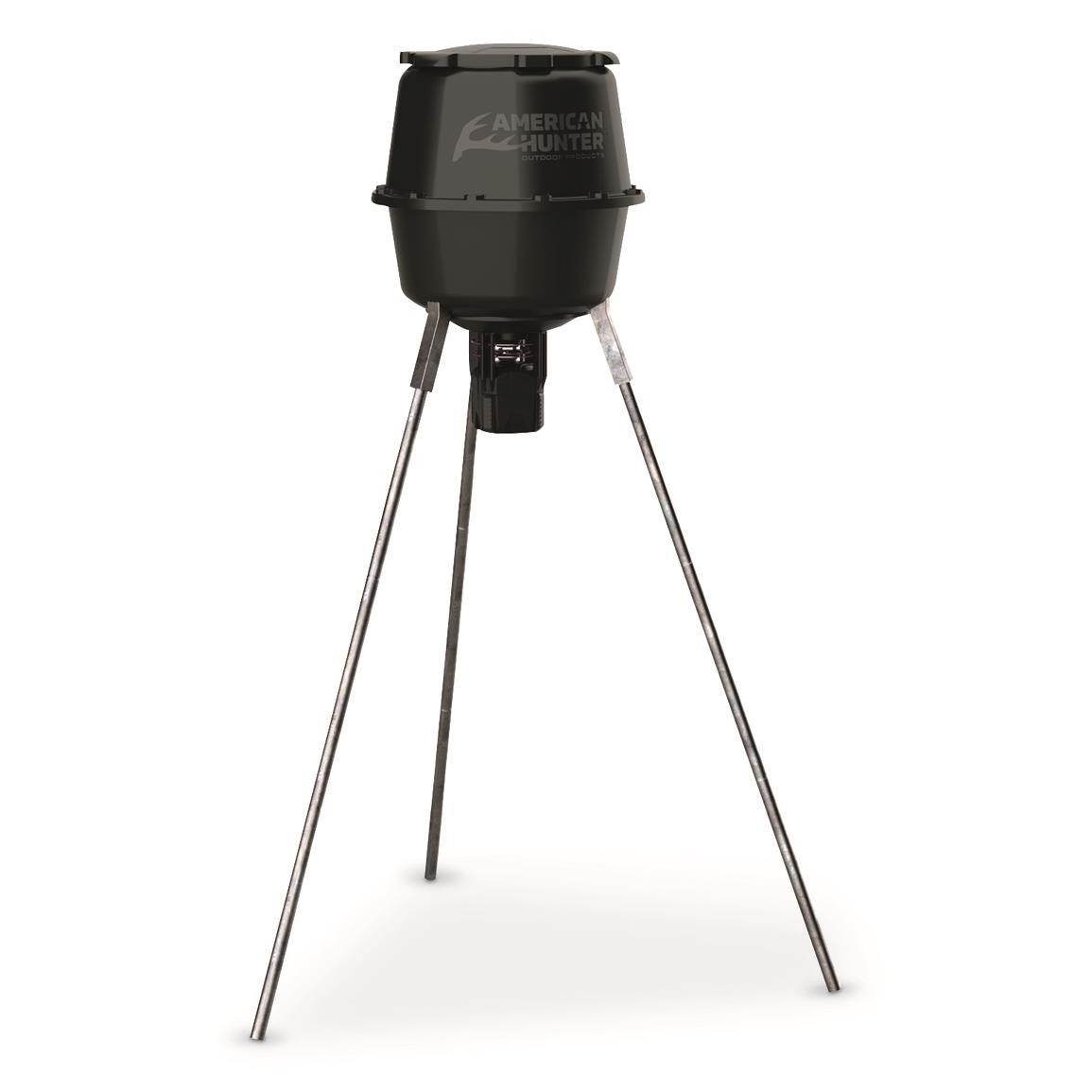
American Hunter XDE-Pro 30-Gallon Feeder
Check Price on Amazon →Confirm price and availability on AmazonMoultrie Universal Digital Timer III
Check Price on Amazon →Confirm price and availability on AmazonWildgame Innovations Trophy Hunter Digital Timer
Check Price on Amazon →Confirm price and availability on AmazonAs an Amazon Associate, we earn from qualifying purchases.


