
Tripod vs Hanging Deer Feeders: Which Type Fits Your Property?
As an Amazon Associate, I earn from qualifying purchases. This article contains affiliate links. If you buy through a link on this page, I may earn a commission at no extra cost to you. That commission helps keep the guides on this site free, and it never changes which feeder I would point you toward for your property.
In this guide: Quick Answer | Tripod vs hanging at a glance | Head-to-head tables | How to choose | Tripod feeders explained | Hanging feeders explained | Representative models | Scenario verdicts | Ownership and running costs | Frequently asked questions | Final verdict
Quick Answer: Tripod vs Hanging Deer Feeders
Choose a tripod deer feeder if you have open ground, want a large capacity, and want timed, spin-cast feeding over a wide area with the least worry about finding the right tree. Choose a hanging deer feeder if your property is mostly timber, your access is tight, you want a feeder you can carry in and hang in minutes, or you only need a smaller amount of feed at a satellite spot rather than a main feeding station. Neither type is better in every situation, and that is the whole point of this comparison: the right answer follows your ground, your trees, your visit frequency, and how much feed you want out at one time.
For most hunters with an open field edge or a food plot, a tripod feeder is the main-station pick, because the representative tripod models in this guide hold 225 to 270 pounds of feed and spread it on a timer. For a timbered property, a back-corner trail, or a second spot you check less often, a hanging feeder earns its place, because it needs no legs, no level pad, and no large open area, and the representative hanging models here hold 30 to 100 pounds. If you only read one more section, read the scenario verdicts near the end: they match each common property layout to one type, and they name the exception that should make you switch.
This article compares the two types themselves. It does not repeat the model-by-model roundups. For the full tripod shortlist, see our best tripod deer feeders guide, and for the full hanging shortlist, see our best hanging deer feeders guide. For the overall best feeders of every type, see our best deer feeders guide. If you have not yet settled how high a feeder should sit, read our height guide first, because height rules differ between spin and gravity designs, and getting height wrong costs more feed than almost any other setup mistake.
Tripod vs Hanging Deer Feeders at a Glance
| Type | Best for | Capacity range in this guide | Feeding style | Photo |
|---|---|---|---|---|
| Tripod feeder | Open ground, main feeding stations, large properties, timed patterning | 225 to 270 lb (representative models) | Timed spin-cast, on a schedule | See Quick-Set 225 figure below |
| Hanging feeder | Timber, tight access, satellite spots, portable setups | 30 to 100 lb (representative models) | Timed spin-cast (Moultrie hanging models) or gravity (Treehugger) |
The capacity ranges in that table describe only the representative models covered in this article. They are not claims about every tripod or hanging feeder ever made. Tripod feeders as a class tend to run larger, because three legs and a freestanding barrel can carry a bigger hopper without asking a tree limb to carry the load. Hanging feeders as a class tend to run smaller, because the whole filled weight hangs from a strap, a hook, or a limb, and every extra pound is a pound you must lift, hang, and trust to that support. That single structural difference explains most of the practical differences that follow: refill frequency, visit frequency, varmint exposure, and where each type can go at all.
Head-to-Head: Stability
| Factor | Tripod feeder | Hanging feeder |
|---|---|---|
| What holds it up | Three legs on the ground, with the hopper above them | A tree, limb, post, or other overhead support, plus straps or a hanger |
| Wind exposure | A tall, loaded barrel on legs catches wind; a level, well-sited pad matters | Hung close to a trunk, it is partly sheltered, but it can swing in wind |
| Slope sensitivity | Legs must be set so the unit sits level; a tilted spinner throws unevenly | The hang point sets the level; the feeder hangs plumb if the support allows it |
| Animal contact | Hogs and raccoons can push, rub, and climb; anchoring and guards matter | Height above ground is the main defence, but straps and bags are chewable |
A tripod feeder is only as stable as its footing. On soft ground after rain, a leg can settle and tilt the whole unit, and a tilted spinner is not a cosmetic problem: our height guide notes that tilt over 2 degrees breaks spin patterns, so feed lands unevenly and part of the pattern is wasted. That is why the setup check for a tripod feeder is not a glance but a level check, repeated after the first heavy rain and after the first fill, when the loaded weight is at its greatest. A hanging feeder avoids the leg-settling problem entirely, because it hangs plumb from its support, but it trades that problem for a different one: swing. A feeder that swings in wind throws feed less predictably, and a strap that rubs a rough bark edge wears over a season. Neither type is set-and-forget on stability. The tripod asks you to check level; the hanging feeder asks you to check straps, hangers, and wear points.
Anchoring deserves a direct word here, because it is where tripod owners most often under-invest. A tripod feeder standing in an open field is a sail with a full hopper on top. Manufacturer anchoring instructions vary by model, so follow the instructions for the exact feeder you buy rather than copying a neighbour’s method, and check the anchors when you check the level. For hanging feeders, the equivalent under-investment is the support itself: a limb that looks stout with an empty feeder can sag or crack under a full one, and a strap rated for the empty weight is not the same as a strap suited to the filled weight plus wind load. Our hanging guide’s standing advice is to work from rated supports and hardware, and to document the filled weight before you hang, not after. That discipline sounds fussy until the first time a feeder comes down in a storm.
Head-to-Head: Capacity Range
| Factor | Tripod feeder | Hanging feeder |
|---|---|---|
| Representative range | 225 to 270 lb | 30 to 100 lb |
| What that means for visits | Longer intervals between refills at a main station | More frequent refills, or a smaller role as a satellite feeder |
| Refill effort | Lifting bags to a fill height of about 6 feet on the Pro Hunter III | Lifting the feeder or lowering it to fill, depending on the design |
| Feed type flexibility | Corn or protein pellets on the Quick-Set models; corn on the Pro Hunter III | Corn, attractants, protein, mineral, or a mix on the gravity Treehugger |
Capacity is the tripod feeder’s clearest structural advantage, and it is worth stating plainly rather than dressing it up. A 250-pound hopper holds more than eight times the feed of a 30-pound hanging feeder, so at the same daily output it needs refilling far less often. That matters most on a remote property, where every visit costs fuel and time, and on a main station that you want to keep running through the season without gaps. Gaps matter because deer pattern to reliable feed; a station that runs dry for a week and then floods again does not hold deer the way a steady station does. If your property is far away, capacity is not a luxury feature. It is the difference between a station you can maintain and a station you cannot.
The hanging feeder’s smaller capacity is not a defect, though. It is the price of portability, and for many spots it is the right price. A 30-pound hanging feeder at a honey-hole trail crossing, or a 100-pound gravity bag feeder on a timber edge, does not need to carry a whole season. It needs to carry enough feed between your normal visits, and its small size is what lets you put feed exactly where deer already travel, rather than where a big feeder happens to fit. The mistake is to buy a hanging feeder for a main station and then resent the refill schedule, or to buy a tripod feeder for a tight timber spot and then fight the terrain every visit. Match capacity to the job, not to the biggest number on the page.
Refill effort cuts both ways and deserves honest treatment. A tripod feeder’s fill height is a real physical demand: the Moultrie Pro Hunter III, for example, has a 6-foot fill height, which means lifting bags to shoulder height or above for most people, repeatedly, with a full hopper waiting below. Hunters with a bad back, a short stature, or no second person on refill day feel that height every time. A hanging feeder, by contrast, is usually filled at a height you choose, or lowered, filled, and re-hung, but the filled feeder must then be lifted back into place, and a 100-pound bag feeder is not light when full. Neither type refills itself. Plan the refill as part of the purchase, including who does it, how they lift, and what they stand on, because the best feeder on paper is a poor feeder if refilling it is miserable enough that it gets skipped.
Head-to-Head: Setup Effort
| Factor | Tripod feeder | Hanging feeder |
|---|---|---|
| Typical setup | Assemble legs and hopper, set level, anchor, program timer | Choose support, hang, secure straps, fill, program timer if fitted |
| Time on site | Longer first setup; the Quick-Set models are described as about 15 minutes | Minutes for a gravity bag feeder; the Treehugger is described as under 5 minutes to attach |
| Tools and help | A second person helps with legs and a full hopper; follow the manual | Often a one-person job for small hanging feeders; larger ones still benefit from help |
| Moving the feeder | Empty first, then carry or drag; legs make it bulky | Unhang, carry, re-hang; the collapsible Moultrie bucket packs down for transport |
Setup effort is where hanging feeders win most clearly on a first visit. A gravity bag feeder that straps to a tree in under five minutes can be feeding the same morning you walk in, with no assembly, no levelling, and no timer programming, because there is no timer to program. That speed matters on a scouting trip, on a new lease where you are still learning deer movement, and anywhere you want to test a spot before committing a big feeder to it. A hanging feeder is, in that sense, a low-commitment experiment: if the spot is wrong, you unhang it and move on with little lost.
Tripod setup is a bigger first-day job, but it pays back over the season in a different currency: control. Once the legs are level, the anchors are set, and the timer is programmed, a tripod spinner feeds on schedule without further daily attention, and moving the pattern is a matter of changing timer settings rather than moving hardware. The Quick-Set family’s roughly 15-minute setup claim shows that tripod assembly need not be an all-day project, but first-time assembly still takes longer than hanging a bag, and it takes more space to lay out parts, more care to get level, and usually a second pair of hands at the moment the hopper goes on the legs. Budget a full unhurried hour for a first tripod setup even if the manual suggests less, and you will not be caught short.
Programming is a setup cost that only applies to timed models, and it applies to both types where a timer is fitted. The Moultrie hanging feeder and the tripod models in this guide all carry digital timers, so neither type escapes programming entirely, but the gravity Treehugger does, which is a genuine simplicity advantage for hunters who do not want another device to configure. If you dislike programming, say so honestly when you choose: a gravity hanging feeder has no timer to mis-program, while every timed feeder, tripod or hanging, rewards ten careful minutes with the manual before you leave it in the field. Our timer programming guide walks through the process step by step.
Head-to-Head: Terrain Suitability
| Factor | Tripod feeder | Hanging feeder |
|---|---|---|
| Open field or food plot | Ideal: level ground, clear throw area, easy vehicle access | Workable only if a suitable tree or post exists at the spot |
| Timber edge | Good where a small clearing can be levelled | Ideal: trees are the support, and the feeder tucks into cover |
| Deep timber | Poor unless a clearing exists; throw pattern is blocked by trunks | Strong: hangs where deer travel, with no clearing needed |
| Slope | Needs a level pad or careful leg adjustment; measure from the lowest approach | Hangs plumb, but the approach and the throw or drop zone still need checking |
Terrain is the decision-maker for most buyers, more than brand or capacity, because terrain is the one thing you cannot change about a property. A tripod feeder needs a patch of ground that is reasonably level, reasonably clear, and reachable with feed bags. In an open field or on a food plot edge, that is easy, and the spinner’s wide pattern is an asset rather than a waste, because the feed lands where deer can find it without piling against trunks or brush. In deep timber, the same spinner is a liability: trunks block the pattern, feed piles in the wrong places, and the clearing you cut to make room is a disturbance you then have to live with all season.
A hanging feeder inverts the problem. It needs a tree, not a clearing, so deep timber is its home ground. A bag feeder strapped to a trunk on a trail, or a timed hanging feeder over a small opening in the canopy, puts feed where deer already walk, with no clearing and little disturbance. The trade is that the feeder’s location is now dictated by the trees you have, not by the spot you would ideally choose, and on an open property with few trees, a hanging feeder may have nowhere to hang at all. That is not a flaw in the feeder; it is a mismatch between the tool and the land. Walk your property with the feeder type in mind before you buy, and mark the actual hang points or the actual pads, not the spots that look good on a map.
Slope deserves its own paragraph because it trips up both types in different ways. For a tripod feeder, the height guide’s rule is to measure slope from the lowest approach, because that is the side where the feeder’s effective height and throw change most, and to keep the unit level, since tilt over 2 degrees breaks spin patterns. On a slope, that means finding the flattest available pad, adjusting legs to suit, and re-checking after rain settles the ground. For a hanging feeder, slope matters less to the feeder itself, which hangs plumb, but it matters to the feed zone: feed thrown or dropped on a slope rolls downhill, pools in low spots, and can end up outside the area deer use. In both cases, the fix is the same: walk the slope, watch where feed would actually go, and place the feeder so the feed zone, not just the feeder, sits where you want it.
Head-to-Head: Varmint Exposure
| Factor | Tripod feeder | Hanging feeder |
|---|---|---|
| Raccoons | Climb legs; guards and leg design are the defence | Climb the tree or strap; height and a smooth trunk help |
| Hogs | Push and rub the legs; can tip a poorly anchored unit | Less leverage on a hanging feeder, but hogs eat spilled feed below |
| Squirrels | Climb legs and chew hopper parts | Chew straps and bags on gravity feeders; a real, reported weakness |
| Built-in defences in this guide | Rigid varmint guard on the Quick-Set Pro; locking lid on the Pro Hunter III | Height above ground; no built-in guard on the gravity bag design |
No feeder type is varmint-proof, and any article that promises otherwise is selling something. Raccoons climb, hogs push, and squirrels chew, and the only honest question is which defence each type gives you and what you must add yourself. Tripod feeders give you a structure to defend: legs that can carry guards, a hopper that can carry a locking lid, and a spinner assembly that can be shielded. The Quick-Set Pro is the clearest example in this guide, because it comes standard with a rigid varmint guard protecting both the feed and the power control unit, and that guard is part of why it sits at the top of the tripod side of this comparison. The Pro Hunter III’s locking lid plays a different role, keeping varmints and moisture out of the hopper between fills, which matters because a lid that raccoons can lift is an open invitation.
Hanging feeders defend differently, and less completely. Height is the main defence: a feeder hung well above the ground is harder for hogs to reach, and a smooth trunk with no low limbs gives raccoons less to climb. But a gravity bag feeder has a soft target built in: the bag itself. Squirrels chewing through a bag is a reported problem for this design, and a chewed bag leaks feed continuously, which wastes feed and trains every varmint in the area to visit. Straps are a second soft target, and a strap chewed through drops the feeder. If you choose a gravity hanging feeder, inspect the bag and straps on every visit, and treat any chew mark as a repair job, not a cosmetic flaw. For a fuller treatment, see our varmint guard guide and our raccoon and hog guide.
Spilled feed is the varmint problem both types share, and it is worth naming because it is the one owners control most directly. A spinner that throws too much, a gravity feeder that drips, or a feeder placed where feed rolls into brush all create a ground-level buffet that teaches hogs and raccoons to visit even when the feeder itself is defended. Timed feeding is the tripod feeder’s answer: measured amounts, on schedule, with nothing left overnight beyond what deer eat. Gravity feeding has no such control, which is a real cost of its simplicity. Whatever type you choose, watch the ground under the feeder on your first few visits. If feed is piling up uneaten, shorten the timer, reduce the amount, or move the feeder before the varmints find the pile.
Head-to-Head: Height Rules
| Factor | Tripod feeder (spin-cast) | Hanging feeder |
|---|---|---|
| Governing rule | Spinner hopper bodies at 6 to 7 feet, per our height guide | Set by the hang point you choose; gravity openings follow the gravity rule below |
| Gravity designs | Not applicable to spin-cast tripod models | Gravity tube openings at 40 to 42 inches, per our height guide |
| What goes wrong | Tilt over 2 degrees breaks spin patterns | Too low invites hogs and varmints; too high puts feed out of comfortable deer reach |
| Re-check schedule | Re-check level and height at 2 and 6 weeks after setup | Re-check hang height and strap condition at 2 and 6 weeks after setup |
Height rules are the part of this comparison most often guessed at, so here they are without guessing. Our height guide establishes spin hopper bodies at 6 to 7 feet and gravity tube openings at 40 to 42 inches, and those two numbers cover the two feeding styles in this article. A spin-cast tripod feeder lives in the first rule: the hopper body sits 6 to 7 feet up, the spinner throws from that height, and the pattern depends on the unit being level. A gravity hanging feeder lives in the second rule: the opening deer feed from sits 40 to 42 inches up, low enough for comfortable deer access and high enough to keep the feed off the ground. A timed hanging feeder with a spinner follows the spin logic rather than the gravity logic, because it throws feed rather than letting deer eat from an opening, so set its hang height so the spinner clears the ground comfortably and throws over the area you want covered, rather than copying the gravity number onto a spinner.
The re-check schedule is the part owners skip, and it is the part that saves feed. Our height guide recommends re-checks at 2 and 6 weeks after setup, and that schedule fits both types for different reasons. On a tripod feeder, two weeks is enough for a leg to settle after rain, and six weeks is enough for the ground to change under a full hopper. On a hanging feeder, two weeks is enough for a strap to stretch or a limb to sag under load, and six weeks is enough for wear to show at a rub point. Put the two dates in your calendar when you set the feeder up, and treat the re-check as part of the setup, not as optional maintenance. A feeder that was perfect on day one and tilted by week six has been wasting feed for weeks by the time anyone notices.
One more height point, because it affects the purchase decision itself: fill height is not the same as feed height. The Pro Hunter III’s 6-foot fill height is the height you lift feed to, while the 6-to-7-foot spin hopper rule is the height the feeder body sits at. They are close numbers describing different things, and confusing them leads to buying a feeder you cannot comfortably fill. Before you buy a tripod feeder, stand at the fill height in the store or on the property, lift a bag to that height, and ask whether you will still be willing to do it on a cold, wet refill day in January. If the answer is no, a hanging feeder you fill at a comfortable height, or a tripod feeder with a lower fill height, is the honest choice, even if the taller feeder looks better on paper.
Head-to-Head: Maintenance
| Factor | Tripod feeder | Hanging feeder |
|---|---|---|
| Routine checks | Level, anchors, legs, lid seal, spinner, battery, timer | Straps, hang point, bag or bucket condition, lid seal, battery and timer if fitted |
| Power | 6V battery on the Pro Hunter III (sold separately), solar panel port; AA batteries on other timed models vary by model | AA batteries on the Moultrie 30 lb hanging feeder; no power at all on the gravity Treehugger |
| What fails first | Batteries, then spinner and timer exposure to weather | Straps and bags on gravity feeders; batteries and timers on timed hanging feeders |
| Off-season storage | Bulky; legs and hopper need dry storage space | Compact; the Moultrie bucket collapses, and a bag feeder folds flat |
Maintenance is where the two types’ personalities show most clearly. A tripod feeder has more parts to maintain, because it has legs, anchors, a spinner, a timer, and a battery, and each of those is a maintenance item. That is not a criticism; it is the cost of the control a timed tripod feeder gives you. The maintenance routine is straightforward and should be written down rather than remembered: check level, check anchors, check the lid seal, check the spinner for debris and damage, check the battery, and confirm the timer still holds the schedule you set. Do that on every refill visit and you will catch most problems while they are small. The failure to plan for is the dead battery discovered on a hunting weekend, so carry a spare battery or a spare set of cells on refill visits, and note the battery type for your exact model in your phone before you leave home.
A gravity hanging feeder has almost no maintenance, and that is its strongest selling point after portability. With no timer, no motor, no battery, and no spinner, there is almost nothing to fail except the bag, the straps, and the buckle, and all three are visible on inspection. The maintenance routine is correspondingly short: look at the bag, look at the straps, look at the buckle, and look at the ground for leaked feed. The trap is assuming that short routine means no routine. A gravity feeder that is never inspected is a feeder whose chewed bag leaks for a month, and the feed lost to a leak can exceed the cost of the feeder itself over a season. Short routine, done every visit, beats a long routine done never.
Timed hanging feeders sit between the two on maintenance: they carry a timer and a battery like a tripod feeder, but their hanging position makes some checks harder. Changing batteries on a feeder hung high in a tree is more awkward than changing them on a tripod feeder at ground level, and programming a timer while standing on uneven ground under a tree is more error-prone than programming one at a comfortable height. If you choose a timed hanging feeder, plan the battery and programming routine before you hang it: choose a hang height you can reach for service, not just for feeding, and test the timer at ground level before the first hang. Off-season storage, by contrast, favours hanging feeders clearly: a collapsible bucket that packs down, or a bag feeder that folds, takes a fraction of the shed space a tripod feeder’s legs and hopper demand.
Head-to-Head: Cost Band
| Factor | Tripod feeder | Hanging feeder |
|---|---|---|
| Purchase band | Mid to higher band: bigger hopper, legs, timer, and motor in one unit | Lower to mid band: smaller, simpler, and gravity models have no motor or timer |
| Running costs | Feed in larger quantities, batteries, occasional timer and motor parts, solar panel optional | Less feed per fill, batteries on timed models only, strap and bag replacement on gravity models |
| Hidden costs | Anchors, a ladder or step for filling, transport of a bulky unit | Replacement straps and bags, a second feeder if one spot needs more capacity |
| Cost of getting it wrong | A big feeder in the wrong spot wastes the most feed | A small feeder as a main station costs the most visits |
This article prints no dollar prices, deliberately. Prices move, listings change, and a price printed without a check date misleads faster than no price at all. What can be said honestly, without a price snapshot, is the shape of the cost: tripod feeders sit in a higher purchase band than hanging feeders, because you are buying a larger hopper, three legs, a timer, and a motor in one unit, while a gravity hanging feeder is a bag, straps, and a buckle, with no electronics at all. Timed hanging feeders sit between the two, because they add a timer and motor to a small hopper. If budget is the binding constraint, a hanging feeder gets you feeding sooner for less money, and that is a legitimate reason to choose one, provided the capacity fits the spot.
Running costs follow the same shape, and they matter more than the purchase price over a season. Feed is the largest running cost for any feeder, and a large tripod feeder that runs all season consumes more feed than a small hanging feeder, which is obvious but worth stating, because the feed bill is where a big feeder surprises new owners. Batteries are the second running cost, and they vary by model: the Pro Hunter III runs on a 6V tab-top rechargeable battery sold separately, with an optional solar panel port that extends time between charges, while the Moultrie 30 lb hanging feeder runs on AA batteries. Solar panels, replacement straps, replacement bags, and occasional timer or motor parts are the smaller lines, but they add up, and the honest way to compare two feeders is to add purchase, feed, batteries, and spares over a full season, not to compare purchase prices alone.
The most expensive mistake in this comparison is not buying the dearer feeder. It is buying the wrong type for the spot, because the wrong type wastes either feed or visits. A big tripod feeder in deep timber, where its pattern is blocked, wastes feed every time it throws. A small hanging feeder as a main station on a remote property wastes visits every time it runs dry early. Both mistakes cost more over a season than the price difference between the two types. Choose the type for the spot first, then choose the model within the type, and the budget will largely take care of itself.
How to Choose: Four Decision Steps
1. Start with the ground, not the feeder
Walk the spot you intend to feed and answer four questions before you look at any model. Is there a level patch of ground big enough for a tripod footprint, or is the spot defined by trees? Is vehicle access close enough to carry 250 pounds of feed, or is this a walk-in spot? Is the ground flat, or does it slope enough that a tripod pad needs work? And where would feed actually land, given the slope and the cover? The answers to those four questions eliminate one type for most spots. Open, flat, vehicle-accessible ground points to a tripod feeder. Timber, walk-in access, or a slope with no pad points to a hanging feeder. If both types could work, move to the next step.
2. Decide how often you can visit
Count your realistic visits, not your optimistic ones. A property you visit every weekend can run a 30-pound hanging feeder without drama, because you refill on the normal visit. A property you visit once a month cannot, because a small feeder will run dry between visits and the station will go quiet. For monthly visits, the tripod feeder’s 225-to-270-pound capacity is not a nice-to-have; it is the minimum that keeps the station running. For a property you live on or visit daily, capacity matters far less, and the hanging feeder’s portability and low cost may matter more. Visit frequency is the single most under-weighted factor in feeder choice, because buyers imagine their best-case schedule rather than their real one.
3. Decide how much control you want over feeding
Timed spin-cast feeding gives you control: measured amounts, set times, and a pattern you can adjust by changing the timer or the spinner speed. Gravity feeding gives you simplicity: deer eat when they arrive, and the feeder needs no power, no timer, and no programming. The control question is really a question about your goals. If you are patterning deer for hunting, timed feeding at dawn and dusk, on a schedule deer learn, is a real advantage, and it points to a timed model in either type. If you are supplementing deer through the season and want the lowest-maintenance option, gravity feeding’s simplicity is a real advantage, and it points to a hanging gravity feeder. Our gravity versus timed comparison works through this trade in more detail, and our feeding times guide covers when to run a timed feeder.
4. Check varmints, wind, and neighbours last, not first
Varmint pressure, wind exposure, and nearby properties are real factors, but they should refine a choice made on ground, visits, and control, not replace it. High hog pressure strengthens the case for a well-anchored tripod feeder with guards, or for a hanging feeder hung high and out of hog reach, depending on the spot. High wind exposure strengthens the case for a sheltered hang point or a well-anchored tripod pad. Neighbouring properties matter because a spinner’s wide pattern can throw feed across a boundary on a small property, while a hanging feeder’s tighter drop zone stays where you put it. Work through these factors after the first three steps, and they will usually confirm the choice rather than overturn it. If they do overturn it, listen: a feeder that throws feed onto a neighbour’s land is a problem no timer setting fixes.
Tripod Feeders Explained
A tripod feeder is a freestanding feeder: a hopper on three legs, usually with a timed spinner underneath that throws feed in a circle on schedule. The type’s defining features are its independence from trees, its large capacity, and its timed control. It goes where you put it, not where the trees are, which is why it dominates open ground, food plots, and field edges. Its defining weakness is also structural: it stands in the open, so it faces wind, hogs, and varmints head-on, and it needs level ground and anchoring to stand safely. The type suits a hunter who wants a main station, who can visit with feed bags by vehicle, and who values timed patterning over portability.
Within the type, the models below differ mainly in capacity, timer flexibility, and varmint defence, not in basic concept. The Moultrie Pro Hunter III is the control-focused pick, with the most feed times per day and adjustable spinner speed. The Wildgame Quick-Set Pro 270 is the varmint-defence pick, with its rigid guard and square-tube legs. The Wildgame Quick-Set 225 is the value pick within the type, with a smaller capacity and a simpler timer, but the same basic tripod concept. None of them is a gravity feeder, and none of them should be confused with the gravity tripod models covered in our gravity guide, which feed by gravity rather than by timer and spinner. The distinction matters because a gravity tripod feeder and a spin-cast tripod feeder share legs but not feeding logic, and the height rules, maintenance, and varmint defences differ accordingly.
Tripod feeders also carry a placement responsibility that hanging feeders do not. A spinner throws feed over a wide area, so the throw zone must be clear of boundaries, roads, and areas where feed would be wasted or unwelcome. Our placement guide covers the siting checks in detail, and our stand distance guide covers how far the feeder should sit from your stand. The short version is: place the tripod feeder where the throw zone is useful ground, where you can reach it with feed, and where the stand distance gives deer comfort without giving away your position. Get those three right and the tripod feeder does the rest on schedule.
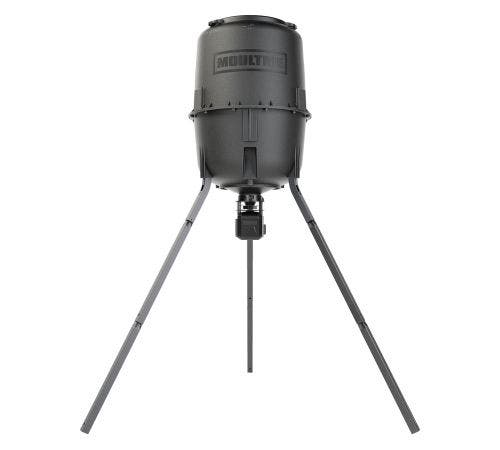
Moultrie Pro Hunter III 250 lb Tripod Feeder
The Moultrie Pro Hunter III is a 250-pound tripod feeder with a 6-foot fill height, powder-coated steel legs, and a thick plastic hopper. It carries the Pro Hunter III feeder kit, which gives 360-degree feed coverage, and it is controlled by Bluetooth through the Moultrie App, with no subscription required, so feed times can be adjusted from a phone without walking to the feeder and leaving scent in the area. The timer supports up to 10 feed times per day, each lasting from 1 to 60 seconds, and the spinner speed is adjustable across High, Medium, and Low settings, which lets the owner control both how much feed goes out and how far it spreads. Power comes from a 6V tab-top rechargeable battery, sold separately, with a port for an optional Moultrie 6V feeder solar panel, and the feeder kit attaches through a Quick-Lock adapter with no tools required.
The strengths of this model are control and capacity together. Ten feed times a day is more scheduling flexibility than the Quick-Set models offer, and adjustable spinner speed is a genuinely useful control, because it lets the owner match the throw to the spot rather than accepting a fixed pattern. The 250-pound capacity sits between the two Quick-Set models, and the 6-foot fill height, while a lift, is low enough to fill without a ladder for most owners. The locking lid keeps varmints and moisture out of the hopper between fills, and the powder-coated steel legs give the unit a stable, weather-resistant base. Bluetooth control is the quiet advantage: changing a schedule without visiting the feeder means fewer intrusions, and fewer intrusions mean deer patterns stay intact through the season.
The honest weaknesses are the battery, the fill height, and the price band. The 6V battery is sold separately, so the feeder is not complete out of the box in the way an AA-powered model is, and a rechargeable battery adds a charging routine to the owner’s schedule. The 6-foot fill height is a real lift for shorter owners or anyone with a bad back, and it should be tested before purchase, not discovered on refill day. The model sits in the higher purchase band of this comparison, because the timer, Bluetooth, and adjustable spinner are premium features, and buyers who only need four feed times a day may find the Quick-Set 225 covers their needs for less. Finally, the Bluetooth range, described as up to 300 feet, depends on conditions and obstacles, so owners should not plan on adjusting the feeder from the house if trees and terrain intervene.
Pros:
- 250 lb capacity with a 6-foot fill height
- Up to 10 feed times per day, 1 to 60 seconds each
- Adjustable spinner speed (High, Medium, Low)
- Bluetooth control from a phone, no subscription required
- Locking lid and powder-coated steel legs
Cons:
- 6V battery sold separately, adding cost and a charging routine
- 6-foot fill height is a real lift on every refill
- Higher purchase band than the Quick-Set models
- Bluetooth range depends on terrain and obstacles
| Spec | Detail |
|---|---|
| Capacity | 250 lb |
| Fill height | 6 feet |
| Feed coverage | 360 degrees |
| Feed times | Up to 10 per day, 1 to 60 seconds |
| Spinner control | Adjustable RPM: High, Medium, Low |
| Legs | Powder-coated steel |
| Hopper | Thick plastic |
| Power | 6V tab-top rechargeable battery, sold separately; solar panel port |
| Control | Bluetooth via Moultrie App, no subscription required |
Wildgame Quick-Set Pro 270 lb Tripod Feeder
The Wildgame Quick-Set Pro 270 is a 270-pound tripod feeder and the largest capacity model in this comparison. It uses a poly barrel on powder-coated square-tube legs, with a galvanized steel spinner plate and a built-in funnel for feed dispersal, and it comes standard with a rigid varmint guard that protects both the feed and the power control unit, a feature no other Quick-Set model carries as standard. The digital timer supports 1 to 6 feed times per day, and the setup is listed at about 15 minutes. The box design includes a handle for filling and transport, and the feeder accepts corn or pellet feed.
The strengths here are capacity, varmint defence, and leg design together. At 270 pounds, this is the feeder for the owner who visits least often and wants the longest interval between refills. The rigid varmint guard is a structural answer to the raccoon problem, rather than an accessory bought afterwards, and square-tube legs resist twisting and bending better than round legs of similar weight, which matters when hogs push against the unit. The built-in funnel improves dispersal accuracy, and the galvanized steel spinner plate resists corrosion better than a plain steel plate. For a main station on a property with real varmint pressure, this combination is the strongest tripod case in this guide.
The weaknesses are weight, bulk, and timer simplicity relative to the Pro Hunter III. A 270-pound capacity means a heavy feeder when full, and moving it, even empty, is a two-person job for most owners. The timer’s 1-to-6 feed times are ample for most schedules but less flexible than the Pro Hunter III’s 10, and owners who want fine-grained dawn-and-dusk control with multiple short bursts may notice the difference. The feeder’s size also means it needs the largest clear pad and the most careful anchoring of the three tripod models, because a tall, full barrel in an open field is the most wind-exposed unit in this guide. Finally, as with all tripod feeders, the fill height and the lifting effort on refill day should be planned, not assumed.
Pros:
- 270 lb capacity, the largest in this comparison
- Rigid varmint guard fitted as standard
- Powder-coated square-tube legs for stability
- Galvanized steel spinner plate
- Built-in funnel for dispersal accuracy
Cons:
- Heavy and bulky when full; moving it needs help
- Timer offers 1 to 6 feed times, fewer than the Pro Hunter III
- Needs the largest level pad and careful anchoring
- Most wind-exposed unit in this guide when full
| Spec | Detail |
|---|---|
| Capacity | 270 lb |
| Mounting | Freestanding tripod |
| Barrel | Poly barrel |
| Legs | Powder-coated square tube |
| Spinner plate | Galvanized steel |
| Varmint guard | Rigid guard fitted as standard |
| Feed times | 1 to 6 per day |
| Setup | Listed at about 15 minutes |
| Feed types | Corn or pellets |
Wildgame Quick-Set 225 lb Tripod Feeder

The Wildgame Quick-Set 225 is a 225-pound tripod feeder and the entry-level model in the Quick-Set family. Its poly barrel holds up to 225 pounds of feed, the empty feeder weighs about 37 pounds, and setup is described as taking about 15 minutes before the feeder is fully operational. The timer supports up to four daily feed times, lasting 5, 10, 15, or 20 seconds depending on preference, and the feeder accepts corn or protein pellets, so the owner can choose feed based on the season and the local deer’s preferences.
The strengths are manageability and simplicity. At about 37 pounds empty, this is the easiest tripod feeder in this guide to carry to a spot and assemble, and its 225-pound capacity is still large enough for a main station on a property visited regularly. The four feed times, with simple 5-to-20-second durations, cover the standard dawn-and-dusk pattern without the complexity of a ten-event timer, and the ability to run protein pellets as well as corn makes it more flexible than a corn-only feeder. For a first tripod feeder, or for a second station where the Pro models would be more feeder than the spot needs, the Quick-Set 225 is the sensible pick.
The weaknesses are capacity relative to its bigger brothers, timer flexibility, and varmint defence. At 225 pounds it needs refilling sooner than the 250- or 270-pound models, which matters on a remote property. The four feed times are fewer than the Pro Hunter III’s ten or the Quick-Set Pro’s six, and owners who want several short bursts through the day may find four limiting. Unlike the Quick-Set Pro, it does not come standard with a rigid varmint guard, so owners on properties with heavy raccoon pressure should plan guards or other defences as part of the purchase, rather than discovering the need after the first raid. None of these weaknesses disqualifies the feeder; they define the spots where it fits and the spots where a bigger model fits better.
Pros:
- 225 lb capacity in a manageable 37 lb empty unit
- Setup described as about 15 minutes
- Simple timer: up to 4 feed times, 5 to 20 seconds
- Accepts corn or protein pellets
- Poly barrel, entry-level within the Quick-Set family
Cons:
- Smallest tripod capacity in this guide, so refills come sooner
- Four feed times only, fewer than the Pro models
- No rigid varmint guard fitted as standard
- Still needs a level pad and anchoring like any tripod feeder
| Spec | Detail |
|---|---|
| Capacity | 225 lb |
| Empty weight | About 37 lb |
| Barrel | Poly barrel |
| Feed times | Up to 4 per day, 5, 10, 15, or 20 seconds |
| Setup | About 15 minutes |
| Feed types | Corn or protein pellets |
Hanging Feeders Explained
A hanging feeder is a feeder that hangs from a support rather than standing on legs. That single difference drives everything else about the type: it needs a tree, limb, or post; it needs no level pad; it is portable in a way a tripod feeder is not; and its capacity is limited by what the support and the owner can lift. Hanging feeders divide into two feeding styles. Timed hanging feeders, like the Moultrie models below, carry a timer and a spinner and throw feed on schedule, just as a tripod spinner does, but from a hanging position. Gravity hanging feeders, like the Treehugger, carry no electronics at all and let deer eat from the feeder as they arrive, with gravity replenishing the opening as feed is eaten.
The type suits a hunter whose property is timbered, whose access is tight, or who wants a feeder that can be moved between spots without a major operation. It also suits a hunter who wants a second or third feeding spot without buying a second or third large feeder. Its weaknesses are capacity, varmint exposure on soft designs, and dependence on suitable supports. A property with no trees at the feeding spots cannot use a hanging feeder at all, and a property where the only trees are at the wrong spots forces a compromise between feeder location and deer movement. The type’s other weakness is subtler: because hanging feeders are easy to set up, owners sometimes set them up casually, without checking the support, the strap, or the hang height, and casual setup is what fails.
Hanging feeders also change the hunting dynamic. A tripod feeder in an open field creates a visible, patterned feeding area that deer approach across open ground, which suits stand hunting over a field edge. A hanging feeder in timber creates a quieter, more concealed feeding spot that deer visit along existing trails, which suits still hunting and trail hunting. Neither dynamic is better in itself; they suit different hunting styles and different properties. The choice between types is therefore also a choice about how you hunt, and owners who hunt both ways often end up owning both types, using each where it fits.
Moultrie All-in-One 30 lb Hanging Feeder
The Moultrie All-in-One hanging feeder is a 30-pound timed hanging feeder built around a collapsible 5-gallon bucket. The bucket holds up to 30 pounds of feed and packs down for transport or storage, which makes this the most portable timed feeder in this guide. The feeder kit gives 360-degree feed coverage, the digital timer supports up to four feedings per day, and Bluetooth connectivity lets the owner adjust feed times and settings from a phone through the Moultrie App, with no subscription required, from up to 300 feet away. Power comes from AA batteries, with an external 6V power port compatible with a Moultrie power panel, and the integrated metal hanger allows flexible placement.
The strengths are portability, simplicity, and control in a small package. A collapsible bucket that packs down is genuinely useful for a walk-in spot, a leased property where gear must be carried in and out, or a hunter who stores feeders between seasons and values shed space. Four feedings a day cover the standard pattern, and Bluetooth control means schedule changes do not require a climb to the feeder. The 360-degree coverage means the feeder does not need aiming, which matters when the hang point is dictated by the available tree rather than by the ideal throw direction. For a satellite spot, a honey hole, or a first feeder on a new property, this combination is hard to beat.
The weaknesses are capacity and hang-height service. Thirty pounds is the smallest capacity in this guide, so this feeder needs the most frequent refills, and it cannot serve as a main station on a property visited monthly. Servicing a hung feeder, changing AA batteries, or adjusting a timer at height is more awkward than servicing a tripod feeder at ground level, so owners should choose a hang height they can reach for service, not just for feeding. The collapsible bucket, while portable, is a plastic bucket rather than a steel hopper, so it deserves the same inspection routine as any plastic part: check for cracks, chew marks, and lid seal wear on every visit. Finally, Bluetooth range depends on terrain and obstacles, so the 300-foot figure should be treated as a maximum under good conditions, not a promise through timber.
Pros:
- 30 lb capacity in a collapsible 5-gallon bucket that packs down
- Up to 4 feedings per day with 360-degree coverage
- Bluetooth control via the Moultrie App, no subscription required
- AA battery power with an external 6V power port
- Integrated metal hanger for flexible placement
Cons:
- Smallest capacity in this guide, so refills come most often
- Cannot serve as a main station on a rarely visited property
- Servicing a hung feeder at height is more awkward than a tripod feeder
- Plastic bucket needs regular inspection for cracks and chew marks
| Spec | Detail |
|---|---|
| Capacity | 30 lb |
| Hopper | Collapsible 5-gallon bucket |
| Feed coverage | 360 degrees |
| Feed times | Up to 4 per day |
| Control | Bluetooth via Moultrie App, no subscription required, up to 300 feet |
| Power | AA batteries; external 6V power port |
| Hanger | Integrated metal hanger |
Moultrie 40 lb Hanging Feeder
The Moultrie 40-pound hanging feeder is the step up from the 30-pound All-in-One within Moultrie’s hanging range, offering a third more capacity in the same hanging concept. The extra ten pounds may sound small, but on a satellite spot visited weekly it is the difference between refilling every visit and refilling every other visit, and that difference compounds over a season. The feeder follows the same hanging logic as the 30-pound model: hang it from a suitable support, set the timer if fitted, and let it feed on schedule, with the same height and strap checks applying on every visit.
The strengths are the same as the smaller Moultrie hanging feeder, with capacity as the added benefit. The hanging concept keeps the feeder portable and tree-dependent rather than pad-dependent, so it fits timber spots a tripod feeder cannot use. The larger capacity extends the interval between refills without changing the setup routine, which is the right kind of improvement: more of what works, with no new complexity. For an owner who likes the 30-pound model’s concept but finds its refill schedule too frequent, the 40-pound model is the natural next step within the same type.
The weaknesses are also the same, with weight as the added cost. Forty pounds of feed, plus the feeder itself, is a heavier lift to hang than thirty pounds, and the support and strap must be suited to the filled weight, not just the empty weight. Owners should also note that this article does not print timer, power, or material details for this model beyond its hanging design and 40-pound capacity, because those details were not verified for this exact model in the sources used for this guide. Check the manufacturer’s listing for the exact model before buying, and confirm the timer, power source, and hanger details there. That caution applies to every model, but it applies most to models where the draft’s verified facts are limited to capacity and type.
Pros:
- 40 lb capacity, a third more than the 30 lb Moultrie hanging feeder
- Same portable hanging concept, fitting timber spots
- Longer interval between refills on a satellite spot
- No level pad or leg assembly required
Cons:
- Heavier to lift and hang when full than the 30 lb model
- Support and strap must suit the filled weight
- Still a satellite capacity, not a main-station capacity
- Timer and power details must be confirmed on the manufacturer’s listing for the exact model
| Spec | Detail |
|---|---|
| Capacity | 40 lb |
| Type | Hanging feeder |
| Timer and power | Confirm on the manufacturer’s listing for the exact model before buying |
Wildgame Treehugger 100 lb Gravity Bag Feeder
The Wildgame Treehugger is a 100-pound gravity bag feeder that straps to a tree and needs no power, no timer, and no moving parts. It is built from long-lasting PVC material, carries a TruBark HD camo exterior, and attaches to a tree with integrated straps and a heavy-duty buckle, in under five minutes according to the manufacturer’s description. It holds up to 100 pounds of corn, attractants, protein, mineral, or a combination, and it replenishes feed naturally as game consumes it, so deer find feed whenever they visit, not only at timer-set times. It is the largest hanging feeder in this guide and the only gravity feeder among the representative models.
The strengths are simplicity, capacity within the hanging type, and speed of setup. With no electronics, there is nothing to program, no battery to die, and no motor to fail, which makes the Treehugger the lowest-maintenance feeder in this comparison and the most forgiving choice for an owner who does not want another device to manage. At 100 pounds it carries more than three times the feed of the 30-pound hanging feeder, so its refill interval approaches that of a small tripod feeder while keeping the hanging feeder’s portability. The under-five-minute setup means it can be deployed on a scouting trip and feeding the same day, and the gravity design means it feeds whenever deer arrive, which suits a supplemental feeding goal better than a strict patterning goal.
The weaknesses are varmint exposure, lack of control, and the soft bag itself. Gravity feeding cannot be timed, measured, or shut off, so feed is available to every animal that visits, including hogs, raccoons, and turkeys, and consumption cannot be managed the way a timer manages it. The bag and straps are chewable, and squirrel damage to the bag is a reported problem that causes continuous leaking and wasted feed. The feeder’s location is dictated by available trees, and a full 100-pound bag is a heavy lift to hang, so the support must be chosen for the filled weight. Owners should inspect the bag, straps, and buckle on every visit and treat any chew mark or fraying as an immediate repair, because a gravity feeder with a damaged bag does not fail loudly; it fails by slowly leaking feed until the bag is empty.
Pros:
- 100 lb capacity, the largest hanging feeder in this guide
- No power, no timer, no moving parts to fail
- Attaches to a tree in under 5 minutes
- Feeds corn, attractants, protein, mineral, or a mix
- TruBark HD camo exterior blends into timber
Cons:
- No timer control: feed is available to all visitors at all times
- Bag and straps are chewable; squirrel damage is a reported problem
- Heavy to hang when full at 100 lb
- Location is dictated by available trees
| Spec | Detail |
|---|---|
| Capacity | Up to 100 lb |
| Material | PVC |
| Exterior | TruBark HD camo |
| Attachment | Integrated straps and heavy-duty buckle |
| Setup | Under 5 minutes to attach, per manufacturer description |
| Power | None required |
| Feed types | Corn, attractants, protein, mineral, or a combination |
Scenario Verdicts: Which Type for Your Property
Open field or food plot: tripod feeder
An open field or food plot is the tripod feeder’s home ground. Level ground, clear throw area, and vehicle access all favour a freestanding unit, and the spinner’s wide pattern is an asset on open ground rather than a waste. Choose the Quick-Set Pro 270 if varmint pressure is high and visits are infrequent, because its capacity and rigid guard suit a main station that must run unattended. Choose the Pro Hunter III 250 if you want the most scheduling control and Bluetooth adjustment, because its ten feed times and adjustable spinner speed let you pattern deer precisely. Choose the Quick-Set 225 if the field station is visited regularly and you want the most manageable tripod feeder, because its smaller capacity is no penalty when refills are routine. The exception that should make you switch to a hanging feeder on an open property is a lack of a suitable pad: if the only open ground is steeply sloped or boggy, a hanging feeder on a field-edge tree may serve better than a tripod feeder fighting the terrain.
Timber edge: either type, decided by the clearing
A timber edge can suit either type, and the deciding factor is whether a level clearing exists. If a small clearing can be levelled at the edge, a tripod feeder gives you capacity and timed control with a throw zone that reaches into the open. If no clearing exists, or the clearing would require cutting cover deer use, a hanging feeder on an edge tree gives you feeding without disturbance. The Treehugger is a strong timber-edge pick for supplemental feeding, because its gravity design needs no power and its 100-pound capacity covers a reasonable interval. A timed Moultrie hanging feeder is the stronger timber-edge pick for patterning, because its schedule concentrates deer movement at chosen times. Walk the edge and mark the actual pad or the actual hang point before deciding; the edge that looks good on a map often has a different story on the ground.
Slope: hanging feeder, with a tripod exception
On a slope, the hanging feeder is usually the better pick, because it hangs plumb regardless of the ground beneath it, while a tripod feeder needs a level pad that a slope may not offer. That said, the slope rule cuts both ways: feed thrown or dropped on a slope rolls downhill, so the feed zone must be checked on a hanging feeder just as carefully as the pad is checked on a tripod feeder. The tripod exception is a slope with a flat bench or terrace: if a level pad exists, even a small one, a tripod feeder on that pad can work well, provided the height is measured from the lowest approach and the unit is levelled and re-checked at 2 and 6 weeks. If no flat pad exists, do not force a tripod feeder onto a slope by propping legs; hang the feeder instead, and place it so the feed zone sits where deer travel, not where gravity carries feed away.
Small property: hanging feeder, with a boundary warning
On a small property, the hanging feeder’s tighter drop zone and smaller footprint are advantages, because a spinner’s wide pattern can throw feed across a boundary, onto a road, or into a neighbour’s land. A hanging feeder, particularly a gravity bag feeder, keeps feed close to the tree it hangs from, which makes it easier to keep the feeding area inside your boundary. The warning is capacity: a small property is often visited frequently, which suits a small feeder, but if the small property is also a remote property visited rarely, the hanging feeder’s capacity becomes a liability rather than an advantage. In that combined case, a tripod feeder on the flattest available pad, with the timer set conservatively to avoid throwing feed across the boundary, may be the better compromise. Small properties reward careful placement more than any other layout, so measure boundaries, stand distances, and throw zones before buying.
Remote property: tripod feeder, with a hanging satellite
On a remote property, the tripod feeder is the main-station pick, because capacity is the binding constraint and only the tripod models in this guide carry 225 to 270 pounds. A remote station that runs dry between monthly visits fails at its only job, so capacity outweighs portability for the main station. The best remote-property setup is often a combination: a tripod feeder as the main station, carrying the season’s bulk feeding, plus a hanging feeder as a satellite on a trail or timber edge, where its portability and small capacity are assets rather than liabilities. The satellite extends coverage without requiring a second large feeder, and it can be moved if deer movement shifts. The combination costs more than either type alone, but it costs less than the wasted visits and wasted feed of a single wrong-type feeder.
Ownership and Running Costs Without the Guesswork
The cost of owning a feeder is not the purchase price; it is the purchase price plus feed, power, spares, and visits over a full season. Feed dominates the total for any feeder that runs all season, and a large tripod feeder consumes more feed than a small hanging feeder, which is the honest trade for its longer refill interval. Owners comparing types should therefore compare feed consumption at the same schedule, not at the same capacity: a tripod feeder set to throw generously will cost more in feed than a hanging feeder set conservatively, regardless of which feeder cost more to buy. Set the timer to the amount deer actually eat, watch the ground for uneaten feed, and adjust before the feed bill teaches the lesson.
Power costs differ by model and should be confirmed before purchase. The Pro Hunter III needs a 6V tab-top rechargeable battery, sold separately, with an optional solar panel that extends time between charges; over a season, the solar panel’s value depends on how often you visit, because a feeder visited weekly does not need solar as much as a feeder visited monthly. The Moultrie 30-pound hanging feeder runs on AA batteries, which are cheaper per purchase but need replacing more often, and the cost of AA batteries over a season should be counted honestly rather than dismissed as trivial. The Treehugger needs no power at all, which is a real saving, but it needs replacement straps and bags over its life, and those spares should be counted as its power-equivalent cost. No type is free to run; each type charges differently.
Visit costs are the line owners forget, and they are the line that decides remote-property choices. A visit costs fuel, time, and wear on a vehicle, and a feeder that needs refilling twice as often costs twice as many visits. On a property an hour away, the visit cost of a small feeder can exceed the purchase price difference between the small feeder and a large one within a single season. That arithmetic is why capacity matters so much for remote properties, and why a hanging feeder’s lower purchase price is not automatically the cheaper choice. Add up purchase, feed, power, spares, and visits for a full season, for each type, at your real visit frequency, and the cheaper type for your property will usually be obvious. If the arithmetic is close, choose the type that fits the ground, because the ground does not negotiate.
Frequently Asked Questions: Tripod vs Hanging Deer Feeders
Which is better, a tripod deer feeder or a hanging deer feeder?
Neither is better in every situation. A tripod feeder is better for open ground, large capacity, and timed patterning at a main station. A hanging feeder is better for timber, tight access, portability, and satellite spots. Choose by your ground, your visit frequency, and how much feed the spot needs, not by which type is more popular.
How much feed does a tripod deer feeder hold compared to a hanging feeder?
In this guide, the representative tripod models hold 225 to 270 pounds, while the representative hanging models hold 30 to 100 pounds. Those ranges describe these models only, not every feeder of each type, but they reflect the general pattern: tripod feeders run larger because legs can carry a bigger hopper, while hanging feeders run smaller because the support must carry the filled weight.
Can I use a hanging deer feeder on a property with no trees?
Not without a substitute support. A hanging feeder needs a tree, limb, or post to hang from, so an open property with no suitable trees at the feeding spot cannot use one unless a post is installed. On treeless ground, a tripod feeder is the natural choice, because it stands on its own legs wherever a level pad exists.
How high should a tripod deer feeder be off the ground?
Our height guide establishes spin hopper bodies at 6 to 7 feet. Set the feeder so the hopper body sits in that range, keep the unit level, and remember that tilt over 2 degrees breaks spin patterns. Measure slope from the lowest approach, and re-check height and level at 2 and 6 weeks after setup.
How high should a hanging deer feeder be hung?
It depends on the feeding style. For gravity designs, our height guide establishes gravity tube openings at 40 to 42 inches. For a timed hanging feeder with a spinner, set the hang height so the spinner clears the ground comfortably and throws over the area you want covered, and choose a height you can reach for battery changes and timer adjustments.
Do hanging deer feeders attract more raccoons than tripod feeders?
Both types attract raccoons, but through different routes. Raccoons climb tripod legs and hanging-feeder trees alike, so neither type is immune. Tripod feeders can carry guards and locking lids as defences, while hanging feeders rely mainly on height and a smooth trunk. Gravity bag feeders add a specific weakness, because squirrels and raccoons can chew bags and straps, so inspect those parts on every visit.
Is a tripod feeder stable on a slope?
A tripod feeder can work on a gentle slope if a level pad exists or the legs can be adjusted to level the unit, but it should not be propped up on a steep slope. Measure from the lowest approach, keep the unit level, anchor it according to the manufacturer’s instructions, and re-check after rain. If no level pad exists, a hanging feeder is usually the better choice on that spot.
How often do I need to refill a hanging deer feeder?
That depends on capacity and daily output. A 30-pound hanging feeder needs refilling far more often than a 100-pound gravity bag feeder, and both need refilling more often than a 225-to-270-pound tripod feeder at the same output. Match capacity to your visit frequency: weekly visits suit small feeders, while monthly visits demand large capacity or a combination of a tripod main station and a hanging satellite.
Can a hanging feeder be used as a main feeding station?
Yes, if the property is visited often enough that its capacity covers the interval between visits, or if the main station’s demand is modest. The 100-pound Treehugger comes closest to main-station capacity among hanging feeders. For a remote property visited monthly, a tripod feeder is usually the better main station, with a hanging feeder as a satellite.
Do tripod deer feeders need anchoring?
Yes, in open ground a tripod feeder should be anchored according to the manufacturer’s instructions for that exact model, and the anchors should be checked when the level is checked. A tall, loaded barrel on legs catches wind, and an unanchored feeder can shift, tilt, or tip, which wastes feed and can damage the feeder. Anchoring is part of setup, not an optional extra.
Are tripod or hanging deer feeders legal in my state?
Feeding and baiting rules vary by state and sometimes by county or season, and they change, so check your current state wildlife agency rules before you feed, whatever type you choose. This article does not give legal advice for any state. If you hunt in Texas, see our Texas rules guide, and if you hunt in Georgia, see our Georgia rules guide, but always confirm against the agency’s current rules before the season.
Should I own both a tripod feeder and a hanging feeder?
Many owners end up with both, and it is often the best answer rather than a compromise. Use a tripod feeder as the main station on open ground, where capacity and timed control matter most, and use a hanging feeder as a satellite in timber or on a trail, where portability and concealment matter most. The combination covers more ground types than either type alone, and it lets each feeder do the job it does best.
Final Verdict: Tripod vs Hanging Deer Feeders
The verdict: There is no single winner, because the two types solve different problems. Buy a tripod feeder for your main station on open ground, where capacity, timed control, and a wide pattern matter most. Buy a hanging feeder for timber, tight access, and satellite spots, where portability and a small footprint matter most. If you can only buy one feeder and your property mixes open ground and timber, buy the type that fits the spot you will feed most, and add the other type later as a satellite.
Tripod pick for most open-ground main stations: the Wildgame Quick-Set Pro 270, for its 270-pound capacity and rigid varmint guard. Control pick: the Moultrie Pro Hunter III 250, for its ten feed times and adjustable spinner speed. Manageable tripod pick: the Wildgame Quick-Set 225, for its 37-pound empty weight and simple four-time timer. Hanging pick for satellite and timber spots: the Wildgame Treehugger 100, for its gravity simplicity and 100-pound capacity. Portable timed hanging pick: the Moultrie All-in-One 30 lb, for its collapsible bucket and Bluetooth control.
Legality reminder: feeding and baiting rules vary by state and change over time. Check your state wildlife agency’s current rules before you feed, and never assume that a feeder legal in one state is legal in another.
For the full model shortlists behind this comparison, see our best tripod deer feeders and best hanging deer feeders guides, and for every type in one place, see our best deer feeders guide. Set the feeder level, check it at 2 and 6 weeks, and let the ground, not the catalogue, make the final call.
Products mentioned in this guide
Moultrie Pro Hunter III 250 lb Deer Feeder
Check Price on Amazon →Confirm price and availability on Amazon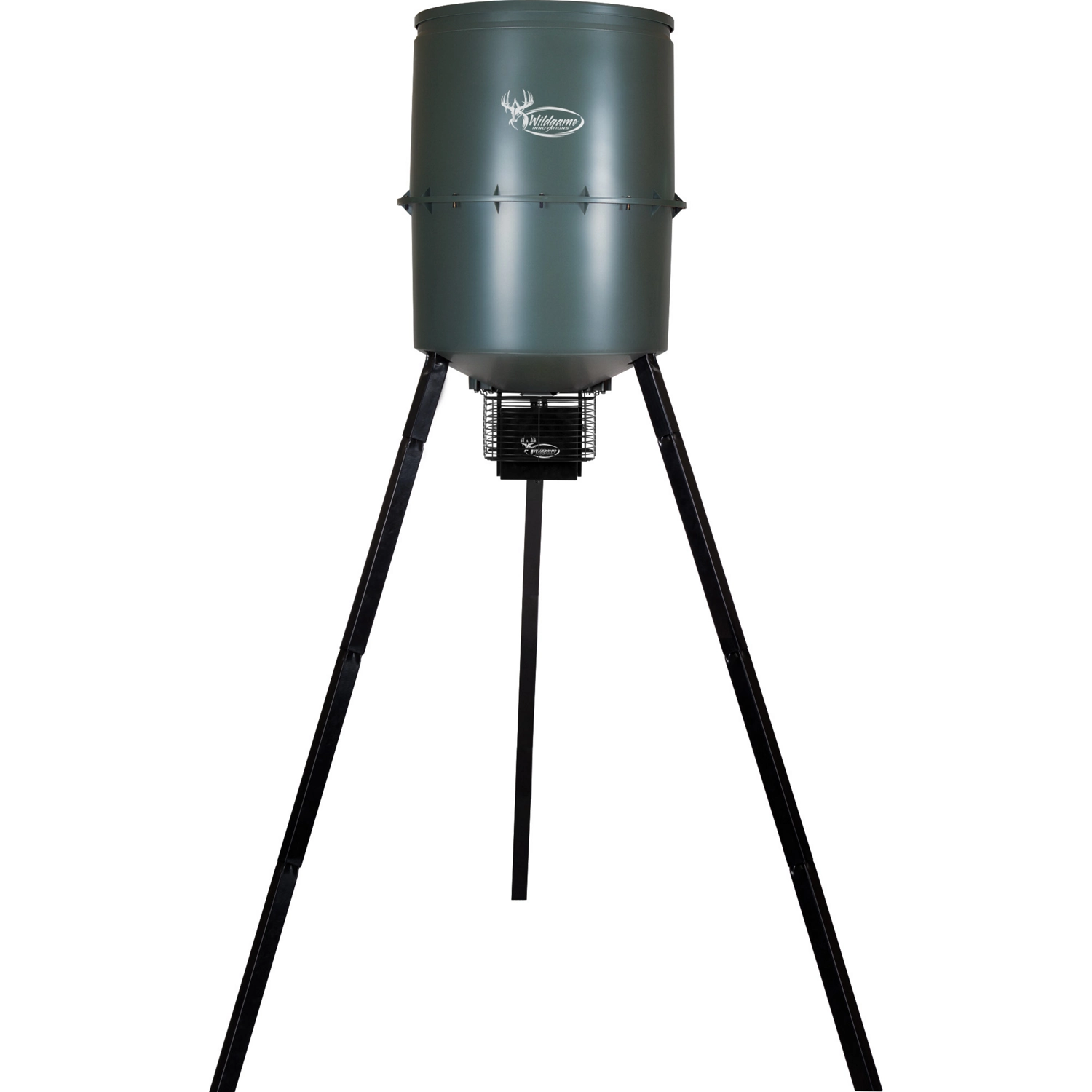
Wildgame Innovations Quick-Set Pro 270 Feeder
Check Price on Amazon →Confirm price and availability on Amazon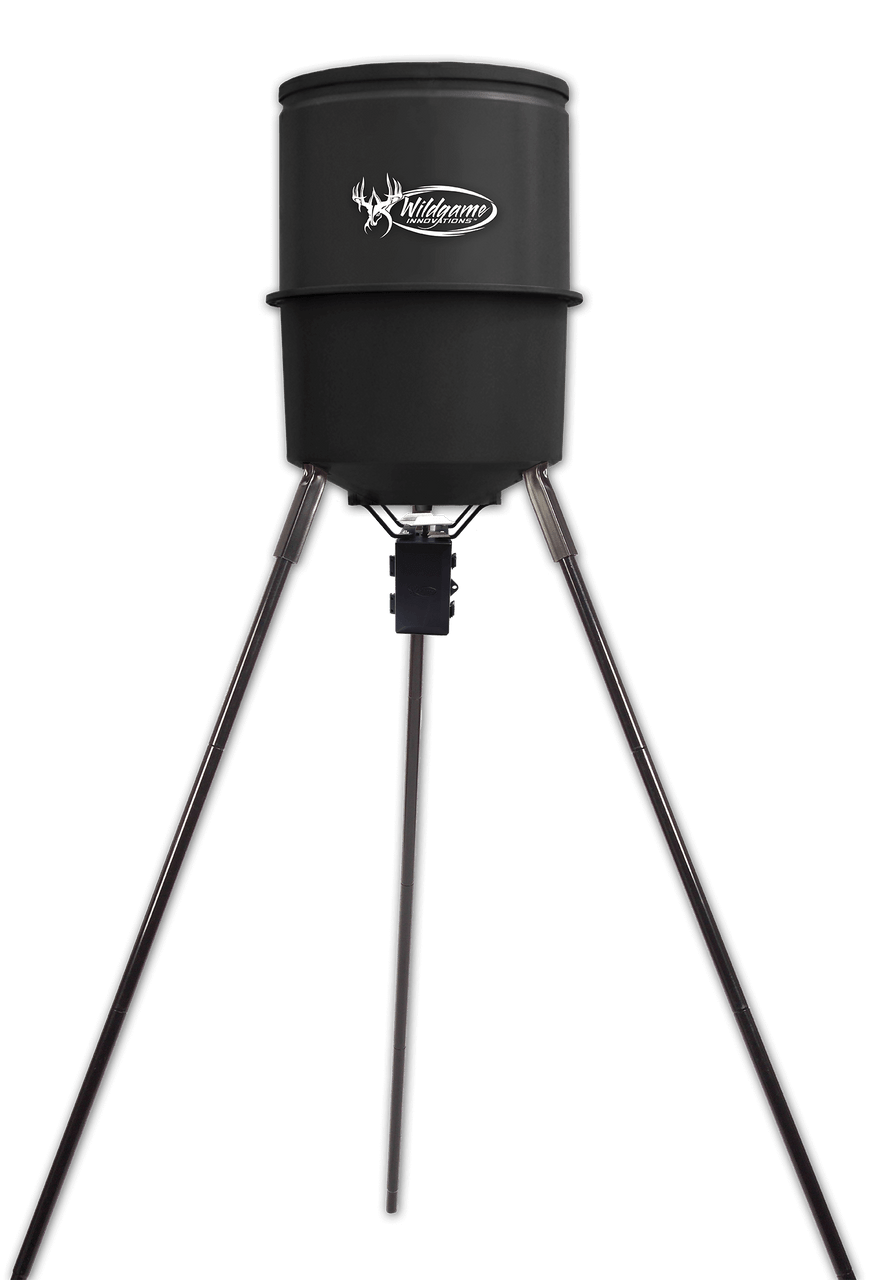
Wildgame Innovations Quick-Set 225 Feeder
Check Price on Amazon →Confirm price and availability on Amazon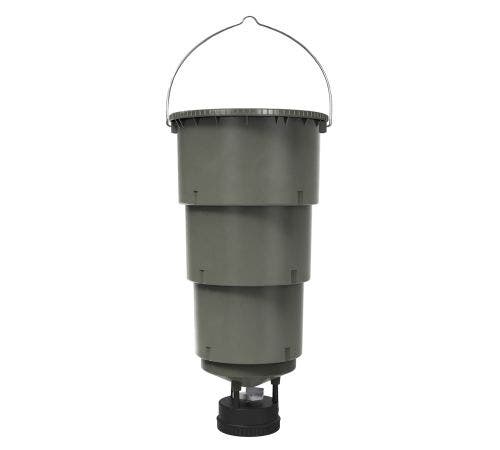
Moultrie 30 lb All-in-One Hanging Feeder
Check Price on Amazon →Confirm price and availability on Amazon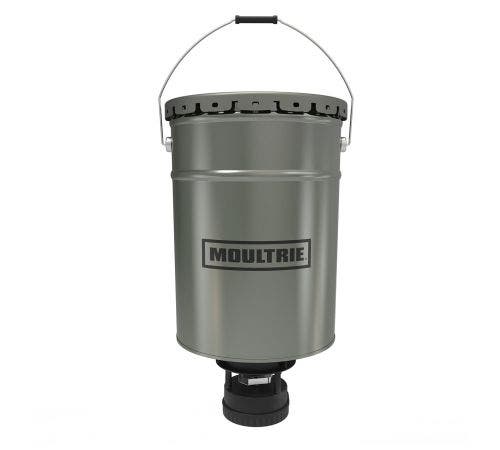
Moultrie 40 lb Hanging Feeder
Check Price on Amazon →Confirm price and availability on Amazon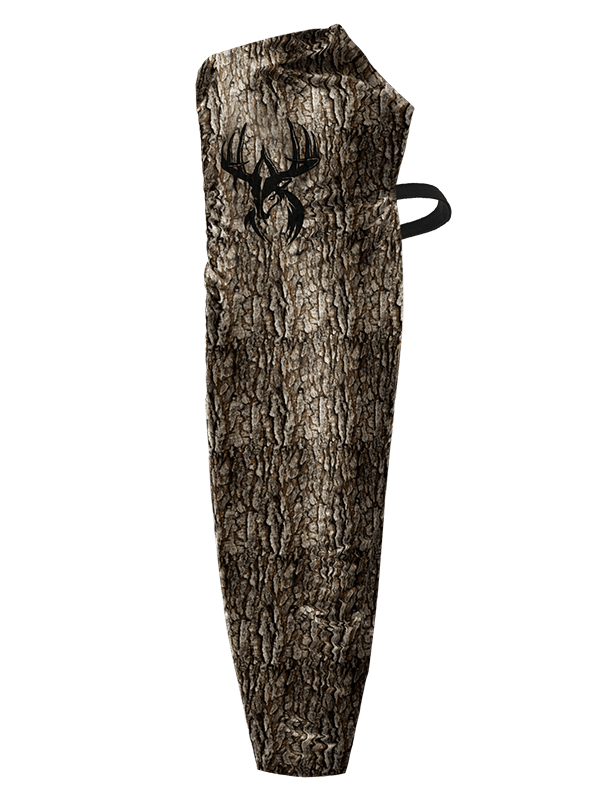
Wildgame Innovations Treehugger 100 lb Feeder
Check Price on Amazon →Confirm price and availability on AmazonAs an Amazon Associate, we earn from qualifying purchases.


