

Deer Feeder Maintenance: 9 Proven Checks by Season
As an Amazon Associate, we earn from qualifying purchases at no extra cost to you.
Based on manufacturer support pages and published specs. Product picks are not hands-on tests.
2026 US field guide
Short answer: Good deer feeder maintenance means nine checks: battery, terminals, timer, motor, spin plate, funnel, hopper, lid and legs. Do all nine before spring and fall feeding, take a quick look at every refill, and store the battery charged in the off-season. Most stoppages trace back to power or a stuck spin plate.
Table of Contents

Three fast choices for deer feeder maintenance
WEAK POWER
Power-Sonic PS-640 F1
A sealed 6V 4.5Ah battery with F1 tab terminals.
Consider if: your 6V battery no longer holds a charge.
Check priceRead evidenceFEWER BATTERY TRIPS
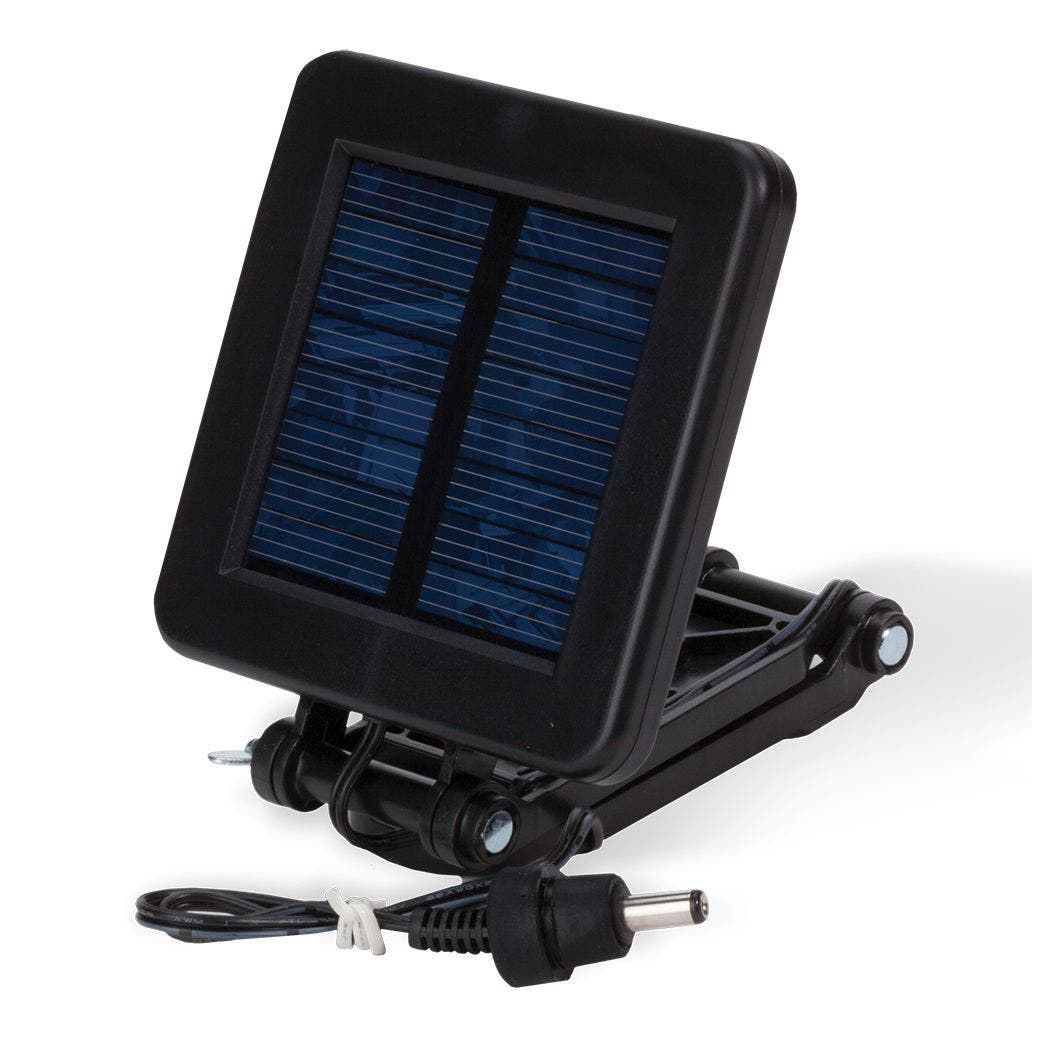
Moultrie 6V Feeder Solar Panel
A 6V panel, model MFA-15110, that tops up a rechargeable 6V battery.
Consider if: the site gets sun and battery trips are the chore you hate.
Check priceRead evidenceFAST DIAGNOSIS
Digital Multimeter
The one tool that tells you if the battery or the feeder is at fault.
Consider if: you are guessing which part failed.
Check priceRead evidenceWhy deer feeder maintenance pays off
A feeder sits outdoors all year, full of food, in rain, heat and cold. The parts that fail first are usually cheap and simple: a tired battery, a dirty terminal or a spin plate that has crept out of position. Catching those on a scheduled visit beats finding an empty site a week before season.
Maintenance also protects what you have spent. Our best deer feeders guide compares complete feeders, but a well-kept kit can often keep running with a replacement part. Before you buy anything, run the checks below.
Moultrie, for example, rates its Pro Hunter III kit for 14°F to 140°F. If you run a feeder in hard cold, expect the battery and timer to behave differently, and check your own manual for its rated range.
Pick your maintenance route in 30 seconds
- Is the feeder working now? Yes: do the seasonal checks below. No: start with our deer feeder not working guide.
- Does the timer display light up? No: suspect the battery, terminals or wiring first.
- Does the plate spin in test mode? No: turn it by hand with the power off to see if it is jammed.
The 9 deer feeder maintenance checks
Disconnect the battery before you touch the spinner or motor. Work through these in order, because each one rules out a cause before you reach for the next.
1. Battery charge
Moultrie support tells owners to confirm the right battery, a 6V 5Ah unit or a 12V 7Ah unit where the kit takes that, and to try a new one to rule out a fault. A multimeter gives you a reading, though a battery can show a fair number and still sag under load. Our feeder battery guide covers the 6V and 12V differences.
2. Terminals and wiring
Look for white or green crust on the terminals, loose connectors and chewed wire. Clean light corrosion, and make sure each connector sits tight. Follow the wire all the way up to the timer, since rodents and squirrels tend to chew where you are not looking.
3. Timer and programming
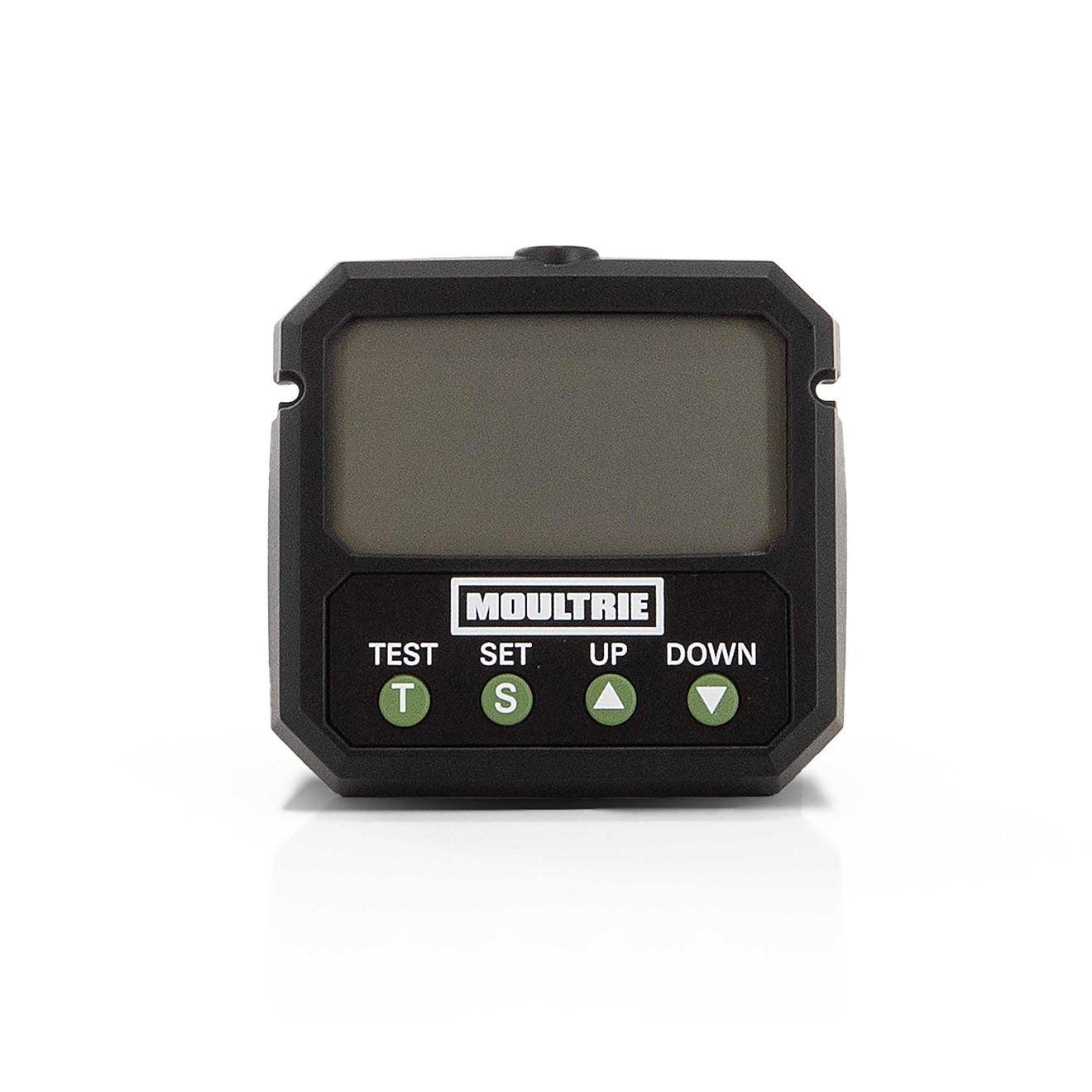
Check the clock is correct and the feed times are still stored. Moultrie support suggests holding the reset button for 10 seconds when a timer misbehaves. After a reset, reprogram and test it. Our timer programming guide walks through it, and our timer guide covers replacements.
4. Motor
Run a test cycle and listen. A steady whir is what you want. Humming without movement points to a jam or a failing motor, while silence with a good battery points to wiring or the timer. Rule those out before reading our replacement motor guide.
5. Spin plate
With the power off, turn the plate by hand. Moultrie says it should be pushed fully down on the shaft and should move freely. Moultrie also advises raising the plate as high as it will go without touching the hopper bottom, which helps prevent jams.
6. Funnel and outlet
Look up into the outlet for caked feed, webs and nests. Wet corn sets like concrete here. If you find a blockage, empty the feeder and clear it properly, rather than poking at a full hopper.
7. Hopper
Check for cracks, chew marks and clumped feed. Any crack that lets in rain ruins the feed below it. If there is mold, follow our steps on how to clean a deer feeder before you refill.
8. Lid
Make sure the lid seats fully and any latch or twist-lock still holds. A loose lid is an open door for rain, and raccoons learn quickly. If they are getting in, see our guide to keeping raccoons and hogs off a feeder.
9. Legs and anchors
A full feeder is heavy, so stability is a safety check. Tighten leg bolts, look for rust at the joints, and confirm the feet sit on firm ground. Soft soil after rain can tip a feeder, so check it after storms. Our feeder height guide helps if you are resetting the legs.
Seasonal deer feeder maintenance calendar
This calendar is our suggested routine. Adjust it to your feeding plan and your state rules.
| When | Focus | Tasks |
|---|---|---|
| Every refill | Quick look | Lid seal, feed condition, run a test cycle |
| Spring | Full check | All nine checks, clean, charge battery, confirm timer |
| Summer | Heat and mold | Smaller fills, watch for clumped feed, check wasps and nests |
| Fall | Full check | All nine checks before season, new battery if weak |
| Winter | Cold and wet | Check the battery, ice around the outlet and leg footing |
| After storms | Safety | Legs, lid, wiring and water in the feed |
Off-season deer feeder maintenance and storage
If you stop feeding for a stretch, do not walk away from a loaded feeder. Corn left in the hopper is the most common way to start next season with mold and pests.
- Empty all feed and clean the hopper.
- Pull the battery, charge it fully and store it somewhere cool and dry. Sealed lead-acid batteries lose charge in storage, so recharge on the schedule in the battery maker’s instructions.
- Check the timer’s manual for backup batteries, and remove them if they could leak.
- Cover the motor and spinner, or take the unit indoors if it unbolts easily.
- Write down model numbers, battery type and any part you need to order, so the spring visit is short.
Gear for deer feeder maintenance
| Product | Type | Fits | Best use | Retailer offer |
|---|---|---|---|---|
| Power-Sonic PS-640 F1 | 6V 4.5Ah battery | 6V kits with F1 tabs | Replacing a worn battery | Check price |
| Moultrie 6V Solar Panel | Charger | 6V rechargeable kits | Fewer battery trips | Check price |
| Digital multimeter | Tool | Any feeder | Finding the fault | Check price |
| Moultrie Universal Digital Timer III | Timer | 6V or 12V; confirm your kit | Replacing a failed timer | Check price Timer III sold out at Amazon itself? The Moultrie Timer II is in stock |
| Moultrie Spinner Plate and Funnel Kit | Repair part | Confirm your kit | Rusted plate or funnel | Check price |
Choose quickly: get the meter first. It often saves you from buying the wrong part.
Power-Sonic PS-640 F1
Buy if: you have a 6V kit, F1 tab connectors and a battery that fails under load.
Pause if: you run 12V, or your kit uses a Moultrie tab-top style battery. Check your manual.
Read field evidence
It is rated 6V and 4.5Ah. Moultrie support mentions a 6V 5Ah battery, so compare this rating to your kit. Moultrie sells its own tab-top battery for the Pro Hunter III, and that kit requires that style.
Moultrie 6V Feeder Solar Panel
Buy if: your feeder has a rechargeable 6V battery and the panel can see open sky.
Pause if: the site is shaded, or your kit runs on non-rechargeable batteries.
Read field evidence
Moultrie lists this panel as compatible with its Pro Hunter III kit. A panel does not replace maintenance, because a worn battery still needs swapping. Our solar deer feeder guide compares complete setups.
Digital multimeter
Buy if: you own more than one feeder or often chase power problems.
Pause if: you keep a known-good spare battery, which is a fair test by itself.
Read field evidence
This is a general suggestion, not a tested model. Any basic meter that reads DC voltage will do. Remember that a resting voltage is only one clue, so also test with the feeder running if you can do that safely.
A simple record makes all of this easier. After each visit, note the date, the battery reading, how much feed went in and anything that looked wrong. Over one season that log shows which deer feeder needs attention, how often its battery really lasts and which site floods or draws pests. If you run more than one deer feeder, give each a number and write it on the hopper. Good notes also make support calls faster, since you can give the model, the fault and the date it started instead of guessing from memory.
What to carry in a deer feeder maintenance kit
Most wasted trips happen because one small item got left at home. Keep a dedicated box in your truck so every visit can end with a working feeder. A basic kit does not cost much, and it pays for itself the first time it saves you a second drive.
- A charged spare battery that matches your kit, plus a basic multimeter.
- Screwdrivers, pliers and a wrench for housing screws, leg bolts and anchors.
- Wire connectors and electrical tape for chewed or loose wiring.
- A stiff brush and a rag for the spin plate, funnel and terminals.
- A notebook or phone note with model numbers and your timer settings.
- Work gloves and a tarp for emptying a hopper without leaving spilled feed behind.
Deer feeder maintenance by feeder type
Spin feeders
These have the most parts to look after: battery, timer, motor and plate. Run a test cycle on every visit, because a spin feeder can fail silently and leave a full hopper. Our guide to the best automatic deer feeders covers models if yours is beyond repair.
Gravity feeders
With no electronics, maintenance is mostly about flow. Check each port for clumped feed, keep drain holes open and look for chewing around the ports. In humid weather, check more often, because pellets swell when they take on moisture.
Hanging feeders
The strap or chain is the main safety item. Check for wear and for bark damage at the tree, and take the feeder down if you stop using it for a while. Follow the maker’s limits on load.
Cellular and app feeders
Add firmware, signal and subscription checks to your list. App-based alerts help, but they do not replace looking at the feeder. See our camera and app-control guide for what these systems can report.
When deer feeder maintenance stops making sense
Repairing is usually the right call when one part has failed and the hopper and legs are sound. Timers, batteries and spin plates are designed to be replaced. Replacing the whole feeder makes more sense in these cases:
- The hopper is cracked, or animals have chewed through it.
- The legs are rusted at the joints, so a full load is not safe.
- You have replaced the kit more than once, which points to a site problem such as water or pests.
- Parts for your model are no longer sold, which is common on older generations.
Before buying, record what failed and when. A log of failures also helps if you need to contact support during the warranty period. Moultrie lists a 1-year warranty on its Pro Hunter III, so keep your receipt with your model number.
Deer feeder maintenance mistakes to avoid
- Replacing parts before testing. Rule out the battery and connections first.
- Working on a live spinner. Disconnect power every time.
- Leaving feed in storage. Empty it before any long break.
- Mixing battery voltages. Match the battery, panel and timer to the kit. A familiar voltage alone does not prove a fit.
- Setting the plate too low. Moultrie advises keeping it raised to avoid jams.
- Skipping notes. Log the battery date and any faults, because patterns tell you more than one bad day.
Three common maintenance cases
The feeder a few hours from home
Every visit counts, so bring a spare battery, a meter, a spare timer and basic tools. Our remote property feeder guide covers kits that suit long gaps.
The hunting club with several feeders
Label each feeder and keep one log. Shared feeders tend to get skipped, so assign each one to a person. See our hunting club feeder guide.
The backyard feeder
Close access makes it easy, so do short checks more often. Quiet, clean operation matters more here, and our backyard feeder guide covers that.
Frequently asked questions
What does deer feeder maintenance include?
Nine checks cover it: battery, terminals, timer, motor, spin plate, funnel, hopper, lid and legs. Add regular cleaning, and empty the feed before any long break.
How often should I service my deer feeder?
Take a quick look at every refill and do a full check before spring and fall feeding. Check again after storms, since wind and soft ground can shift the legs.
Why did my deer feeder stop spinning?
Start with the battery, then the spin plate. Moultrie support says to confirm the battery, make sure the plate is fully on the shaft and turns by hand, and hold the timer reset for 10 seconds.
Should I leave corn in my feeder in the off-season?
No. Empty and clean it before any long break. Stored corn draws moisture, mold and pests, and it can jam the outlet by the time you return.
How should I store a deer feeder battery?
Charge it fully, store it cool and dry, and recharge it on the schedule in the maker’s instructions. Sealed lead-acid batteries slowly lose charge while stored.
Does a solar panel remove the need for maintenance?
No. It reduces battery trips, but the battery still ages and the rest of the feeder still needs checks. Shade and dirt on the panel also cut its output.
The choice in one sentence
Run the nine deer feeder maintenance checks before each season, test power first, and buy parts only after a check proves you need them.
Check the Power-Sonic Battery on AmazonHow we built this guide
We used manufacturer specs and support pages, and combined them with standard care for sealed batteries and outdoor equipment. We did not test these products. The calendar and multimeter pick are our suggestions. Always follow the manual for your exact kit.
Sources
- Moultrie support: Won’t Spin troubleshooting
- Moultrie support: No Power troubleshooting
- Moultrie: 250 lb Deer Feeder Pro III specifications
- National Deer Association: Aflatoxin in Corn
Products mentioned in this guide

Power-Sonic PS-640 F1 6V Feeder Battery
Check Price on Amazon →Confirm price and availability on Amazon
Moultrie 6V Feeder Solar Panel
Check Price on Amazon →Confirm price and availability on AmazonMoultrie Universal Digital Timer III
Check Price on Amazon →Confirm price and availability on Amazon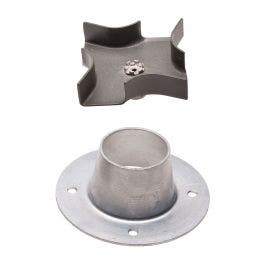
Moultrie Spinner Plate & Funnel Kit
Check Price on Amazon →Confirm price and availability on AmazonAs an Amazon Associate, we earn from qualifying purchases.


