Best Deer Feeder Motors (2026 Guide)
Disclosure: This post contains affiliate links. As an Amazon Associate, we earn from qualifying purchases at no extra cost to you.
On this page: Quick answer · At a glance · Pick in 30 seconds · How we picked · Wildgame 12V Motor · Moultrie Spinner Plate · Wildgame Trophy Hunter Timer · Power-Sonic PS-640 · Moultrie 6V Solar Panel · Moultrie Gravity Feeder Kit · Moultrie Feeder Feet Gen 2 · Videos · Real cost · How to choose · Resources · FAQs · Verdict
Quick answer: the best deer feeder motors
The best deer feeder motors start with the Wildgame 12V Motor. It is a direct 12V replacement motor with a listed 1/4-inch shaft, and the shaft size is the detail that decides whether a replacement motor fits your feeder. Before you order any motor, confirm four things about the one you already own: voltage, shaft diameter, shaft length, and connector. Voltage and shaft size alone do not establish fit, and a motor that spins but does not fit is a return, not a repair.
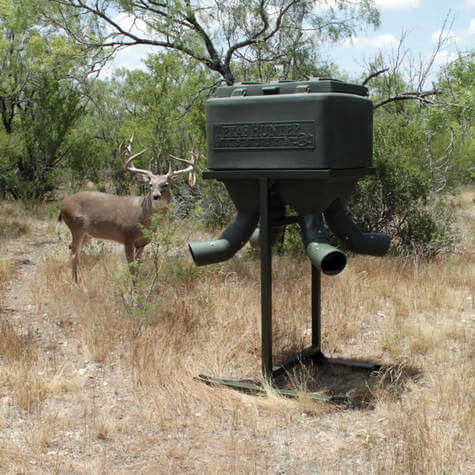
A deer feeder motor is a small electric motor that spins the plate under the hopper and throws corn or pellets. The timer tells it when to run, the battery powers it, and the plate does the throwing. When a feeder stops spinning, the fault can sit in any of those four parts, and buying a motor before diagnosing the fault is the most common money wasted on feeder repairs. This guide covers the whole motor system: a replacement motor, a spinner plate, a timer, a battery, a solar panel, a no-motor conversion kit, and a support part, so you can buy the part that actually failed.
One warning runs through the whole guide. No maker in this guide publishes motor RPM or throw figures for its replacement motors, so this guide prints none. Any roundup that prints an RPM or a throw distance for a replacement motor is guessing, and a guess is a bad basis for a part order. What the makers do publish is voltage, shaft size, and fit, and those are the figures this guide uses.
Three fast choices
Wildgame 12V Motor
The Wildgame 12V Motor is the replacement motor to buy first because it is a direct 12V replacement with a listed 1/4-inch shaft, and the shaft size is the detail that decides fit.
Consider that voltage and shaft size alone do not establish fit, so confirm length, mounting, connector, and spinner before ordering.
Moultrie Spinner Plate and Funnel Kit
The Moultrie Spinner Plate and Funnel Kit is the plate to buy first when the motor still runs and only the plate is worn, bent, or throwing unevenly.
Consider that a new plate cannot fix a dead motor, so test the motor before ordering a plate.
Wildgame Trophy Hunter Timer
The Wildgame Trophy Hunter Timer is the timer to buy when the motor is fine and the control unit is the part that failed, with six feeds a day at one to thirty seconds.
Consider that timer voltage and connector must match your control unit, so check both before ordering.
These are use-case starting points, not claims of firsthand testing. Motor specs below are maker claims, not measured output figures.
Best deer feeder motors at a glance
Compare part type and fit first. The Deal column reuses only verified Amazon offers from this guide; a blank cell means no verified offer is listed here, never a guessed link.
| Product | Best for | Part type | Key spec | Deal |
|---|---|---|---|---|
| Wildgame 12V Motor | Replacing a dead 12V motor | Replacement motor | 12V, 1/4-inch shaft | Check Wildgame 12V Motor price |
| Moultrie Spinner Plate and Funnel Kit | Worn or bent plate, motor still runs | Spinner plate kit | Metal plate and funnel, MFA-13103 | Check Moultrie Spinner Plate price |
| Wildgame Trophy Hunter Timer | Failed control unit, motor fine | Timer | 6 feeds a day, 1 to 30 seconds | Check Wildgame Trophy Hunter Timer price |
| Power-Sonic PS-640 F1 | Dead or weak 6V battery | Battery | 6V sealed lead-acid, F1 tabs | Check Power-Sonic PS-640 price |
| Moultrie 6V Solar Panel MFA-15110 | Keeping a 6V battery charged | Solar panel | 6V feeder solar panel | Check Moultrie 6V Solar Panel price |
| Moultrie Gravity Feeder Kit MFG-13338 | Quitting motors altogether | Gravity conversion kit | Quick-Lock adapter, no power needed | Check Moultrie Gravity Feeder Kit price |
| Moultrie Feeder Feet Gen 2 MFA-15008 | Support part for the motor housing | Support part | Gen 2 replacement feet | Check Moultrie Feeder Feet price |
Pick a motor part in 30 seconds
- Does the feeder make no sound at all? Check the battery and the timer first, then the motor. Power-Sonic PS-640 or Wildgame Trophy Hunter Timer before Wildgame 12V Motor.
- Does the motor run but the corn throws unevenly? The plate is the suspect, not the motor. Moultrie Spinner Plate and Funnel Kit.
- Does the battery die between visits? Add solar power rather than a bigger battery. Moultrie 6V Solar Panel MFA-15110.
- Are you done with motors, timers, and batteries? Convert the feeder to gravity and walk away. Moultrie Gravity Feeder Kit MFG-13338.
This is a selection path, not a repair manual. If the feeder is under warranty, check the warranty before opening the control box.
How we picked the best deer feeder motors
We picked from motor-system parts with a verified offer and a maker-stated fit detail. Every part in this guide has a job in the same system: the motor spins the plate, the plate throws the feed, the timer tells the motor when to run, the battery powers it, the solar panel charges the battery, and the conversion kit removes the motor from the system entirely. A part earned its place by having a stated voltage, shaft size, or model number that a buyer can match against the part they already own.
Three weaknesses in competing roundups shaped this guide. First, many roundups print RPM and throw figures for replacement motors that no maker publishes, so this guide prints none; a motor is judged on voltage, shaft, and fit, which are the figures that decide whether it works. Second, many roundups list a motor without saying what else must match, so every review below names the fit checks: voltage, shaft diameter, shaft length, mounting, connector, and spinner. Third, many roundups treat a dead feeder as a dead motor, so this guide starts with diagnosis, because a dead battery or a dead timer costs less than a motor and fails more often.
What we did not do matters too. Nobody on this site ran these motors on a bench or in a field test for this guide, and nothing here claims a hands-on result. Owner experience is paraphrased from retailer listings and the site’s own replacement-motor guide, good and bad, and where owner reports are thin, the guide says so instead of filling the gap with invented praise. Specs are maker claims, not measured output figures.
One honest limit on the whole category. Only two pure motor and plate parts carry verified offers in the pool this guide works from, the Wildgame 12V Motor and the Moultrie Spinner Plate and Funnel Kit, so this guide covers the full motor system around them rather than inventing seven motors that do not exist. That is the honest shape of this category: the motor is one part in a system, and the system is what you buy.
1. Wildgame 12V Motor — Best deer feeder motor for a 12V replacement
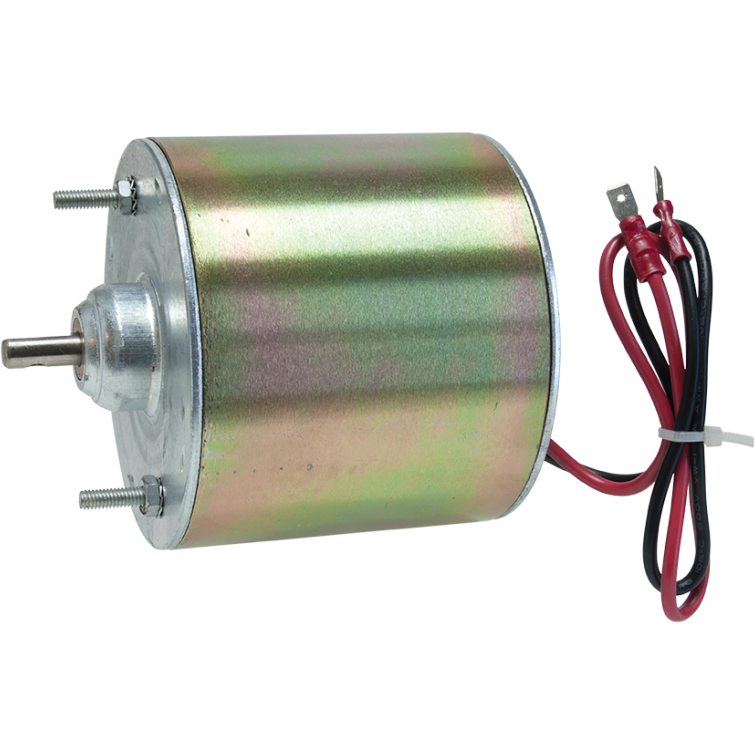
Our take: The Wildgame 12V Motor is the replacement motor to buy first because it is a direct 12V replacement with a listed 1/4-inch shaft, and the shaft size is the detail that decides fit. A 12V motor that matches your feeder’s voltage and shaft is a repair; a 12V motor that does not match is a return. This motor gives you the two figures that matter most, voltage and shaft diameter, in the listing itself.
The strengths are fit and clarity. A 12V motor suits the 12V control units that Wildgame feeders use, and the listed 1/4-inch shaft matches the spinner plates made for that shaft size. The motor is a separate part, so you replace the part that failed instead of the whole feeder, which is the cheapest repair a dead feeder can have. Owners who measure first and order second report the fewest problems, and this motor rewards that habit, because the listing states what it is instead of leaving the buyer to guess.
The weaknesses are the fit checks the listing cannot do for you. Consider that voltage and shaft size alone do not establish fit, so confirm length, mounting, connector, and spinner before ordering. Shaft length decides whether the plate sits at the right height under the hopper, the mounting decides whether the motor bolts in without drilling, and the connector decides whether it plugs into your control unit without rewiring. A motor that matches on voltage and shaft but fails on length or connector is still the wrong part.
Pros
- 12V replacement motor for Wildgame 12V control units
- Listed 1/4-inch shaft, the detail that decides plate fit
- Replaces only the failed part, not the whole feeder
- Cheapest repair a dead feeder can have when the motor is the fault
- Listing states voltage and shaft size plainly
Cons
- Voltage and shaft size alone do not establish fit
- Shaft length, mounting, and connector must be confirmed separately
- Wrong for a 6V system; never raise voltage on a 6V-only feeder
- No RPM or throw figure published by the maker
- Owner reports are thin compared with complete feeders
From the field: The site’s own replacement-motor guide treats this motor as the 12V option to compare, and the recurring owner lesson is measurement: owners who record the old motor’s voltage, shaft diameter, shaft length, mounting holes, and connector before ordering report the smoothest swaps. The 6V Wildgame motor, listed separately with a 1/8-inch shaft, is the cautionary tale here: same brand, different shaft, and a buyer who orders by brand alone will order the wrong part. Measure the old motor, then order.
| Spec | Detail |
|---|---|
| Voltage | 12V |
| Shaft diameter | 1/4 inch, as listed |
| Part type | Replacement motor |
| Brand | Wildgame Innovations |
| Fit checks | Voltage, shaft diameter, shaft length, mounting, connector, spinner |
| RPM | Not published by the maker |
| Throw distance | Not published by the maker |
Check Wildgame 12V Motor on Amazon
2. Moultrie Spinner Plate and Funnel Kit — Best deer feeder motor plate
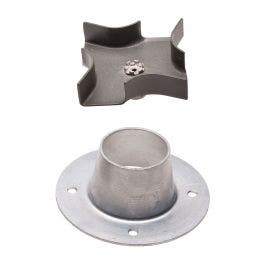
Our take: The Moultrie Spinner Plate and Funnel Kit is the plate to buy first when the motor still runs and only the plate is worn, bent, or throwing unevenly. The plate is the part that touches the feed, so it wears first: corn scours it, moisture rusts it, and a bent plate throws to one side. A new plate on a good motor is a ten-minute repair that saves a feeder.
The strengths are the kit and the material. The kit pairs a metal spinner plate with a funnel, so the feed drops onto the plate cleanly instead of scattering inside the housing. Metal holds its shape better than plastic under corn and weather, and a plate that holds its shape throws evenly, which is the whole job. The kit carries the Moultrie part number MFA-13103, so fit can be checked against the maker listing instead of guessed from a photo. For a Moultrie feeder with a running motor and a tired plate, this is the right part.
The weaknesses are the limits of a plate-only fix. Consider that a new plate cannot fix a dead motor, so test the motor before ordering a plate. If the motor hums but does not spin, or spins slowly under load, the fault is the motor or the battery, not the plate, and a new plate will throw nothing. The plate also fits the Moultrie family it was made for, so check the part number against your feeder before ordering, and do not assume a plate from one brand fits another brand’s shaft.
Pros
- Metal plate holds its shape under corn and weather
- Funnel included, so feed drops cleanly onto the plate
- Moultrie part number MFA-13103 for a checkable fit
- Ten-minute repair when the motor still runs
- Cheaper than replacing the motor or the feeder
Cons
- Cannot fix a dead or weak motor
- Fits the Moultrie family it was made for, not every brand
- A bent plate and a weak motor look alike until you test
- No RPM or throw figure published by the maker
- Owner reports are thin compared with complete feeders
From the field: The site’s own replacement-motor guide treats the spinner plate as a separate diagnosis step, and the owner lesson is to test before ordering: run the motor with the plate off, listen for a steady spin, and check the plate for bends and wear. Owners who replace a worn plate report even throws returning at once, and owners who replace a plate over a dying motor report nothing changing, which is the expensive way to learn that the motor was the fault. Test first, order second.
| Spec | Detail |
|---|---|
| Part number | MFA-13103 |
| Part type | Metal spinner plate and funnel kit |
| Brand | Moultrie |
| Fixes | Worn, bent, or uneven-throwing plate |
| Does not fix | Dead motor, weak battery, failed timer |
| RPM | Not published by the maker |
Check Moultrie Spinner Plate and Funnel Kit on Amazon
3. Wildgame Trophy Hunter Timer — Best deer feeder motor timer
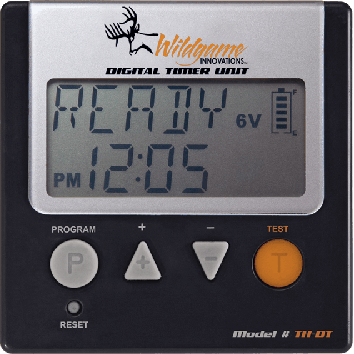
Our take: The Wildgame Trophy Hunter Timer is the timer to buy when the motor is fine and the control unit is the part that failed, with six feeds a day at one to thirty seconds. A feeder that throws at the wrong times, or not at all, usually has a timer fault, not a motor fault, and a timer costs less than a motor. This timer is the control-unit replacement to compare first for Wildgame feeders.
The strengths are the schedule and the price of the repair. Six feeds a day at one to thirty seconds covers dawn, midday, and dusk with room to spare, and thirty seconds is a long enough run for a heavy scatter. Replacing a timer instead of a motor saves the cost of the motor and the work of the swap, because the timer sits in the control box where it can be reached without dropping the hopper. For a feeder that runs but throws at the wrong time, this is the part to check first.
The weaknesses are compatibility, and they are strict. Consider that timer voltage and connector must match your control unit, so check both before ordering. A timer that fits the box but not the connector is a return, and a timer wired to the wrong voltage can damage the control unit. Moultrie Timer III is sold out at Amazon, and Moultrie Timer II is the in-stock option, so do not buy this Wildgame timer as a substitute for a Moultrie timer; buy the timer made for your feeder’s brand and voltage.
Pros
- Six feeds a day, 1 to 30 seconds each
- Cheaper repair than a motor when the timer is the fault
- Sits in the control box, reachable without dropping the hopper
- Covers dawn, midday, and dusk schedules
- Digital control, no mechanical dial to wear
Cons
- Voltage and connector must match your control unit
- Not a substitute for a Moultrie timer
- Cannot fix a dead motor or a dead battery
- A timer fault and a motor fault look alike until you test
- Owner reports are thin compared with complete feeders
From the field: The site’s own timer guide lists this timer at six events a day with one to thirty second runs, and the owner lesson is the same as for motors: test before ordering. Run the motor directly from the battery, bypassing the timer, and if the motor spins, the timer is the suspect. Owners who skip that test and order a motor first report spending twice: once on the motor, once on the timer that was actually broken.
| Spec | Detail |
|---|---|
| Feeds per day | Up to 6 |
| Run length | 1 to 30 seconds |
| Part type | Digital timer, control unit |
| Brand | Wildgame Innovations |
| Fit checks | Voltage and connector on your control unit |
| Does not fix | Dead motor, dead battery |
Check Wildgame Trophy Hunter Timer on Amazon
4. Power-Sonic PS-640 F1 — Best deer feeder motor battery

Our take: The Power-Sonic PS-640 F1 is the battery to buy when the motor is fine and the power is the part that failed. A feeder that throws weakly, throws once and stops, or throws nothing at all usually has a weak battery, not a dead motor, and a 6V sealed lead-acid battery with F1 tab terminals is the standard power for 6V feeder systems. This is the battery the site’s own battery guide compares, and it is the first power check before any motor order.
The strengths are standard fit and sealed build. A sealed lead-acid battery does not spill in the control box, and F1 tab terminals match the tab connectors that 6V feeder systems use, so the swap is a plug, not a rewire. The 6V rating matches the 6V control units and motors that most timed feeders run, and a fresh battery restores full throw strength at once, which is the fastest diagnosis there is: if a fresh battery fixes the throw, the motor was never the problem.
The weaknesses are terminal style and voltage discipline. The battery uses F1 tab terminals, not spring-top terminals, so check your feeder’s connector before ordering, because the wrong terminal is a return. Never raise voltage on a 6V-only system: a 12V battery on a 6V motor and timer can damage both, and the damage costs more than the battery saved. A battery also ages even when the feeder sits idle, so a battery that sat in a shed all winter may be weak in September, and no battery lasts forever.
Pros
- 6V sealed lead-acid battery, standard for 6V feeder systems
- F1 tab terminals match tab-connected 6V feeders
- Sealed build, no spill in the control box
- Fastest diagnosis there is: a fresh battery restores full throw
- Cheaper than a motor when the battery is the fault
Cons
- F1 tabs only; check your feeder’s terminal style first
- Never use a higher voltage on a 6V-only system
- Ages in storage, even when the feeder sits idle
- Cannot fix a dead motor or a failed timer
- Capacity must match the feeder; check the maker listing
From the field: The site’s own battery guide warns that the available research does not establish that this battery outlasts every competing brand, and that honesty matters here: buy it for fit and standard terminals, not for a longevity claim no one has proven. Owners who match the terminal style and the voltage report smooth swaps, and owners who order by voltage alone report connectors that do not fit. Check the tabs, check the volts, then order.
| Spec | Detail |
|---|---|
| Voltage | 6V |
| Type | Sealed lead-acid |
| Terminals | F1 tabs |
| Brand | Power-Sonic |
| Model | PS-640 F1 |
| Fit checks | Voltage, terminal style, capacity against the maker listing |
| Never do | Raise voltage on a 6V-only system |
Check Power-Sonic PS-640 F1 on Amazon
5. Moultrie 6V Solar Panel MFA-15110 — Best deer feeder motor solar panel

Our take: The Moultrie 6V Solar Panel MFA-15110 is the panel to buy when the battery dies between visits. A 6V battery that runs flat between monthly visits is not a bad battery; it is a battery with no charger. A solar panel aimed at the sky keeps the battery topped up all season, and it is the cheapest way to stop the most common feeder failure there is: a flat battery on the first morning of the season.
The strengths are fit and habit. The panel is made for 6V Moultrie feeder systems, so the voltage and the connector match the battery and the control unit it was made for, and the part number MFA-15110 lets you check fit against the maker listing. A panel needs aiming once and checking after storms, and then it works without visits, which is the point: the feeder keeps throwing while you are somewhere else. For a remote lease, that is worth more than a spare battery in the truck.
The weaknesses are sky and shade. A panel under a tree charges nothing, and a panel aimed at the wrong sky charges slowly, so site choice decides whether the panel works. The panel also charges a 6V battery; it does not fix a dead motor, a failed timer, or a battery that will no longer hold a charge. If the battery is old and will not hold power, replace the battery first, then add the panel, or the panel will charge a battery that cannot keep it.
Pros
- Made for 6V Moultrie feeder systems, voltage and connector match
- Keeps the battery topped up between visits
- Part number MFA-15110 for a checkable fit
- Aimed once, then works without visits
- Stops the most common feeder failure: a flat battery
Cons
- Needs a clear view of the sky; shade kills charging
- Does not fix a dead motor or a failed timer
- Does not revive a battery that will no longer hold a charge
- Must be checked after storms
- 6V only; check voltage before ordering
From the field: Owners who run solar panels report the steadiest feeders, and the lesson they repeat is aiming: a panel that faces the open sky keeps a battery alive all season, and a panel tucked under branches does not. The site’s own solar guide makes the same point with a compatibility check, and the check is worth doing, because a 6V panel on a 12V system, or a 12V panel on a 6V system, is a mismatch that costs a battery. Match the volts, aim at the sky, and check after storms.
| Spec | Detail |
|---|---|
| Voltage | 6V |
| Part number | MFA-15110 |
| Part type | Feeder solar panel |
| Brand | Moultrie |
| Fixes | Battery running flat between visits |
| Does not fix | Dead motor, failed timer, battery that will not hold a charge |
| Needs | Clear view of the sky |
Check Moultrie 6V Solar Panel MFA-15110 on Amazon
6. Moultrie Gravity Feeder Kit MFG-13338 — Best no-motor option for deer feeder motors
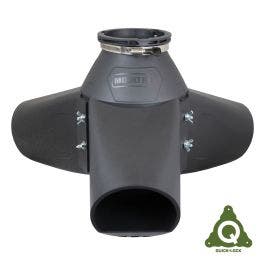
Our take: The Moultrie Gravity Feeder Kit MFG-13338 is the kit to buy when you are done with motors, timers, and batteries altogether. It converts a Moultrie feeder, or any barrel it fits, into a gravity feeder with a Quick-Lock adapter that twists on and off without extra tools or hardware. No batteries, no timer, no motor, and nothing to program: fill it, and deer eat when they arrive.
The strengths are the removal of the whole failure chain. A gravity feeder has no motor to die, no timer to fail, and no battery to run flat, so the feeder works in September exactly as it worked in June. The kit handles corn and protein pellets with adjustable flow, and the three-trough design spreads feed so deer eat evenly. Owners who convert report the same relief in different words: they are tired of feeder batteries and motors, and the gravity kit ends the chore.
The weaknesses are the loss of control. A gravity feeder cannot schedule feeds, cannot limit the daily amount, and cannot keep feed off the ground between visits, so deer eat what they want, and so does anything else that reaches the troughs. That suits a site where you want feed available at all times, and it fails on a site where raccoons or hogs already rule. The kit also fits Moultrie feeders and barrels it was made for, so check the Quick-Lock fit before ordering, and do not assume it fits every hopper.
Pros
- Converts a feeder to gravity with no motor, timer, or battery
- Quick-Lock adapter twists on and off without extra tools
- Adjustable flow for corn and protein pellets
- Three-trough design spreads feed evenly
- Ends the battery and motor chore entirely
Cons
- No schedule and no daily amount control
- Feed is available at all times, including to raccoons and hogs
- Fits Moultrie feeders and barrels it was made for, not every hopper
- A gravity feeder empties faster than a timed feeder on busy ground
- No throw, so feed stays at the feeder instead of scattering
From the field: Retailer reviewers of this kit report converting a mechanical feeder to gravity and not looking back, and the sentiment is consistent: the kit suits owners who visit rarely and want the feeder to work without them. The recurring watch-out is the same as for every gravity feeder: without a schedule, use swings with deer numbers and varmints, so a site with heavy hog pressure will empty a gravity kit faster than a timed feeder on the same ground. Convert for simplicity, not for control.
| Spec | Detail |
|---|---|
| Part number | MFG-13338 |
| Part type | Gravity feeder kit, Quick-Lock adapter |
| Brand | Moultrie |
| Power | None; gravity-fed, no batteries, no timer |
| Feed | Corn and protein pellets, adjustable flow |
| Design | Three-trough feed distribution |
| Fits | Moultrie feeders and barrels; check Quick-Lock fit |
Check Moultrie Gravity Feeder Kit MFG-13338 on Amazon
7. Moultrie Feeder Feet Gen 2 MFA-15008 — Best support part for a deer feeder motor
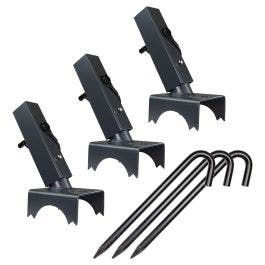
Our take: The Moultrie Feeder Feet Gen 2 MFA-15008 is the support part to buy when the motor housing sits too close to wet ground. It is not a motor, and this guide does not pretend it is: it is a set of replacement feet for Moultrie feeders, and its job is stance. A feeder that stands level and clear of mud keeps its motor housing drier, its plate freer, and its control box out of splash, and that is worth more than it sounds on a wet lease.
The strengths are modest and honest. Replacement feet restore a feeder that has sunk, tilted, or lost a foot to rot or hogs, and a level feeder throws evenly, because a tilted plate throws to one side. The part number MFA-15008 lets you check fit against the maker listing, and the swap needs no wiring, no programming, and no tools beyond the ones you already carry. For a feeder that works but stands badly, feet are the cheapest fix in this guide.
The weaknesses are the limits of a support part. Feet cannot fix a dead motor, a failed timer, or a weak battery, and a buyer who orders feet for a feeder that does not spin will still have a feeder that does not spin. The listing does not state a load rating in the sources checked, so this guide prints none, and the feet fit the Moultrie feeders they were made for, so check the part number before ordering. Feet are a stance fix, nothing more, and they earn their place here only as the part that protects the motor housing from the ground.
Pros
- Restores a level stance on a feeder that has sunk or tilted
- A level feeder throws evenly; a tilted plate throws to one side
- Part number MFA-15008 for a checkable fit
- No wiring and no programming to swap
- Keeps the motor housing clearer of mud and splash
Cons
- Not a motor, and cannot fix a dead motor
- Cannot fix a failed timer or a weak battery
- No load rating stated in the sources checked
- Fits the Moultrie feeders it was made for, not every brand
- Owner reports are thin compared with complete feeders
From the field: Owner reports for replacement feet are thin, and this guide will not invent them. What the evidence does support is the use case: owners who level a feeder report even throws returning, and owners who leave a feeder tilted report corn landing on one side and deer feeding on one side. If your feeder spins but throws unevenly, check the stance before you order a plate, because a level feeder with a good plate throws evenly, and a tilted feeder with a new plate throws unevenly in a new way.
| Spec | Detail |
|---|---|
| Part number | MFA-15008 |
| Part type | Replacement feet, Gen 2 |
| Brand | Moultrie |
| Fixes | Sunk, tilted, or damaged feeder stance |
| Does not fix | Dead motor, failed timer, weak battery |
| Load rating | Not stated in the sources checked |
Check Moultrie Feeder Feet Gen 2 on Amazon
Diagnose before you order: the five-minute motor check
Most dead feeders are not dead motors, and five minutes of diagnosis saves the cost of the wrong part. Start with the battery: put in a fresh battery, or test the old one, and watch whether the throw strengthens. A feeder that throws weakly on an old battery and strongly on a fresh one never needed a motor. Next, bypass the timer: run the motor directly from the battery, and if the motor spins, the timer is the suspect, not the motor.
Then check the plate. Take the plate off and run the motor bare; a motor that spins freely without the plate but strains with it has a plate problem, a jam, or corn packed in the housing. Look for corn dust, moisture, and insect nests in the housing, because all three stop a plate before they stop a motor. Finally, measure the old motor before you order its replacement: voltage, shaft diameter, shaft length, mounting holes, and connector. Write the figures down, then order against them. A motor ordered by brand alone is a guess, and a guess is a return.
One more warning. Never raise voltage on a 6V-only system to get a stronger throw. A 12V battery on a 6V motor and timer can damage both, and the damage costs more than the battery saved. If your 6V feeder throws weakly, the fault is the battery, the plate, or the motor, in that order, and the fix is the right part at the right voltage, not more voltage.
Watch: feeder height, timing, and timer setup
These three videos from the Best Deer Feeders channel cover the three things that decide whether a spinner feeder works on your property: height, timing, and timer setup. Watch them before you bolt anything to a tree or a tripod.
How High Should a Deer Feeder Be?
Feeder height decides how much of each spin-cast throw deer can reach, and how much ends up as ground scatter.
Best Time to Run a Deer Feeder (Morning vs Evening)
Timer schedules only pay off when the throw lands while deer are moving, so match feed times to local movement.
How to Set a Tripod Deer Feeder Timer
A short walkthrough of setting a tripod feeder timer, step by step, before the season starts.
What a deer feeder motor really costs to run
The motor is the cheapest part of the system to replace and the most expensive part to guess wrong. The table below uses what owners report, not printed prices, because prices change by store and by season.
| Cost item | What owners report | Notes |
|---|---|---|
| Replacement motor | One motor, ordered once, when the old one is measured first | A motor ordered by brand alone is a return, not a repair |
| Spinner plate | One plate, when the motor still runs and the plate is worn | Test the motor before ordering a plate |
| Timer | One timer, when the motor spins on direct battery power | Bypass the timer to test it; do not guess |
| Battery | A fresh 6V battery each season, sooner on a busy feeder | A battery ages in storage, even when the feeder sits idle |
| Solar panel | Bought once, aimed once, checked after storms | A panel under a tree charges nothing |
| Timer III vs Timer II | Moultrie Timer III is sold out at Amazon; Timer II is the in-stock option | Never buy a feeder on the assumption a sold-out timer will return |
| Wrong-part returns | One return wipes out the saving on a cheap part | Measure voltage, shaft, length, mounting, and connector first |
| Gravity conversion | One kit, no more batteries, timers, or motors | You trade control for simplicity; varmints eat freely |
The takeaway is simple. Diagnose first, measure second, order third, and the motor system costs one part instead of three. The most expensive repair in this guide is not the motor; it is the motor, the timer, and the battery ordered in the wrong order, because only one of them was actually broken.
How to choose a deer feeder motor part
How do I know the motor is the part that failed?
Test the chain in order: battery, timer, plate, motor. A fresh battery that restores the throw means the battery was the fault. A motor that spins on direct battery power but not through the timer means the timer was the fault. A motor that spins freely without the plate but strains with it means the plate or the housing was the fault. A motor that does nothing on direct battery power, with a fresh battery, is the motor. That order costs nothing to run and saves the cost of every part you do not need.
What must match when I order a replacement motor?
Six things must match: voltage, shaft diameter, shaft length, mounting, connector, and spinner. Voltage decides whether the motor runs at all without damage. Shaft diameter decides whether the plate fits. Shaft length decides whether the plate sits at the right height. Mounting decides whether the motor bolts in without drilling. Connector decides whether it plugs into your control unit. Spinner decides whether the plate you own fits the shaft you are buying. Voltage and shaft size alone do not establish fit, and a motor that matches on two of six is still the wrong part.
6V or 12V: which system do I have?
Read the label on your feeder, your control unit, and your old motor, and believe the label, not the listing you are about to buy. A 6V system runs a 6V battery, a 6V timer, and a 6V motor, and a 12V system runs 12V parts throughout. Never mix them, and never raise voltage on a 6V-only system to get a stronger throw. If the label is gone, check the battery the feeder came with and the timer model, and if you still cannot tell, ask the maker with the feeder model number before ordering.
When should I stop repairing and convert to gravity?
Convert when the motor system has failed twice and you visit rarely. A second motor, a second timer, and a second battery add up to more than a gravity kit, and a gravity feeder has no motor to die, no timer to fail, and no battery to run flat. Convert when you want feed available at all times and no schedule, and do not convert when raccoons or hogs already rule the site, because a gravity feeder feeds them freely. The conversion is a choice about control, not about cost alone.
Resources: more feeder guides on this site
- Best Deer Feeder Motor: 6V and 12V Replacements Compared
- Best Deer Feeder Parts and Accessories: Motors, Timers, Batteries and Solar
- Best Deer Feeder Timers: Moultrie and Wildgame Timers Compared
- Deer Feeder Solar Panel: 7 Smart 6V and 12V Buying Checks
- Deer Feeder Batteries: Best 6V and 12V Picks
- Deer Feeder Not Working? Diagnose It in This Order
- Best Automatic Deer Feeders: 7 Timed Feeders Compared
- Best Deer Feeder Kits for 55-Gallon Drums
- DIY 55-Gallon Drum Deer Feeder: Complete Build Guide
- How to Program a Deer Feeder Timer, Step by Step
- Best Deer Feeders 2026: 16 Top-Rated Feeders Reviewed
- Spin vs Gravity Deer Feeders: Key Differences Explained
- Best Deer Feeder Varmint Guard: 8 Ways to Stop Raccoons Stealing Your Corn
- How to Clean a Deer Feeder: 7 Easy Steps to Stop Mold
- Buying a Used Deer Feeder: Inspection Guide
Authority link: the Interagency Grizzly Bear Committee (IGBC) publishes the bear-resistant testing standard that no deer feeder has passed as bear-proof; see igbconline.org.
Frequently asked questions about deer feeder motors
What is the best deer feeder motor?
The best deer feeder motor in this guide is the Wildgame 12V Motor, a direct 12V replacement with a listed 1/4-inch shaft. Before ordering any motor, confirm voltage, shaft diameter, shaft length, mounting, connector, and spinner against the motor you already own.
How do I know if my deer feeder motor is dead?
Test the chain in order: battery, timer, plate, motor. A fresh battery that restores the throw means the battery was the fault. A motor that spins on direct battery power but not through the timer means the timer was the fault. A motor that does nothing on direct power, with a fresh battery, is the motor.
What size shaft does a deer feeder motor need?
It depends on your feeder. The Wildgame 12V Motor lists a 1/4-inch shaft, and the separate Wildgame 6V motor lists a 1/8-inch shaft. Measure the old motor’s shaft diameter before ordering, because a plate made for one shaft size will not fit the other.
Can I use a 12V motor on a 6V feeder?
No. Never raise voltage on a 6V-only system. A 12V battery or motor on a 6V timer and control unit can damage both. Match the motor voltage to the feeder’s system voltage, and read the label on the feeder, the control unit, and the old motor before ordering.
What is a spinner plate on a deer feeder?
The spinner plate is the flat plate under the hopper that the motor spins. Corn or pellets drop onto the plate, and the spin throws them out in a circle. A worn or bent plate throws unevenly, and a plate-only replacement, like the Moultrie MFA-13103 kit, fixes that without replacing the motor.
How many volts is a deer feeder motor?
Most timed deer feeders run 6V or 12V motors, matched to the feeder’s battery and timer. The Wildgame 12V Motor in this guide is 12V, and the Power-Sonic PS-640 battery is 6V. Read the label on your feeder and old motor; never guess the voltage from the brand alone.
Why does my deer feeder motor run but not throw corn?
The usual causes are a weak battery, a worn or bent spinner plate, or corn packed in the housing. Test with a fresh battery, take the plate off and run the motor bare, and clear the housing of corn dust and moisture. If the motor spins freely without the plate, the plate or the housing is the fault, not the motor.
Do I need a new timer or a new motor?
Bypass the timer and run the motor directly from the battery. If the motor spins, the timer is the suspect, and a timer like the Wildgame Trophy Hunter Timer is the cheaper repair. If the motor does nothing on direct power with a fresh battery, the motor is the suspect.
Is the Moultrie Timer III still available?
No. Moultrie Timer III is sold out at Amazon, and Moultrie Timer II is the in-stock option. Never buy a feeder or a timer on the assumption that a sold-out timer will come back; buy the timer made for your feeder’s brand and voltage.
Can I replace a deer feeder motor myself?
Yes, on most feeders it is a small job: remove the old motor, record voltage, shaft diameter, shaft length, mounting, and connector, then fit the replacement the same way. If the feeder is under warranty, check the warranty before opening the control box, because opening it can void cover.
What does RPM mean for a deer feeder motor?
RPM is revolutions per minute, the speed the motor spins. No maker in this guide publishes RPM figures for its replacement motors, so this guide prints none. Judge a replacement motor on voltage, shaft size, and fit, which are the figures that decide whether it works.
Should I convert my feeder to gravity instead of replacing the motor?
Convert when the motor system has failed twice and you visit rarely. A gravity kit like the Moultrie MFG-13338 has no motor to die, no timer to fail, and no battery to run flat. Do not convert when raccoons or hogs already rule the site, because a gravity feeder feeds them freely.
Final verdict: the best deer feeder motors
Our pick: the Wildgame 12V Motor is the best deer feeder motor for a 12V replacement, because it states its voltage and its 1/4-inch shaft in the listing, and those are the figures that decide fit. If the motor still runs and only the plate is worn, buy the Moultrie Spinner Plate and Funnel Kit. If the motor spins on direct power but not through the timer, buy the Wildgame Trophy Hunter Timer. If the throw is weak, test a fresh Power-Sonic PS-640 battery first, and add the Moultrie 6V Solar Panel so it stays charged. If you are done with motors altogether, convert with the Moultrie Gravity Feeder Kit.
Whichever part you buy, diagnose first, measure second, and order third. Record the old motor’s voltage, shaft diameter, shaft length, mounting, and connector before you order anything, and never raise voltage on a 6V-only system. The cheapest repair in this guide is the right part ordered once, and the most expensive is the wrong part ordered twice.
Last updated: November 2026.
Products mentioned in this guide
Wildgame Innovations 12V Replacement Motor
Check Price on Amazon →Confirm price and availability on AmazonMoultrie Spinner Plate & Funnel Kit
Check Price on Amazon →Confirm price and availability on AmazonWildgame Innovations Trophy Hunter Digital Timer
Check Price on Amazon →Confirm price and availability on AmazonPower-Sonic PS-640 F1 6V Feeder Battery
Check Price on Amazon →Confirm price and availability on AmazonMoultrie 6V Feeder Solar Panel
Check Price on Amazon →Confirm price and availability on AmazonMoultrie Gravity Feeder Kit
Check Price on Amazon →Confirm price and availability on AmazonMoultrie Feeder Feet Gen 2
Check Price on Amazon →Confirm price and availability on AmazonAs an Amazon Associate, we earn from qualifying purchases.