Best Banks Deer Feeders
As an Amazon Associate, I earn from qualifying purchases. This guide contains Amazon links for two Banks models only, the Feedbank 300 and the Feedbank Timber 250, because those are the two models with a verified Amazon listing used in this guide. Every other Banks model below is described without an Amazon button, so that no link is ever guessed or attached to the wrong feeder. If you buy through an Amazon link on this page, the price you pay does not change, and the commission helps keep this site running.
Quick Answer: Banks Feedbank 300 Is the Best Banks Deer Feeder for Most Properties
The Banks Feedbank 300 is the best Banks deer feeder for most properties. It holds 300 pounds of feed, mounts on a single post, feeds through four adjustable ports set at 42 inches, and needs no battery, motor, or timer. That combination suits a permanent feeding site better than any other Banks model: the capacity is large enough to stretch the time between refills, the single-post design leaves no tripod legs for a buck to catch his antlers on, and the gravity design has no electronics to fail in cold, wet, or dusty weather. If your site is not permanent, or if you need to move the feeder around a property during the season, the Banks Feedbank Timber 250 is the better pick, because it sits on the ground and can be moved without pulling a post. If your site is small, or you only want a trial station before committing to a post hole, the Banks Feedbank 40 is the sensible starting point. Read the capacity and mounting sections before you order, because the post is not included with the elevated Feedbank models, and that post, plus the work of setting it, is part of the real cost of the feeder.
On this page: Banks deer feeders at a glance | How to choose a Banks deer feeder | Feedbank 300 | Timber 250 | Feedbank 150 | Timber 500 | Feedbank 600 | Feedbank 40 | The real cost of owning a Banks feeder | FAQs | Verdict
What Makes a Banks Deer Feeder Different
Banks Outdoors builds one kind of deer feeder, and it builds it in several sizes: a gravity feeder. There is no motor to throw feed, no timer to program, no battery to charge, and no spinner plate to jam. Feed sits in a hopper, gravity pulls it down, and deer eat from ports at the bottom. When a port empties, more feed flows down to replace it. That simplicity is the whole appeal, and it is also the whole trade-off. A gravity feeder feeds whenever deer visit, day or night, and it cannot ration feed to certain hours the way a timed spin feeder can. If you want timed feeding, you want a different kind of feeder altogether, and our guide to the best automatic deer feeders covers those. If you want a feeder that works with no electronics at all, Banks is one of the strongest brands to start with, and the full comparison of gravity designs is in our best gravity deer feeders guide.
The second thing that sets Banks apart is the mount. Most gravity feeders stand on three legs. Banks elevated Feedbank models do not. They mount on a single center post, usually a 4×4 timber set into the ground, or on a tree. Banks describes this as a design that will not interfere with or damage antler growth, because there are no legs in the feeding area for a buck to brush against while he eats. Whether antler contact matters on your property depends on how many mature bucks use the site, but the practical benefit is real for any deer: a deer can approach the feeder from any side, and there is nothing at ground level to step over or bump into. The cost of that benefit is permanence. A tripod feeder can be dragged to a new spot in an afternoon. A single-post feeder can only be moved by pulling or cutting the post and setting a new one, so the elevated Feedbank models suit a site you expect to keep for several seasons.
The third thing to understand is the shape of the Banks family, because the model numbers tell you the capacity and almost nothing else, and it is easy to order the wrong size. The elevated Feedbank line runs 40, 150, 300, and 600 pounds. The ground-level Timber line runs 250 and 500 pounds, with capacities listed as 250-plus and 500-plus pounds. Every elevated model except the small 40 uses four feeding ports; the 40 uses two. Every elevated model except the 40 lists its ports at 42 inches, which Banks describes as an optimal height for deer feeding. The Timber models sit on the ground instead, so their feed is presented low, which changes the drainage, moisture, and non-target animal questions, as explained below. Two Banks products are deliberately not ranked in this guide: the Feedbank Mobile Base is a base for the 150 and 300, not a feeder, and the Haybank is a hay feeder that holds a rectangular hay bale, not a corn or protein feeder. Both may be useful accessories on a Banks property, but neither belongs in a ranking of deer feeders.
One more honesty note belongs at the top of this guide. This site researches feeders; it does not hands-on test them, and no sentence in this guide claims otherwise. Capacities, port counts, mounting requirements, and materials below come from Banks Outdoors product pages and retailer specification listings for the exact model named, and where listings disagree, the disagreement is stated rather than smoothed over. No price is printed in this guide, because prices change and a printed price goes stale quickly; check the listing at the time you buy. What this guide does do is match each model to the site it suits, name the weaknesses plainly, and keep you from buying a permanent-post feeder for a temporary site, or a 40-pound feeder for a property you visit once a month.
Banks Deer Feeders at a Glance
| Product | Best for | Capacity / key spec | Type | Photo |
|---|---|---|---|---|
| Banks Feedbank 300 | Best overall permanent site | 300 lb, 4 adjustable ports at 42 inches | Gravity, single post |  |
| Banks Feedbank Timber 250 | Best movable ground feeder | 250-plus lb, 4 ports, sits on the ground | Gravity, ground level |  |
| Banks Feedbank 150 | Best mid-size fixed site | 150 lb, 4 adjustable ports at 42 inches | Gravity, single post |  |
| Banks Feedbank Timber 500 | Best large ground feeder | 500-plus lb, 4 ports, sits on the ground | Gravity, ground level |  |
| Banks Feedbank 600 | Best maximum capacity | 600 lb, 4 adjustable ports at 42 inches | Gravity, single 6×6 post |  |
| Banks Feedbank 40 | Best small or trial station | 40 lb, 2 adjustable ports | Gravity, tree or post |  |
If you only have a minute, the table above is the whole guide in miniature. The rest of this article explains why each model earned its row, and which rows to avoid for your kind of property. One pattern is worth noticing before you go further: Banks does not sell a timed feeder, a hanging feeder, or a tripod feeder. If your site needs one of those, the right answer is not a Banks feeder at all. Compare the overall field in our best deer feeders roundup, and come back to Banks when a gravity design is what you actually want.
How to Choose a Banks Deer Feeder
1. Start With the Mount, Not the Capacity
Most buyers start by asking how much feed a feeder holds. With Banks, start by asking where the feeder will stand, because the mount decides whether the feeder can ever move again. The elevated Feedbank 150, 300, and 600 mount on a single post that is not included, set into the ground. Banks product pages list an 8-foot 4×4 post set 3 feet into the ground for the 150 and 300, while some retailer listings for the same models say a 7-foot post; the 600 mounts on a single 6×6 post, also not included. Confirm the post length on the listing for the exact configuration you buy, and budget for the post, any concrete you choose to use, and the labor of digging and setting it, before you compare feeder prices. A feeder that looks affordable on its own can become a weekend project once the post work is counted, and that is fine, as long as you counted it before ordering rather than after the box arrives.
The Feedbank 40 is the exception in the elevated line. It mounts on a tree, a fence post, a T-post, or a 4×4 post, which makes it the only Banks feeder that suits a site where you cannot or do not want to dig a post hole. That flexibility is why it works as a trial station: strap or mount it, watch how deer use the spot for a season, and only then decide whether the spot deserves a permanent post and a larger feeder. The Timber 250 and Timber 500 are the other exception. They sit on the ground and are designed to be moved around a property, so they suit a hunter who wants to shift feeding effort between sites during the season, or a land manager who has not yet settled on a permanent location. Ground placement is not free, though. Feed presented at ground level is closer to soil moisture, mud, and droppings, and it is easier for non-target animals to reach. Plan for a firm, well-drained surface under a Timber feeder, and inspect the dispensing area more often than you would an elevated feeder. Our placement guide, where to place a deer feeder for best results, covers drainage, cover, and stand distance in detail, and it applies to a Banks site just as it does to any other feeder.
Height deserves its own check, because it is one of the few numbers Banks publishes consistently. The elevated Feedbank models list their feed ports at 42 inches, and Banks calls that an optimal height for deer. That height is also a useful defense against small ground animals: a raccoon or opossum can still climb a post, but it cannot simply walk up and eat at ground level the way it can at a ground feeder. If you set a post too short, or if a post sinks into soft ground over a wet season, you quietly give that advantage away. Check port height after the first heavy rain, and again after the first freeze and thaw, and re-level or re-set a post that has moved. A feeder that started at 42 inches and now sits at 36 inches is a different feeder for varmint purposes, even though nothing about the hopper changed.
2. Match Capacity to How Often You Can Refill
Capacity is not about bragging rights; it is about refill trips. A feeder that empties between your visits stops feeding deer, and deer that find an empty feeder repeatedly will stop checking it. Work backwards from your visiting pattern. If you can reach the property every weekend, a 150-pound feeder may carry a moderate site between visits. If you visit once a month, or if the property is a long drive, a 300-pound or larger feeder is the safer choice, because it gives you a margin when consumption runs higher than expected. If you visit daily or live on the property, a 40-pound feeder is perfectly practical, and its small size becomes an advantage, because you can keep feed fresh by refilling little and often rather than letting a large load sit and stale.
Feed type changes the arithmetic, and this is where many buyers get caught. Listed capacities are weight capacities, and corn and protein pellets do not weigh the same per scoop, nor do they flow the same way through a port. A feeder that holds its full listed weight in corn may hold a different weight in pellets, and small pellets may flow faster through an adjustable port than whole corn does. That is why the adjustable ports on the Feedbank models matter: you can tune the opening to the feed you actually use, and re-tune it when you switch feeds during the year. Start with a conservative opening, watch the ground under the feeder for spillage for a few days, and open the ports only until deer can feed freely without a growing pile of wasted feed underneath. Spillage is not just wasted money; spilled feed on the ground draws raccoons, hogs, and other animals to the site, and those animals may then climb, push, or chew at the feeder itself. The capacity guide at protein deer feeder capacity explains pellet weight and refill math in more depth, and the feeding program in our best protein feeders guide helps you decide whether protein, corn, or a mix belongs in a gravity feeder at all.
There is also a freshness limit that capacity alone does not show. A 600-pound feeder filled in early summer and left untouched can hold feed that sits through heat, humidity, and rain for weeks, and feed that sits too long can cake, mold, or draw insects, even under a watertight cover. Large capacity is valuable when deer are actually eating at a rate that turns the feed over. It is a liability when the site is quiet and the feed sits. As a rule, buy the smallest feeder that still covers your longest gap between visits with a margin, not the largest feeder you can afford. The Timber 500 and Feedbank 600 earn their keep on high-use sites and large properties; on a quiet site, they mostly earn you stale feed.
3. Read the Port Design Honestly
Every Banks feeder in this guide feeds through ports, and the number of ports decides how many deer can eat at once. Four ports, which every model except the 40 has, let several deer feed together with less crowding and less displacement, where a dominant doe pushes a younger deer off the feed. Two ports, on the 40, mean deer take turns, which is fine on a low-pressure site and a real limitation on a busy one. If your trail camera shows several deer at the site at the same time, four ports are worth more than extra capacity. If your camera shows one or two deer at a time, two ports are enough, and the 40 will serve you well.
Adjustable ports are the second part of the design, and they deserve more attention than they usually get. The elevated Feedbank models list adjustable feeding ports, which let you control how fast feed flows. That control is what lets one feeder handle both corn and protein pellets, and it is what lets you slow the flow when you notice spillage. But adjustable also means adjustable by animals: a port set wide open for large pellets will also let smaller animals take feed more easily, and a port that is never checked can work loose or clog with fines, the dusty fragments at the bottom of a feed bag. Make port inspection part of every refill visit. Clear fines, check that each port flows, and reset any port that has drifted from its setting. Gravity feeders are often sold as maintenance-free, and compared with a timed feeder they nearly are, but no feeder is inspection-free, and the five minutes spent on ports at refill time is what keeps a gravity feeder feeding evenly all season.
Cover design is the third part, and Banks is consistent here: large, watertight or latching covers that make filling easy and keep feed dry. That matters more than it sounds, because the most common gravity feeder failure is not mechanical at all; it is wet feed. A cover that is hard to open gets left half-closed. A cover that does not seal lets rain in. A cover that is easy to lift and latch properly gets used properly every time. When you fill a Banks feeder, close the cover fully and check the latch or seal before you leave, every time. A feeder that is easy to fill from the ground, without a ladder, is also a feeder you will actually refill on schedule, which is a quiet advantage of the single-post height and the ground-level Timber design over tall tripod feeders that need a ladder at fill time.
4. Plan for Varmints, Hogs, Bears, and Weather Before You Buy
No gravity feeder is varmint-proof, and any listing that suggests otherwise should be read with care. Gravity ports are open by design, because deer must reach feed without a motor or trigger, and that openness also lets raccoons, squirrels, hogs, and other animals reach it. Banks describes its elevated single-post design as helping here, and the reasoning is sound as far as it goes: ports at 42 inches, on a single slick post, are harder for small ground animals to exploit than feed sitting in a tray on the ground. But raccoons climb, squirrels climb, and hogs push, and a determined animal at a poorly sited feeder will still get feed. Retailer review summaries for the Feedbank 300 make exactly this point from the owner side: users report deer arriving quickly and the feeder lasting for seasons, but some also report squirrels and raccoons climbing onto the feeder. Treat varmint resistance as a sliding scale, not a promise, and add site defenses where they are lawful and appropriate, such as keeping spillage down, clearing brush that gives animals a climbing route onto the feeder, and considering a fence or pen where hogs are a problem. Our varmint guard guide covers those defenses in detail.
Bears are a separate question, and the honest answer is harsher. A ground-level feeder can be rolled or pushed by a bear, and retailer review summaries for the Timber 250 say exactly that: the feeder is heavily built and withstands nibbling by squirrels and raccoons, but it is not recommended for bear country because it can be rolled around like a barrel. An elevated feeder on a single post is harder to roll, but no polyethylene hopper is bear-proof, and the correct response to bears is not a stronger feeder but a different feeding decision, covered in our bear-resistant deer feeder guide. If bears are regular visitors to your property, think carefully before placing any gravity feeder, and check local rules first. The same caution applies to legality in general: Banks itself prints a reminder on its product pages to refer to local laws and regulations before using its feeders, because supplemental feeding and baiting rules vary by state and change over time. Check your state rules before you buy, not after you install, and start with our state guides such as Texas feeding rules and Georgia feeding rules if those states apply to you.
Weather is the last planning item, and it is where the Banks material choice helps. Retailer specifications list UV-stabilized polyethylene for the Feedbank 150, 300, 600, and Timber models, which is the right material for a feeder that will sit in sun, rain, and frost for years: it resists fading, cracking, and rot far better than untreated plastic or wood. That does not make the feeder immune to weather. Polyethylene still expands and contracts with temperature, covers still need their seals checked after a hard freeze, and a post set in wet clay will move more than a post set in firm, drained soil. Site the feeder where water drains away from the base, not where it pools, and avoid low spots that turn to mud in the first autumn rain. A feeder that stands in a puddle will feed poorly no matter how good its hopper is, because deer dislike standing in mud to eat, and because mud under a ground-level feeder contaminates feed fast.
1. Banks Feedbank 300: Best Overall Banks Deer Feeder
The Feedbank 300 is the model this guide ranks first because it is the best balance in the Banks family, not because it is the biggest or the cheapest. At 300 pounds, it holds enough feed to cover a month or more on a moderate site without asking you to fill a 600-pound hopper that may go stale, and it is small enough that one person can fill it without special equipment. It mounts on a single 4×4 post, it feeds through four adjustable ports at 42 inches, and its large watertight cover makes filling straightforward. If you have one permanent site and you want one Banks feeder for it, this is the model to buy, and it is also the model already covered in our gravity guide, where it earned its place as the permanent-site pick.
The strengths start with the mount. A single center post leaves the feeding area clear, so deer can approach from any direction and bucks can feed without legs in the way. Banks states that the single post will not interfere with or damage antler growth, and while antler damage from tripod legs is a debated topic, the practical benefit of an unobstructed feeding circle is not debated: deer feed more calmly when they can see around them and move freely, and calm deer stay longer and return more often. Four ports spread that benefit further, because several deer can feed at once instead of queuing at one or two openings, which reduces the displacement and chasing that pushes younger deer off a site. The 42-inch port height sits at a comfortable deer muzzle height, high enough to discourage casual ground feeding by small animals, and low enough that deer of all sizes, including does and young deer, can reach it without stretching.
The gravity design is the second strength, and it is worth stating plainly what it gives you: nothing to program, nothing to power, and nothing to fail electronically. There is no timer to reset after a battery change, because there is no battery. There is no motor to seize in a cold snap, because there is no motor. There is no spinner plate to clog with wet corn, because there is no spinner. The maintenance that remains is honest, physical work: keep the cover sealed, keep the ports clear, keep the post sound, and keep the feed dry. For a property you visit on weekends, that is a better maintenance profile than a timed feeder that needs its electronics checked on every visit. The UV-stabilized polyethylene hopper, listed in retailer specifications, is built for years outdoors, and the large watertight cover protects feed from rain in a way that an open tray or a loosely covered hopper cannot.
The weaknesses are real, and they are mostly the weaknesses of permanence. The post is not included, so the feeder alone is not a complete installation, and the post work, digging, setting, and levelling, is a real project, not a ten-minute assembly. Banks product pages list an 8-foot 4×4 post set 3 feet into the ground for this model, while some retailer listings say a 7-foot post, so confirm the post length on the listing for the exact configuration you buy rather than assuming either figure. Once the post is set, the site is fixed: if deer do not use the spot, or if a new food source or a logging change shifts deer movement, moving the feeder means new post work. The second weakness is varmint pressure. Retailer review summaries report that some owners have had squirrels and raccoons climb onto the feeder, and a few report broken mounts or short screws, which is a reminder to inspect the mounting hardware at installation, to use sound fixings, and to check the mount after storms and animal contact rather than assuming it stays tight forever. The third weakness is shared by every gravity feeder: it cannot ration feed by time of day, so on a site with heavy hog or raccoon pressure at night, a timed feeder that only throws feed at dawn and dusk may waste less than a gravity feeder that is open all night. If night pressure dominates your site, weigh that before choosing gravity at all.
From the field, paraphrased from a retailer editorial summary of customer feedback for the Feedbank 300: owners report the feeder as durable and easy to assemble, lasting for several hunting seasons, with good numbers of deer attracted to it, particularly within the first month of use. The same summary reports the other side too: some users have had problems with squirrels and raccoons climbing onto the feeder, and some have reported broken mounts or short screws. That mix matches what the design predicts. A well-mounted Feedbank 300 on a good site draws deer quickly and lasts, and it still needs mount inspection and varmint awareness, because no open-port feeder is immune to climbing animals.
Pros:
- 300-pound capacity suits a permanent site without the staleness risk of a much larger hopper
- Single-post mount leaves the feeding area clear and gives deer access from all sides
- Four adjustable ports at 42 inches suit several deer at once and most feed types
- No battery, motor, or timer, so there are no electronics to fail in bad weather
- Large watertight cover makes filling easy and keeps feed dry
Cons:
- Post is not included, and post installation is a real project, not a quick assembly
- Site is fixed once the post is set, so a poor site choice is costly to correct
- Open gravity ports cannot ration feed by time of day, so night varmint pressure wastes feed
- Some owner feedback reports climbing squirrels and raccoons and occasional mount hardware problems
| Spec | Detail |
|---|---|
| Model | FB300 |
| Capacity | 300 lb |
| Feed delivery | Gravity |
| Feed ports | 4, adjustable |
| Port height | 42 inches |
| Mount | Single 4×4 post, not included, set 3 feet into the ground; manufacturer pages list an 8-foot post, some retailer listings say 7-foot, confirm before buying |
| Material | UV-stabilized polyethylene, per retailer specifications |
| Cover | Large, watertight |
| Power | None required |
Check Price on Amazon: Banks Feedbank 300
2. Banks Feedbank Timber 250: Best Movable Banks Deer Feeder
The Timber 250 is the Banks feeder for buyers who cannot commit to a post hole, or who want to move their feeding effort during the season. It sits on the ground, holds 250-plus pounds of feed, feeds through four ports, and carries a large latching cover that keeps feed fresh and makes filling easy. Banks describes the Timber as a ground feeder that dispenses feed on the ground, flowing as it empties, and retailer listings add the bark-look texture molded into the feeder, which helps it blend into woods or a backyard edge. If your property has several candidate sites and you have not yet proven which one deer prefer, this is the feeder to start with, because you can try a site, watch it for a few weeks, and move the feeder without digging anything.
The strengths are mobility and simplicity together. Ground placement means no post, no concrete, no digging, and no ladder at fill time. One person can reposition the feeder to follow deer movement, to rest a site that has gone quiet, or to shift feeding effort toward a stand that will be hunted in a particular week. The 250-plus-pound capacity is large enough to cover a moderate site between visits, and the four ports mean several deer can feed at once, which matters on a site where a group arrives together at dawn or dusk. The watertight latching cover is a genuine advantage over a loose lid: it seals against rain, it stays closed against wind and curious animals better than a gravity lid, and it opens wide for easy filling. The UV-stabilized polyethylene construction, listed in retailer specifications, is the same durable material as the elevated Feedbank models, so ground placement does not mean a cheaper build.
The weaknesses follow directly from ground placement, and they should decide the purchase for anyone in wet ground or bear country. Feed presented at ground level is closer to soil moisture, mud, and contamination than feed presented at 42 inches, so the Timber 250 needs a firm, well-drained surface and more frequent inspection of the dispensing area than an elevated feeder. A site that looks dry in summer can become a mud patch in autumn rain, and mud under a ground feeder contaminates feed and discourages deer from standing to eat. Non-target access is also greater at ground level: every animal that walks past can reach the feed without climbing anything, so spillage control and site cleanliness matter even more here than on a post feeder. The bear warning is the sharpest weakness. Retailer review summaries for the Timber 250 describe it as heavily built and able to withstand nibbling by squirrels and raccoons, but not recommended for bear-infested areas, because it can be rolled around like a barrel. If bears visit your property regularly, do not buy a ground-level feeder on the assumption that weight alone will hold it in place.
From the field, paraphrased from retailer editorial summaries of customer feedback for the Timber 250: owners describe the feeder as heavily built, easy to assemble, and quick to attract deer and other wildlife, sometimes within days, and they praise the way it blends into the woods and can be moved when needed. The same summaries report the bear limitation noted above, and a small number of ratings behind the summary means it should be read as indicative, not as a large-sample verdict. The picture that emerges is consistent with the design: a tough, movable feeder that works well where ground feeding is acceptable, and a poor choice where bears or standing water are part of the site.
Pros:
- Sits on the ground, so it moves around a property without any post work
- 250-plus-pound capacity covers a moderate site between visits
- Four ports let several deer feed at once
- Large latching watertight cover keeps feed fresh and makes filling easy
- Bark-look texture helps the feeder blend into wooded sites
Cons:
- Ground-level feed is more exposed to moisture, mud, and contamination
- Non-target animals reach ground feed without climbing anything
- Not suitable for bear country, where it can be rolled like a barrel
- Needs a firm, drained surface, which rules out low, wet spots
| Spec | Detail |
|---|---|
| Model | FBTIM250 |
| Capacity | 250-plus lb |
| Feed delivery | Gravity, ground dispensing |
| Feed ports | 4 |
| Mount | Sits on the ground, no post required |
| Material | UV-stabilized polyethylene, per retailer specifications |
| Cover | Large, watertight, latching |
| Power | None required |
Check Price on Amazon: Banks Feedbank Timber 250
3. Banks Feedbank 150: Best Mid-Size Fixed-Site Banks Feeder
The Feedbank 150 is the same feeder as the 300, at half the capacity, and that sentence is almost the whole review. It mounts on a single 4×4 post, feeds through four adjustable ports at 42 inches, and carries a large watertight cover. The difference is what the smaller hopper means for your visiting pattern and your feed freshness. On a site you visit weekly, or a site with modest deer numbers, 150 pounds is plenty, and the smaller load turns over faster, which keeps feed fresher than a large hopper that sits half-empty for weeks. On a remote site you visit monthly, 150 pounds is a risk, because a busy site can empty it between visits and leave deer finding an empty feeder. Buy the 150 when your visits are frequent or your deer numbers are modest, and buy the 300 when either of those is uncertain.
The strengths mirror the 300: a clear feeding area with no legs, four ports for several deer at once, a comfortable 42-inch port height, adjustable flow for corn or pellets, and no electronics to maintain. The smaller hopper also brings two quiet advantages. First, filling is easier and faster, because you are lifting and pouring half the weight, which matters if you carry feed in from a vehicle over rough ground. Second, the smaller hopper is easier to keep clean and dry, because you see the bottom of it more often and you notice caking, fines, or insect activity sooner. For a hunter who checks the site weekly anyway, those advantages are real, and they are why a mid-size feeder is often the better-managed feeder, even when a larger one would technically hold more.
The weaknesses also mirror the 300, plus one that is specific to size. The post is not included, and the post work is the same project as for the 300, so the 150 does not save you any installation effort; it only saves hopper capacity. Banks product pages list an 8-foot 4×4 post set 3 feet into the ground for this model, while some retailer listings say a 7-foot post, so the same confirm-before-buying advice applies. The size-specific weakness is refill frequency: a 150-pound feeder on a busy site can empty in a week or two during heavy feeding periods, and if your visits slip, the site goes quiet. There is also a false-economy trap here. Buyers sometimes choose the 150 to save money over the 300, then find they are driving to the property twice as often to refill, and the extra fuel and time quickly erase the saving. Count your trips, not just the feeder, when you compare the two.
No honestly sourced owner-experience summary specific to the Feedbank 150 was verified for this guide, so no owner-experience paragraph is included for this model. That is a gap in the record, not a judgment on the feeder: the design is shared with the 300, whose owner feedback is covered above, but feedback for one model is not presented as feedback for another.
Pros:
- Same single-post, four-port design as the 300, at a mid-size capacity
- 150 pounds turns over faster, which keeps feed fresher on frequently visited sites
- Four adjustable ports at 42 inches suit several deer and most feed types
- No battery, motor, or timer to maintain
- Easier and faster to fill than a larger hopper
Cons:
- Post is not included, and installation effort is the same as for the larger 300
- Can empty between visits on a busy or remote site
- Site is fixed once the post is set
- Choosing it only to save money can backfire if refill trips increase
| Spec | Detail |
|---|---|
| Model | FB150 |
| Capacity | 150 lb |
| Feed delivery | Gravity |
| Feed ports | 4, adjustable |
| Port height | 42 inches |
| Mount | Single 4×4 post, not included, set 3 feet into the ground; manufacturer pages list an 8-foot post, some retailer listings say 7-foot, confirm before buying |
| Material | UV-stabilized polyethylene, per retailer specifications |
| Cover | Large, watertight |
| Power | None required |
Buying note: no verified Amazon listing is used for the Feedbank 150 in this guide, so there is no Amazon button for this model here. Check the manufacturer listing or a reputable dealer for the exact FB150 configuration, and confirm the post specification on that listing before ordering.
4. Banks Feedbank Timber 500: Best Large Ground Banks Feeder
The Timber 500 is the Timber 250 at twice the capacity, and it earns its ranking for large properties and high-use sites where moving the feeder still matters. It sits on the ground, holds 500-plus pounds of feed, feeds through four ports, and carries a large latching cover. Banks describes the Timber 500 in the same terms as the 250: a ground feeder that is easy to move around a hunting property, so feeding effort can be focused wherever it is needed. The practical difference is refill interval. On a site that eats through a 250-pound feeder between your visits, the 500 gives you a margin, and on a property with several groups of deer using one site, the larger hopper keeps the site feeding through the heaviest weeks without an emergency refill trip.
The strengths are the same as the 250, scaled up: no post work, no digging, movable placement, four ports for group feeding, a latching watertight cover, and UV-stabilized polyethylene construction listed in retailer specifications. The larger size also brings a benefit that is easy to overlook: a heavier, fuller ground feeder is harder for smaller animals to shift than a light, nearly empty one, although that advantage disappears as the hopper empties, so it should never be relied on as a defense. For a land manager running a feeding program across a season, the 500 is also the more efficient choice in labor terms: one fill covers twice the feeding of a 250, which means half the fill trips for the same site, and fill trips are the hidden labor cost of any feeding program.
The weaknesses are also the same as the 250, scaled up, and they deserve more weight at this size, not less. A 500-plus-pound ground feeder holds a great deal of feed at ground level, so if the site drains poorly, a great deal of feed is exposed to moisture and contamination at once. Choose the surface carefully, and do not place this feeder in a low spot on the assumption that capacity will compensate for a bad site; it will not. The bear warning that applies to the 250 applies with equal force here: a ground-level feeder can be rolled or pushed, and a larger one is still a polyethylene hopper on the ground, not a bear-proof container. The third weakness is freshness at scale. Five hundred pounds of feed that sits through a quiet period, a change in deer movement, or a long spell of hot, humid weather can stale or cake before it is eaten, and discovering a problem at the bottom of a 500-pound hopper is a much bigger clean-out job than at the bottom of a 150-pound one. Buy the 500 when deer numbers justify it, not because a larger number looks better on a comparison table.
No honestly sourced owner-experience summary specific to the Timber 500 was verified for this guide, so no owner-experience paragraph is included for this model. The Timber 250 feedback above is the closest related evidence, and it is not presented as feedback for the 500, because the two models differ in size and in how a full hopper behaves on the ground.
Pros:
- 500-plus-pound capacity covers high-use sites between visits
- Ground placement means it can still be moved without post work
- Four ports let several deer feed at once
- Large latching watertight cover keeps feed fresh and makes filling easy
- UV-stabilized polyethylene construction, per retailer specifications
Cons:
- Ground-level feed is exposed to moisture, mud, and contamination at a large scale
- Not a bear-proof choice; a ground feeder can be rolled or pushed
- Large loads can stale or cake if deer numbers do not turn the feed over
- Cleaning out a problem at the bottom of a 500-pound hopper is a major job
| Spec | Detail |
|---|---|
| Model | FBTIM500 |
| Capacity | 500-plus lb |
| Feed delivery | Gravity, ground dispensing |
| Feed ports | 4 |
| Mount | Sits on the ground, no post required |
| Material | UV-stabilized polyethylene, per retailer specifications |
| Cover | Large, watertight, latching |
| Power | None required |
Buying note: no verified Amazon listing is used for the Timber 500 in this guide, so there is no Amazon button for this model here. Check the manufacturer listing or a reputable dealer for the exact FBTIM500 configuration before ordering.
5. Banks Feedbank 600: Best Maximum-Capacity Banks Feeder
The Feedbank 600 is the largest feeder Banks makes, and it exists for one kind of buyer: someone with a large property, a high-use site, or several feeding sites served from a single feeder that moves between posts. It holds up to 600 pounds of feed, mounts on a single 6×6 post, feeds through four adjustable ports at 42 inches, and is described by Banks as mobile, because additional 6×6 posts can be installed around a property and the feeder moved between them. That multi-post idea is genuinely clever for a land manager: set posts at several proven sites, and shift the feeder to the site that needs it, without digging a new hole each time. For a single-site hunter, though, the 600 is usually more feeder than the site needs, and the rest of this section explains why bigger is not automatically better.
The strengths are capacity, port design, and that multi-post mobility. Six hundred pounds is enough to carry a busy site through long gaps between visits, and it is enough to run a feeding program through the heaviest weeks without the anxiety of an empty hopper. Four adjustable ports at 42 inches give the same calm, multi-deer feeding as the 300, with flow control for corn or pellets, and the UV-stabilized polyethylene construction listed in retailer specifications is built for years outdoors. The single-post design keeps the feeding area clear, just as on the smaller elevated models, and the heavier 6×6 post gives a more substantial mount for a much heavier loaded hopper. If your property genuinely consumes feed at a rate that empties a 300-pound feeder too fast, the 600 is the correct step up, and it is a better step than adding a second feeder, because one site with four ports feeds more calmly than two competing sites.
The weaknesses are size, weight, delivery, and freshness, and they are all consequences of the same decision. A 600-pound feeder is a large, heavy installation: the post is a 6×6, not a 4×4, and it is not included, so the installation project is bigger than for the 300. Banks notes on its product page that this item is delivered by semi-truck, and that a lift-gate fee may be necessary after checkout if the buyer has no way to unload it, with Banks in contact after purchase. That is not a small detail. It means delivery needs planning, access for a truck, and a way to unload a large item safely, which is a different proposition from a parcel delivery. Freshness is the quieter weakness: 600 pounds of feed that is not eaten quickly can sit, cake, or draw insects, and a stale load at this scale is a large waste of feed and a large clean-out. Finally, filling a 600-pound hopper is a substantial job in itself, and it needs feed carried to the site in quantity, which may mean a vehicle, a trailer, or several trips on foot.
No honestly sourced owner-experience summary specific to the Feedbank 600 was verified for this guide, so no owner-experience paragraph is included for this model. Do not read the 300 feedback as a substitute: the 600 differs in post size, delivery method, and fill labor, and those differences change the ownership experience.
Pros:
- 600-pound capacity, the largest in the Banks family, for busy or remote sites
- Four adjustable ports at 42 inches for calm, multi-deer feeding
- Single-post design keeps the feeding area clear of legs
- Multi-post mobility: additional 6×6 posts let the feeder shift between proven sites
- UV-stabilized polyethylene construction, per retailer specifications
Cons:
- Heavier 6×6 post is not included, and installation is a bigger project than for the 300
- Semi-truck delivery with a possible lift-gate fee needs planning and truck access
- Large loads can stale or cake if deer numbers do not turn the feed over
- Filling 600 pounds is a substantial job and needs feed carried in quantity
| Spec | Detail |
|---|---|
| Model | FB600G |
| Capacity | 600 lb |
| Feed delivery | Gravity |
| Feed ports | 4, adjustable |
| Port height | 42 inches |
| Mount | Single 6×6 post, not included; Banks describes multi-post mobility between installed posts |
| Material | UV-stabilized polyethylene, per retailer specifications |
| Cover | Large, sealable |
| Delivery note | Banks states semi-truck delivery, with a possible lift-gate fee if the buyer cannot unload it |
| Power | None required |
Buying note: no verified Amazon listing is used for the Feedbank 600 in this guide, so there is no Amazon button for this model here. Check the manufacturer listing or a reputable dealer for the exact FB600G configuration, and confirm delivery arrangements before ordering.
6. Banks Feedbank 40: Best Small Banks Deer Feeder
The Feedbank 40 is the smallest feeder Banks makes, and it is the right answer to a different question from the rest of this guide. It does not exist to feed a property for a month. It exists to test a site, to supplement a main feeder, to feed a small parcel, or to give a hunter with easy, frequent access a station that is quick to fill and easy to keep fresh. It holds 40 pounds of feed, feeds through two adjustable ports, mounts on a tree, a fence post, a T-post, or a 4×4 post, and carries a large overlapping watertight cover that Banks describes as making filling easy and keeping feed fresh. If you are unsure whether deer will use a spot at all, this is the feeder to find out with, because the cost of being wrong is small: a 40-pound feeder on a dead site is a minor mistake, while a post hole and a 300-pound feeder on a dead site is not.
The strengths are flexibility and freshness. No other Banks feeder mounts in as many ways: a tree in dense cover, a fence post along a field edge, a T-post on a narrow clearing, or a 4×4 where a post is available. That flexibility suits small properties, steep ground where a tripod would not sit level, and dense cover where a large feeder would be conspicuous. The small hopper is also the freshest hopper in the family, because 40 pounds turns over quickly when deer visit, and because you will see the bottom of it often enough to notice caking or fines before they become a problem. Filling is fast, the feeder is easy to handle, and the adjustable ports still let you tune flow for corn or pellets. For a supplemental station near a stand, a garden-edge trial, or a site you pass daily, the 40 is arguably the best-managed feeder Banks sells, because it is the one you will actually keep full and clean.
The weaknesses are capacity and port count, and they are absolute limits, not flaws to work around. Forty pounds empties fast on any site with real deer traffic, and a feeder that empties between visits stops working as a feeding site. If your visits are weekly or less frequent, the 40 cannot be your primary feeder, and buying it as one will teach you that lesson through empty-hopper visits. Two ports also mean deer take turns, so on a busy site the 40 will cause more displacement and waiting than a four-port model. The mounting flexibility cuts both ways as well: a tree mount is only as sound as the tree and the fixing, and a T-post mount is only as sound as the post is deep and straight. Inspect the mount after storms and animal contact, just as you would a post mount, because a small feeder that falls or tips spills its whole load at once. Finally, the small size makes the 40 the most vulnerable Banks feeder to a single raccoon or hog visit: one determined animal can eat or spill a meaningful share of a 40-pound load in one night, where the same visit would barely dent a 300-pound hopper.
No honestly sourced owner-experience summary specific to the Feedbank 40 was verified for this guide, so no owner-experience paragraph is included for this model. The feeder is ranked on its verified specifications and mounting flexibility, not on borrowed feedback from larger models.
Pros:
- Most flexible mounting in the family: tree, fence post, T-post, or 4×4
- Ideal trial station before committing to a post hole and a larger feeder
- Small loads turn over fast, so feed stays fresh
- Two adjustable ports with a large overlapping watertight cover
- Fast and easy to fill and handle
Cons:
- 40-pound capacity empties fast on any site with real deer traffic
- Two ports mean deer take turns, with more displacement on busy sites
- Cannot serve as a primary feeder if visits are weekly or less frequent
- A single varmint visit can eat or spill a large share of one load
| Spec | Detail |
|---|---|
| Model | FB40 |
| Capacity | 40 lb |
| Feed delivery | Gravity |
| Feed ports | 2, adjustable |
| Mount | Tree, fence post, T-post, or 4×4 post |
| Cover | Large, overlapping, watertight |
| Power | None required |
Buying note: no verified Amazon listing is used for the Feedbank 40 in this guide, so there is no Amazon button for this model here. Check the manufacturer listing or a reputable dealer for the exact FB40 configuration before ordering.
The Real Cost of Owning a Banks Deer Feeder
The feeder itself is only part of what a Banks feeder costs, and the rest of the cost is measured in trips, feed, and post work rather than in a single purchase. Start with the post. The elevated Feedbank 150, 300, and 600 all need a post that is not included: a 4×4 for the 150 and 300, a 6×6 for the 600, set into the ground, with any concrete you choose to use and the labor of digging, setting, and levelling. If you hire that work out, get the quote before you order the feeder. If you do it yourself, count a half-day for a first post, including travel to buy the timber, rather than assuming an hour. The Timber models and the 40 avoid that cost entirely, which is a genuine saving, but they replace it with a different cost: more frequent inspection of ground-level feed, and, for the 40, more frequent refills.
Next, count refill trips in arithmetic, not in optimism. The formula is simple: divide the feeder capacity by the site’s daily consumption, and the result is the number of days between refills. The consumption figure is the part you must learn from your own site, because it varies with deer numbers, season, competing food sources, and varmint loss. As an illustration only, not as a claim about any real site: if a site consumes 10 pounds a day, a 40-pound feeder lasts 4 days, a 150-pound feeder lasts 15 days, a 250-pound feeder lasts 25 days, a 300-pound feeder lasts 30 days, a 500-pound feeder lasts 50 days, and a 600-pound feeder lasts 60 days. At 20 pounds a day, halve every figure: the 300 lasts 15 days and the 40 lasts 2 days. The lesson is not the specific numbers, which are examples, but the shape of the decision. A feeder that lasts fewer days than your visiting interval will be empty when you arrive, and every empty visit is a week of deer learning not to check the site. Choose a capacity that covers your longest realistic gap between visits, with a margin for a busy week, and then check consumption on your first few visits by noting how much you add each time. After a month of notes, you will know your site’s real daily figure, and you can stop guessing.
Feed cost follows the same arithmetic, and it dwarfs the feeder cost over a season. A feeder that holds more does not make feed cheaper; it only changes how often you buy and carry it. What does change feed cost is waste. Spillage from ports set too wide, feed spoiled by a cover left unlatched, feed eaten by raccoons at night, and feed left to stale in an oversized hopper are all feed you paid for and deer never ate. The cheapest feeding program is usually not the largest feeder, but the best-managed one: ports tuned to the feed, covers latched every time, spillage checked at every visit, and capacity matched to consumption so feed turns over before it stales. A gravity feeder helps here, because it has no motor or timer to maintain, but it does not help automatically. The maintenance it saves on electronics, it asks back in port checks and cover discipline, and that trade is worth making only if you actually do the checks.
Finally, count the costs that do not appear on any listing. Delivery for the 600 needs truck access and possibly a lift gate, as Banks states. Feed needs transport to the site, which may mean a vehicle that can carry sacks over rough ground, or several carries on foot. A post needs tools: a digger, a level, and fixings. A ground feeder needs a drained, firm surface, which may mean gravel or a pad. None of these costs is large on its own, but together they are the difference between a feeder that gets installed and used, and a feeder that stands empty, because the last step was never planned. Plan the whole installation, from delivery to first fill, before you order, and the Banks feeder you choose will do what its design promises. Skip that planning, and even the best-ranked feeder in this guide will disappoint you, through no fault of its hopper.
Banks Deer Feeder FAQs
Which Banks deer feeder is best for most people?
The Banks Feedbank 300. It holds 300 pounds, mounts on a single post, feeds through four adjustable ports at 42 inches, and needs no power. It suits a permanent site better than any other Banks model, because its capacity covers a month or more on a moderate site without the staleness risk of a much larger hopper. If your site is not permanent, the Timber 250 is the better pick, because it sits on the ground and moves without post work.
Do Banks feeders need a battery, motor, or timer?
No. Every Banks feeder in this guide is a gravity feeder. Feed flows down by gravity and deer eat from ports, so there is no battery to charge, no motor to seize, and no timer to program. That simplicity is the main reason to choose Banks, and it is also why a Banks feeder cannot ration feed to certain hours the way a timed spin feeder can.
Is the post included with a Banks Feedbank feeder?
No. The elevated Feedbank models need a post that is not included. Banks product pages list an 8-foot 4×4 post set 3 feet into the ground for the 150 and 300, while some retailer listings say a 7-foot post, so confirm the post length on the listing for the exact configuration you buy. The 600 needs a single 6×6 post, also not included. The Timber models need no post at all, and the 40 mounts on a tree or an existing post.
What is the difference between the Feedbank and Timber models?
Feedbank models are elevated feeders that mount on a single post or a tree, with ports at 42 inches on the larger models. Timber models sit on the ground and dispense feed at ground level. Elevated models suit permanent sites and keep feed away from soil moisture, while Timber models suit movable feeding, because they can be shifted around a property without digging. Ground feeding needs a drained, firm surface and more frequent inspection.
How many deer can feed at a Banks feeder at once?
It depends on the port count. Every model in this guide except the 40 has four ports, so several deer can feed together with less crowding. The 40 has two ports, so deer take turns. On a site where your camera shows several deer arriving together, four ports are worth more than extra capacity. On a site with one or two deer at a time, two ports are enough.
Can Banks feeders handle corn and protein pellets?
Yes, with adjustment. The elevated Feedbank models have adjustable ports that let you control flow for different feed shapes and sizes, and that adjustment matters, because corn kernels, large pellets, and small pellets do not flow the same way. Start with a conservative opening, watch for spillage for a few days, and open the ports only until deer feed freely without a growing pile of wasted feed underneath. Re-tune the ports when you switch feed types.
Are Banks feeders raccoon-proof?
No gravity feeder is fully varmint-proof, and Banks feeders are no exception. Elevated ports at 42 inches on a single post make casual ground feeding harder for small animals, but raccoons and squirrels climb, and retailer review summaries for the Feedbank 300 report climbing animals as a real owner complaint. Keep spillage down, clear climbing routes onto the feeder, and inspect the mount regularly. Ground-level Timber feeders are more exposed to non-target animals than elevated models.
Are Banks feeders suitable for bear country?
A ground-level Banks feeder is a poor choice where bears are regular visitors. Retailer review summaries for the Timber 250 describe it as heavily built, but not recommended for bear areas, because it can be rolled around like a barrel. No polyethylene hopper is bear-proof. If bears visit your property, reconsider whether any gravity feeder is the right choice, and check local rules and bear guidance before placing one.
How often will I need to refill a Banks feeder?
Divide the capacity by your site’s daily consumption. As an illustration only: at 10 pounds a day, a 300-pound feeder lasts about 30 days, a 150-pound feeder about 15 days, and a 40-pound feeder about 4 days. At 20 pounds a day, halve those figures. Learn your site’s real daily consumption by noting how much you add on each visit for the first month, then choose a capacity that covers your longest gap between visits with a margin.
What is the best Banks feeder for a small property?
The Feedbank 40, for a trial or supplemental station, or the Feedbank 150, for a small permanent site. The 40 mounts on a tree or an existing post and holds 40 pounds, which suits a site you visit often. The 150 gives you a permanent single-post site with four ports and a more useful capacity. A 300 or 600 on a small property is usually wasted capacity, and a ground Timber model needs a drained, firm spot that a small property may not have.
Is it legal to use a Banks deer feeder where I hunt?
It depends on your state and local rules, which vary and change over time. Banks itself reminds buyers on its product pages to refer to local laws and regulations before using its feeders. Check your state feeding and baiting rules before you buy and install, not after. If you hunt in Texas or Georgia, start with our state guides for those states, and check your own state wildlife agency for the current rules wherever you hunt.
Why does this guide only link to Amazon for two Banks models?
Because only two Banks models, the Feedbank 300 and the Feedbank Timber 250, have a verified Amazon listing used in this guide. The other models are described without an Amazon button rather than attaching a guessed link to the wrong feeder. You can still buy those models through the manufacturer listing or a reputable dealer, and the buying note under each review says exactly that.
Verdict: Which Banks Deer Feeder Should You Buy?
Buy the Banks Feedbank 300 if you have one permanent site and you want the best all-round Banks feeder: 300 pounds, four adjustable ports at 42 inches, a single post, and no electronics to fail. Buy the Banks Feedbank Timber 250 if your site is not proven yet, or if you want to move feeding effort around a property during the season: ground placement, 250-plus pounds, and four ports, with no post work at all. Buy the Banks Feedbank 150 if you visit weekly and want the same single-post design at a mid-size capacity that keeps feed fresher. Buy the Banks Feedbank Timber 500 if a high-use site empties a 250 between your visits and you still need to move the feeder. Buy the Banks Feedbank 600 only if a large property or a genuinely busy site justifies 600 pounds, and you have planned for a 6×6 post and semi-truck delivery. Buy the Banks Feedbank 40 if you need a trial station, a supplemental station, or a small-property feeder you can visit often. Whatever you buy, check your state and local feeding rules before you install, confirm the post specification on the listing for the exact model you order, and site the feeder where water drains away from it. A Banks feeder chosen that way, on a proven site, with ports tuned to your feed and a cover latched on every visit, is a feeder that will still be feeding deer several seasons from now.
Products mentioned in this guide
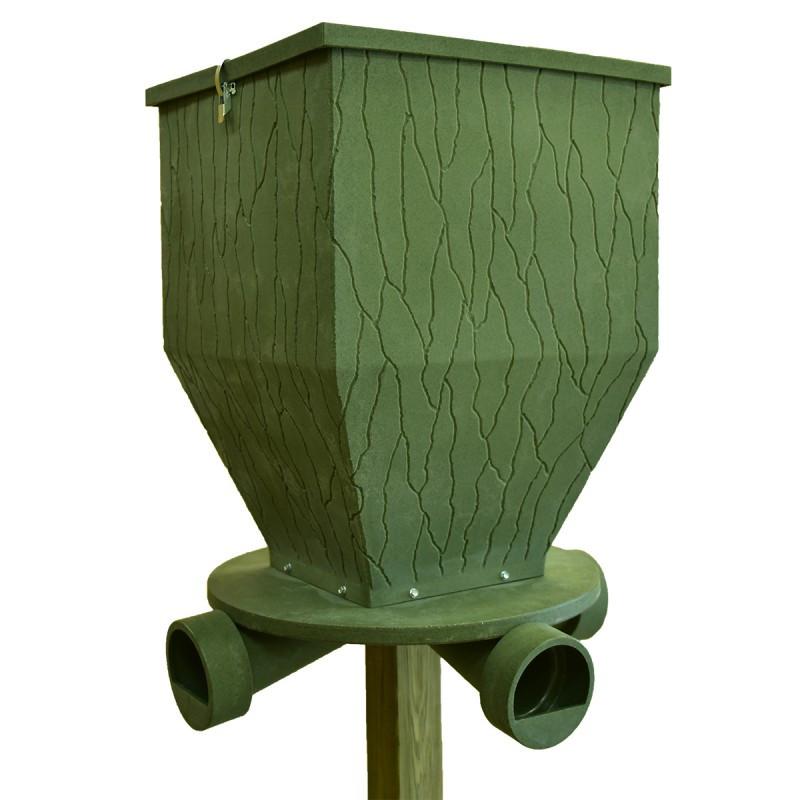
Banks Outdoors Feedbank 300 Feeder
Check Price on Amazon →Confirm price and availability on Amazon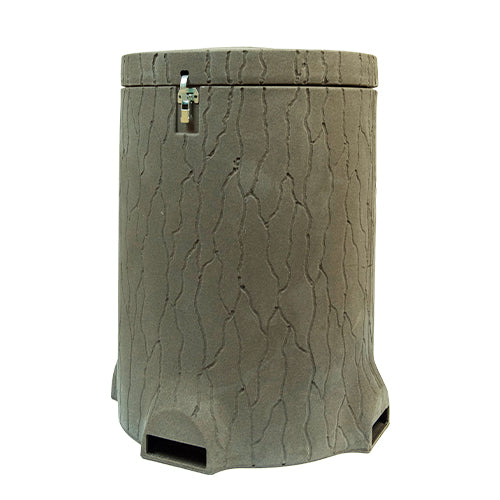
Banks Outdoors Feedbank Timber 250
Check Price on Amazon →Confirm price and availability on AmazonAs an Amazon Associate, we earn from qualifying purchases.