
Best Quiet Deer Feeders
Disclosure: As an Amazon Associate we earn from qualifying purchases made through links on this page, at no extra cost to you. Product availability and details should be checked on the retailer page before you buy.
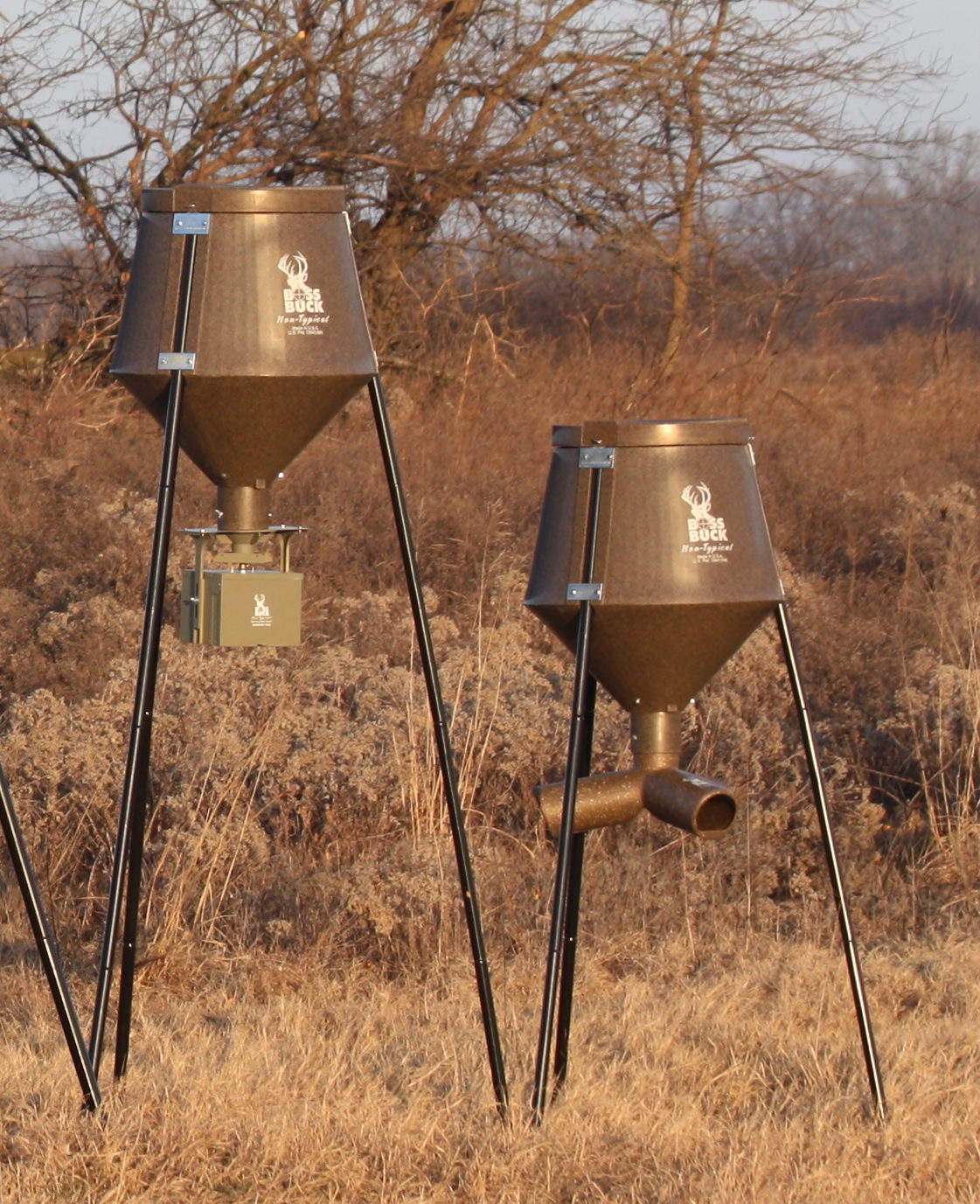
The best quiet deer feeders are the ones deer do not hear coming, because a feeder that startles deer is a feeder that deer learn to avoid. Hunters know the sound well: a motor whirs, a spinner plate clatters, corn rattles across dry ground, and a mature buck that was approaching calmly stops, turns, and leaves. On pressured ground, that single sound can undo weeks of patient patterning, and on a small property, where deer are never far from a stand, it can matter even more. Quiet is not a luxury feature. It is a hunting feature.
This guide takes a deliberately honest approach to quiet. No measured decibel levels are printed here, because none have been verified for these feeders, and inventing a number would be worse than useless. Instead, noise is described qualitatively, from design: a gravity feeder has no motor and no spinner, so it makes no mechanical sound by construction; a timed spinner feeder has a motor and a spinning plate, so it makes a short burst of mechanical sound at each feed time; and the character of that sound depends on materials, such as a metal plate versus a plastic plate, on mounting, and on how well the feeder is maintained. Owner-reported character is described as owner-reported, not as measured fact, and where a detail is uncertain, this guide says so.
The ranking that follows from that approach is simple, and it may surprise readers who expect a timed feeder to top a quiet list. The quietest feeders are gravity feeders, full stop. They feed silently because there is nothing to make a sound. Timed feeders can be made quieter, and the guide below explains how, but they cannot be made silent, because a motor and a spinner are doing work. If silence is your first priority, choose gravity. If timed control matters more than silence, choose a timed feeder with open eyes, place it carefully, and maintain it well. Both choices are legitimate, but they are not the same choice, and this guide does not pretend otherwise.
Quick Answer: Best Quiet Deer Feeders
For the quietest feeding, choose a gravity feeder. The Boss Buck 200, Boss Buck 350, Moultrie 250 Gravity, Banks Feedbank 300, Banks Timber 250, and Wildgame Treehugger 100 in this guide all feed without a motor, so none of them produces a mechanical feed-time sound. Among them, pick by capacity, site, and herd size: the Boss Buck 350 or Banks 300 for a main or herd station, the Moultrie 250 Gravity or Banks Timber 250 for a remote or timbered site, and the Treehugger 100 for a small satellite station. Only if you need timed, rationed feeding should you look at a spinner feeder, and the Moultrie Pro Hunter III 250 in this guide is included last, with its noise trade-off stated plainly, for that specific job.
Quiet is also a practice, not just a purchase. A silent gravity feeder can still spook deer if you refill it noisily at dawn, slam a lid, drop a bag, or drive to the site during prime movement. Quiet-refill practice, covered in detail below, matters as much as feeder choice: refill at midday, keep lids and latches in good repair, carry feed in soft containers where practical, and approach a site from downwind and out of sight. The quietest feeder in the world will not save a hunt if the refill visit teaches deer that the site is dangerous.
Our Fast Picks for Quiet Feeding
Boss Buck 200 Gravity Feeder
The Boss Buck 200 is the quietest starting point in this guide, because it has no motor, no timer, and no spinner plate to clatter, so feeding makes no mechanical sound at all.
Gravity feed is free-choice, so it will not ration feed or throw corn on a schedule, and it needs the same moisture and varmint checks as any gravity feeder.
Boss Buck 350 Gravity Protein Feeder
The Boss Buck 350 is the quiet protein station in this guide, because its gravity head feeds deer silently around the clock, with no motor burst to announce each feeding.
Free-choice protein use can climb fast where deer numbers are high, so watch consumption for the first few weeks, and remember Boss Buck publishes no throw distance for gravity feeders, so none is printed here.
Moultrie 250 Gravity Feeder
The Moultrie 250 Gravity is the silent battery-free pick in this guide, because a gravity feeder has no motor to start, no spinner to spin, and nothing electronic to hum, click, or fail.
It feeds free-choice rather than on a timer, so it cannot ration feed or pattern deer to set times, and it still needs checks for moisture, bridging, and varmint damage.
Banks Outdoors Feedbank 300
The Banks Feedbank 300 suits a quiet site, because its gravity design removes the whole category of mechanical noise, leaving only the ordinary sounds of deer feeding.
It is not a rationing feeder, so it will not control daily intake the way a timed feeder does, and free-choice use should be watched where deer numbers are high.
Banks Outdoors Feedbank Timber 250
The Banks Timber 250 fits pressured timber, because its gravity design is silent by construction, and timber cover already muffles the small sounds deer themselves make at a feeder.
Its 250 lb hopper empties faster than the 300 lb Banks in this guide, so put it where you can refill it on a normal schedule rather than at the hardest-to-reach corner.
Wildgame Treehugger 100
The Wildgame Treehugger 100 is the small quiet station in this guide, because its gravity hanging design feeds without a motor, and its modest size suits a site where a big tripod would dominate the ground.
One hundred pounds is a small hopper, so it empties faster than every other feeder in this guide, and it is a satellite station, not a herd-scale main feeder.
Moultrie Pro Hunter III 250
The Moultrie Pro Hunter III 250 is included last and with a clear warning, because it is a timed spinner feeder, so it will make a short burst of motor and spinner sound at each feed time, unlike the silent gravity feeders above.
Do not buy this feeder expecting silence. Buy it only if timed, rationed feeding matters more to you than silence, and place it where a short feed-time sound will not ruin a nearby stand.
Best Quiet Deer Feeders at a Glance
| Feeder | Capacity | Type | Best For | Deal |
|---|---|---|---|---|
| Boss Buck 200 Gravity Feeder | 200 lb | Gravity feeder | Quiet feeding at a first station or a pressured site | Check Price on Amazon |
| Boss Buck 350 Gravity Protein Feeder | 350 lb | Gravity protein feeder | Quiet protein feeding for a herd | Check Price on Amazon |
| Moultrie 250 Gravity Feeder | 250 lb | Gravity feeder | Silent, battery-free feeding at a remote site | Check Price on Amazon |
| Banks Outdoors Feedbank 300 | 300 lb | Gravity feeder | Quiet, low-maintenance feeding in a remote corner | Check Price on Amazon |
| Banks Outdoors Feedbank Timber 250 | 250 lb | Gravity feeder | Quiet feeding in timbered, pressured ground | Check Price on Amazon |
| Wildgame Treehugger 100 | 100 lb | Gravity hanging feeder | A small, quiet hanging station near a stand or trail | Check Price on Amazon |
| Moultrie Pro Hunter III 250 | 250 lb | Timed spinner feeder | Timed feeding only if you accept a short motor sound at feed times | Check Price on Amazon |
Capacity bars compare stated hopper capacities only, rounded down, never up. They say nothing about noise. A gravity feeder and a spinner feeder with the same capacity are not equally quiet, and the mechanism column in the glance table is the one that decides the noise question.
What Actually Makes a Deer Feeder Noisy?
Feeder noise comes from a short list of sources, and naming them makes the whole buying decision clearer. First, the motor. A timed feeder’s motor starts, runs for a few seconds, and stops, and that start-stop character is what deer notice, because it is sudden and unlike any natural sound. Second, the spinner plate. A spinning plate throws feed, and feed striking a metal plate, a hard hopper, or dry ground makes a rattling, scattering sound that carries further than the motor itself. Third, vibration. A loose mount, a rattling lid, or a leg that resonates can turn a small motor sound into a larger structure sound. Fourth, the refill visit, which is human noise, not feeder noise, but which deer associate with the site just as strongly.
Gravity feeders remove the first three sources by removing the mechanism. There is no motor to start, no plate to spin, and no vibration from a running motor. What remains is the sound of deer themselves: feed shifting in a port, a head nudging a feeder, hooves on ground. Those sounds are natural in character, they are quiet in volume, and deer are accustomed to them, because deer make similar sounds while browsing. That is why gravity feeders are not merely quieter in degree but different in kind: they do not introduce a mechanical sound into a deer’s environment at all.
Spinner feeders, by contrast, introduce a mechanical event at a predictable time. Some owners report that deer become accustomed to a regular feed-time sound and even approach when they hear it, and that habituation is real on properties where the same sound happens daily and is never followed by danger. But habituation is not silence, and it is not guaranteed. On pressured ground, with mature bucks, or where feed times coincide with hunting hours, a mechanical burst can still cost an opportunity. The honest framing is that a spinner feeder’s sound can be managed and sometimes habituated to, but it cannot be eliminated while the spinner is running.
Materials change the character of spinner sound, though not its existence. Owners commonly describe metal spinner plates as sharper and more ringing in character than plastic plates, which tend to sound duller and less carrying. That description is qualitative and owner-reported, not measured, but it is a useful buying consideration: if you must run a spinner, a plastic plate and funnel kit, regular tightening of mounts, and a well-maintained motor will keep its sound as unobtrusive as that design allows. None of those steps turns a spinner into a gravity feeder, and this guide does not claim otherwise.
What Spooks Deer: Sound, Timing, and Association
Deer do not react to sound in isolation. They react to sound plus context. A sudden sound at dawn, from a direction where deer expect danger, after a quiet night, will spook deer more than the same sound at midday in a familiar place. That is why feed timing matters for quiet feeding. A timed feeder that throws at first light, near a stand, on a morning you plan to hunt, puts its loudest moment exactly where and when it can do the most harm. The same feeder throwing at midday, away from a stand, on a non-hunt day, may be heard by no deer at all, or heard and ignored.
Association is the deeper mechanism. Deer learn what follows a sound. If a motor sound is followed, day after day, by nothing dangerous, deer may habituate. If a motor sound is followed by a hunter’s movement, a vehicle, or a shot, deer will associate the sound with danger and react to it. That is why quiet-refill practice and stand placement matter as much as feeder choice. A feeder that is silent but visited noisily at dawn, or a spinner feeder placed beside a stand, will both teach deer to avoid a site, for different reasons. The goal is to make the feeding site boring: no sudden sounds, no human scent at prime times, no danger following any sound the site does make.
Wind, cover, and terrain also carry or muffle sound. Sound carries further across open ground and still air than through timber and broken terrain, and a feeder in a hollow or behind a ridge will be less audible from a bedding area than one on an open ridge. That is a placement consideration, not a product feature, and it is worth more than a small difference between two spinner models. Place a feeder where terrain and cover work for you, keep stands at a sensible distance, covered in our stand-distance guide, and let the land do part of the quietening for you.
Gravity, Auger, and Spinner: Noise Character Compared
Gravity feeding is silent by design. Feed moves by gravity through ports or a head, deer take what they need, and no mechanism runs. Auger feeding sits in the middle in principle: an auger moves feed mechanically, so it makes a mechanical sound, but owners commonly describe auger sound as a lower, steadier hum or grinding character rather than the sharp burst of a spinner, because the feed is moved continuously rather than thrown. That description is qualitative, and no auger feeder is included as a ranked pick in this guide, because the verified pool for this build centres on gravity and timed spinner models, so this section describes the mechanism honestly without recommending an unverified auger model.
Spinner feeding is the loudest in character, for the reasons above: motor start, plate spin, feed scatter. Its advantage is control, not quiet. A spinner rations feed, throws on a schedule, and patterns deer to times, and those are real management benefits. The trade-off is that every feed event is audible. Managers who choose a spinner should choose it for control, place it away from stands, time its throws away from prime hunting hours where possible, and maintain it so its sound stays as low and regular as that design allows. Our spin-versus-gravity comparison covers the mechanism differences in more detail.
A practical summary for buyers: if your first priority is silence, buy gravity and stop worrying about spinner features. If your first priority is timed control, buy a spinner, accept its sound, and manage placement, timing, and maintenance around it. If you need both, use both in different roles: gravity feeders near stands and pressured sites, and a timed feeder at a main site away from stands where its sound does less harm. That mixed approach is how most experienced managers solve a problem that no single feeder solves alone.
Quiet-Refill Practice: The Part Most Guides Skip
Refill practice is where quiet feeding is won or lost, because a human visit is louder, smellier, and more alarming to deer than any feeder mechanism. The rules are simple and worth stating plainly. Refill at midday, when deer are least likely to be at the site and when your movement is least likely to coincide with prime movement. Approach from downwind and out of sight where the site allows it. Keep lids, latches, and hinges in repair, because a slamming lid is a sharp, unnatural sound that carries. Carry feed in a way that does not spill or rattle across the site, and clean up spilled feed, which attracts raccoons and hogs whose own noise and disturbance then become part of the site’s character.
Vehicle noise deserves the same attention. Driving to a feeder at dawn, idling beside it, and slamming doors teaches deer that the site means vehicles and people. Where possible, park away from the site and walk in, keep the visit short, and leave by the same quiet route. On a large property, covered in our large-properties guide, that discipline is harder but more important, because far sites are visited less often and each visit is therefore more noticeable. On a small property, covered in our small-properties guide, it is more important still, because deer are never far from any site.
Maintenance is quiet practice too. A loose spinner plate rattles, a loose lid bangs in wind, and a leg that wobbles in a breeze can make a feeder noisy even when it is not running. Check mounts, plates, lids, and legs on every visit, tighten what has loosened, and replace worn parts before they become noisy. A feeder that is silent when new and rattling after a season has not changed its design; it has changed its condition, and condition is the owner’s responsibility.
The Best Quiet Deer Feeders: Detailed Reviews
Boss Buck 200 Gravity Feeder
The Boss Buck 200 is the quietest starting point in this guide, because it has no motor, no timer, and no spinner plate to clatter, so feeding makes no mechanical sound at all.
The Boss Buck 200 is the quietest starting point in this guide, because it has no motor, no timer, and no spinner plate to clatter, so feeding makes no mechanical sound at all. That sentence is the whole argument, and it is worth repeating because it is so often buried under features. A feeder with no mechanism cannot make a mechanical sound, and on pressured ground, that absence is the feature that matters most. Deer approach a gravity feeder, eat, and leave, and the only sounds are their own.
Two hundred pounds is a practical capacity for a first quiet station or a satellite site. It holds enough feed to avoid constant refills, yet the feeder remains a manageable installation that one person can site and service. For a hunter setting up a quiet site near a stand, that balance matters: the feeder should be easy to install quietly, without a large crew, heavy equipment, or a long, noisy installation day that teaches deer to avoid the site before it ever feeds.
Boss Buck’s gravity design also suits protein and corn feeding where availability matters more than rationing. Deer eat when they choose, which is natural behaviour, and a gravity station that is always available can become a reliable, low-stress part of a deer’s routine. That reliability is itself a quiet benefit, because a site deer trust is a site deer use calmly, and calm deer are quiet deer. A stressed deer at a noisy feeder is loud in a different way, through stomping, snorting, and sudden flight, and avoiding that stress is part of quiet feeding.
Gravity feed is free-choice, so it will not ration feed or throw corn on a schedule, and it needs the same moisture and varmint checks as any gravity feeder. Those are the trade-offs, stated plainly. A manager who needs rationing should look at the timed pick at the end of this guide, with its noise warning attached, rather than expecting a gravity feeder to do a timed feeder’s job. And a gravity feeder still needs a tight lid, clear ports, and regular checks, because moisture and bridging can silence a feeder in the worst way, by stopping feed altogether.
For a quiet site, the Boss Buck 200 is the simplest, most defensible pick in this guide. It is silent by design, sensibly sized, and easy to live with, and it sets the standard against which every other quiet claim should be judged: if a feeder has a motor, it is not as quiet as this one, whatever its marketing says.
Gravity feed is free-choice, so it will not ration feed or throw corn on a schedule, and it needs the same moisture and varmint checks as any gravity feeder.
Pros
- 200 lb stated capacity
- Gravity feeder
- Quiet role clearly defined
Cons
- Needs regular site checks
- Not silent if it is a timed spinner model
- Refill weight and access must be planned
Check the current listing for the Boss Buck 200 Gravity Feeder: Check Price on Amazon
Related reading: our gravity guide explains free-choice feeding, our spin-versus-gravity comparison covers mechanism differences, our automatic feeder guide covers timed models, and our large-capacity guide covers feeding across acreage.
Boss Buck 350 Gravity Protein Feeder
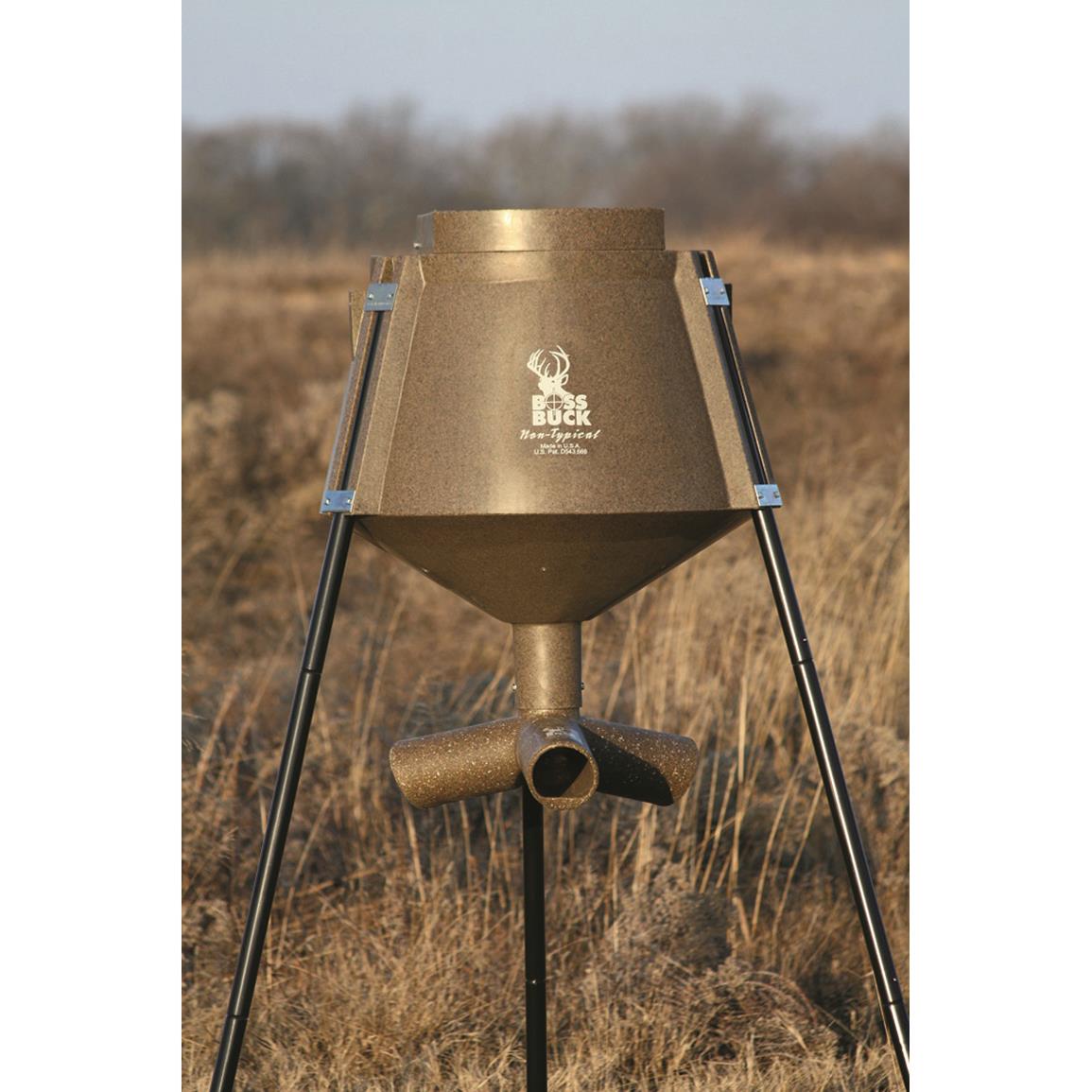
The Boss Buck 350 is the quiet protein station in this guide, because its gravity head feeds deer silently around the clock, with no motor burst to announce each feeding.
The Boss Buck 350 is the quiet protein station in this guide, because its gravity head feeds deer silently around the clock, with no motor burst to announce each feeding. Protein feeding is a long-season commitment, and a protein station that announces itself mechanically several times a day is a poor fit for that commitment on pressured ground. A silent protein head, by contrast, lets deer feed on protein whenever they choose, without a sound event attached to every visit.
Three hundred and fifty pounds is a strong protein capacity. It stretches refill intervals, which means fewer human visits, and fewer human visits mean fewer noisy refill days. That is a quiet benefit that is easy to overlook: a larger hopper is not just a convenience, it is fewer disturbances at the site. On a property where a protein station is visited weekly, doubling the interval halves the disturbance, and deer notice the difference even if they never hear a motor.
The multi-port gravity head also reduces competition noise and behaviour. Several deer feeding at once means less jostling, less displacement, and less of the stomping and snorting that comes from competition at a single port. A calm group of deer feeding together is quieter, in animal terms, than a tense queue at a one-port feeder, and that calm is part of what makes a protein station productive over a season rather than just visited.
Free-choice protein use can climb fast where deer numbers are high, so watch consumption for the first few weeks, and remember Boss Buck publishes no throw distance for gravity feeders, so none is printed here. Gravity feeders do not throw feed, so a throw figure would be meaningless, and any source printing one for a Boss Buck gravity model should be treated with suspicion. Similarly, Boss Buck’s hopper family is 200, 350, 600, and 1,200 lb, and there is no 250 lb or 500 lb Boss Buck gravity feeder. Those facts are stated here because they protect buyers from misleading listings.
For a herd-scale quiet protein station, the 350 is the pick that best combines silence, capacity, and a multi-port head. It will not ration feed, and it should not be expected to, but for silent, always-available protein, it is the strongest option in this guide.
Free-choice protein use can climb fast where deer numbers are high, so watch consumption for the first few weeks, and remember Boss Buck publishes no throw distance for gravity feeders, so none is printed here.
Pros
- 350 lb stated capacity
- Gravity protein feeder
- Quiet role clearly defined
Cons
- Needs regular site checks
- Not silent if it is a timed spinner model
- Refill weight and access must be planned
Check the current listing for the Boss Buck 350 Gravity Protein Feeder: Check Price on Amazon
Related reading: our gravity guide explains free-choice feeding, our spin-versus-gravity comparison covers mechanism differences, our automatic feeder guide covers timed models, and our large-capacity guide covers feeding across acreage.
Moultrie 250 Gravity Feeder
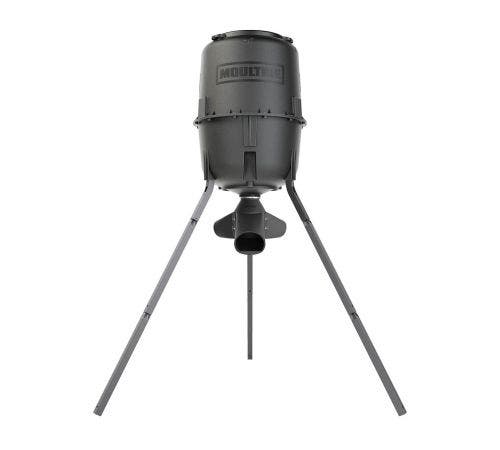
The Moultrie 250 Gravity is the silent battery-free pick in this guide, because a gravity feeder has no motor to start, no spinner to spin, and nothing electronic to hum, click, or fail.
The Moultrie 250 Gravity is the silent battery-free pick in this guide, because a gravity feeder has no motor to start, no spinner to spin, and nothing electronic to hum, click, or fail. Battery-free is a quiet benefit in itself. A timed feeder’s battery is a maintenance item, and a failing battery can produce irregular motor sounds, missed throws, or a motor that strains audibly before it fails. A gravity feeder has no battery to fail, so it has no failure sound either.
Two hundred and fifty pounds is a practical middle capacity for a quiet site. It is large enough to hold feed for weeks at a moderate rate, yet the feeder remains a standard installation. For a remote site, where visits are infrequent, that combination is ideal: long intervals, few disturbances, and no electronic component that could fail silently between visits and leave the site empty.
Moultrie’s gravity design also fits managers who already use Moultrie timed feeders elsewhere and want a silent station near a stand. The brand familiarity helps with parts, accessories, and refill routines, and a network that mixes a silent gravity station near a stand with a timed station away from it is a sensible, common solution. The gravity station does the quiet work, the timed station does the control work, and neither is asked to do the other’s job.
It feeds free-choice rather than on a timer, so it cannot ration feed or pattern deer to set times, and it still needs checks for moisture, bridging, and varmint damage. Those checks are quiet work if done at midday and with care, and they are the price of a silent feeder. A gravity feeder that is never checked will eventually fail through moisture or blockage, and a failed feeder is not a quiet feeder; it is an empty one.
For a remote or pressured quiet site, the Moultrie 250 Gravity is a clean, defensible pick: silent by design, battery-free, sensibly sized, and easy to maintain. It is the kind of feeder that disappears into a site, which is exactly what a quiet feeder should do.
It feeds free-choice rather than on a timer, so it cannot ration feed or pattern deer to set times, and it still needs checks for moisture, bridging, and varmint damage.
Pros
- 250 lb stated capacity
- Gravity feeder
- Quiet role clearly defined
Cons
- Needs regular site checks
- Not silent if it is a timed spinner model
- Refill weight and access must be planned
Check the current listing for the Moultrie 250 Gravity Feeder: Check Price on Amazon
Related reading: our gravity guide explains free-choice feeding, our spin-versus-gravity comparison covers mechanism differences, our automatic feeder guide covers timed models, and our large-capacity guide covers feeding across acreage.
Banks Outdoors Feedbank 300
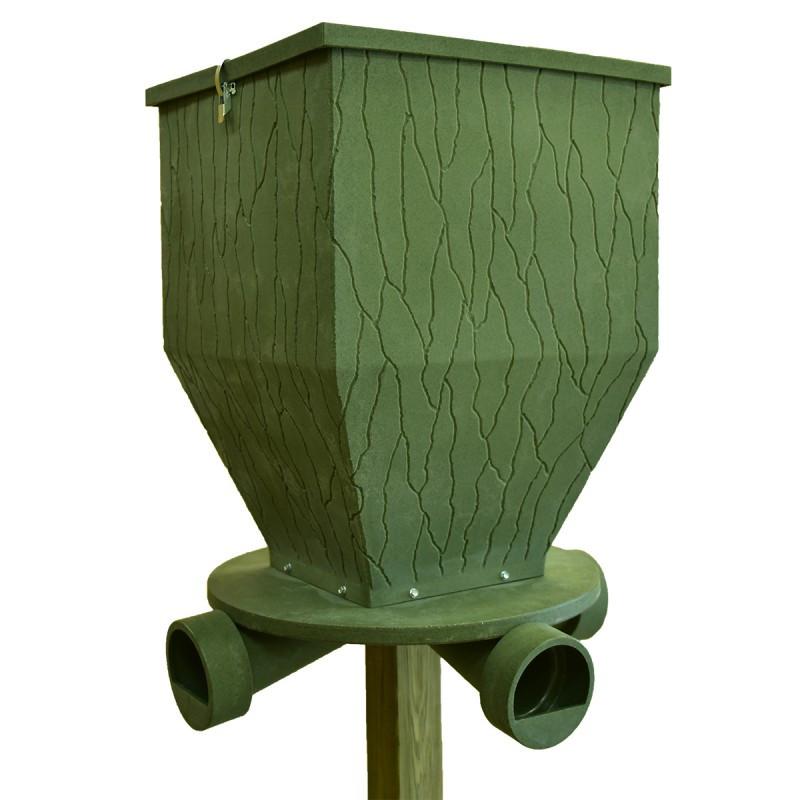
The Banks Feedbank 300 suits a quiet site, because its gravity design removes the whole category of mechanical noise, leaving only the ordinary sounds of deer feeding.
The Banks Feedbank 300 suits a quiet site, because its gravity design removes the whole category of mechanical noise, leaving only the ordinary sounds of deer feeding. That framing matters, because it sets expectations correctly. A gravity feeder is not quiet in the sense of muffling a motor; it is quiet in the sense of having no motor to muffle. Buyers who understand that distinction will not be disappointed by a gravity feeder, and will not be misled by a timed feeder marketed as quiet.
Three hundred pounds is a strong capacity for a quiet main or satellite station, and as with the Boss Buck 350, a larger hopper means fewer refill visits and therefore fewer disturbances. Banks feeders are also known for durable, weather-resistant construction, and durability is a quiet feature over time. A feeder whose lid stays tight, whose legs stay firm, and whose ports stay clear does not develop the rattles, bangs, and wobbles that make an ageing feeder noisy. Durability, maintained, is quietness sustained.
The Feedbank 300 also suits remote corners, where a quiet feeder is most valuable because deer there are least accustomed to human disturbance. A remote site that is silent, always available, and rarely visited by people can become a reliable, low-stress feeding site, and low-stress sites are where mature deer feed most calmly. That calm is the real prize of quiet feeding, and it is worth more than any feature list.
It is not a rationing feeder, so it will not control daily intake the way a timed feeder does, and free-choice use should be watched where deer numbers are high. That trade-off should be accepted openly, not worked around with wishful thinking. If rationing is essential, add a timed feeder elsewhere, away from stands, rather than forcing a gravity feeder into a role it was not designed for.
For a durable, quiet, low-maintenance station, the Banks Feedbank 300 is one of the strongest picks in this guide, and the one most likely to still be quiet after several seasons, provided it is maintained. That longevity is the quiet argument that matters most, because a feeder is judged over seasons, not over a first week.
It is not a rationing feeder, so it will not control daily intake the way a timed feeder does, and free-choice use should be watched where deer numbers are high.
Pros
- 300 lb stated capacity
- Gravity feeder
- Quiet role clearly defined
Cons
- Needs regular site checks
- Not silent if it is a timed spinner model
- Refill weight and access must be planned
Check the current listing for the Banks Outdoors Feedbank 300: Check Price on Amazon
Related reading: our gravity guide explains free-choice feeding, our spin-versus-gravity comparison covers mechanism differences, our automatic feeder guide covers timed models, and our large-capacity guide covers feeding across acreage.
Banks Outdoors Feedbank Timber 250
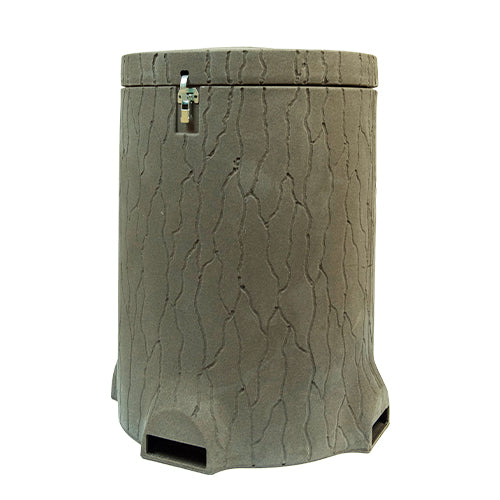
The Banks Timber 250 fits pressured timber, because its gravity design is silent by construction, and timber cover already muffles the small sounds deer themselves make at a feeder.
The Banks Timber 250 fits pressured timber, because its gravity design is silent by construction, and timber cover already muffles the small sounds deer themselves make at a feeder. Timber is a naturally quiet environment: trees break wind, absorb sound, and give deer cover to approach and leave without crossing open ground. A silent feeder in timber is therefore doubly quiet, because both the feeder and the landscape are working for the hunter, and that combination is hard to beat on pressured ground.
Two hundred and fifty pounds is a sensible timber capacity. It is large enough for a sustained station, yet the feeder remains manageable in wooded ground where installation and refill access can be tight. Timber sites often have narrower access, more roots and slope, and less room for a large installation crew, so a mid-size gravity feeder that one or two people can site and service is a practical advantage, not just a capacity choice.
Its 250 lb hopper empties faster than the 300 lb Banks in this guide, so put it where you can refill it on a normal schedule rather than at the hardest-to-reach corner. That placement advice is a quiet advice too, because a feeder that empties unexpectedly creates a gap in availability, and deer that find an empty feeder learn to look elsewhere. Consistent availability, maintained by a realistic refill schedule, is part of quiet feeding, because it keeps deer routine and calm rather than searching and stressed.
As a gravity feeder, the Timber 250 shares the strengths and limits of every gravity pick here: silent, battery-free, free-choice, and in need of moisture and varmint checks. Its specific strength is its fit for timbered, pressured ground, where its size, silence, and durability combine into a station that deer can use without ever encountering a mechanical sound or a large, exposed structure.
For timber hunters who need a quiet station that blends into wooded ground, the Banks Timber 250 is a strong, honest pick, and the right size for a site where access is tighter and deer are warier.
Its 250 lb hopper empties faster than the 300 lb Banks in this guide, so put it where you can refill it on a normal schedule rather than at the hardest-to-reach corner.
Pros
- 250 lb stated capacity
- Gravity feeder
- Quiet role clearly defined
Cons
- Needs regular site checks
- Not silent if it is a timed spinner model
- Refill weight and access must be planned
Check the current listing for the Banks Outdoors Feedbank Timber 250: Check Price on Amazon
Related reading: our gravity guide explains free-choice feeding, our spin-versus-gravity comparison covers mechanism differences, our automatic feeder guide covers timed models, and our large-capacity guide covers feeding across acreage.
Wildgame Treehugger 100
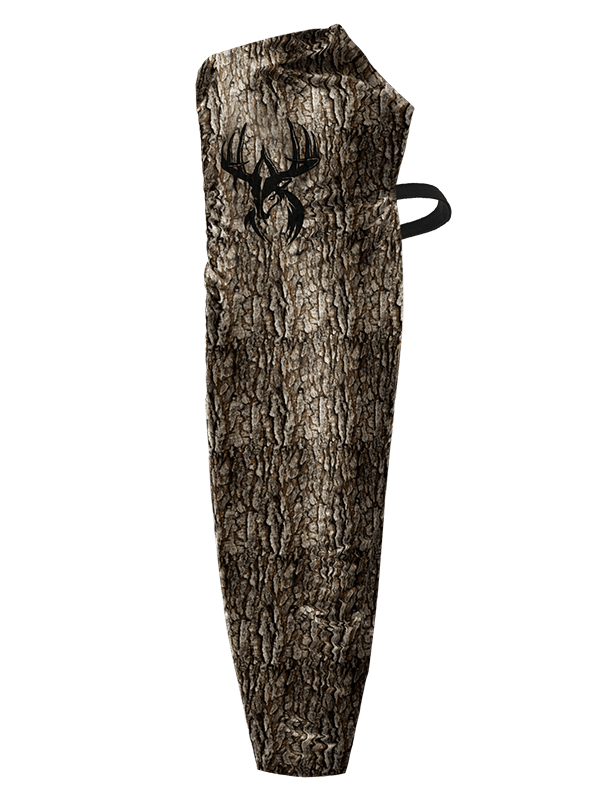
The Wildgame Treehugger 100 is the small quiet station in this guide, because its gravity hanging design feeds without a motor, and its modest size suits a site where a big tripod would dominate the ground.
The Wildgame Treehugger 100 is the small quiet station in this guide, because its gravity hanging design feeds without a motor, and its modest size suits a site where a big tripod would dominate the ground. Small sites, near a trail or a stand, often cannot accommodate a large tripod without clearing ground, creating a visible structure, and changing the character of the site. A hanging gravity feeder, attached to a tree, changes the site less, and a site that changes less is a site deer accept faster and use more calmly.
One hundred pounds is a small hopper, so it empties faster than every other feeder in this guide, and it is a satellite station, not a herd-scale main feeder. That limit should be accepted, not hidden. A Treehugger is the right feeder for a single trail, a single stand approach, or a trial site where you are learning deer use, and it is the wrong feeder for a herd station or a protein program. Used in its role, its small size is an advantage, because it is easy to hang, easy to refill quietly, and easy to move if deer ignore it.
Hanging feeders also have a quiet advantage in mounting. A feeder hung from a tree, properly secured, does not have legs to resonate or a tripod to wobble in wind, and it does not present a large structure for hogs to rub. It does need a sound hanging point and a secure attachment, because a loose hanging feeder can sway and knock, and that knocking is a sharp, unnatural sound. Check the hang on every visit, keep the attachment tight, and the feeder will stay as quiet as its design allows.
For hunters who want a small, quiet, easily moved station, the Treehugger 100 is a useful pick, provided its capacity limit is respected. It will not feed a herd, and it will not replace a main station, but as a quiet satellite near a stand or trail, it earns its place in this guide.
One hundred pounds is a small hopper, so it empties faster than every other feeder in this guide, and it is a satellite station, not a herd-scale main feeder.
Pros
- 100 lb stated capacity
- Gravity hanging feeder
- Quiet role clearly defined
Cons
- Needs regular site checks
- Not silent if it is a timed spinner model
- Refill weight and access must be planned
Check the current listing for the Wildgame Treehugger 100: Check Price on Amazon
Related reading: our gravity guide explains free-choice feeding, our spin-versus-gravity comparison covers mechanism differences, our automatic feeder guide covers timed models, and our large-capacity guide covers feeding across acreage.
Moultrie Pro Hunter III 250
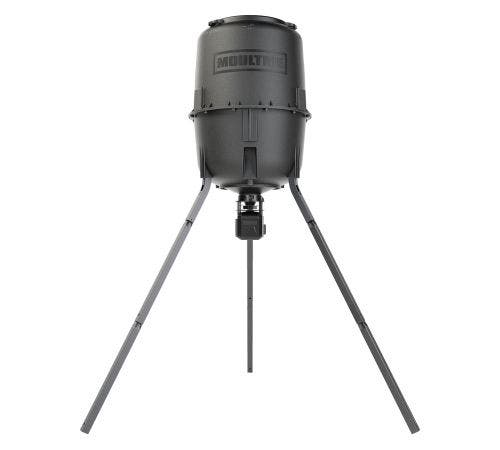
The Moultrie Pro Hunter III 250 is included last and with a clear warning, because it is a timed spinner feeder, so it will make a short burst of motor and spinner sound at each feed time, unlike the silent gravity feeders above.
The Moultrie Pro Hunter III 250 is included last and with a clear warning, because it is a timed spinner feeder, so it will make a short burst of motor and spinner sound at each feed time, unlike the silent gravity feeders above. That warning is not a criticism of the feeder; it is a statement of its mechanism. A spinner feeder does work at feed time, and work makes sound. Any guide that ranks a spinner feeder as quieter than a gravity feeder, without explaining that difference, is misleading its readers, and this guide will not do that.
Do not buy this feeder expecting silence. Buy it only if timed, rationed feeding matters more to you than silence, and place it where a short feed-time sound will not ruin a nearby stand. That placement rule is the key to using a spinner feeder on a property where quiet also matters. Put the timed feeder at a main site away from stands, time its throws away from prime hunting hours where possible, and let gravity feeders cover the quiet sites near stands. Used that way, a spinner feeder’s sound becomes a managed trade-off rather than a surprise.
The Pro Hunter III does have genuine strengths for its role. Its timed feeding rations feed and patterns deer to set times, its 250 lb hopper is a practical timed capacity, and its platform benefits from Moultrie’s accessory ecosystem, including solar charging covered in our solar feeder guide. Those strengths are why it is included at all, despite its noise. A guide that omitted timed feeders entirely would leave managers who need rationing without a recommendation, and that would be a different kind of dishonesty.
To keep a spinner feeder as quiet as its design allows, maintain it well. Tighten mounts, check the spinner plate, replace a worn or damaged plate, and keep the motor and connections clean. Owners commonly describe metal plates as sharper in sound character than plastic plates, so a plastic plate and funnel kit is a reasonable, qualitative consideration for a manager who must run a spinner. None of those steps makes a spinner silent, and they should not be sold as doing so, but they do keep its sound regular, low, and predictable, which is the best a spinner design can offer.
For managers who need timed control and accept its sound, the Pro Hunter III 250 is a sensible, serviceable pick, placed last in this guide for a reason. Its rank is not a judgement on its quality as a timed feeder; it is a judgement on its noise, and on noise alone, every gravity feeder above it is quieter.
Do not buy this feeder expecting silence. Buy it only if timed, rationed feeding matters more to you than silence, and place it where a short feed-time sound will not ruin a nearby stand.
Pros
- 250 lb stated capacity
- Timed spinner feeder
- Quiet role clearly defined
Cons
- Needs regular site checks
- Not silent if it is a timed spinner model
- Refill weight and access must be planned
Check the current listing for the Moultrie Pro Hunter III 250: Check Price on Amazon
Related reading: our gravity guide explains free-choice feeding, our spin-versus-gravity comparison covers mechanism differences, our automatic feeder guide covers timed models, and our large-capacity guide covers feeding across acreage.
Making a Spinner Feeder Quieter (Without Pretending It Is Silent)
If you already own a spinner feeder, several steps can reduce its sound character, and they are worth doing even though none of them creates silence. Tighten every mount and bolt, because loose hardware rattles. Check the spinner plate for wear, cracks, or imbalance, and consider a plastic plate and funnel kit, whose sound character owners commonly describe as duller than metal. Keep the motor clean and dry, keep the battery charged so the motor does not strain, and keep the throw area clear so feed does not strike hard, resonant surfaces. Time throws for midday where management goals allow, and place the feeder away from stands and bedding areas so its sound reaches fewer deer at sensitive times.
What not to do matters too. Do not muffle a motor with materials that trap heat or moisture, do not modify a feeder in a way that voids safety or creates a fire risk, and do not expect a modification to turn a spinner into a gravity feeder. The goal of spinner maintenance is a regular, low, predictable sound, not silence, and a manager who understands that goal will be satisfied with the result, while a manager who expects silence will be disappointed by any spinner, however well maintained.
Verdict: Best Quiet Deer Feeders
The best quiet deer feeders are gravity feeders, and the best of them for most hunters are the Boss Buck 200 for a first quiet station, the Boss Buck 350 or Banks Feedbank 300 for a main or herd station, and the Moultrie 250 Gravity or Banks Timber 250 for a remote or timbered site, with the Wildgame Treehugger 100 as a small satellite. That conclusion follows directly from design, not from marketing: a feeder with no motor makes no mechanical sound, and no timed feeder, however well made, can match that. If timed control is essential, the Moultrie Pro Hunter III 250 is a sensible timed pick, placed last here because its short feed-time sound is a real trade-off that should be accepted knowingly, not discovered after purchase.
Choose by silence first if silence is your priority, by capacity and site second, and by timed features only if you need them. Refill quietly at midday, maintain lids, mounts, and plates, place feeders where terrain and cover muffle sound, and keep stands at a sensible distance. Check local feeding rules before installing any feeder, because regulations vary by state and season. With a silent gravity feeder, quiet practice, and honest expectations, a feeding site can become a calm, routine part of a deer’s day, which is exactly what a quiet feeder is for.
Frequently Asked Questions About Quiet Deer Feeders
What is the quietest type of deer feeder?
A gravity feeder is the quietest type by design, because it has no motor, no timer, and no spinner plate, so it makes no mechanical sound at feed time. Timed spinner feeders always make a short motor and spinner sound when they throw, and auger feeders make a mechanical sound when they move feed. If silence is the first priority, choose gravity.
What are the best quiet deer feeders?
The best quiet deer feeders in this guide are gravity models: the Boss Buck 200, Boss Buck 350, Moultrie 250 Gravity, Banks Feedbank 300, Banks Timber 250, and Wildgame Treehugger 100. They differ in capacity and site fit, not in mechanism noise, because none of them has a motor. The timed Moultrie Pro Hunter III 250 is included last, for managers who need timed control and accept its feed-time sound.
How loud are deer feeders in decibels?
No verified decibel levels are printed in this guide, because none have been verified for these feeders. Noise is described qualitatively from design instead: gravity feeders make no mechanical sound, spinner feeders make a short motor and plate burst, and metal plates are commonly described by owners as sharper in character than plastic plates. Any source printing a precise decibel figure for these models without a measurement method should be treated with caution.
Do quiet feeders spook deer less?
Generally, yes, but sound is only part of the story. A silent feeder visited noisily at dawn can still spook deer, and a spinner feeder whose sound is followed by no danger may be habituated to over time. Quiet feeding works best as a system: a silent feeder, quiet midday refills, sensible stand distance, and a site deer already trust.
Are gravity feeders completely silent?
They make no mechanical sound, because they have no mechanism, but they are not silent in the sense of making no sound at all. Deer feeding make ordinary sounds, feed shifts in ports, and a loose lid or mount can knock in wind. Gravity feeders are silent in the mechanical sense that matters most, and they stay that way when maintained.
Is a metal or plastic spinner plate quieter?
Owners commonly describe plastic plates as duller and less carrying in sound character than metal plates, which are described as sharper and more ringing. That is a qualitative, owner-reported description, not a measured result, but it is a reasonable consideration if you must run a spinner feeder. Plate choice does not make a spinner silent.
Can deer get used to a feeder motor sound?
Deer can habituate to a regular sound that is never followed by danger, and some owners report deer approaching when they hear a familiar feed-time sound. Habituation is not guaranteed, especially on pressured ground or with mature bucks, and it does not make a spinner feeder silent. Do not rely on habituation for a stand-adjacent site.
Should a quiet feeder go near my stand?
A gravity feeder can go nearer a stand than a spinner feeder, because it makes no feed-time sound, but stand distance still matters for scent, movement, and deer behaviour. Our stand-distance guide covers the hunting side of placement. As a rule, keep even a silent feeder far enough from a stand that your entry, exit, and scent do not become part of the site.
When should I refill a quiet feeder?
Refill at midday, when deer are least likely to be at the site, and keep the visit short and quiet. Avoid dawn and dusk refills during hunting season, park away from the site where possible, keep lids in repair so they do not slam, and clean up spilled feed that attracts raccoons and hogs.
Do auger feeders make less noise than spinner feeders?
In principle, auger sound is commonly described as a lower, steadier character than a spinner’s sharp burst, because feed is moved continuously rather than thrown. That is a qualitative mechanism description, not a measured comparison, and no auger model is ranked in this guide, because the verified pool for this build centres on gravity and timed spinner models.
How do I make my existing spinner feeder quieter?
Tighten mounts, check and if needed replace the spinner plate, keep the motor clean and the battery charged, clear the throw area of hard resonant surfaces, and time throws away from prime hunting hours where possible. Those steps reduce sound character and regularity, but they do not make a spinner silent, and they should not be sold as doing so.
Are quiet deer feeders legal everywhere?
No. Feeding rules vary by state and season, and a feeder that is legal in one state may be restricted in another. Check the current local rules before installing any feeder, and treat our state legality guides as starting points, not as legal authority.
Further reading on this site: gravity feeders, spin versus gravity, hanging feeders, small properties, remote properties, feeder timers, varmint guards, and the main best deer feeders roundup.
Products mentioned in this guide
Boss Buck 200 lb All In Gravity Feeder
Check Price on Amazon →Confirm price and availability on AmazonBoss Buck 350 lb Gravity Protein Feeder
Check Price on Amazon →Confirm price and availability on Amazon
Moultrie 250 lb Gravity Deer Feeder
Check Price on Amazon →Confirm price and availability on AmazonBanks Outdoors Feedbank 300 Feeder
Check Price on Amazon →Confirm price and availability on AmazonBanks Outdoors Feedbank Timber 250
Check Price on Amazon →Confirm price and availability on AmazonWildgame Innovations Treehugger 100 lb Feeder
Check Price on Amazon →Confirm price and availability on AmazonMoultrie Pro Hunter III 250 lb Deer Feeder
Check Price on Amazon →Confirm price and availability on AmazonAs an Amazon Associate, we earn from qualifying purchases.


